Berlin Wall Guides
Walking tours, cycling routes, and in-depth articles about the Berlin Wall - plan your visit or explore the history.
Where to See the Berlin Wall Today
More than three decades after it fell, the Berlin Wall has largely vanished from the city. Of the 155 kilometers of concrete and wire that once encircled West Berlin, only scattered fragments remain. But those fragments – along with memorials, museums, and preserved border installations – tell one of the most powerful stories of the twentieth century. This guide covers every type of Berlin Wall site you can still visit today, organized by category to help you plan your trip.
Berlin Wall vs East Side Gallery: What’s the Difference?
One of the most common questions visitors ask is whether the East Side Gallery is “the real Berlin Wall.” The answer is yes and no. The East Side Gallery is a genuine section of the Wall, but it is not the wall that faced West Berlin. Understanding the difference adds depth to your visit and helps you decide where to go.
Berlin Wall Sites with Kids & Family
Visiting Berlin Wall sites with children can be a meaningful experience, but not every site is suitable for all ages. Some museums deal with detention, surveillance, and death in ways that may be overwhelming for younger visitors. This guide helps families choose the right sites, avoid the ones that might be too intense, and plan a comfortable half-day itinerary that keeps everyone engaged.
How to Visit the Berlin Wall in One Day
You can see the most important Berlin Wall sites in a single day if you plan your route efficiently. This itinerary takes you from the comprehensive memorial at Bernauer Straße through the Checkpoint Charlie area to the East Side Gallery, using a mix of walking and public transport. Most of the key sites are outdoors and free to enter, making this an affordable day of sightseeing.
Half-Day Tour: Stasi and Surveillance
This half-day tour visits the two sites where the Stasi’s machinery of surveillance and repression is most viscerally preserved: the ministry headquarters where Erich Mielke ran his spy empire, and the secret remand prison where political detainees were broken through psychological torture. Both are in the northeast of Berlin, connected by a short tram ride. Allow 4–5 hours including transit and guided tours.
Half-Day Tour: Western Spy Stations
This half-day tour visits two Cold War landmarks on the western outskirts of Berlin: the hilltop where the NSA eavesdropped on the Eastern Bloc, and the bridge where captured spies were exchanged at the frontier. Both sites are outside the city centre and require S-Bahn and bus travel, but the journey is part of the experience – you cross through the Grunewald forest and along the Havel lakes that once formed the edge of the Western enclave. Allow 4–5 hours including transit.
Half-Day Walk: Cold War Spies in Central Berlin
This walking tour follows the Cold War spy corridor through central Berlin. Starting from Checkpoint Charlie, the most famous border crossing, to the Tränenpalast, a station where tearful farewells played out for 28 years. All four sites lie within about two kilometres of one another, making this a genuine walk with no trains required. Allow 3–4 hours including visits.
Full-Day Tour: Cold War Espionage Trail
This full-day tour connects five Cold War espionage sites across Berlin, from the hilltop where the NSA eavesdropped on the Eastern Bloc to the cells where the Stasi broke its prisoners. The route mixes walking with S-Bahn and U-Bahn rides and takes roughly 5–6 hours including transit. Start early at Teufelsberg to see everything; if time is short, begin at Checkpoint Charlie and work eastward.
Half-Day Walk: Bernauer Straße and the Northern Wall
This half-day walking route covers the most historically significant stretch of the Berlin Wall. Bernauer Straße and its surroundings in the north of the city. Over roughly 5 kilometres and 3 to 4 hours, you will visit the main memorial, two escape tunnel sites, a ghost station, and the spot where one of the first people was killed trying to flee. Start at Nordbahnhof (S-Bahn lines S1, S2, S25, S26) and finish at Mauerpark, near the Eberswalder Straße U-Bahn station (U2).
Half-Day Walk: Checkpoint Charlie to East Side Gallery
This half-day walk covers the most visited stretch of the Berlin Wall’s route through central and south-eastern Berlin. Over roughly 6 kilometres and 3 to 4 hours, you will pass through Checkpoint Charlie, several major memorials, and finish at the East Side Gallery, the longest surviving painted section of the wall. Start at Kochstraße U-Bahn station (U6) and finish at Warschauer Straße (S-Bahn and U1). This is the most popular tourist route along the wall and it gets busy, especially around Checkpoint Charlie; starting early in the morning makes a noticeable difference.
Cycling the Berlin Wall: The Berliner Mauerweg
Yes, you can cycle the entire Berlin Wall route. The Berliner Mauerweg (Berlin Wall Trail) is a 160-kilometre signposted path that follows the former border around West Berlin. The trail is mostly flat, suitable for all fitness levels, and passes dozens of historical sites, memorials, and information panels along the way. Most cyclists complete it in two to three days, though you can also ride it section by section.
Berlin Wall Walking Tour: A Self-Guided Route Through History
This self-guided walking tour covers the most important Berlin Wall sites across central Berlin, following a logical route that you can complete in one full day or split across two shorter outings. The total walking distance is approximately 12 kilometers (7.5 miles), with public transit connections between the more distant sites. All locations are marked on our interactive Berlin Wall map.
The Border Guards of the Berlin Wall: Conscripts, the Order to Shoot, and the Trials That Followed
At its peak, around 50,000 soldiers of the Grenztruppen der DDR guarded the border around West Berlin and along the inner-German frontier. Most were conscripts, eighteen or nineteen years old, posted not where they had volunteered but where the state needed bodies in the watchtowers. They patrolled in pairs, watched each other as closely as they watched the border, and lived under standing orders to open fire on anyone trying to cross. About 2,500 of them defected to the West. Eight died on duty at the Berlin Wall. After reunification, more than a hundred stood trial for the killings they had carried out or ordered. This is their story, from the barracks and the death strip to the courtrooms and the surviving watchtowers you can visit in Berlin today.
The Peaceful Revolution in Berlin: The Protests That Toppled the Wall
The Berlin Wall did not fall because a politician decided it should. It fell because, in the autumn of 1989, ordinary people in East Germany stopped being afraid. In Leipzig they had been marching every Monday since September, the crowds growing from hundreds to tens of thousands. In Prague and Budapest they fled through embassies and open borders. And in Berlin – where the Wall stood tallest and the secret police watched closest – they lit candles outside a church in Prenzlauer Berg and did something that had not happened in forty years of dictatorship: they gathered, they spoke, and they refused to leave.
The story of November 9 is well known – the confused press conference, the crowds at Bornholmer Straße, the Wall breached by a border guard’s decision to open the gate. But that night was the last act, not the first. The revolution that made it possible played out over the weeks before, in specific streets and buildings across East Berlin. Most of them are still standing, and you can visit them today.
The Berlin Spy Tunnel: The CIA, MI6 and Operation Gold
In the summer of 1954, American engineers began building a warehouse on the southeastern edge of West Berlin, in a scrubby district called Rudow where the American sector ran up against East German fields. It had an unusual design: half above ground, half below, with a ramp so fork-lift trucks could run from the basement to the ground floor. East German border guards watched the excavation from a few hundred metres away and thought nothing of it. The basement was not for storage. It was the top of a shaft, and the shaft was the start of a tunnel that would run 450 metres east, under the border, to tap the telephone cables of the Soviet army.
The Islands of West Berlin: Steinstücken, Eiskeller and the Exclaves Stranded in the East
Everyone knows West Berlin was an island. Fewer people know it was an archipelago. Scattered across the countryside around the city were a dozen detached scraps of West Berlin territory, some of them meadows, one of them a village with families living in it, each entirely surrounded by East Germany. They are the strangest thing the division produced, and most of them are now so completely absorbed into the landscape that you can stand in one without knowing.
The Basic Treaty and Ostpolitik: How Detente Changed Life at the Berlin Wall
By the end of the 1960s the Berlin Wall had been standing for most of a decade, and West Germany still had no official way of talking to the government that built it. Bonn’s position was that the German Democratic Republic did not properly exist. That fiction had a price, and West Berliners paid it: for six years they were not allowed to visit relatives living a few streets away in the East, and the telephone lines between the two halves of the city had been dead since 1952. The treaties signed between 1970 and 1973, of which the Basic Treaty of December 1972 was the centrepiece, did not remove a single block of concrete. What they did was accept the Wall in order to make holes in it. The result was the strangest decade of the Cold War in Berlin, one in which the border became more crossable and more lethal at the same time.
East Side Gallery: Berlin Wall Murals & Visitor Guide
For 28 years the Berlin Wall was something to be feared, not admired. Then, in the first months of 1990, with the border already open and the concrete still standing, 118 artists from 21 countries arrived on a 1.3-kilometre stretch beside the River Spree and began covering its bare grey concrete in art. The result was the East Side Gallery – the longest surviving section of the Berlin Wall, and, as its creators like to say, the longest open-air gallery in the world. This is the story of how it came to be, the murals that made it famous, the fight to save it from the wrecking ball, and how to walk its full length today.
Music Behind the Wall: Rock, Punk and Wolf Biermann in East Germany
The Berlin Wall did not only inspire the rock stars of the West. On the far side of the concrete lay a whole other musical world – one the East German state tried, by turns, to own, to license and to silence. This is the story of music behind the Wall: the home-grown rock the GDR tolerated, the tiny punk scene it hunted through the churches, and the banned singer-songwriter whose exile helped crack the country open. It is the companion to our main guide to the Berlin Wall in music, which follows the songs and concerts on the Western side.
Khrushchev’s Berlin Ultimatum: The Crisis That Built the Wall
The Berlin Wall did not appear out of nowhere on a Sunday morning in August 1961. It was the last move in a crisis that had been running for almost four years – one that began with a diplomatic note, survived two collapsed summits, and ended with American and Soviet tanks pointing their guns at each other across a Berlin street. This is the story of Khrushchev’s Berlin ultimatum: what the Soviet leader actually demanded, why he demanded it, and how the crisis he started produced the one thing he had told his own allies was too provocative to build.
The Berlin Wall in Music: Songs, Concerts and the Sound of a Divided City
The Berlin Wall was concrete, barbed wire and floodlights, but it was also one of the most sung-about structures of the twentieth century. For nearly thirty years it stood at the dead centre of the Cold War, and the soundtrack of that stand-off was written on both sides of it. In the West, rock stars recorded love songs in its shadow and hurled concerts at it; in the East, the state licensed its own rock bands and jailed the musicians who went too far. And when the Wall finally fell, it was music – a cellist at the concrete, a conductor changing a single word of Beethoven – that gave the moment its voice. This is the story of the Berlin Wall in music, from Bowie to Beethoven’s Ninth: the songs it inspired, the concerts it provoked, and the two very different musical worlds it kept apart.
The Berlin Wall in Art: Graffiti, Murals and the East Side Gallery
For nearly thirty years the Berlin Wall was one of the most heavily guarded borders on earth. It was also, on one side, the largest canvas in the world. The concrete facing West Berlin slowly filled with cartoon heads, slogans, hearts and murals, while the side facing East stayed blank and untouchable behind the death strip. This is the story of the Wall as a work of art – the graffiti pioneers who claimed it, the mural Keith Haring painted and lost in a single day, and the East Side Gallery, where the barrier finally became a canvas on the side that had always faced away.
The 1953 East German Uprising: June 17 and the Road to the Wall
Eight years before the Berlin Wall went up, East Germans had already tried to bring down the communist system that would later wall them in. On 17 June 1953 the workers who were meant to be the heroes of that “workers’ and peasants’ state” walked off the building sites, filled the streets of East Berlin, and were met by Soviet tanks. Within two days the revolt had spread to some 700 towns and drawn in around a million people – the first mass uprising anywhere in the Soviet bloc. It was crushed in a single afternoon, but its consequences ran straight through the next decade: it hardened the regime, swelled the flood of refugees to the West, and set East Germany on the road that led to the Wall.
The Berlin Wall in Film: The Best Movies and Series, Explained
For three decades the Berlin Wall did not only divide a city – it gave filmmakers one of the twentieth century’s great settings: a place where a single street could separate freedom from surveillance, and where an ordinary border crossing could decide a life. The divided city drew Hitchcock and Spielberg, inspired an Oscar winner, and produced a whole German genre of bittersweet comedies after 1989. This guide rounds up the essential Berlin Wall films and TV series – the spy thrillers, escape dramas, Stasi stories and Ostalgie comedies worth your time – and points you to the real places behind them.
Bowie and Iggy Pop in West Berlin
In the late summer of 1976 David Bowie arrived in West Berlin and, for the next two years, made the divided city his home. He came to escape: from Los Angeles, from a deepening cocaine addiction, and from the brittle superstar he had become. He brought his friend Iggy Pop with him, and the two of them set up house in a Schöneberg apartment and went to work in a recording studio that stood right against the Berlin Wall. What came out of those rooms – Bowie’s Low and “Heroes”, Iggy Pop’s The Idiot and Lust for Life – is now regarded as some of the most influential music either man ever made. This is the story of their Berlin years, and where you can still trace them in the city today.
Crossing the Berlin Wall: Checkpoints and Border Crossings
For twenty-eight years the Berlin Wall turned a single city into two, and the only way through it was a handful of guarded gates. Most Berliners could not use them at all. A West German with the right papers, a foreign tourist, an Allied soldier, a diplomat – each had a different crossing, a different set of rules, and a different reception on the far side. For the West Berliners whose parents, children and friends now lived a few streets away in the East, the gates were shut completely for more than two years, until a fragile set of agreements known as the Passierscheinabkommen reopened them for a few days at a time. This is how crossing the Wall actually worked: the checkpoints, the paperwork, the forced exchange of money, and the tearful goodbyes at the Palace of Tears.
The Stasi: East Germany’s Secret Police
The Berlin Wall was the visible face of East Germany’s dictatorship. The invisible one sat in a sprawling office complex in the Lichtenberg district, where the Ministry for State Security – the Stasi – kept watch over an entire nation. By the time the Wall fell in 1989, the Stasi had around 91,000 full-time employees and a network of at least 170,000 unofficial informants: proportionally the largest secret police apparatus in history. This is the story of how it worked, how it ended – and where you can confront it in Berlin today, in the offices and prison cells it left behind.
Conrad Schumann: The Soldier Who Jumped to Freedom
Three days after East Germany sealed the border, a 19-year-old guard named Conrad Schumann stood watch over a low coil of barbed wire on the corner of Ruppiner Straße and Bernauer Straße. Across the wire, in the West, a crowd was watching him. At around four in the afternoon on 15 August 1961, he took a short run, flung away his cigarette, and jumped – over the wire, out of the East, and into one of the most famous photographs of the twentieth century.
The Berlin Airlift: How West Berlin Survived the Soviet Blockade (1948-49)
On the night of 23 June 1948, the lights went out in West Berlin. The Soviet Union cut every road, railway and canal leading into the western half of the city and switched off the electricity flowing from power stations in the East. Two million people woke up under siege, with roughly five weeks of food and six weeks of coal in stock. What happened next – fifteen months of round-the-clock flying that at its peak put a transport plane on a Berlin runway every 90 seconds – became known as the Berlin Airlift, and it decided the future of the divided city more than a decade before the Berlin Wall went up.
Glienicke Bridge: The Real Bridge of Spies and Its Cold War Spy Swaps
On a freezing February morning in 1962, two men walked towards each other across a steel bridge between West Berlin and Potsdam. One was an American U-2 pilot shot down over the Soviet Union; the other was the most important Soviet spy ever caught in the United States. When they passed the white line painted across the middle of the Glienicke Bridge, the Cold War’s most famous prisoner exchange was complete – and a quiet road bridge over the Havel river earned the name it still carries today: the Bridge of Spies.
Ghost Stations of the Berlin Wall: What They Were & Which You Can Visit Today
When the Berlin Wall went up in August 1961, not only did it divide streets and squares – it sliced through the city’s underground rail network. For the next 28 years, several West Berlin U-Bahn and S-Bahn lines ran through East Berlin, their trains slowing to a crawl through dimly lit, guard-patrolled platforms where no one was allowed to get on or off. Berliners called them Geisterbahnhöfe – ghost stations.
Daring Escapes Across the Berlin Wall
Over the 28 years the Berlin Wall stood, more than 5,000 people managed to escape from East to West Berlin. They tunneled under the Wall, flew over it, swam around it, crashed through it in vehicles, and exploited every weakness they could find. At least 140 people died in the attempt. The stories of those who succeeded, and those who did not, reveal extraordinary courage, desperate ingenuity, and the lengths people will go to for freedom.
Life on Both Sides: East Berlin vs West Berlin
Living in divided Berlin meant living in two different worlds separated by concrete. In West Berlin, residents enjoyed personal freedoms, consumer choice, and access to Western media, but lived on an island surrounded by hostile territory. In East Berlin, the state guaranteed employment, housing, and childcare, but at the cost of political freedom, constant surveillance, and restricted movement. The contrast between the two halves of the same city was one of the starkest illustrations of the Cold War divide.
Victims of the Berlin Wall: Remembering Those Who Died
At least 140 people died at the Berlin Wall between 1961 and 1989, according to research by the Berlin Wall Memorial’s documentation center and the Centre for Contemporary History in Potsdam. Victims included people shot while attempting to cross, those who drowned in border waterways, individuals who suffered fatal accidents during escape attempts, and at least one person who died from a heart attack during a border control confrontation. The true number may be higher, as the East German government suppressed information about border deaths.
The Fall of the Berlin Wall: How It Happened on November 9, 1989
The Berlin Wall fell on the night of November 9, 1989, when East German border guards, overwhelmed by crowds of citizens demanding passage, opened the checkpoints and allowed free crossing for the first time in 28 years. The event was triggered by a mistaken announcement at a press conference and became the defining moment of the Cold War’s end.
History of the Berlin Wall: A Complete Guide (1961-1989)
The Berlin Wall was a fortified concrete barrier that physically and ideologically divided Berlin from 1961 to 1989, separating the democratic West Berlin from the communist East Berlin and surrounding East Germany. Built by the German Democratic Republic (GDR) to prevent mass emigration to the West, the Wall became the defining symbol of the Cold War and the Iron Curtain.
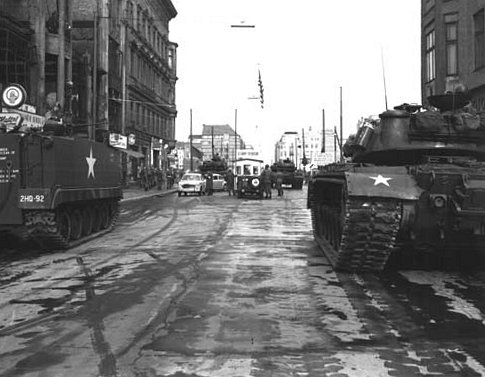
Checkpoint Charlie
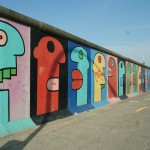
East Side Gallery
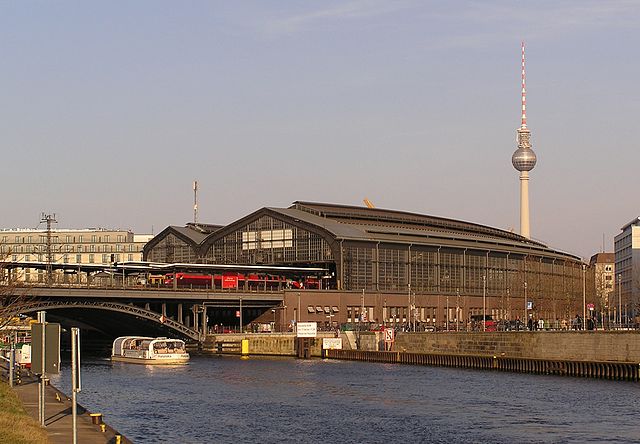
Bahnhof Friedrichstraße
History of the Berlin Wall: A Complete Guide (1961-1989)
65 Years Ago: US and Soviet Tanks Faced Off at Checkpoint Charlie
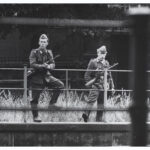
The Border Guards of the Berlin Wall: Conscripts, the Order to Shoot, and the Trials That Followed
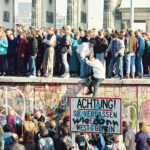
9 November in Berlin: 37 Years Since the Wall Fell, and What’s On
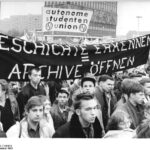
Alexanderplatz Demonstration
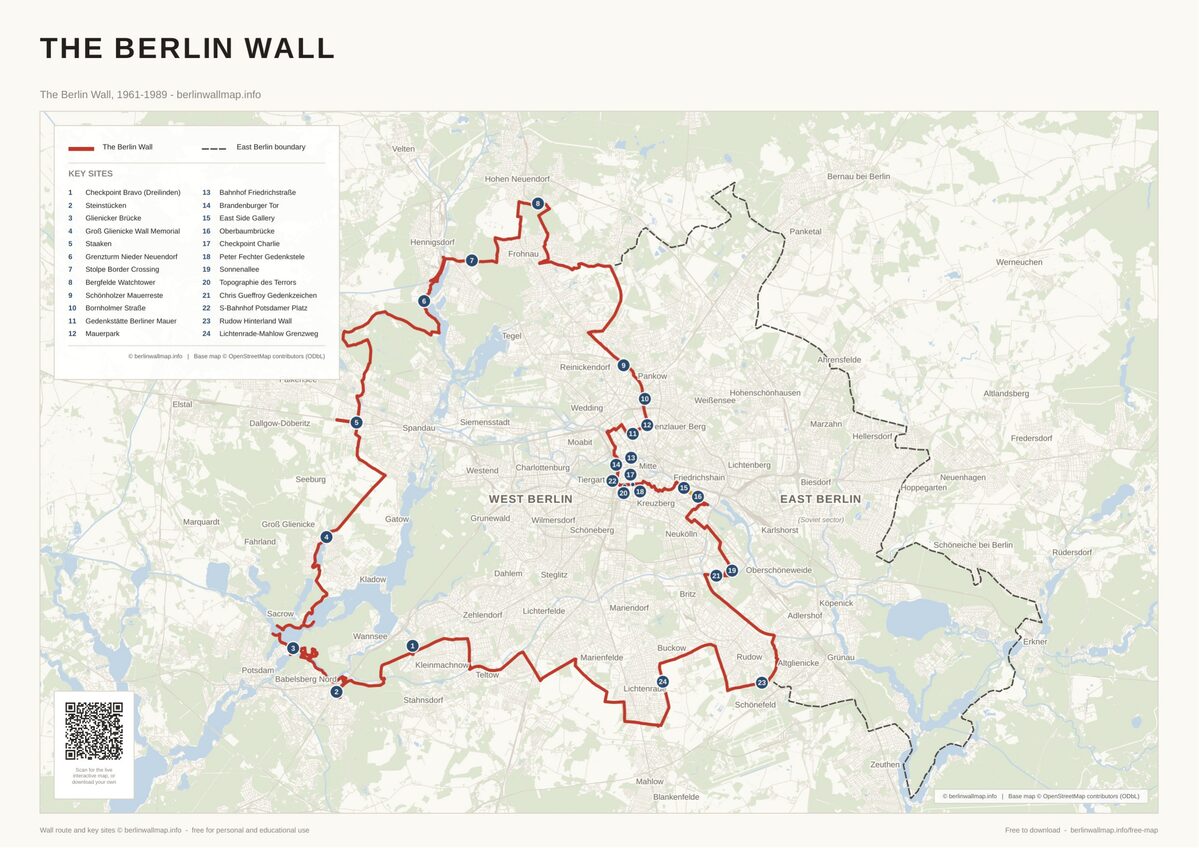
Free map downloads
Free printable PDF maps of the Berlin Wall.
Get the free maps →Explore the Timeline
Journey through Berlin Wall history from 1945 to 1990.
View Timeline →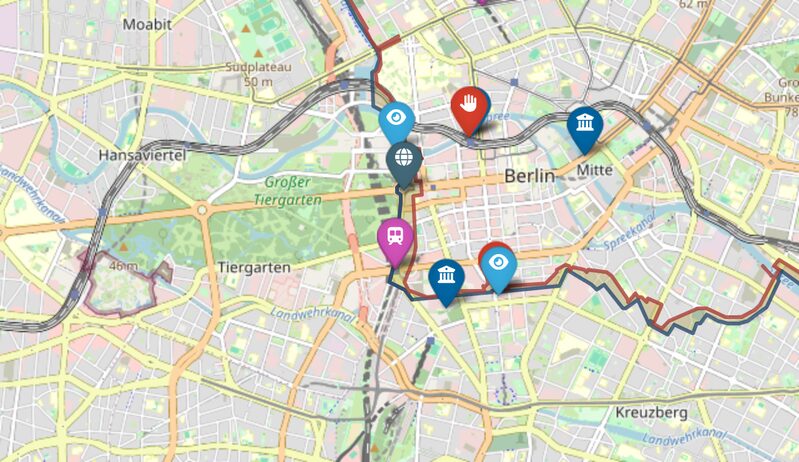
Embed Our Map
Add a free interactive Berlin Wall map to your website or blog.
Get embed code →