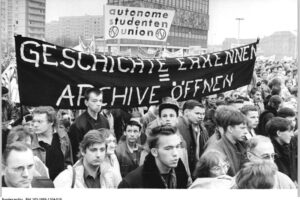
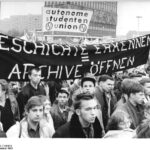
On 4 November 1989, between 200,000 and 500,000 people filled this square in the largest non-state demonstration in East German history and the first legally permitted protest organised by private citizens. Twenty-six speakers addressed the crowd from a flatbed truck, among them Christa Wolf, Stefan Heym and Jens Reich, while East German television broadcast it live. The demands were free elections, press freedom, an end to Stasi surveillance and a new constitution. Five days later the Berlin Wall fell. No monument marks the event, but the square where half a million people found their voice is unmistakable.
More...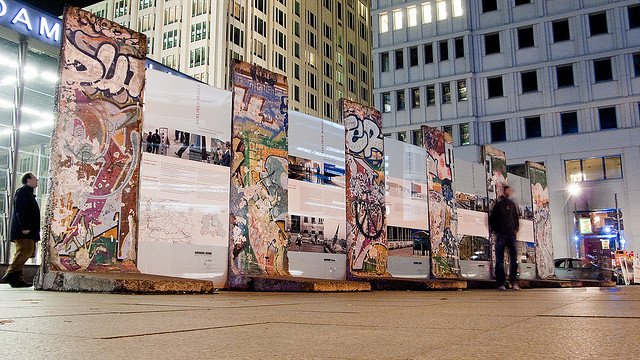
This exhibition at Potsdamer Platz is made up of displays hung between original segments of the Berlin Wall. Created in 2005 as a temporary exhibition, it was made permanent due to very positive public response.
More...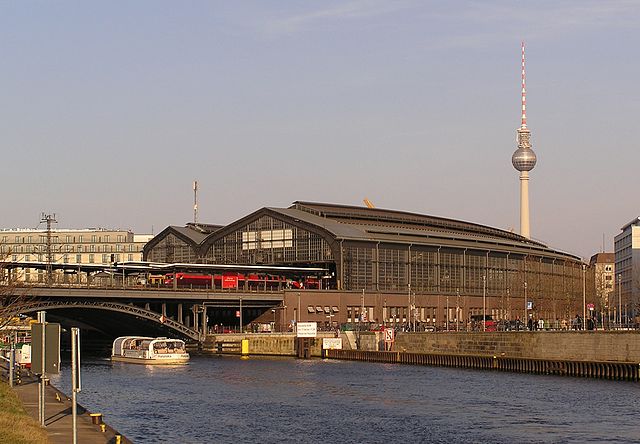
As an important travel hub between the West Berlin sectors, despite it being located entirely in the Soviet occupied West Berlin, its underground U and S-Bahn facilities were only open to West Berlin travelers, for transferring, or to access the border crossing on the ground floor. Nearby: Tränenpalast (Reichstagufer 17), a permanent exhibition of daily […]
More...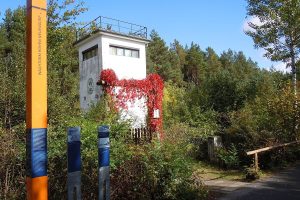
The Bergfelde Watchtower is a former border command post hidden in a reforested area near Hubertussee in Hohen Neuendorf, north of Berlin. It now serves as a memorial to Joachim Mehr and other victims who died attempting to cross the border in this area.
More...
An information stele and three panels of photographs stand in a quiet meadow park on the southeastern edge of Berlin, marking where the CIA and MI6 dug a 450-metre tunnel under the sector border to tap the telephone cables of the Soviet army. It is one of the few sites on the Berlin Wall Trail […]
More...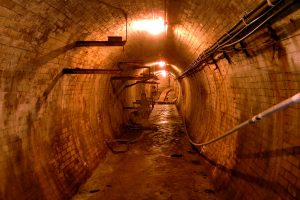
The Berliner Unterwelten association offers guided tours through underground bunkers and escape tunnels near Bernauer Straße, revealing the hidden infrastructure of Cold War Berlin.
More...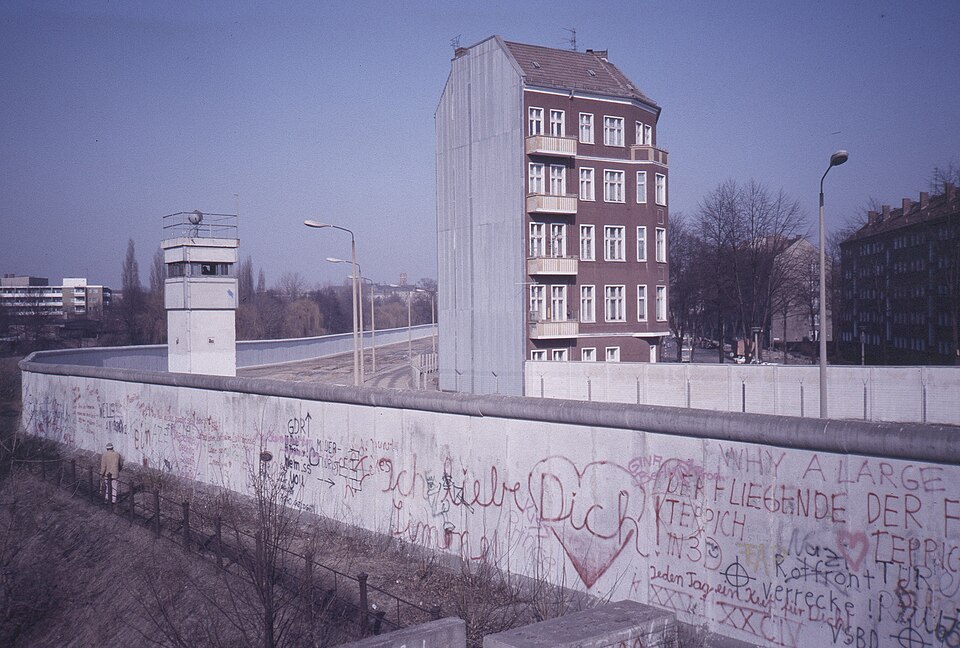
Site of two of the most daring escapes in Berlin Wall history. In 1983, Holger Bethke fired an arrow trailing a nylon line over the Wall near Treptow Park, pulled a steel cable across, and zipped over the death strip on a homemade wooden pulley. In 1989, his brothers flew two ultralight aircraft into Treptower […]
More...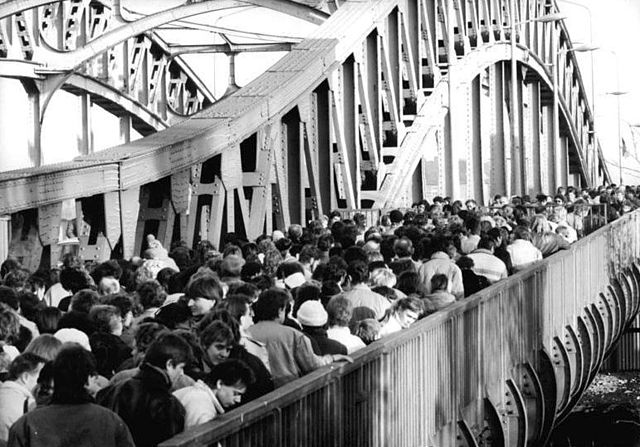
The northmost checkpoint within the city stretched from Bösebrücke bridge to Malmöer Straße. This border crossing was the first to be breached after the fall of the wall. It was opened by the border guards after crowds amassed on either side, and they had no choice but to open the border. Nearby: A 200m section […]
More...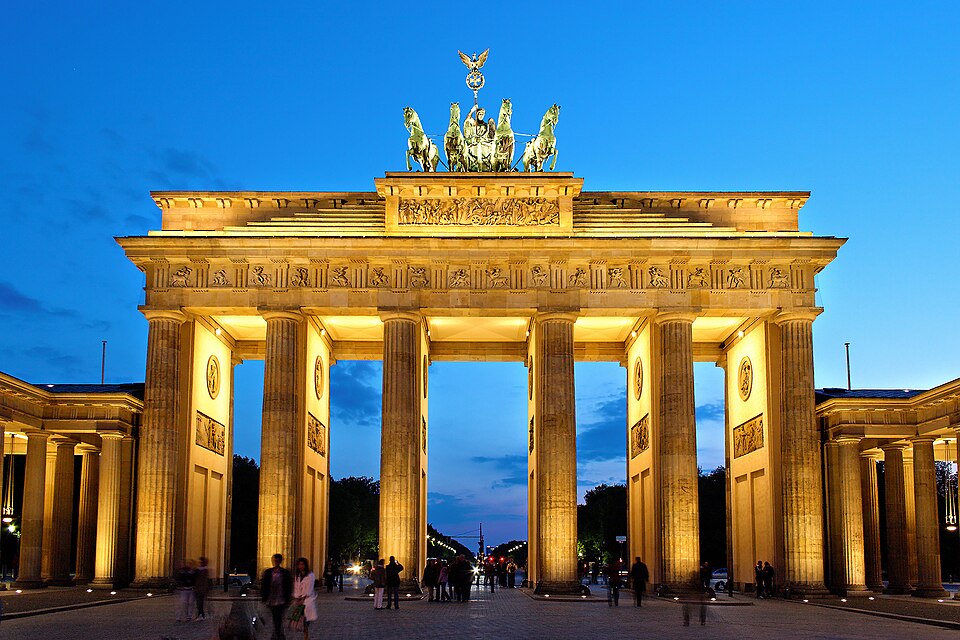
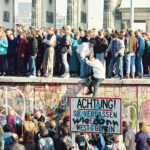
The Brandenburg Gate became the main symbol of Berlin’s division. From 1961 to 1989, it stood inaccessible in the death strip, visible but unreachable from both sides. On 22 December 1989, the gate was reopened as over 100,000 people gathered to celebrate. Today it is the main site for reunification events.
More...
A low-profile border crossing, at the intersection of Chausseestraße and Liesenstraße, it was the location of an escape attempt on 8 April 1989, during which shots were fired. Nearby: Berlin Wall History Mile, “Kaninchenfeld” (Rabbit Field), Memorial: “Wiedervereinigung”
More...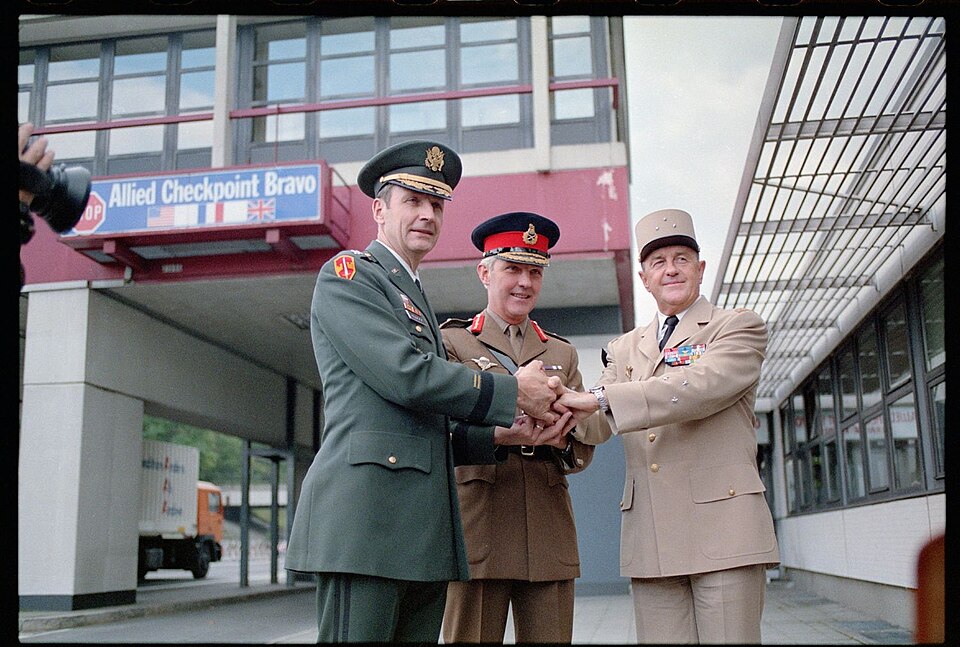
The Allied checkpoint on the transit motorway between West Berlin and West Germany. All vehicles travelling the Autobahn corridor to Helmstedt passed through here, making it the counterpart to Checkpoint Alpha at the other end. The East German side at Drewitz was heavily fortified, processing thousands of vehicles daily.
More...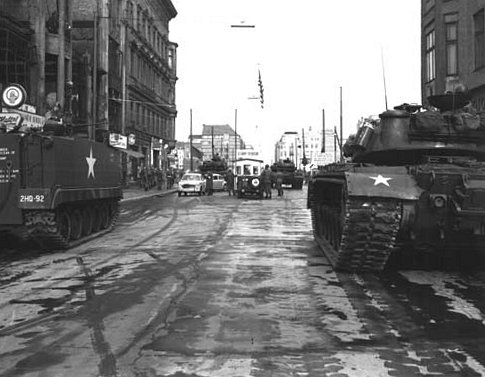
At Friedrichstraße, and featured in many cold-war era spy movies and books, this was the most famous of the border crossings. It was the only designated crossing for foreigners and Allied Forces. Many notable historical incidents took place here, including the intense standoff of Soviet and US tanks in 1961, and the fatal escape attempt […]
More...
A simple cross and information panel mark the spot at the Britzer Zweigkanal where 20-year-old Chris Gueffroy was shot on 5 February 1989 – the last person killed by gunfire while trying to cross the Berlin Wall. His death, just nine months before the wall fell, provoked international outrage and became a symbol of the […]
More...
An interactive museum dedicated to everyday life in East Germany. Visitors can sit in a Trabant, explore a reconstructed East German apartment, and learn about the state surveillance, education system, and culture of the GDR. One of Berlin’s most popular museums, offering a vivid picture of life behind the wall.
More...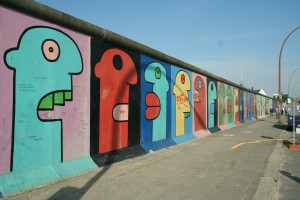
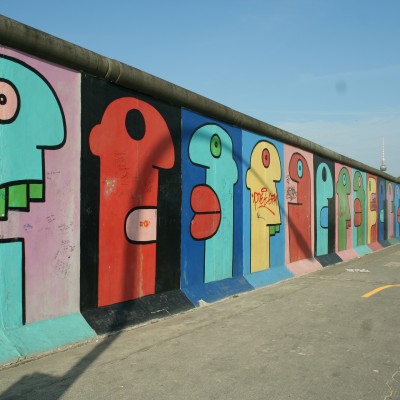
The longest surviving stretch of the Berlin Wall, this 1.3km open-air gallery along the Spree was painted by 118 artists from 21 countries in 1990. Iconic murals include Dmitri Vrubel’s “My God, Help Me to Survive This Deadly Love” depicting the Brezhnev-Honecker kiss, and Birgit Kinder’s Trabant breaking through the wall. Restored in 2009, it […]
More...
The Eiskeller exclave was one of the strangest geographical anomalies of the Cold War. Three West Berlin farmsteads, connected to the main city by a corridor just four metres wide and 800 metres long, became an island of freedom surrounded by GDR territory.
More...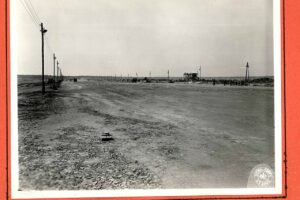
The Berlin Airlift’s great construction feat: Tegel airport was built from nothing in around 90 days by 19,000 Berliners – more than 40 per cent of them women – working around the clock in the French sector. Its 2,428-metre runway was the longest in Europe when the first aircraft landed in November 1948. When two Soviet-controlled radio masts obstructed the approach path, the French commandant Jean Ganeval had them dynamited. Tegel went on to become West Berlin’s main airport, with its iconic hexagonal terminal, until it closed in 2020; the site is now being redeveloped as a technology and residential quarter.
More...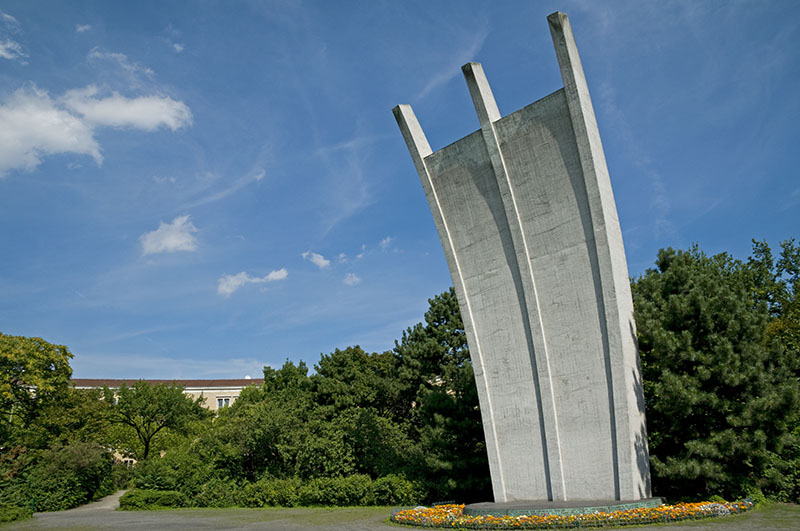
The airport where the Berlin Airlift (1948-1949) broke the Soviet blockade of West Berlin, with Allied planes landing every 90 seconds to supply the city. American pilot Gail Halvorsen became the “Candy Bomber” by dropping sweets for children. The Airlift Memorial (“Hungerkralle”) stands at the entrance. Now a public park, the former airfield is used […]
More...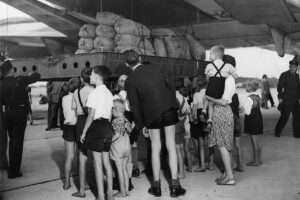
RAF Gatow in the British sector was one of the Berlin Airlift’s three airfields, handling the British share of the lift while Sunderland flying boats landed on the nearby Havel. Throughout the Cold War it remained the Royal Air Force’s Berlin station, its radar watching over the air corridors. Handed to the Bundeswehr when the British left in 1994, it is now the Military History Museum Berlin-Gatow (Luftwaffenmuseum), with more than 100 aircraft, air-defence systems and Cold War exhibits in the historic hangars and on the former airfield. Entry is free.
More...
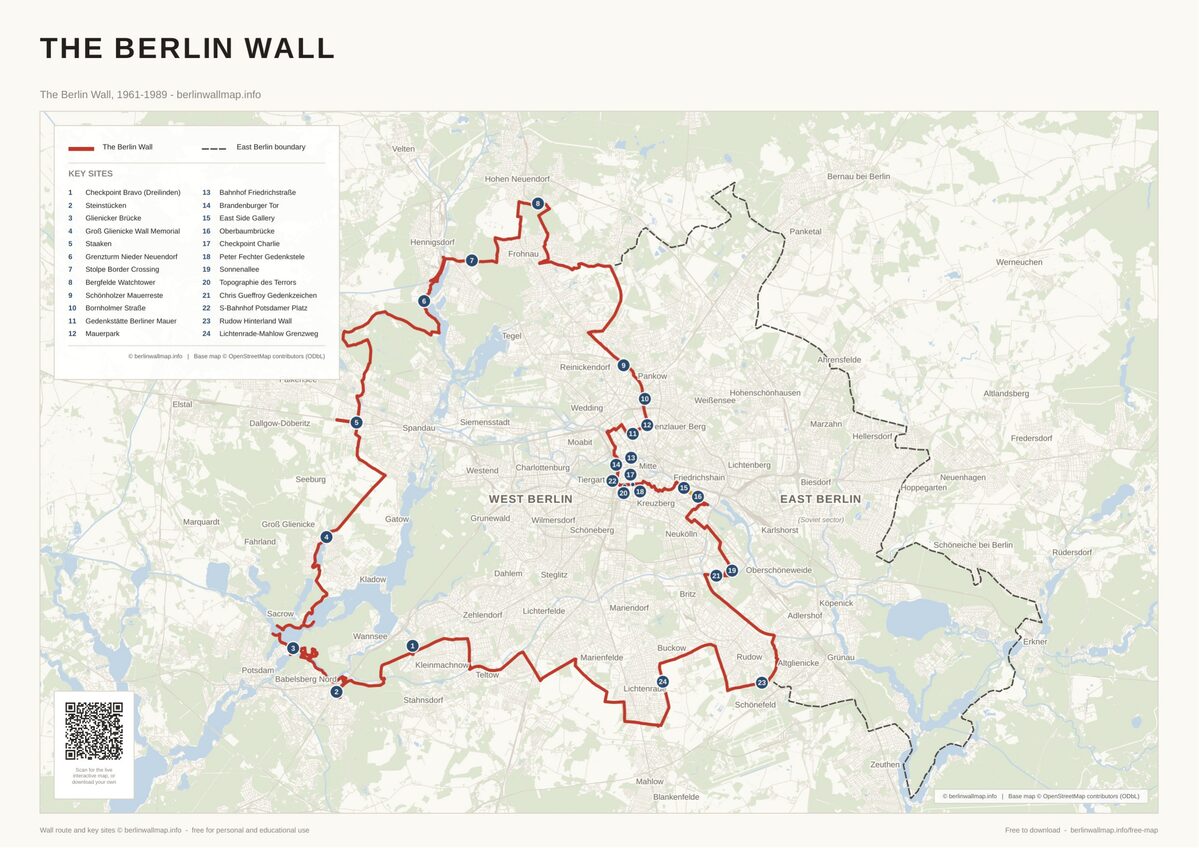
Free printable PDF maps of the Berlin Wall.
Get the free maps →Journey through Berlin Wall history from 1945 to 1990.
View Timeline →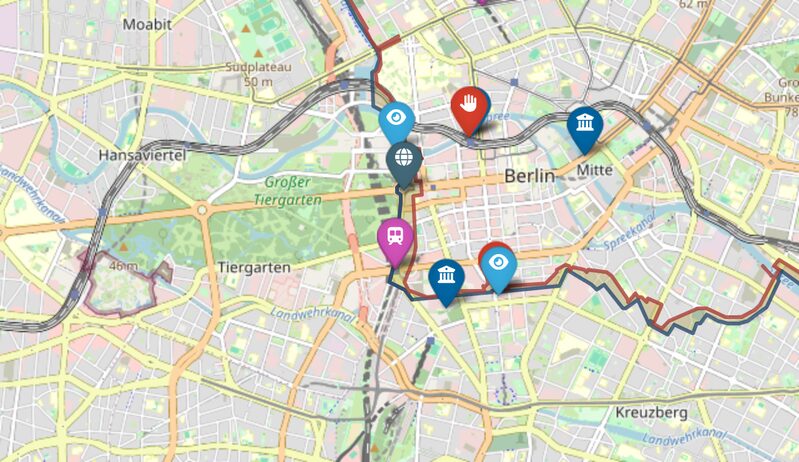
Add a free interactive Berlin Wall map to your website or blog.
Get embed code →