Berlin Wall Sites to Visit — Outer Berlin
Bergfelde Watchtower
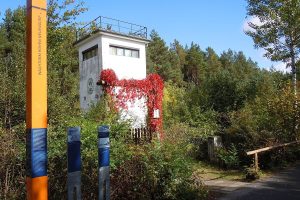
The Bergfelde Watchtower is a former border command post hidden in a reforested area near Hubertussee in Hohen Neuendorf, north of Berlin. It now serves as a memorial to Joachim Mehr and other victims who died attempting to cross the border in this area.
More...Berlin Spy Tunnel Memorial
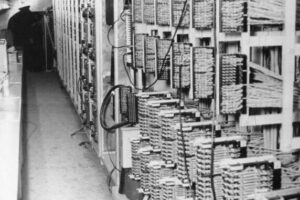
An information stele and three panels of photographs stand in a quiet meadow park on the southeastern edge of Berlin, marking where the CIA and MI6 dug a 450-metre tunnel under the sector border to tap the telephone cables of the Soviet army. It is one of the few sites on the Berlin Wall Trail […]
More...Checkpoint Bravo (Dreilinden)
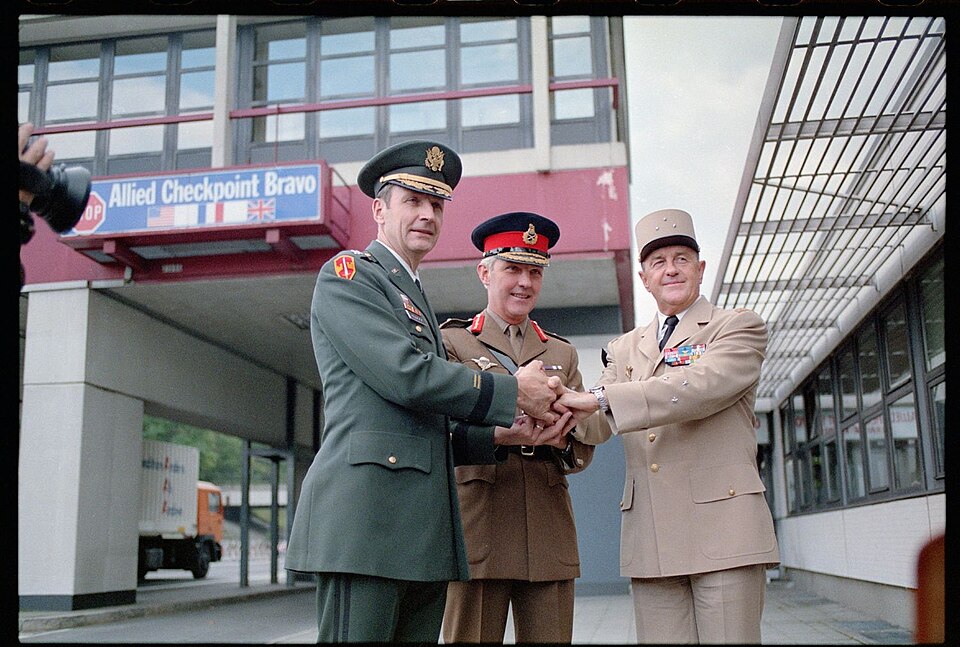
The Allied checkpoint on the transit motorway between West Berlin and West Germany. All vehicles travelling the Autobahn corridor to Helmstedt passed through here, making it the counterpart to Checkpoint Alpha at the other end. The East German side at Drewitz was heavily fortified, processing thousands of vehicles daily.
More...Eiskeller Exclave
The Eiskeller exclave was one of the strangest geographical anomalies of the Cold War. Three West Berlin farmsteads, connected to the main city by a corridor just four metres wide and 800 metres long, became an island of freedom surrounded by GDR territory.
More...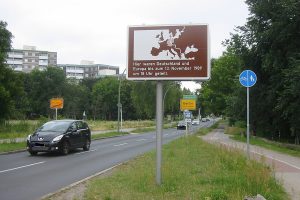
Flugplatz Gatow
RAF Gatow in the British sector was one of the Berlin Airlift’s three airfields, handling the British share of the lift while Sunderland flying boats landed on the nearby Havel. Throughout the Cold War it remained the Royal Air Force’s Berlin station, its radar watching over the air corridors. Handed to the Bundeswehr when the British left in 1994, it is now the Military History Museum Berlin-Gatow (Luftwaffenmuseum), with more than 100 aircraft, air-defence systems and Cold War exhibits in the historic hangars and on the former airfield. Entry is free.
More...Glienicke/Nordbahn Family Tunnel
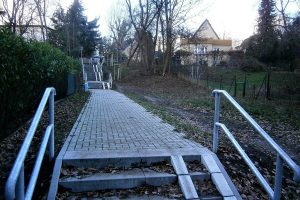
In March 1963, one of the most daring family escape tunnels was dug beneath a living room in Glienicke/Nordbahn, a small town on Berlin’s northern border. Eleven-year-old Detlef Aagard, his parents, and ten others crawled to freedom through the narrow passage.
More...Glienicker Brücke
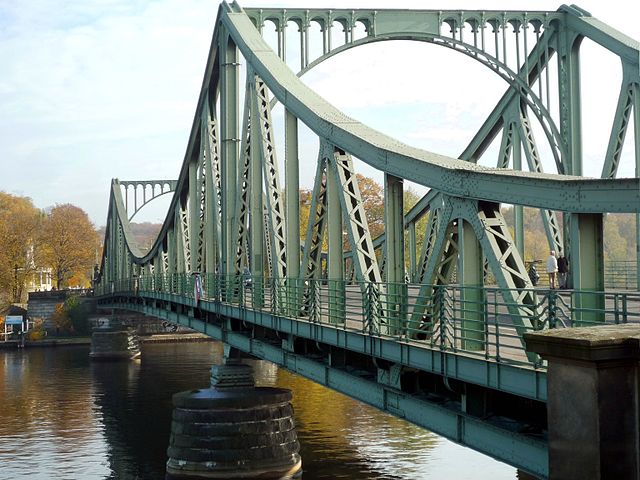
A bridge spanning the Havel river, connecting Wannsee with the Brandenburg capital, Potsdam. Spies captured during the Cold War were often exchanged here, earning it the moniker “Bridge of Spies”. The East German authorities closed the bridge to West Berliners on 27 May 1952, and was closed to East Berliners after construction of the Berlin […]
More...Grenzturm Nieder Neuendorf
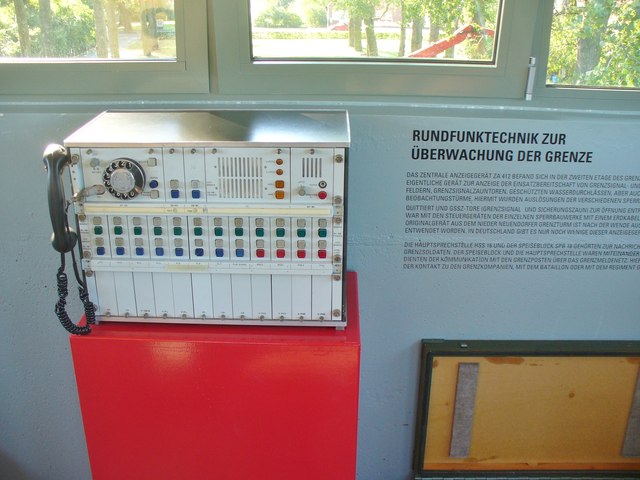
One of the last surviving Berlin Wall watchtowers, the Grenzturm in Nieder Neuendorf stands on the banks of the Havel river, where the border between West Berlin and East Germany once ran.
More...Griebnitzsee Wall Remains
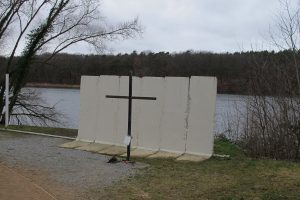
The Griebnitzsee Wall Remains are a protected monument on the shore of Griebnitzsee lake, marking a section of the border where the Wall met the water. The scenic lakeside setting belies the deadly purpose of the installations that once stood here.
More...Groß Glienicke Wall Memorial
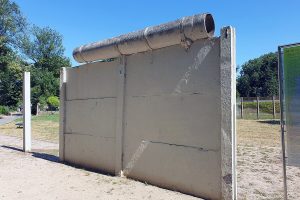
The Groß Glienicke Wall Memorial preserves the only surviving “first generation” Berlin Wall segment, built in 1961-62. Over 30 metres of original concrete slabs with hollow blocks and Y-shaped barbed wire deflectors stand on the shore of Groß Glienicker See.
More...Heilandskirche Sacrow
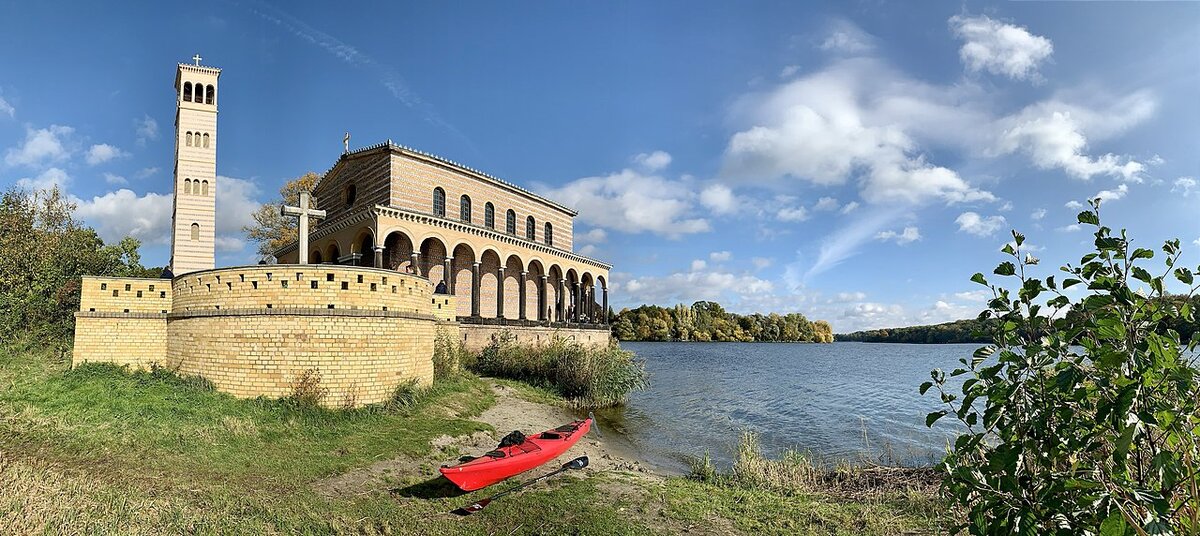
Heilandskirche Sacrow, the Church of the Redeemer, is a striking Italianate church on the banks of the Havel near Potsdam. Walled off for 28 years during the division of Germany, it became one of the most powerful symbols of the Berlin Wall’s impact on daily life.
More...Klein Glienicke
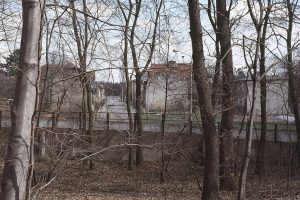
Klein Glienicke was a GDR enclave wedged between West Berlin and Potsdam, accessible only through a single surveilled bridge. Its residents lived in near-total isolation for 28 years, surrounded on three sides by territory they could see but never enter.
More...Lichtenrade-Mahlow Grenzweg
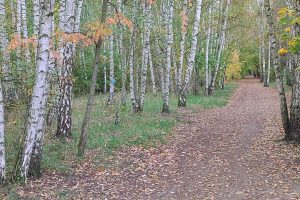
The Lichtenrade-Mahlow Grenzweg follows the former border along Berlin’s southern boundary, where a preserved Kolonnenweg patrol road with original GDR lamp posts traces the path of the Wall through what is now a peaceful residential area.
More...Notaufnahmelager Marienfelde
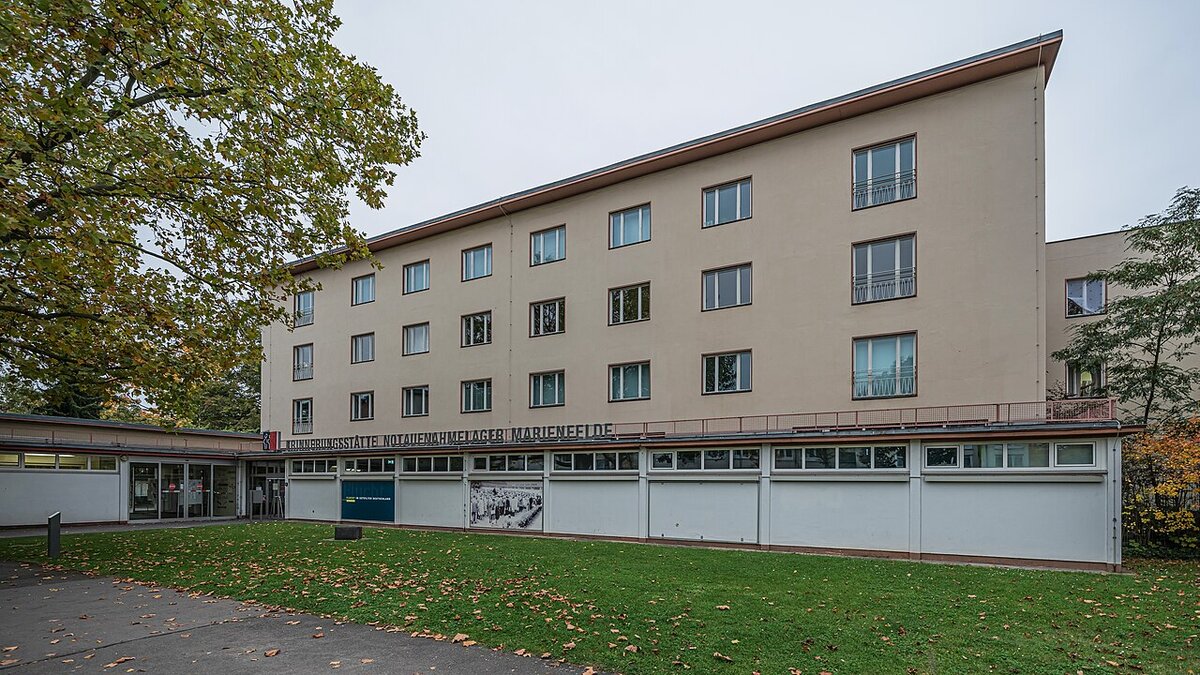
The Marienfelde Emergency Reception Centre processed over 1.35 million refugees from East Germany between 1953 and 1990. Today it houses a museum documenting the history of flight from the GDR.
More...Oranienburger Chaussee Tunnels
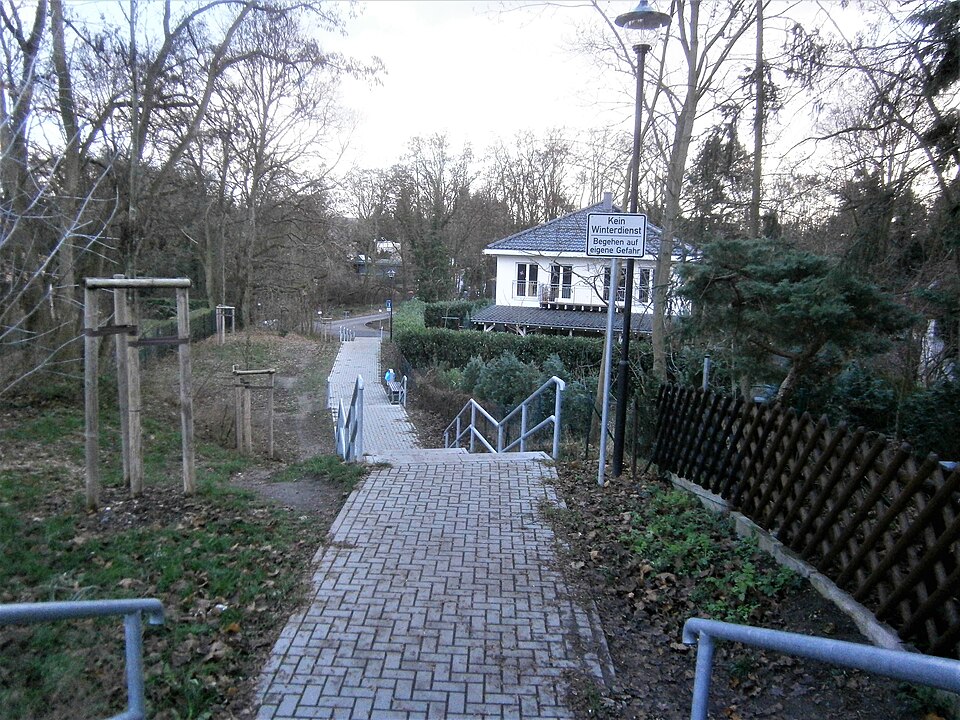
Site of some of the earliest successful escape tunnels beneath the Berlin Wall. On 24 January 1962, 28 people escaped through a tunnel dug by brothers Günter and Bruno Becker from their basement – an event that inspired the film “Tunnel 28.” In May 1962, twelve senior citizens dug a 32-metre tunnel from a chicken […]
More...Rudow Hinterland Wall
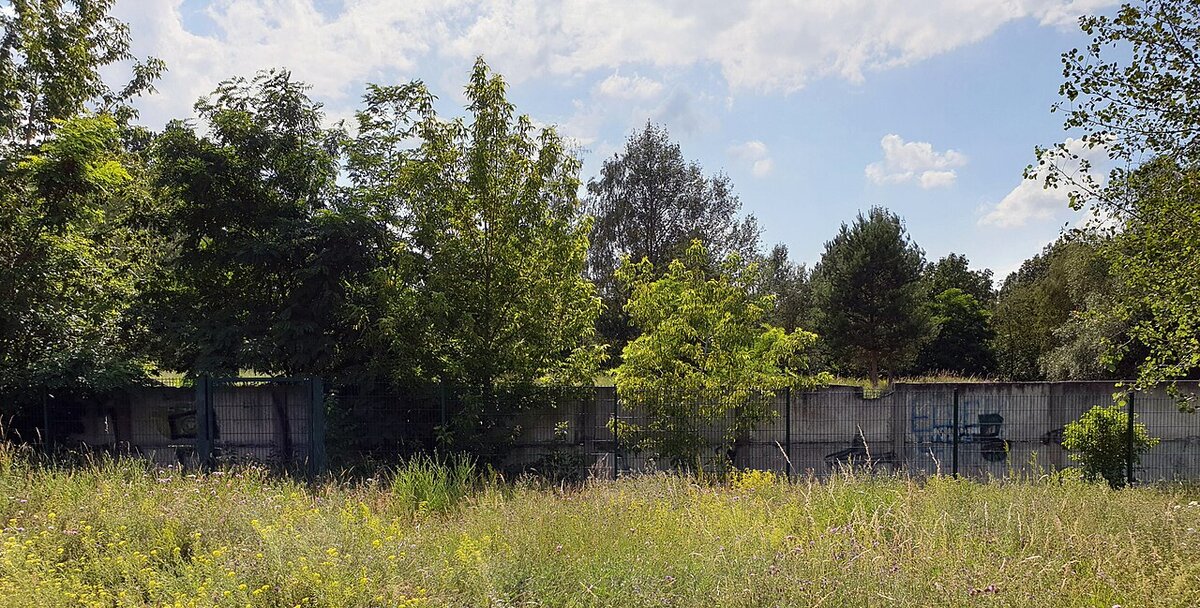
The Rudow Hinterland Wall preserves the southernmost Berlin Wall remains in the city. Third-generation concrete slabs stand between H-shaped reinforced concrete supports, overlooking a former death strip that has been reclaimed by nature.
More...Staaken
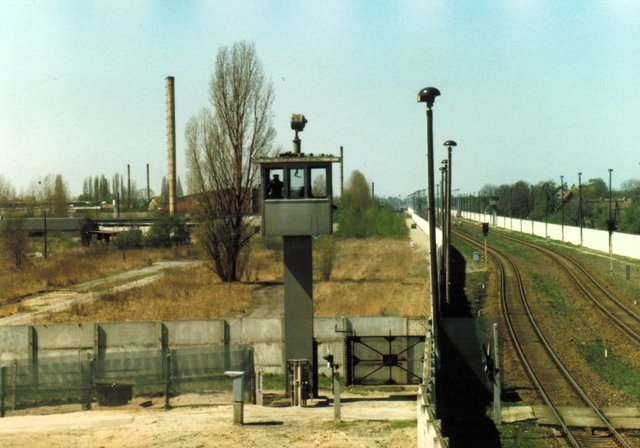
Staaken, on the west-most outskirts of West Berlin, was home to several different rail and road crossings during the cold war years. Albrechtshof rail crossing was closed in 1961 after possibly one of the most dramatic GDR escapes: East German engineer Harry Deterling crashed a whole train through the barriers towards Gartenstadt Staaken in West […]
More...Steinstücken
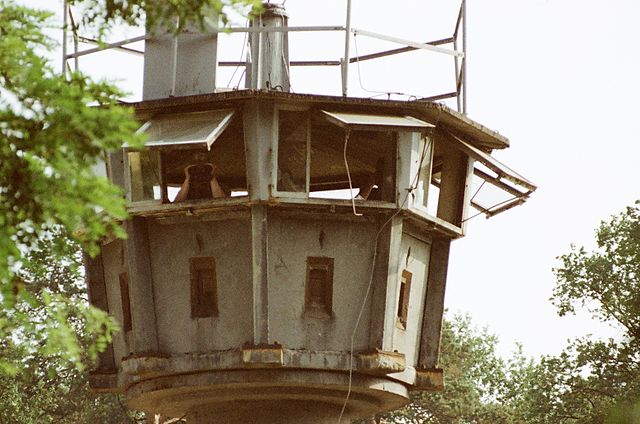
A small enclave of roughly 200 inhabitants at its Cold War peak, Steinstücken is the southernmost territory of Berlin, in Wannsee. For a time its border was made up of only barbed wire, and was the point of many escape attempts. A permanent border wall was erected here after more than 20 East German border […]
More...Stolpe Border Crossing
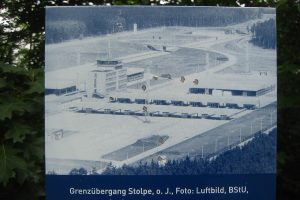
The Stolpe border crossing, opened in 1982, holds the distinction of being the last checkpoint built before the Berlin Wall fell. Located at the northern edge of Berlin on Route 96, it served travellers heading to Scandinavia and the Baltic coast.
More...
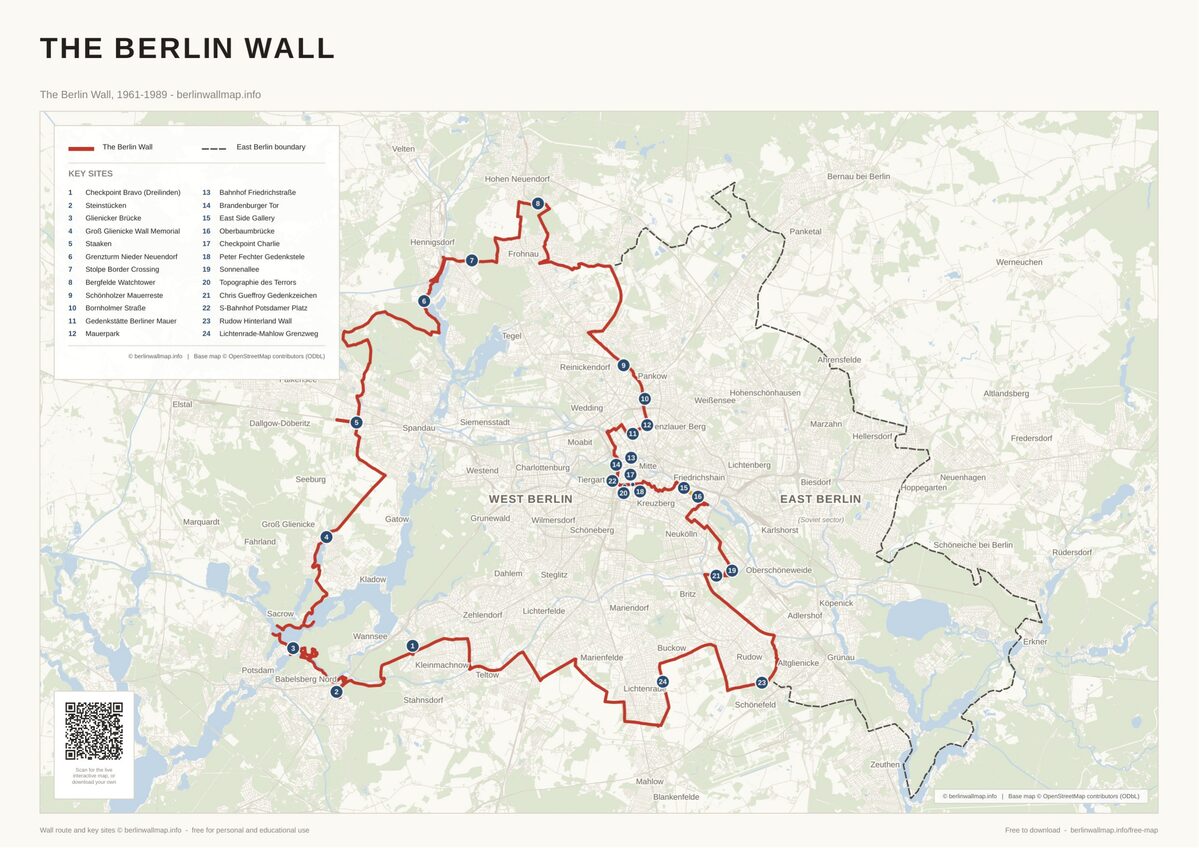
Free map downloads
Free printable PDF maps of the Berlin Wall.
Get the free maps →Explore the Timeline
Journey through Berlin Wall history from 1945 to 1990.
View Timeline →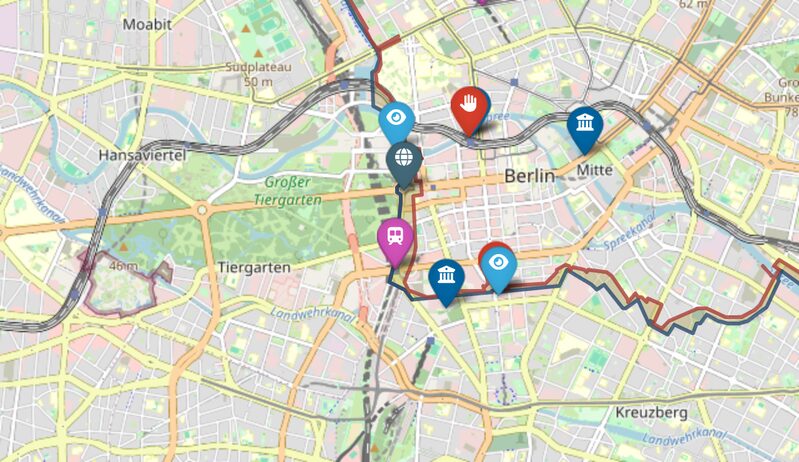
Embed Our Map
Add a free interactive Berlin Wall map to your website or blog.
Get embed code →