Falkensee
Falkensee, a town just west of Spandau in Brandenburg, experienced the economic devastation of the Berlin Wall more acutely than almost any other community. When the border was sealed in 1961, 80% of the town’s male workforce lost their jobs overnight.
Before the Wall, Falkensee functioned as a suburb of West Berlin. Thousands of residents commuted daily via the S-Bahn to jobs in Spandau and central Berlin. The severing of the S-Bahn link on 13 August 1961 stranded the entire community on the wrong side of the border.
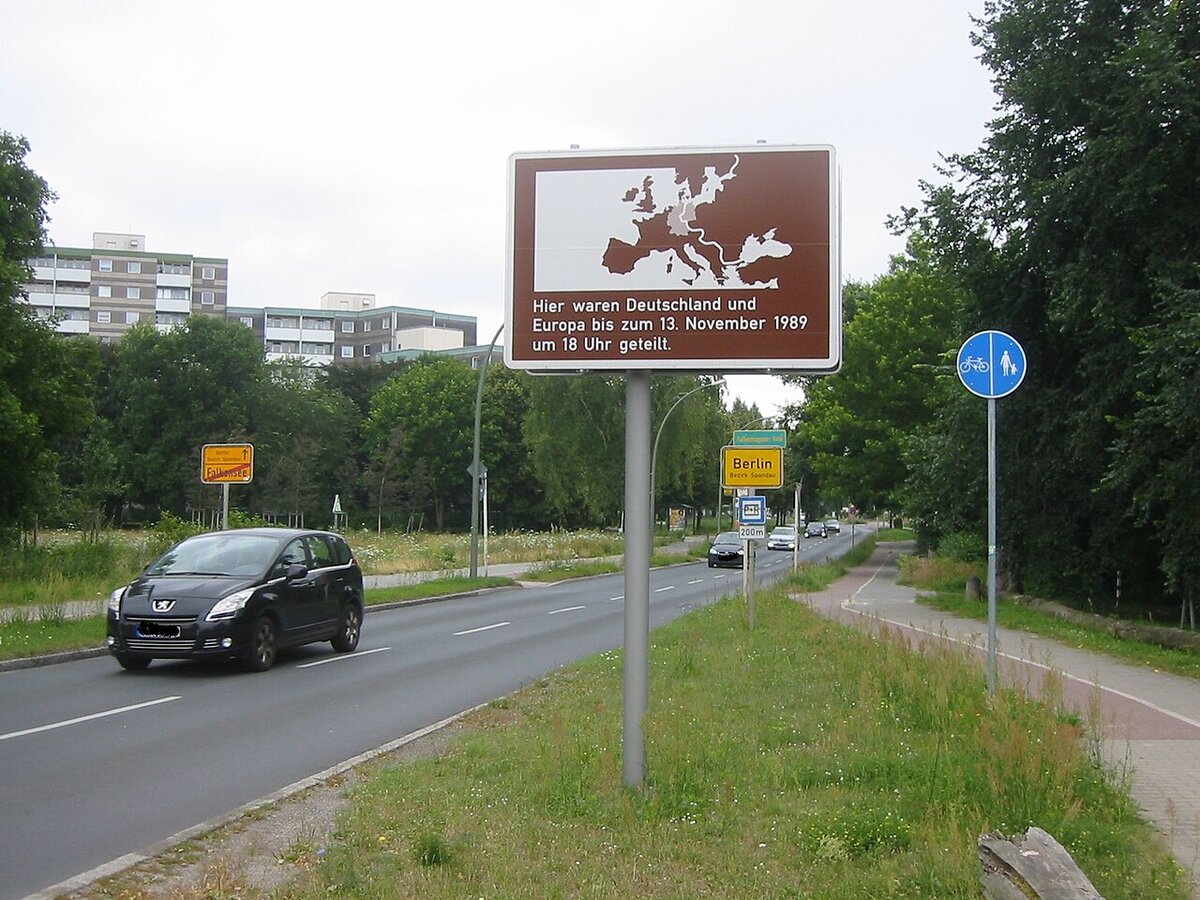
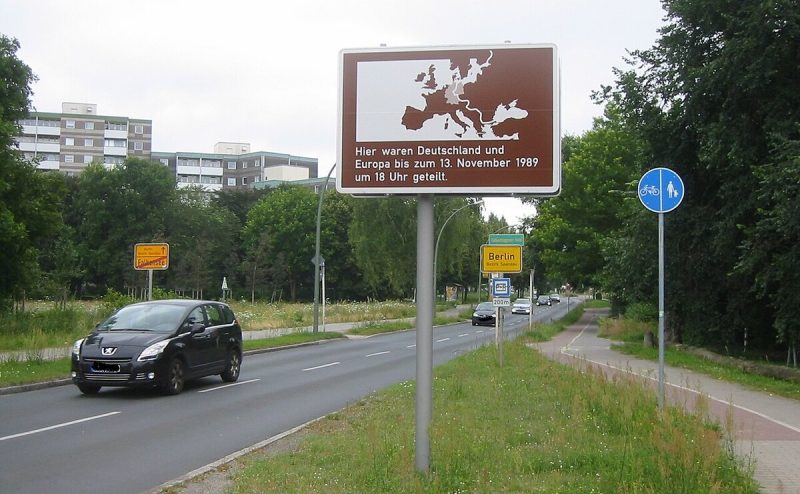
Infotafel zur Erinnerung an die Deutsche Teilung am ehemaligen Grenzübergang in Berlin-Falkenhagener (Photo: Assenmacher)
The economic impact was immediate and severe. Factories in Falkensee had to be established from scratch to provide employment for workers who had previously commuted to the west. The town’s population shrank as some residents were relocated deeper into the GDR, and the border zone restrictions made daily life difficult for those who remained.
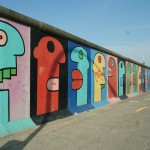
After reunification, the S-Bahn link to Spandau was gradually restored, and Falkensee experienced rapid growth. Its population more than doubled as Berlin commuters discovered affordable housing just outside the city boundary. Today, a wall mural in the town centre commemorates the years of division and the community’s recovery.
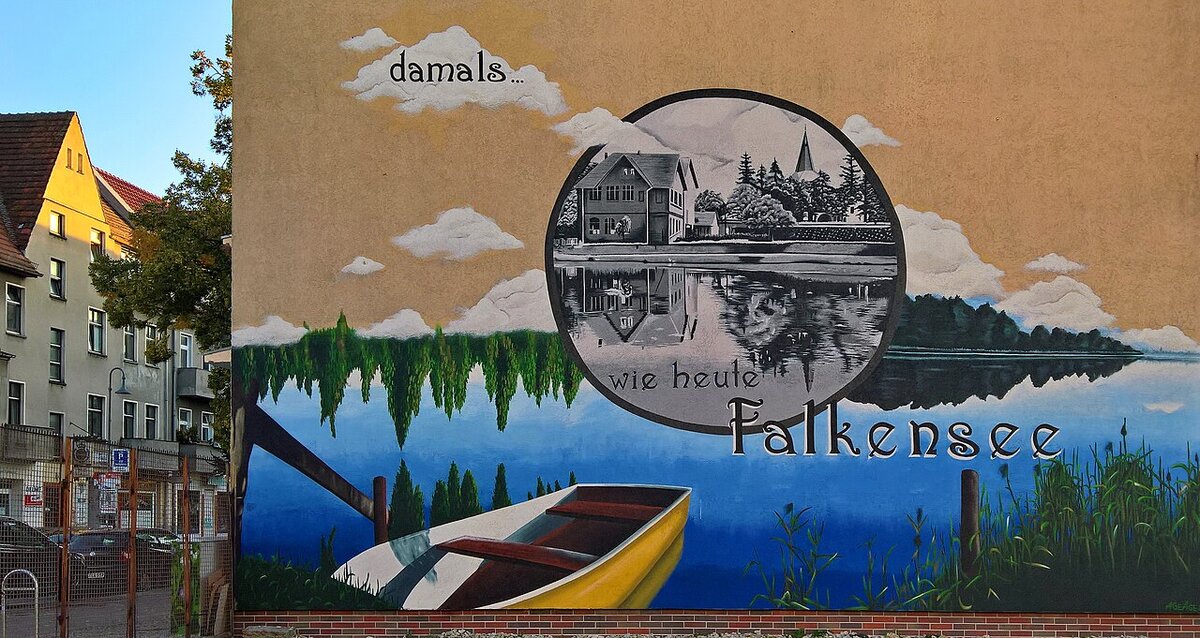
Wandbild in der Bahnhofstraße (Photo: Peter Kersten)
Gallery


Nearby Berlin Wall Sites


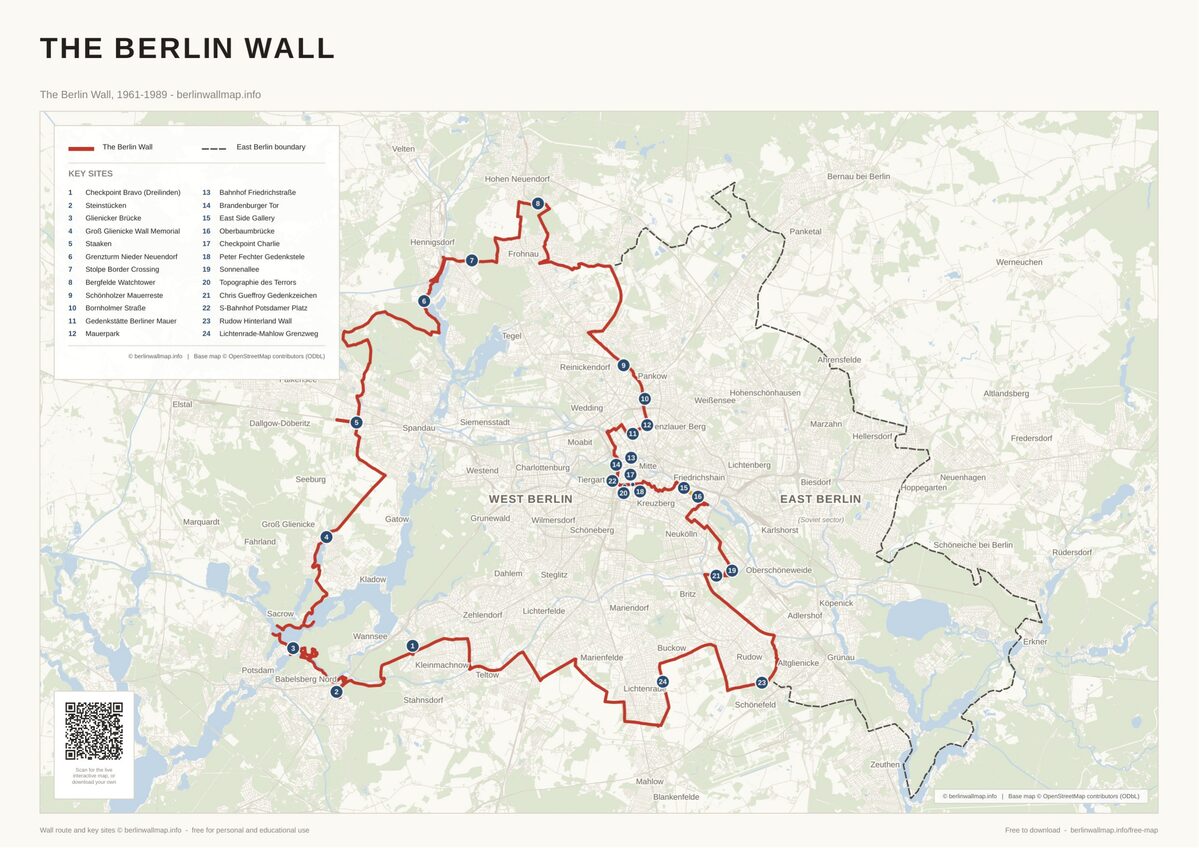
Free map downloads
Free printable PDF maps of the Berlin Wall.
Get the free maps →Explore the Timeline
Journey through Berlin Wall history from 1945 to 1990.
View Timeline →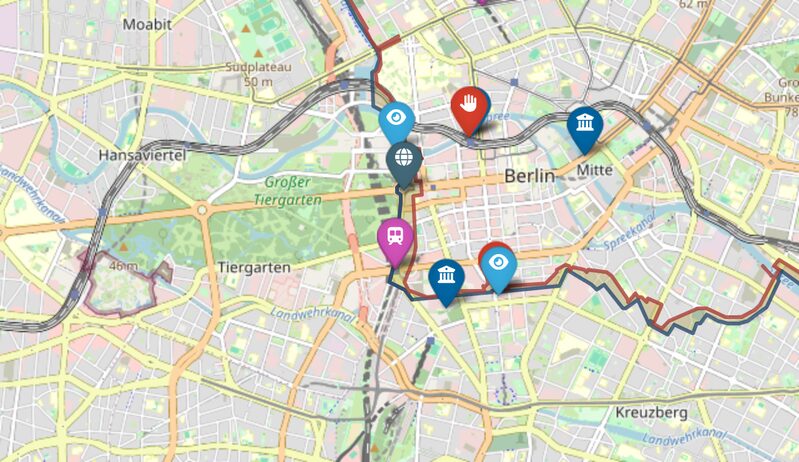
Embed Our Map
Add a free interactive Berlin Wall map to your website or blog.
Get embed code →