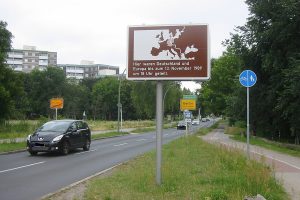
Glienicke/Nordbahn Family Tunnel
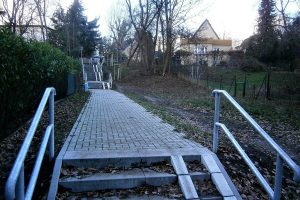
In March 1963, one of the most daring family escape tunnels was dug beneath a living room in Glienicke/Nordbahn, a small town on Berlin’s northern border. Eleven-year-old Detlef Aagard, his parents, and ten others crawled to freedom through the narrow passage.
More...Lichtenrade-Mahlow Grenzweg
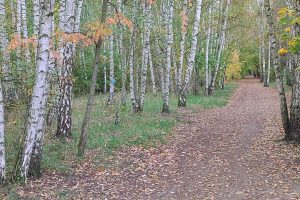
The Lichtenrade-Mahlow Grenzweg follows the former border along Berlin’s southern boundary, where a preserved Kolonnenweg patrol road with original GDR lamp posts traces the path of the Wall through what is now a peaceful residential area.
More...Stolpe Border Crossing
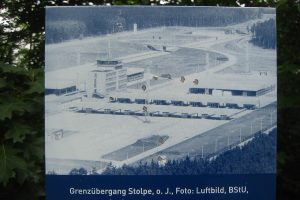
The Stolpe border crossing, opened in 1982, holds the distinction of being the last checkpoint built before the Berlin Wall fell. Located at the northern edge of Berlin on Route 96, it served travellers heading to Scandinavia and the Baltic coast.
More...Waltersdorfer Chaussee Crossing
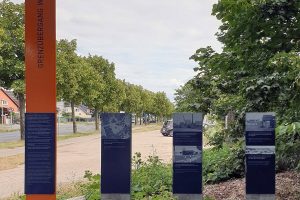
The Waltersdorfer Chaussee Crossing was a unique transit checkpoint created specifically for West Berliners travelling to Schonefeld Airport in East Berlin. Opening in 1963, it served a purely practical function in the otherwise rigid border system.
More...Rudow Hinterland Wall
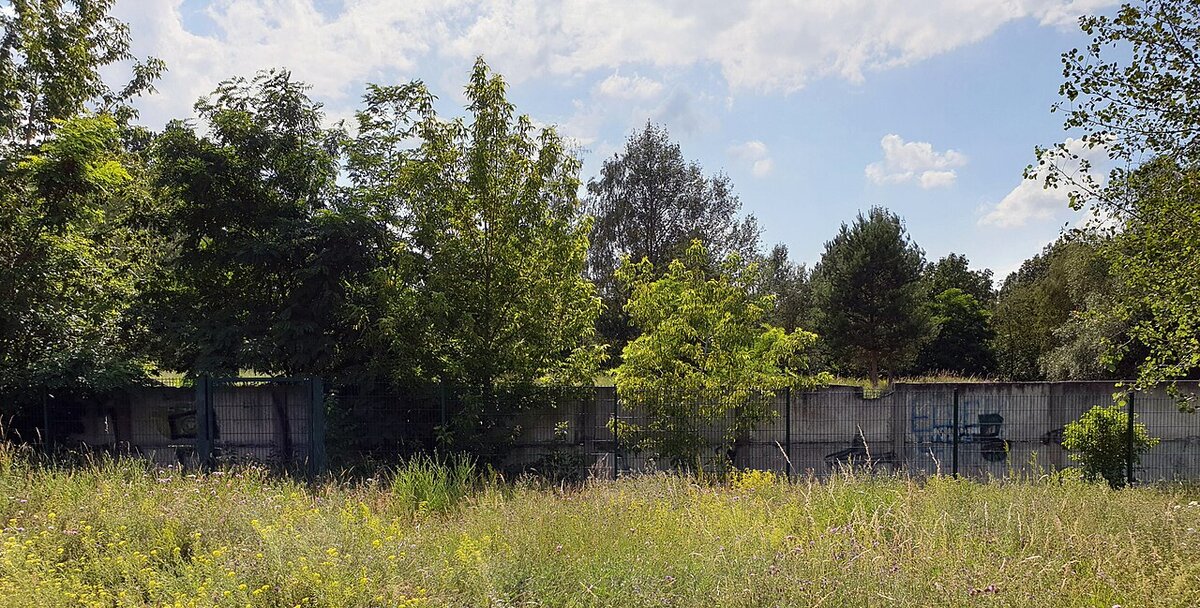
The Rudow Hinterland Wall preserves the southernmost Berlin Wall remains in the city. Third-generation concrete slabs stand between H-shaped reinforced concrete supports, overlooking a former death strip that has been reclaimed by nature.
More...Griebnitzsee Wall Remains
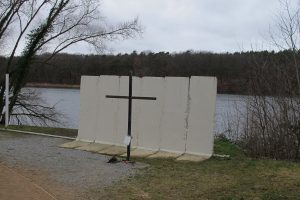
The Griebnitzsee Wall Remains are a protected monument on the shore of Griebnitzsee lake, marking a section of the border where the Wall met the water. The scenic lakeside setting belies the deadly purpose of the installations that once stood here.
More...Gleim-Tunnel
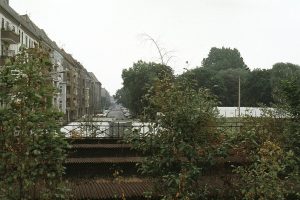
The Gleim-Tunnel is a 130-metre street tunnel built in 1905 beneath the railway tracks between Prenzlauer Berg and Wedding. During the Cold War, the Berlin Wall ran directly through its centre, sealing it shut for 29 years.
More...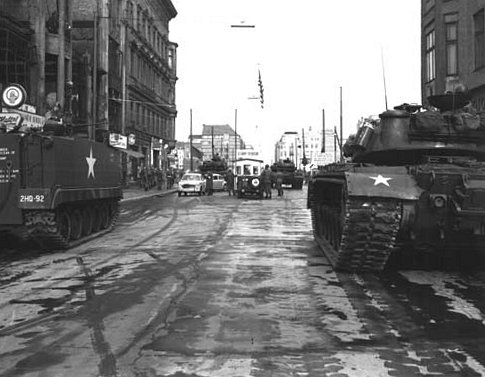
Checkpoint Charlie
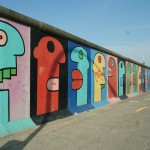
East Side Gallery
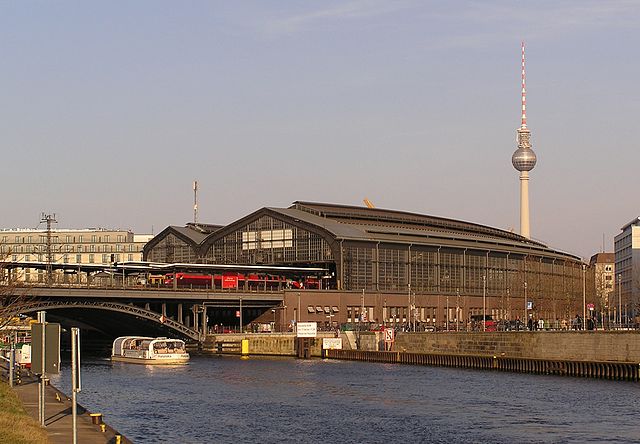
Bahnhof Friedrichstraße
History of the Berlin Wall: A Complete Guide (1961-1989)
65 Years Ago: US and Soviet Tanks Faced Off at Checkpoint Charlie
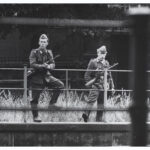
The Border Guards of the Berlin Wall: Conscripts, the Order to Shoot, and the Trials That Followed
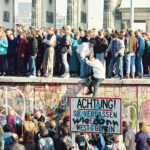
9 November in Berlin: 37 Years Since the Wall Fell, and What’s On
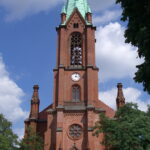
Gethsemanekirche
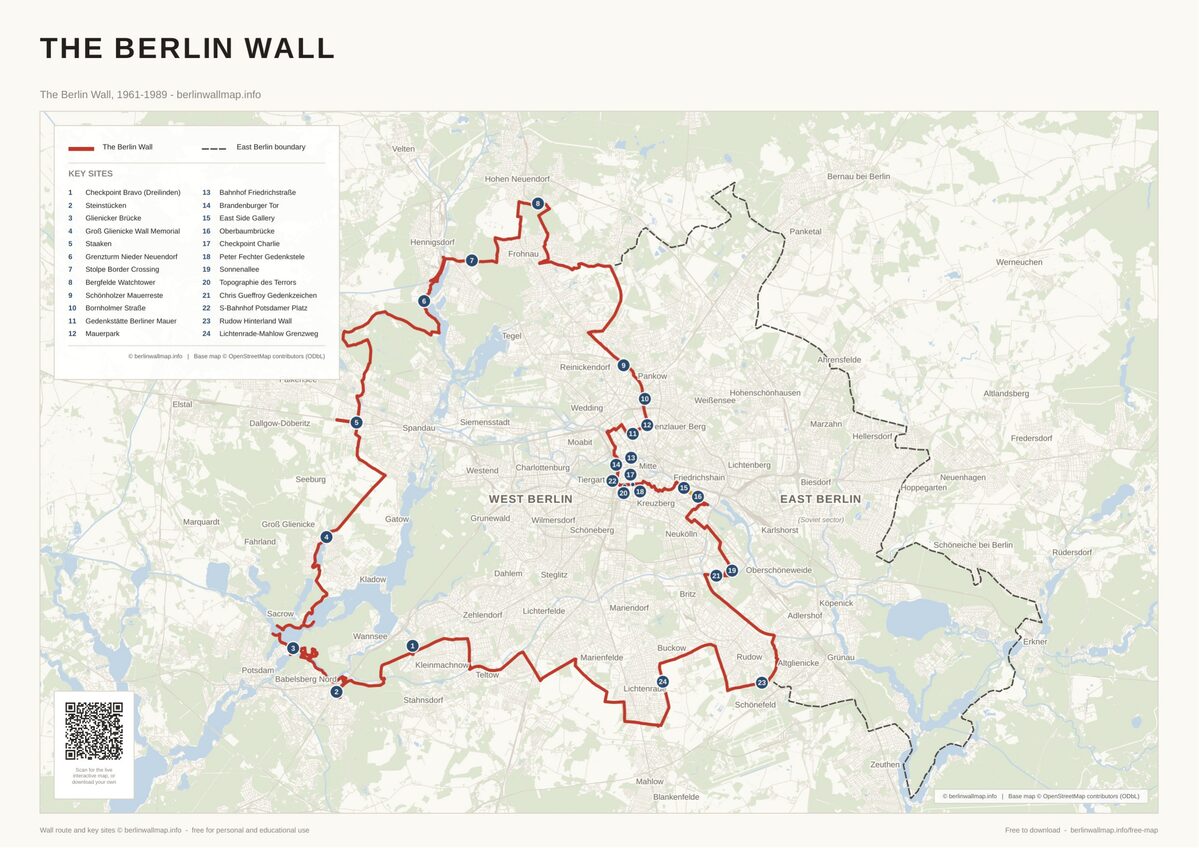
Free map downloads
Free printable PDF maps of the Berlin Wall.
Get the free maps →Explore the Timeline
Journey through Berlin Wall history from 1945 to 1990.
View Timeline →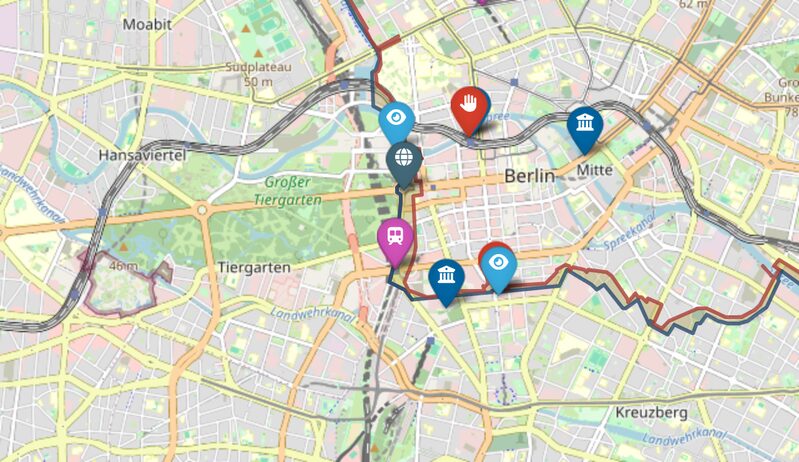
Embed Our Map
Add a free interactive Berlin Wall map to your website or blog.
Get embed code →