Berlin Wall: Facts & Figures
Key questions and answers about the history of the Berlin Wall, from its construction in 1961 to its fall in 1989.
When was the Berlin Wall built?
The Berlin Wall was built on 13 August 1961. Read more →
Who built the Berlin Wall?
The Berlin Wall was built by the government of the German Democratic Republic (East Germany), with the approval and backing of the Soviet Union. Read more →
When did the Berlin Wall fall?
The Berlin Wall fell on 9 November 1989. Read more →
How long was the Berlin Wall?
The Berlin Wall stretched for 155km (96 miles) around the entire perimeter of West Berlin. Read more →
Why was the Berlin Wall built?
The Berlin Wall was built to stop the exodus of East Berliners fleeing the communist regime by escaping to West Berlin. Read more →
What was the Death Strip?
The Death Strip (Todesstreifen) was the heavily fortified no-man’s-land between the two parallel walls that made up the Berlin Wall – the outer wall facing West Berlin and the inner wall on the East Berlin side. Read more →
When was the Berlin Blockade?
The Berlin Blockade occurred between 24 June 1948 and 12 May 1949. Read more →
How many people died trying to cross the Berlin Wall?
At least 140 people are confirmed to have died at the Berlin Wall between 1961 and 1989, according to research by the Berlin Wall Memorial and the Centre for Contemporary History Potsdam. Read more →
What was the Berlin Airlift?
The Berlin Airlift was one of the most ambitious logistics operations in history – the Western Allies’ response to the Soviet Berlin Blockade of 1948–1949, in which they flew all supplies into West Berlin by air for nearly a year. Read more →
Which US presidents visited the Berlin Wall?
Two US presidents made landmark visits to the Berlin Wall during the Cold War: John F. Kennedy in 1963 and Ronald Reagan in 1987. Both delivered speeches that became defining moments of the era. Read more →
How many people escaped over the Berlin Wall?
Around 5,000 people are estimated to have successfully crossed the Berlin Wall between 1961 and 1989. Read more →
What were the ghost stations?
Ghost stations. Geisterbahnhöfe in German, were underground railway stations in East Berlin through which West Berlin trains passed without stopping. Read more →
How did the Berlin Wall actually fall?
The Berlin Wall fell on 9 November 1989 after a botched press conference by East German spokesman Günter Schabowski, a major mistake. Read more →
How was Berlin divided after World War II?
After Germany’s surrender in May 1945, Berlin was divided into four sectors, each controlled by one of the Allied powers: the United States, Britain, France, and the Soviet Union. Read more →
What remains of the Berlin Wall today?
Very little of the original Berlin Wall remains. Of the 155km of Wall that once encircled West Berlin, only about 3km of original segments survive in various locations around the city. Read more →
What was life like in East Berlin?
Life in East Berlin was defined by the tension between the state’s promise of socialist equality and the reality of surveillance, shortages, and restricted freedom. Read more →
Who were the East German border guards?
The Berlin Wall was guarded by the Grenztruppen der DDR (Border Troops of the GDR), a military force of around 47,000 soldiers dedicated solely to preventing escape from East Germany. Read more →
What were the four generations of the Berlin Wall?
The Berlin Wall went through four major construction phases between 1961 and 1989, evolving from hasty barbed wire into a heavily fortified border system. Read more →
How was the Berlin Wall guarded?
The Berlin Wall was one of the most heavily fortified borders in history, designed with multiple layers of obstacles that made escape almost impossible. Read more →
What happened to the Berlin Wall after reunification?
The dismantling of the Berlin Wall began almost immediately after it opened on 9 November 1989 and was largely complete within two years. Read more →
25 Facts About the Berlin Wall You Should Know
The Berlin Wall stood for 28 years, dividing a city, a nation, and a continent. From its sudden construction in August 1961 to its dramatic fall in November 1989, the Wall became the most powerful symbol of the Cold War. Whether you’re planning a visit to Berlin or exploring from afar, here are 25 facts about the Berlin Wall that reveal the full scope of its history.
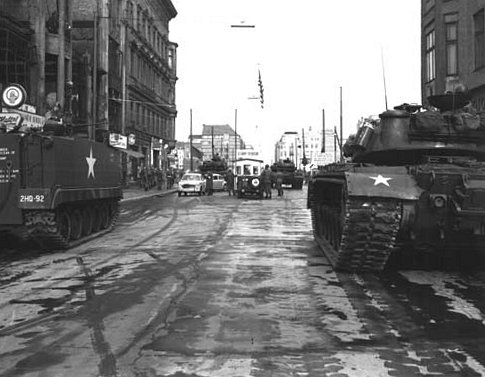
Checkpoint Charlie
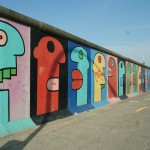
East Side Gallery
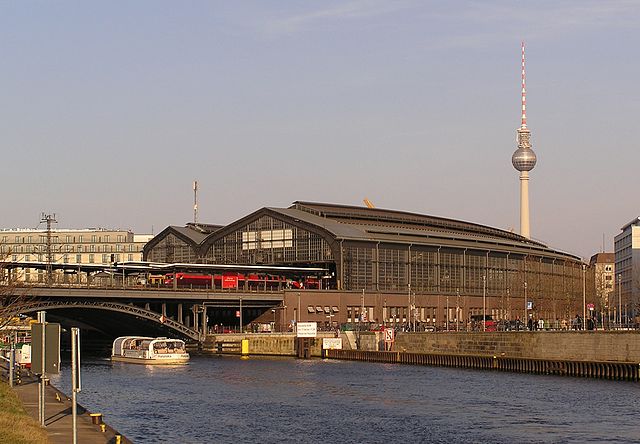
Bahnhof Friedrichstraße
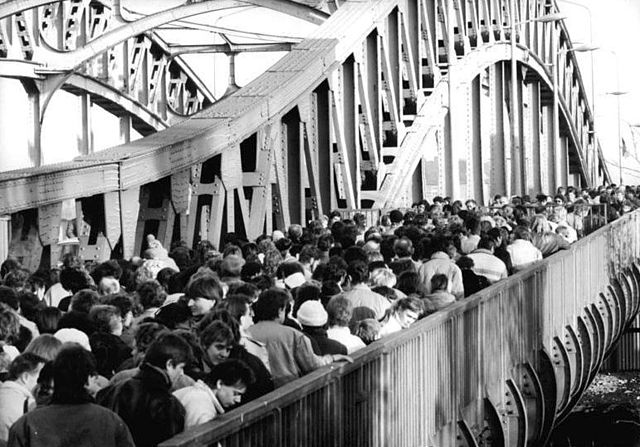
Bornholmer Straße
65 Years Ago: US and Soviet Tanks Faced Off at Checkpoint Charlie
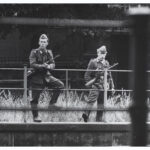
The Border Guards of the Berlin Wall: Conscripts, the Order to Shoot, and the Trials That Followed
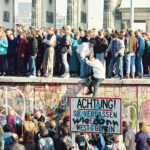
9 November in Berlin: 37 Years Since the Wall Fell, and What’s On
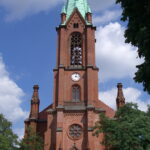
Gethsemanekirche
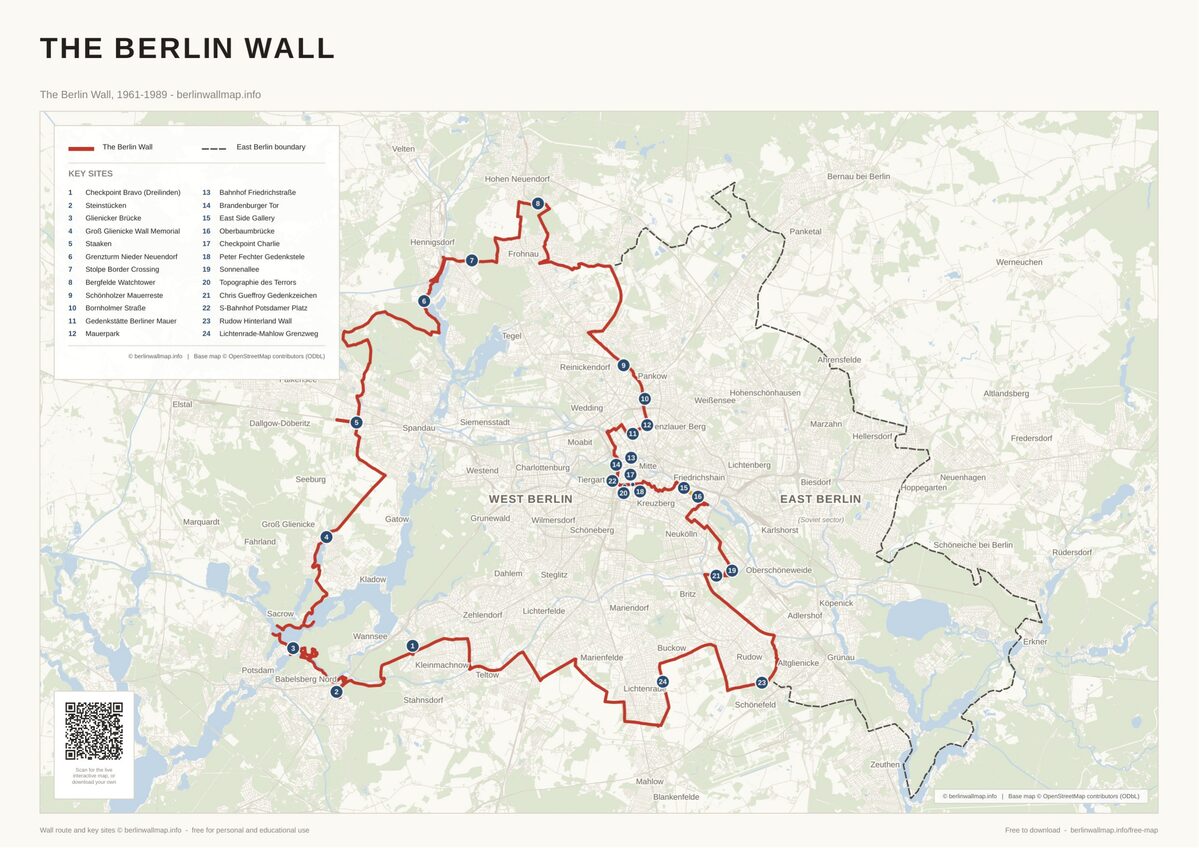
Free map downloads
Free printable PDF maps of the Berlin Wall.
Get the free maps →Explore the Timeline
Journey through Berlin Wall history from 1945 to 1990.
View Timeline →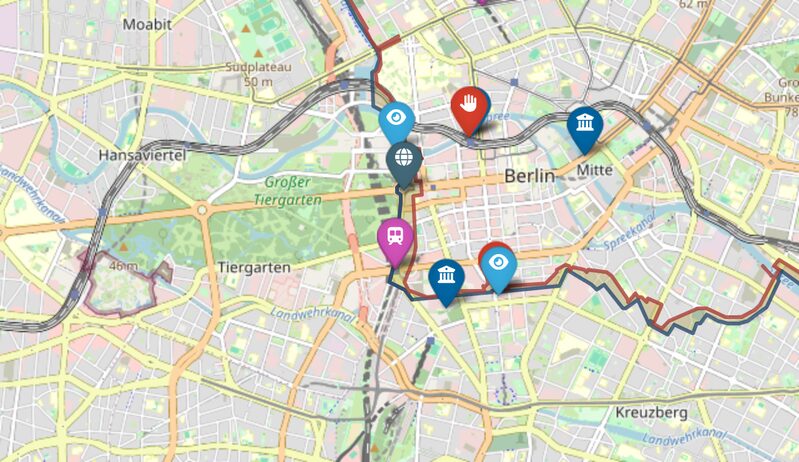
Embed Our Map
Add a free interactive Berlin Wall map to your website or blog.
Get embed code →