What was the Death Strip?
The Death Strip (Todesstreifen) was the heavily fortified no-man’s-land between the two parallel walls that made up the Berlin Wall – the outer wall facing West Berlin and the inner wall on the East Berlin side.
The strip varied in width from just a few metres in dense urban areas to over 150 metres in outlying sections. Far from being simply an empty space, it was engineered as a killing zone designed to make escape virtually impossible.
Its fortifications evolved over the Wall’s 28-year existence, but by the 1980s, the Death Strip typically included:
- A patrol road for military vehicles, running the full length of the border
- Raked sand strips (Kontrollstreifen) that revealed footprints – checked by guards on regular patrols
- Anti-vehicle trenches to prevent anyone crashing through with a car or truck
- Trip wires connected to signal flares and, in some sections, to automatic firing devices
- Guard dog runs – dogs on long leashes attached to overhead wires
- Floodlights that illuminated the strip at night, eliminating any cover of darkness
- 302 watchtowers manned by armed border guards with orders to shoot
The Death Strip was maintained with ruthless efficiency. Buildings, trees, and any structures that might provide cover were demolished. Along Bernauer Straße, entire apartment blocks were torn down to widen the strip.
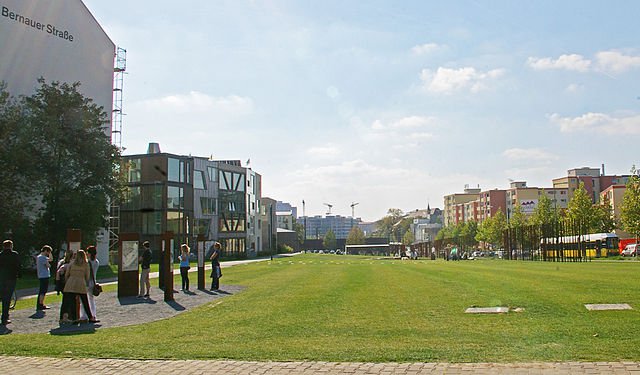
For a detailed look at the fortifications, see how the Berlin Wall was guarded and the four generations of the Wall.

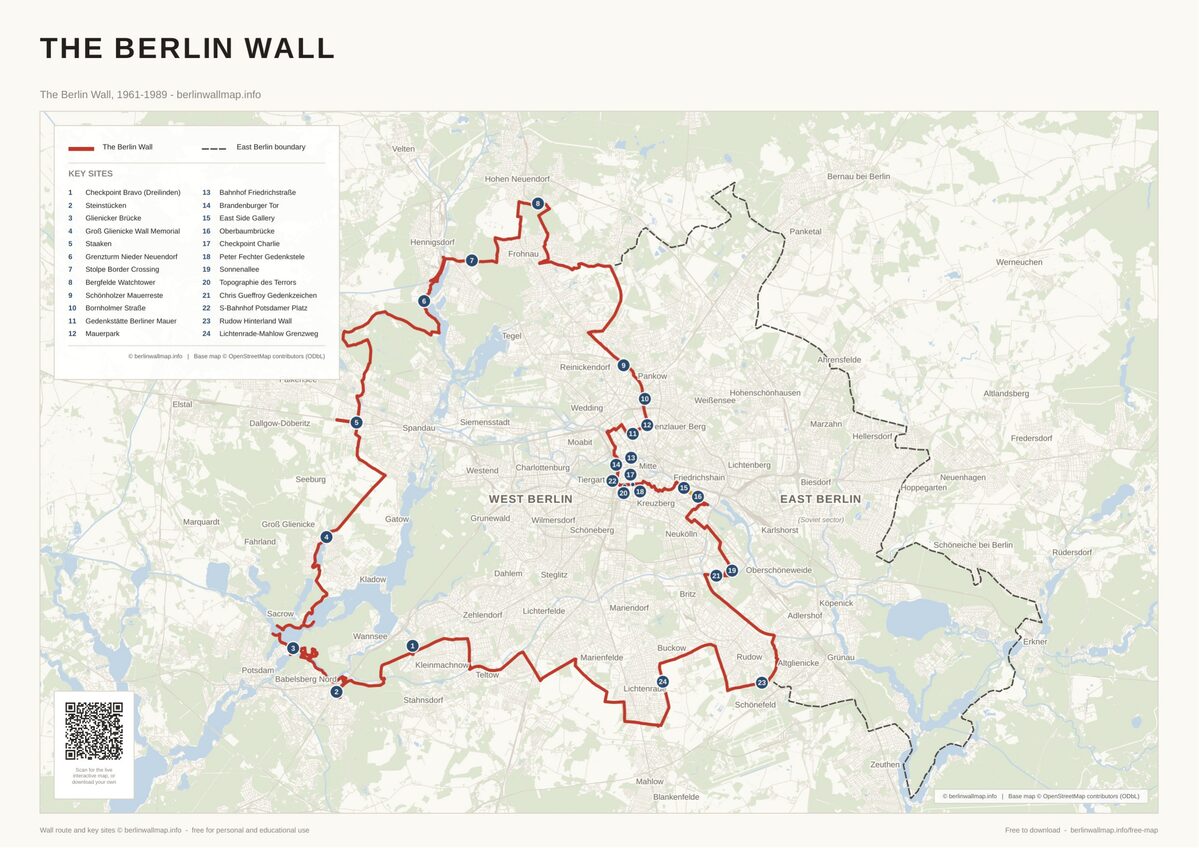
Free map downloads
Free printable PDF maps of the Berlin Wall.
Get the free maps →Explore the Timeline
Journey through Berlin Wall history from 1945 to 1990.
View Timeline →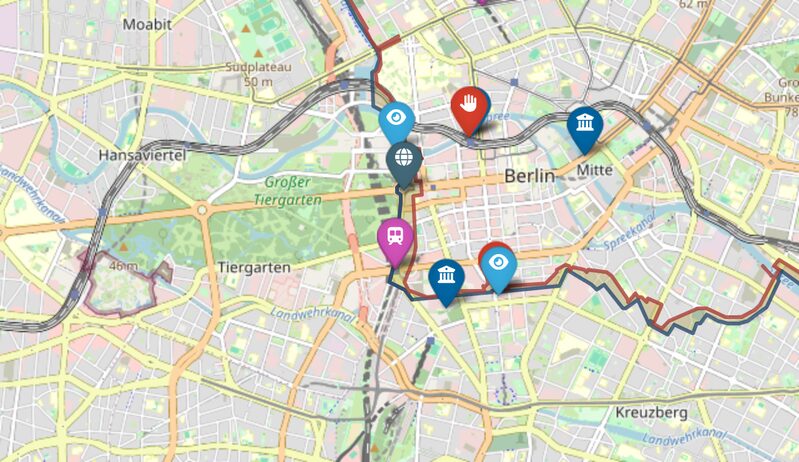
Embed Our Map
Add a free interactive Berlin Wall map to your website or blog.
Get embed code →