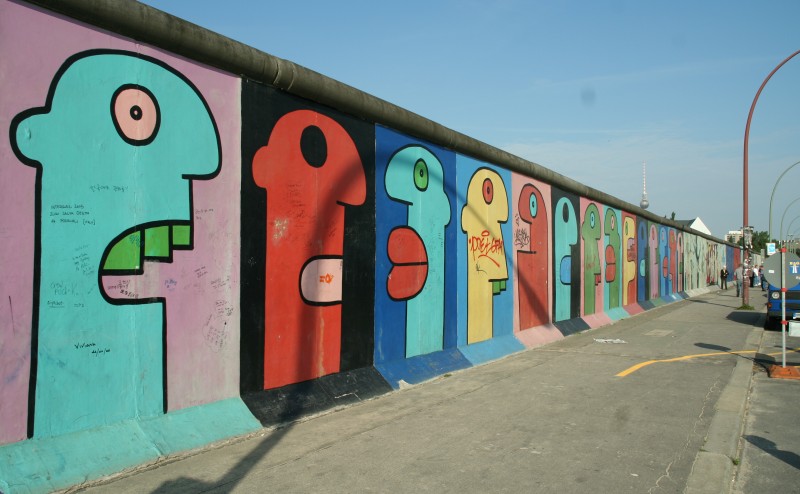
East Side Gallery
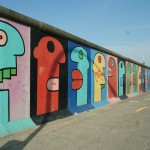
The longest surviving stretch of the Berlin Wall, this 1.3km open-air gallery along the Spree was painted by 118 artists from 21 countries in 1990. Iconic murals include Dmitri Vrubel’s “My God, Help Me to Survive This Deadly Love” depicting the Brezhnev-Honecker kiss, and Birgit Kinder’s Trabant breaking through the wall. Restored in 2009, it is Berlin’s most visited wall site.
Just months after the wall fell, a group of international artists were invited to paint the eastern face of this surviving stretch, transforming a symbol of oppression into the world’s largest open-air gallery. The murals range from political commentary to abstract art, but two have become global icons: Dmitri Vrubel’s “My God, Help Me to Survive This Deadly Love,” depicting the socialist fraternal kiss between Leonid Brezhnev and Erich Honecker, and Birgit Kinder’s “Test the Best,” showing a Trabant car bursting through the concrete.
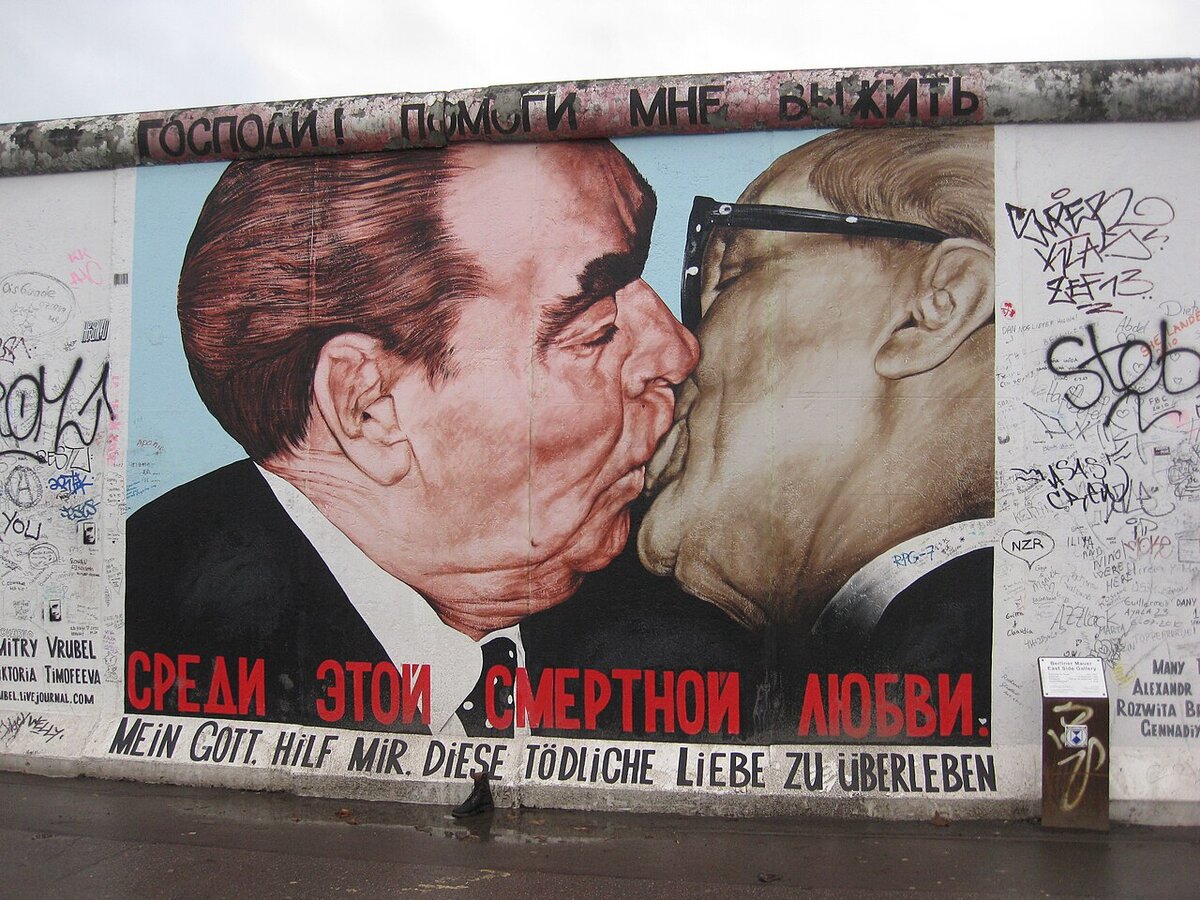
Dmitri Vrubel’s “My God, Help Me to Survive This Deadly Love” – the Brezhnev-Honecker kiss (Photo: Pelorucho)

The gallery fell into disrepair over the years and was controversially restored in 2009, with many original artists returning to repaint their works. The project sparked heated debate – some artists refused to participate, arguing that repainting destroyed the authenticity of the originals. Sections of the gallery were also temporarily removed in 2013 to make way for a luxury apartment development, prompting large-scale protests.
Today the East Side Gallery is Berlin’s most visited wall site, drawing millions of visitors each year. It runs along Mühlenstraße on the bank of the River Spree, between Ostbahnhof and the Oberbaumbrücke. The gallery is protected as a heritage monument, and ongoing restoration efforts aim to preserve the murals against weathering and vandalism.
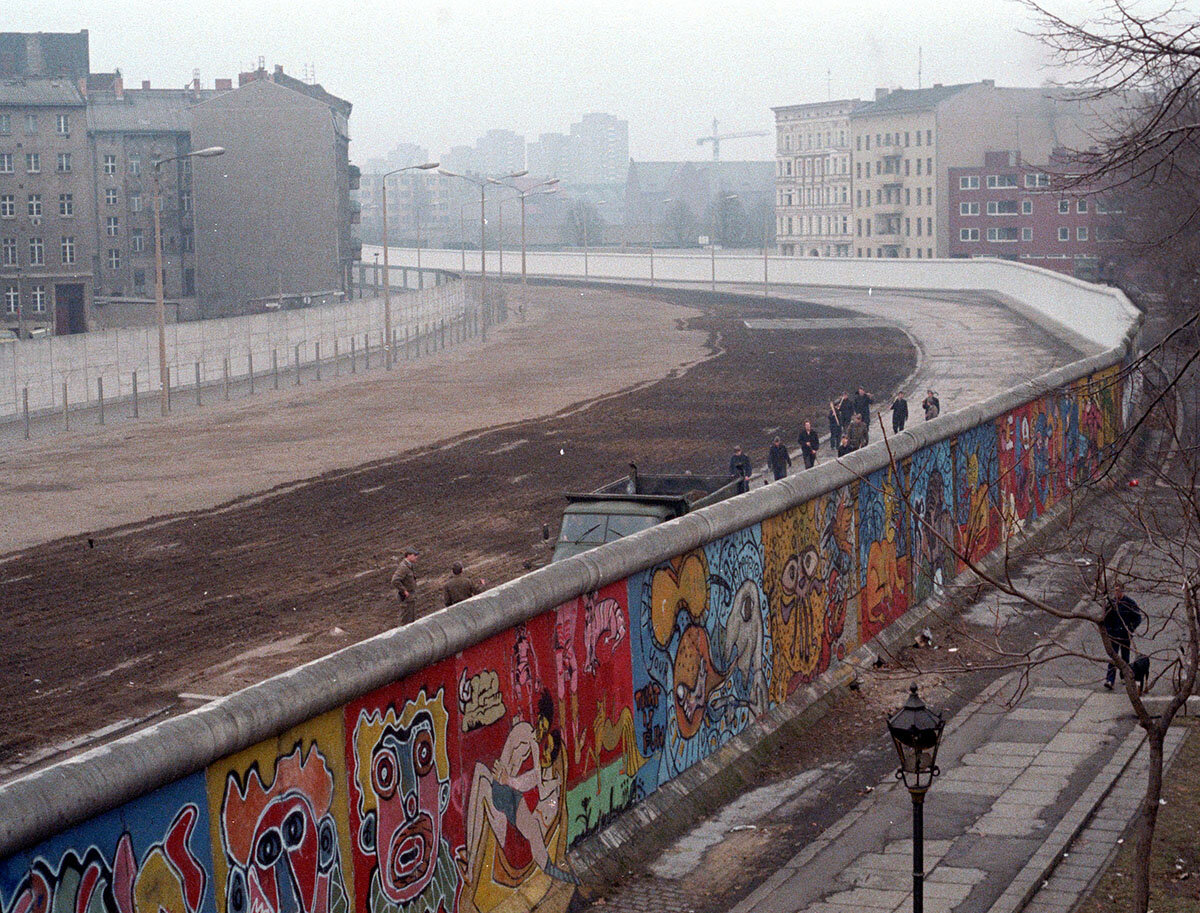
Birgit Kinder’s Trabant breaking through the wall (Photo: PhotographyEdits)

Gallery


Nearby Berlin Wall Sites
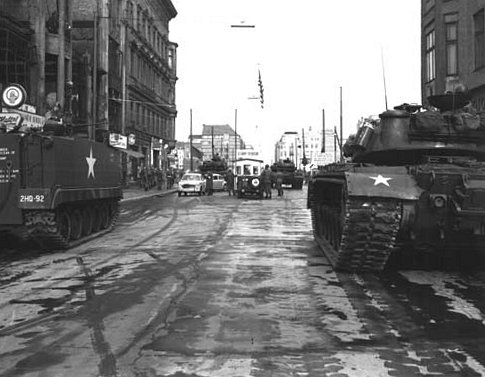
Checkpoint Charlie
East Side Gallery
Bahnhof Friedrichstraße
History of the Berlin Wall: A Complete Guide (1961-1989)
65 Years Ago: US and Soviet Tanks Faced Off at Checkpoint Charlie
The Border Guards of the Berlin Wall: Conscripts, the Order to Shoot, and the Trials That Followed
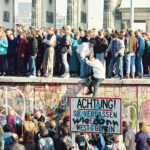
9 November in Berlin: 37 Years Since the Wall Fell, and What’s On
Gethsemanekirche
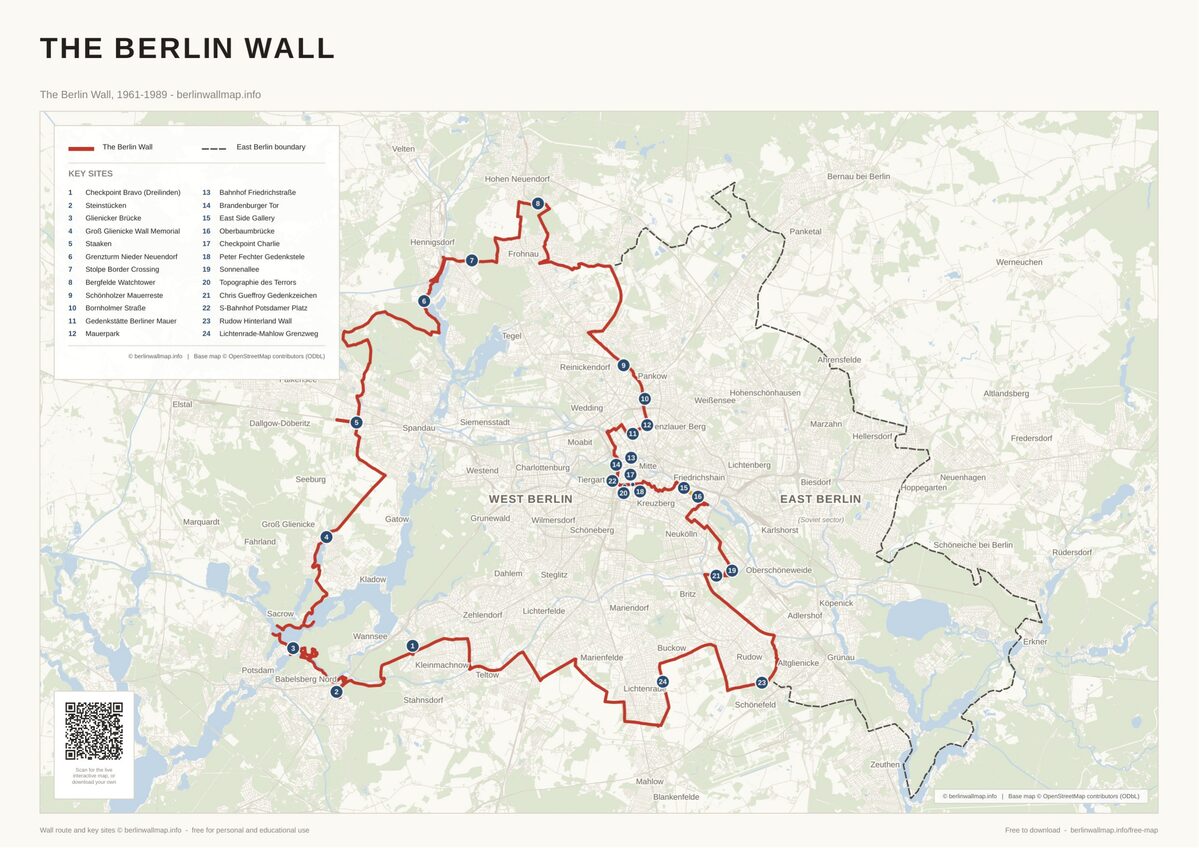
Free map downloads
Free printable PDF maps of the Berlin Wall.
Get the free maps →Explore the Timeline
Journey through Berlin Wall history from 1945 to 1990.
View Timeline →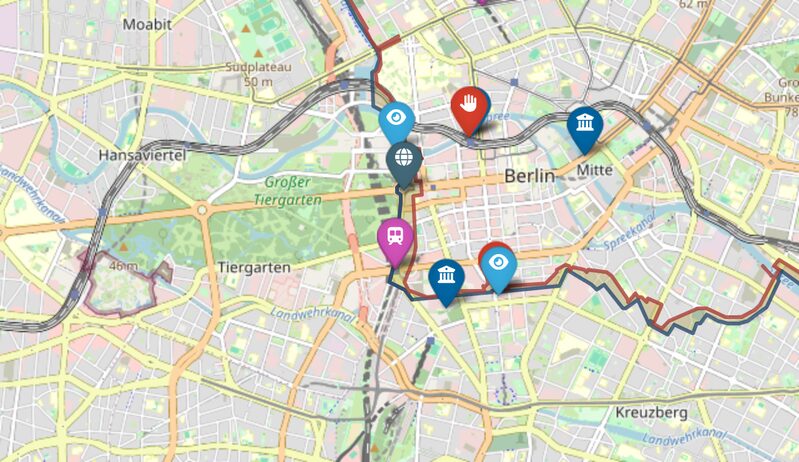
Embed Our Map
Add a free interactive Berlin Wall map to your website or blog.
Get embed code →