Bethke Brothers Escape
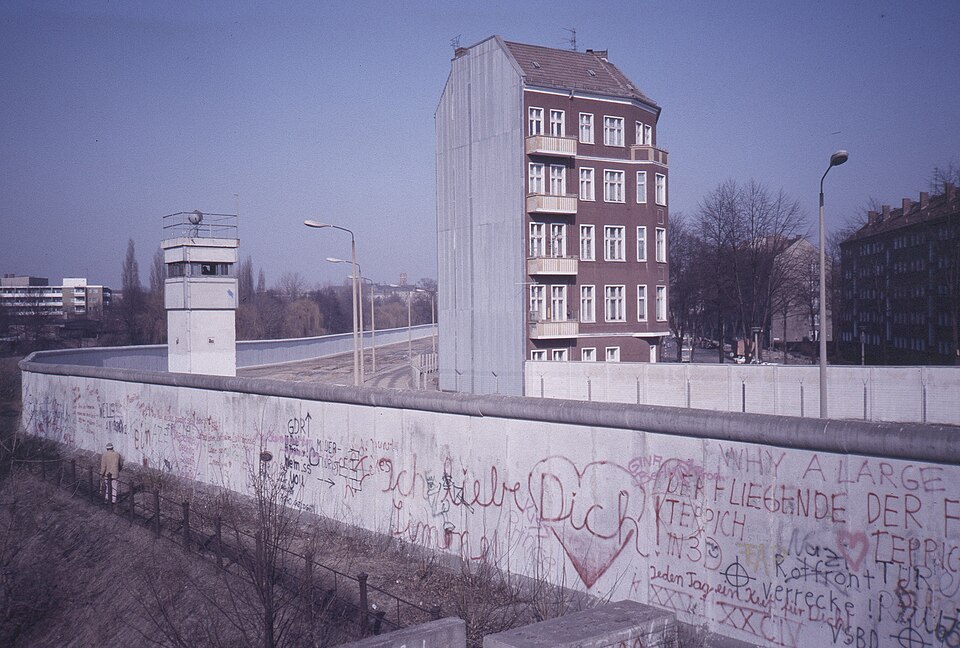
Site of two of the most daring escapes in Berlin Wall history. In 1983, Holger Bethke fired an arrow trailing a nylon line over the Wall near Treptow Park, pulled a steel cable across, and zipped over the death strip on a homemade wooden pulley. In 1989, his brothers flew two ultralight aircraft into Treptower Park at 4:15 AM to extract their youngest brother Egbert, then flew out past the Reichstag to West Berlin.
The Bethke brothers – Ingo, Holger, and Egbert – escaped from East Germany on three separate occasions using three increasingly audacious methods, making them one of the most celebrated escape stories of the Cold War.
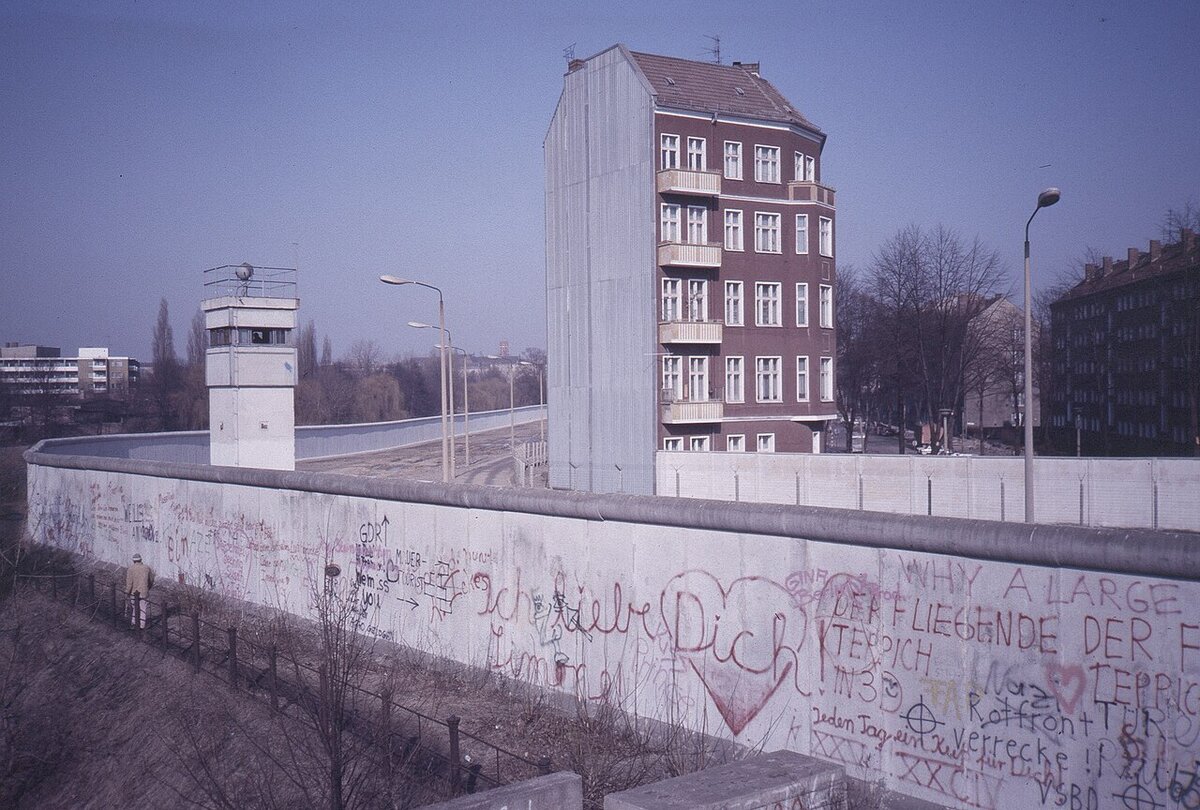
The Berlin Wall along Lohmühlenstraße in Treptow, 1987 (Photo: Roehrensee)

The eldest brother, Ingo, made his escape first. On 22 May 1975, having studied the border defences as a conscript, he slipped through a gap in the fence, navigated a minefield, and swam across the River Elbe on an inflatable air mattress to reach Lower Saxony.
Eight years later, on 31 March 1983, Holger Bethke identified a spot near Treptow Park where the death strip was narrow with tall buildings on either side. He climbed to a rooftop, fired an arrow trailing a nylon line across the Wall, and his brother Ingo – already safe in the West – tied it to a steel cable. Holger pulled the cable taut, anchored it to a chimney, and used a homemade wooden pulley to zip-line over the Wall and sleeping border guards to freedom.
The most dramatic escape came on 26 May 1989 – just months before the Wall fell. Ingo and Holger sold their pub in Cologne to buy two Ikarus C22 ultralight aircraft. At 4:15 AM, they flew the tiny planes across the border and landed in Treptower Park, where their youngest brother Egbert was hiding in the bushes. He dashed to the waiting aircraft, and all three flew back over the Wall, landing in front of the Reichstag in West Berlin. The entire operation took less than ten minutes.
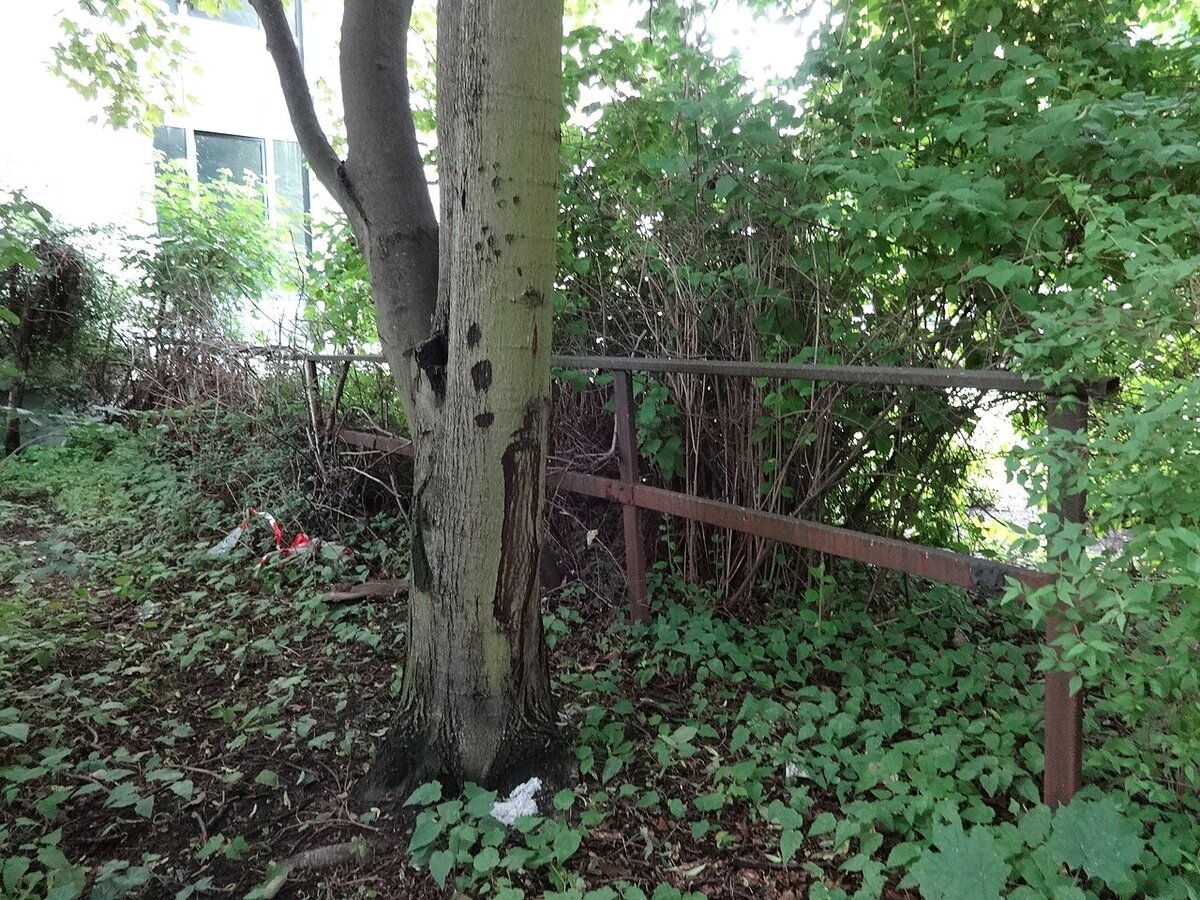
Former border zone markings on Lohmühlenstraße 35, Alt-Treptow – near where the Bethke brothers crossed the Wall (Photo: Assenmacher)

Gallery


Affiliate link - we may earn a commission
Nearby Berlin Wall Sites
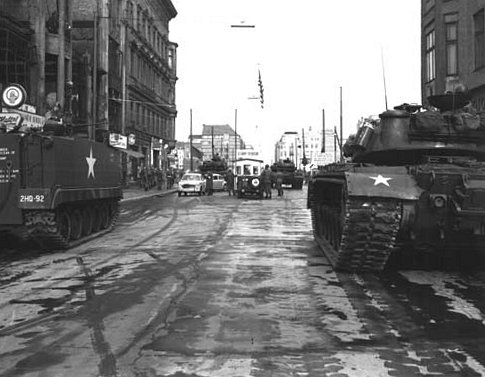
Checkpoint Charlie
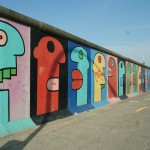
East Side Gallery
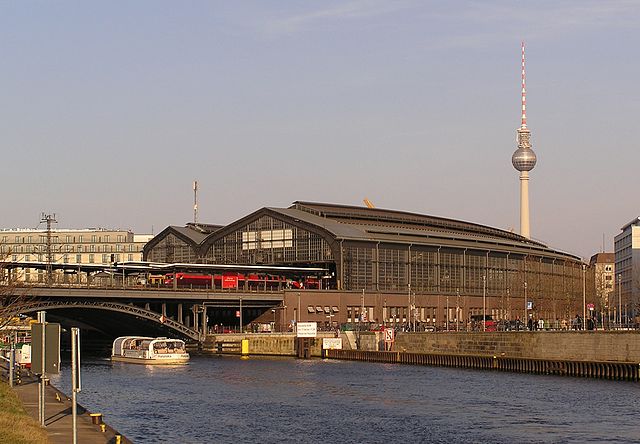
Bahnhof Friedrichstraße
History of the Berlin Wall: A Complete Guide (1961-1989)
65 Years Ago: US and Soviet Tanks Faced Off at Checkpoint Charlie
The Border Guards of the Berlin Wall: Conscripts, the Order to Shoot, and the Trials That Followed
9 November in Berlin: 37 Years Since the Wall Fell, and What’s On
Gethsemanekirche
Affiliate link - we may earn a commission
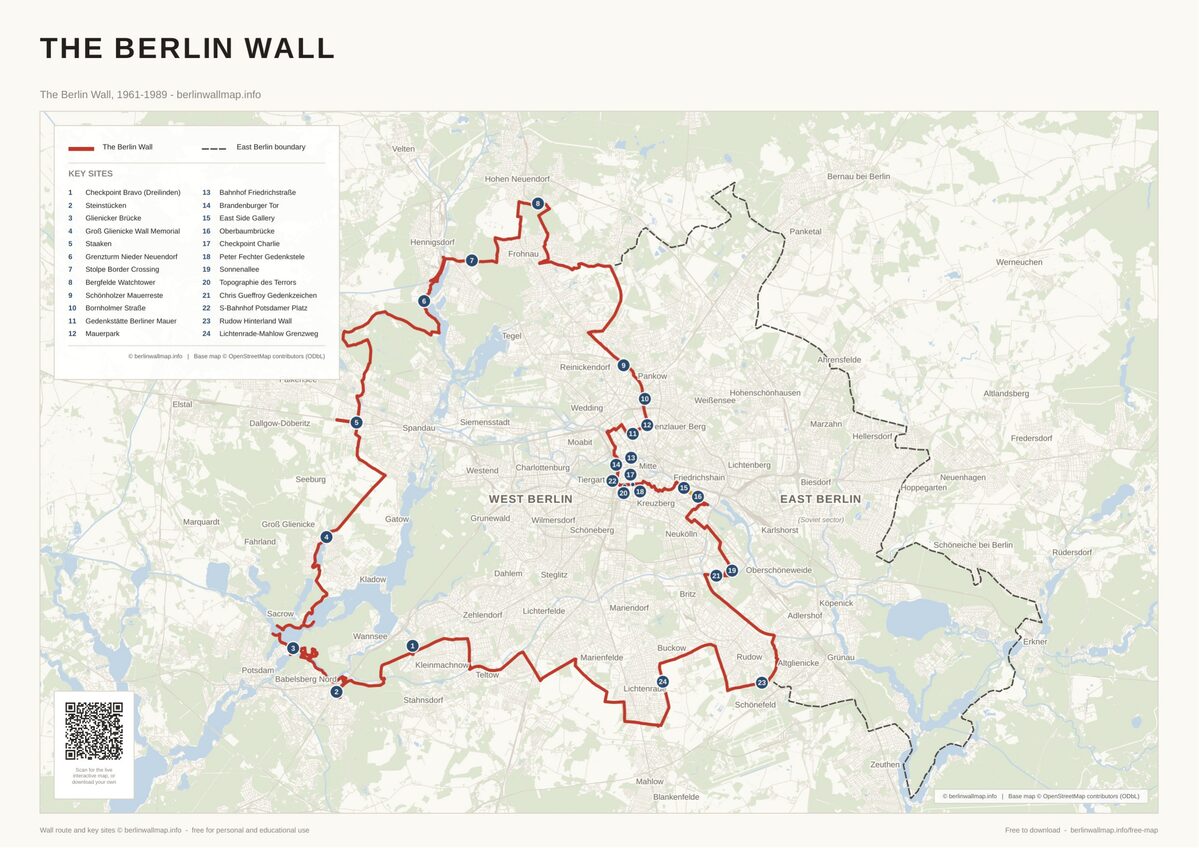
Free map downloads
Free printable PDF maps of the Berlin Wall.
Get the free maps →Explore the Timeline
Journey through Berlin Wall history from 1945 to 1990.
View Timeline →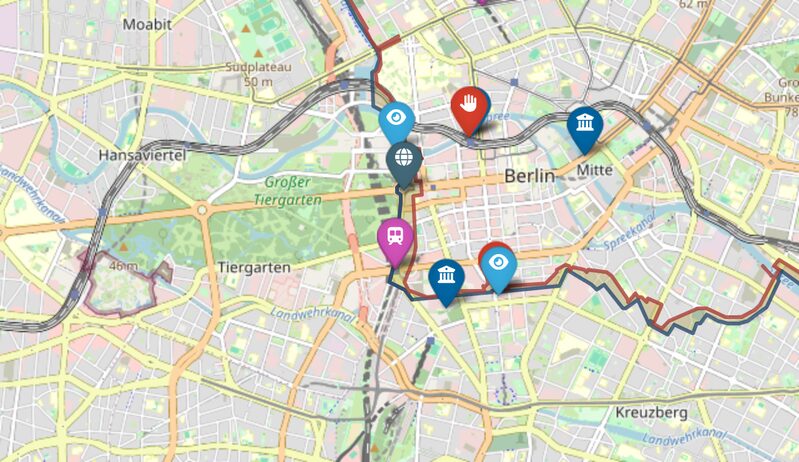
Embed Our Map
Add a free interactive Berlin Wall map to your website or blog.
Get embed code →