Division of Berlin
1945 – 1961
End of World War II in Europe
Germany surrenders unconditionally. Berlin lies in ruins after years of Allied bombing and the final Soviet assault. The city will soon be divided among the victorious powers.
Potsdam Conference divides Berlin
The Allied leaders meet at Cecilienhof Palace near Berlin and formally agree to divide Germany and Berlin into four occupation zones: American, British, French, and Soviet. The result is a pocket of Allied-controlled territory deep within Soviet-controlled East Germany.
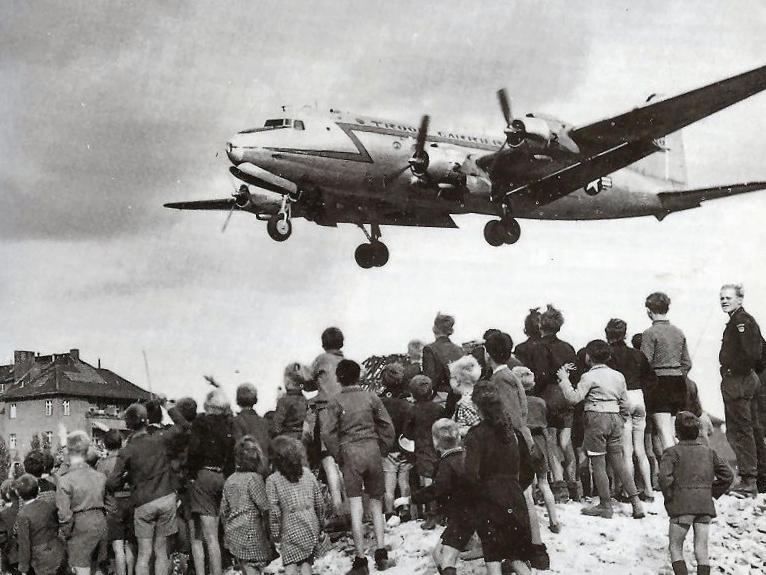
Berlin Blockade begins
The Soviet Union blocks all road, rail, and canal access to West Berlin, attempting to force the Western Allies out. In response, the Western Allies launch the Berlin Airlift, flying in food and supplies for 11 months.
Two Germanies established
The Federal Republic of Germany (West Germany) is founded in May, followed by the German Democratic Republic (East Germany) in October. Berlin remains divided but movement between sectors is still possible.
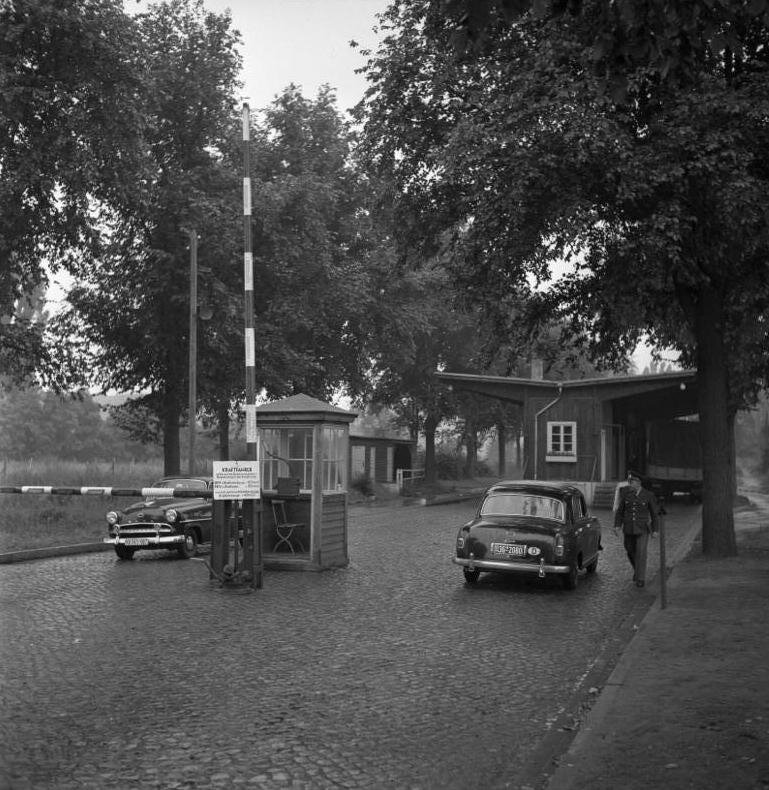
East Germany closes inner German border
East Germany seals the 1,393 km border between East and West Germany with fences and guards. But Berlin remains an open loophole — East Germans can still cross into West Berlin and fly to the West.
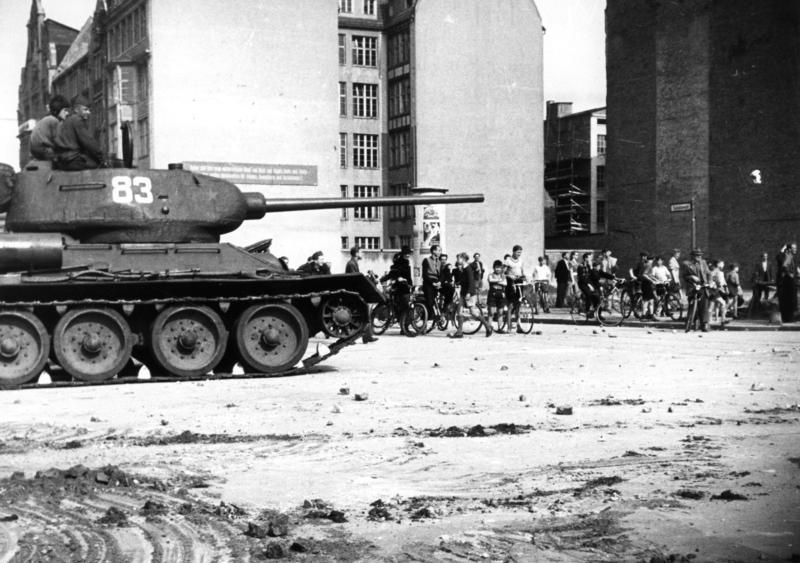
East German uprising crushed
Workers across East Germany rise up against the communist government. Soviet tanks crush the revolt. The failed uprising drives more East Germans to flee to the West through Berlin — by 1961, 3.5 million will have left.
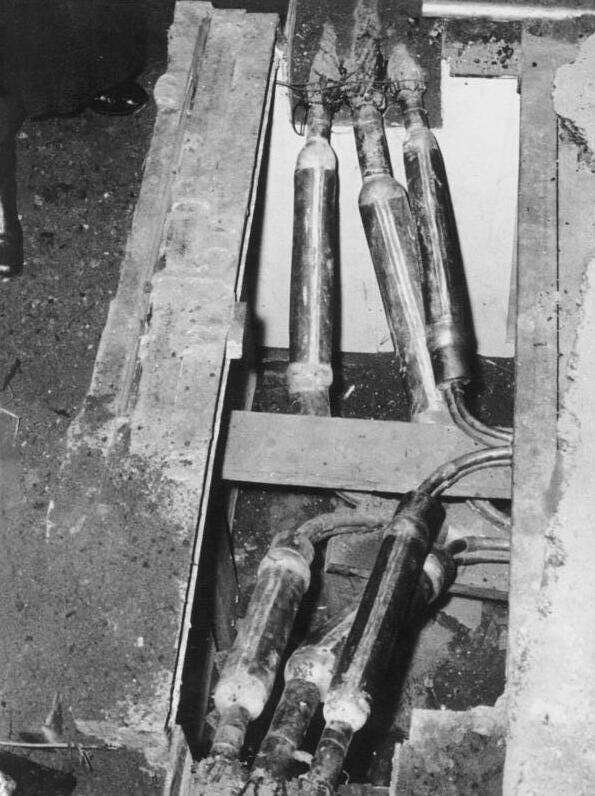
Soviet troops uncover the Berlin spy tunnel
Repair crews chasing rain damage on flooded cables dig onto the tap chamber of a 450-metre tunnel the CIA and MI6 had driven from Rudow into Altglienicke. Operation Gold had recorded Soviet army traffic for eleven months. George Blake had betrayed it to the KGB before digging began, and the Soviets let it run rather than expose him.
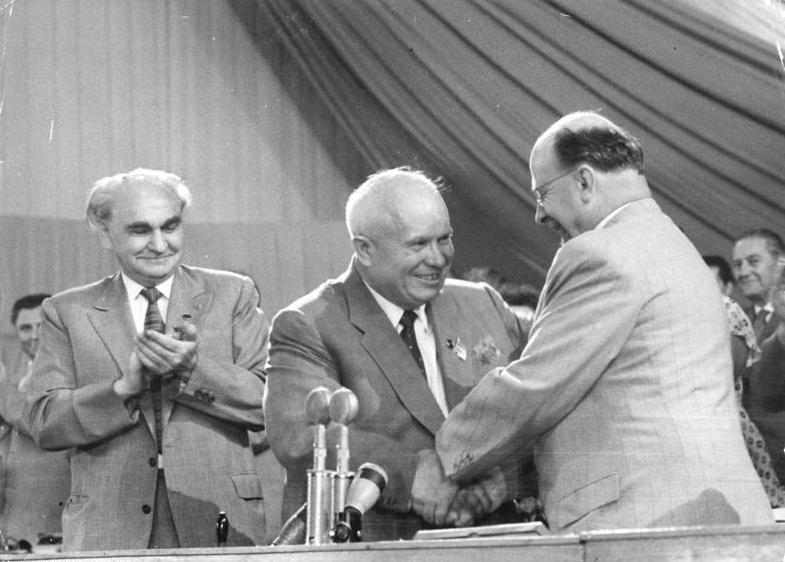
Khrushchev's Berlin Ultimatum
Soviet leader Nikita Khrushchev demands Western forces leave Berlin within six months, triggering a three-year crisis. The ultimatum fails, but the pressure on Berlin intensifies.
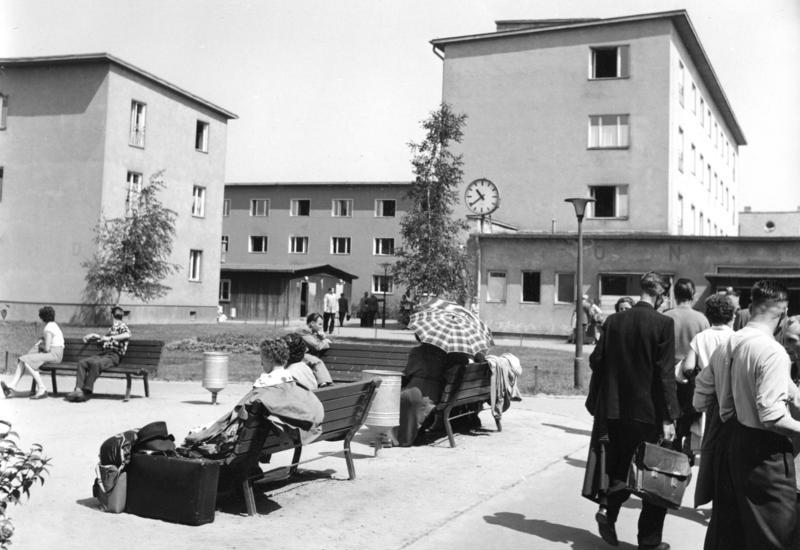
Mass exodus reaches crisis point
Over 1,000 East Germans flee to the West each day through Berlin. In July 1961 alone, 30,415 people cross over. The East German economy faces collapse as it hemorrhages its workforce.
The Berlin Wall
1961 – 1989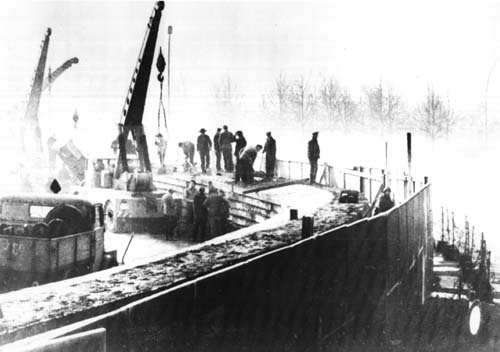
The Berlin Wall goes up overnight
In the early hours of August 13, East German soldiers and workers begin sealing the border with barbed wire and concrete posts. Operation Rose cuts Berlin in two. Families, friends, and neighbours are separated without warning. Within days, the barbed wire is replaced by concrete blocks.
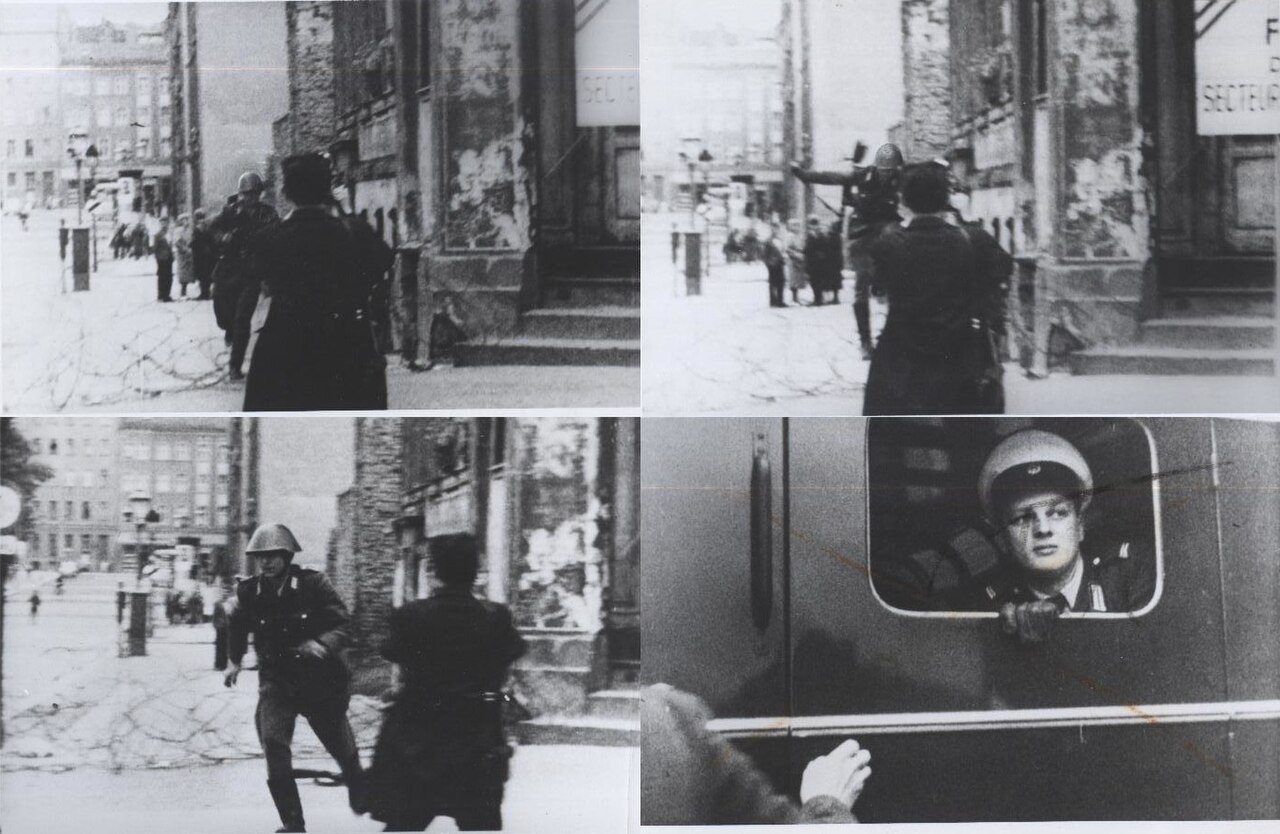
Conrad Schumann leaps to freedom
East German border guard Conrad Schumann, 19, jumps over the barbed wire at Bernauer Straße and runs to a waiting West Berlin police car. The photograph of his leap becomes one of the most iconic images of the Cold War.
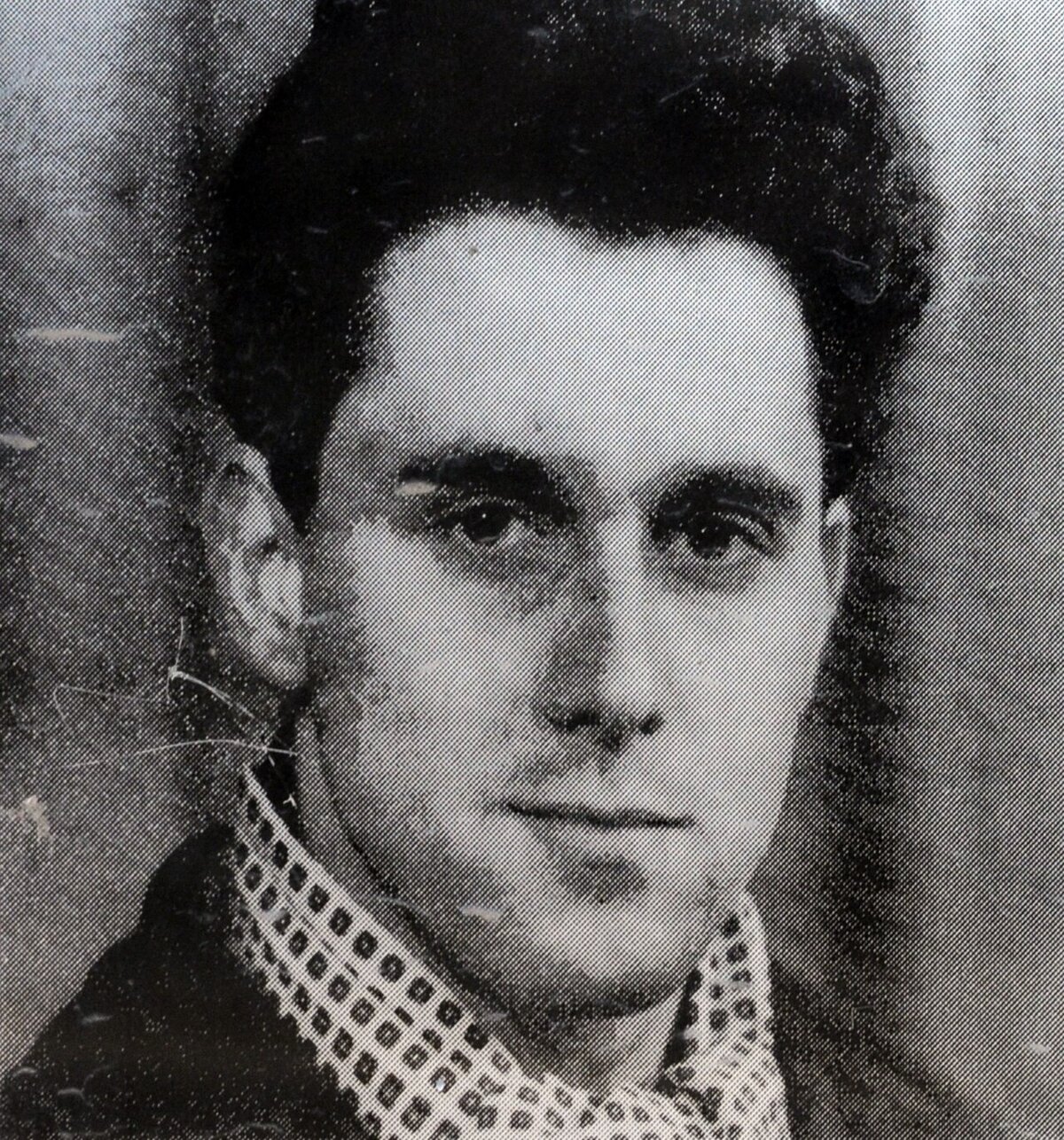
Günter Litfin — first person shot dead at the Wall
Günter Litfin, a 24-year-old tailor, is shot dead by transport police while trying to swim across the Spandau Ship Canal near Humboldt Harbour. He becomes the first person killed trying to cross the Berlin Wall.

US and Soviet tanks face off at Checkpoint Charlie
American and Soviet tanks stand just 100 metres apart at Checkpoint Charlie for 16 tense hours — the closest the Cold War comes to armed conflict in Berlin. The standoff ends when both sides quietly withdraw.
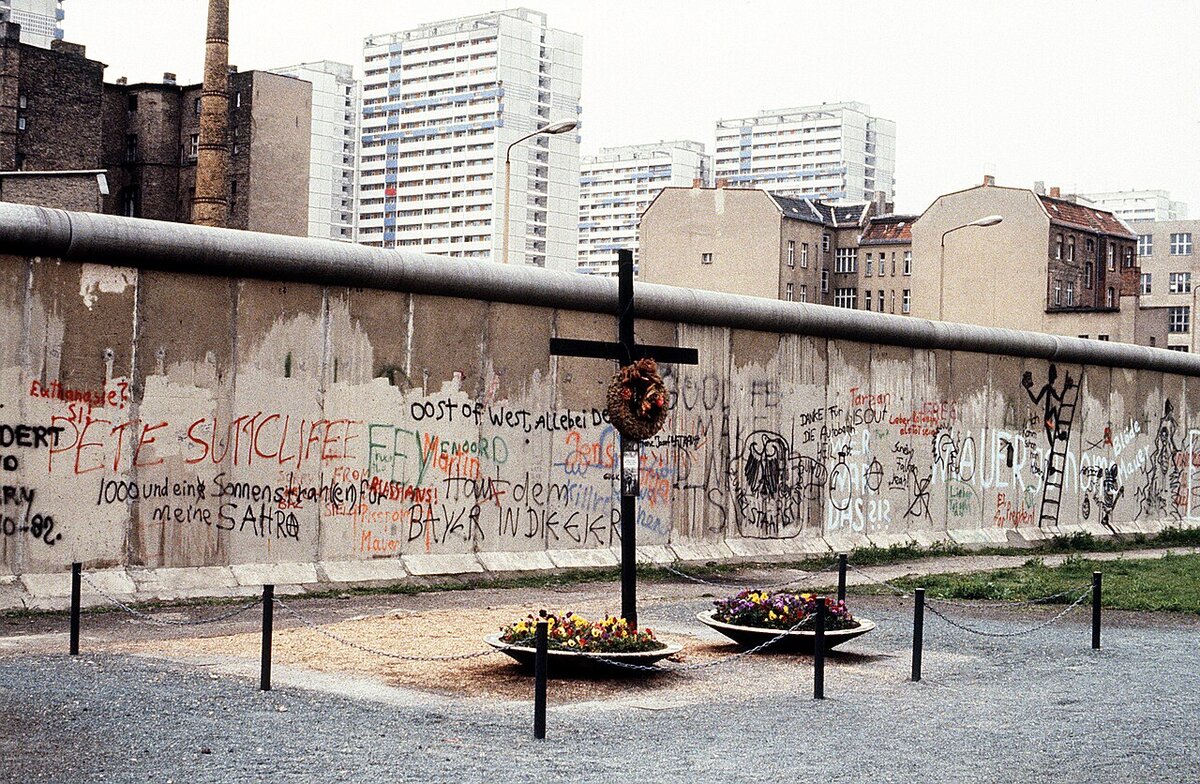
Peter Fechter bleeds to death at the Wall
18-year-old Peter Fechter is shot trying to escape near Checkpoint Charlie and falls back into the death strip on the Eastern side. As Western crowds watch in horror, he bleeds to death over the course of an hour while East German guards do nothing. His death causes international outrage.
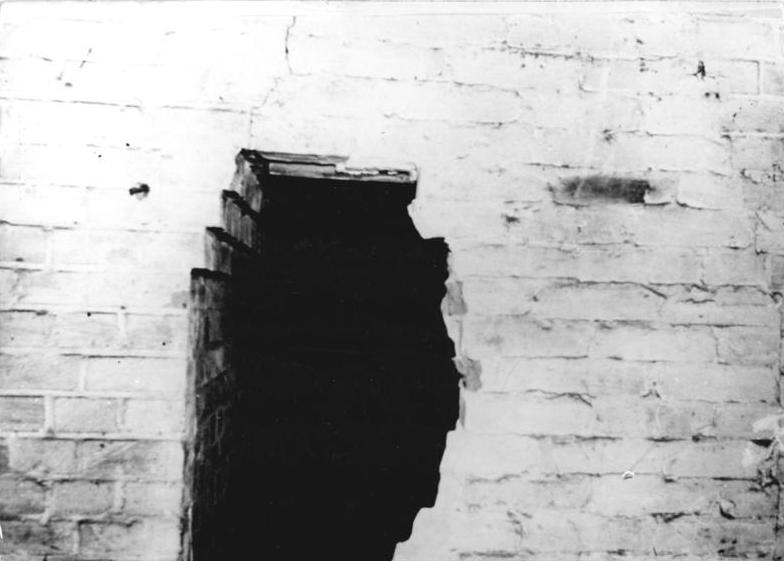
First escape tunnel discovered
A group of East Berliners dig a tunnel from a bakery cellar on Schönholzer Straße to Wollankstraße S-Bahn station in the French sector. At least 33 people escape through the tunnel before it is discovered.
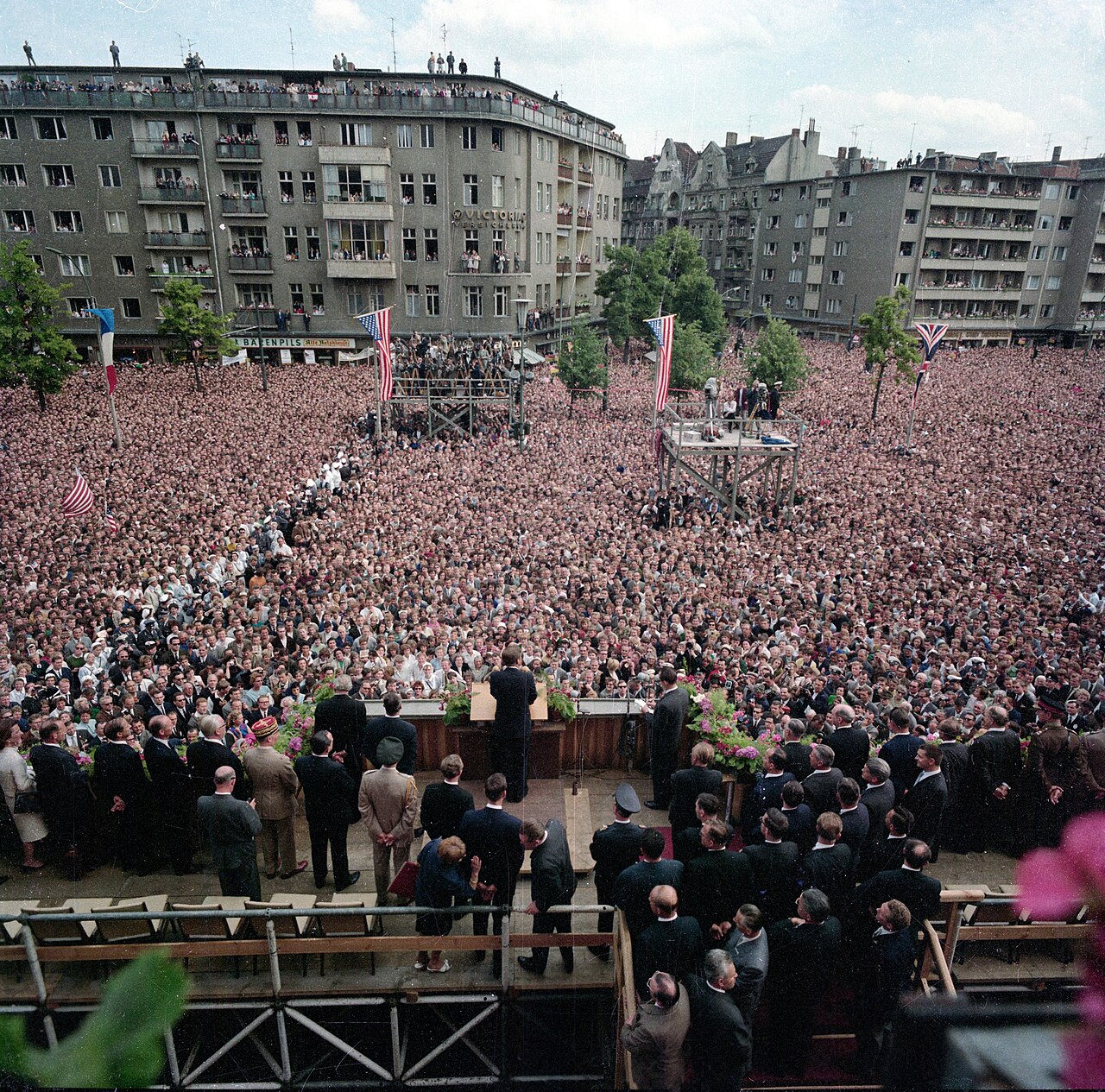
JFK: "Ich bin ein Berliner"
US President John F. Kennedy visits West Berlin and delivers his famous speech at the Schöneberg Rathaus to a crowd of over 120,000. "All free men, wherever they may live, are citizens of Berlin, and therefore, as a free man, I take pride in the words: Ich bin ein Berliner."
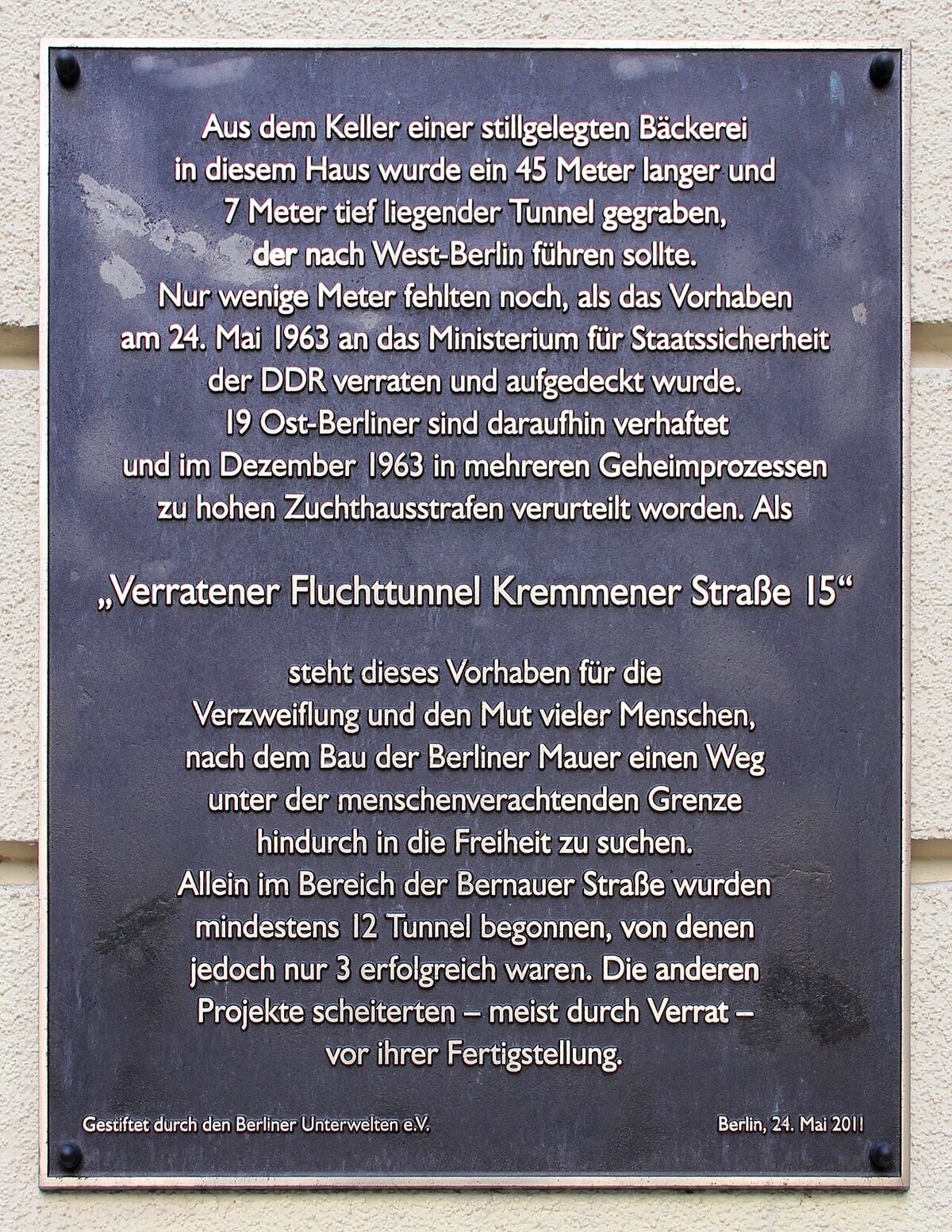
Tunnel 29 — 29 people escape
A group of West Berlin students dig a 135-metre tunnel from Bernauer Straße to the East. Over two nights, 29 people crawl through the narrow passage to freedom. NBC films the operation, broadcasting it to millions.
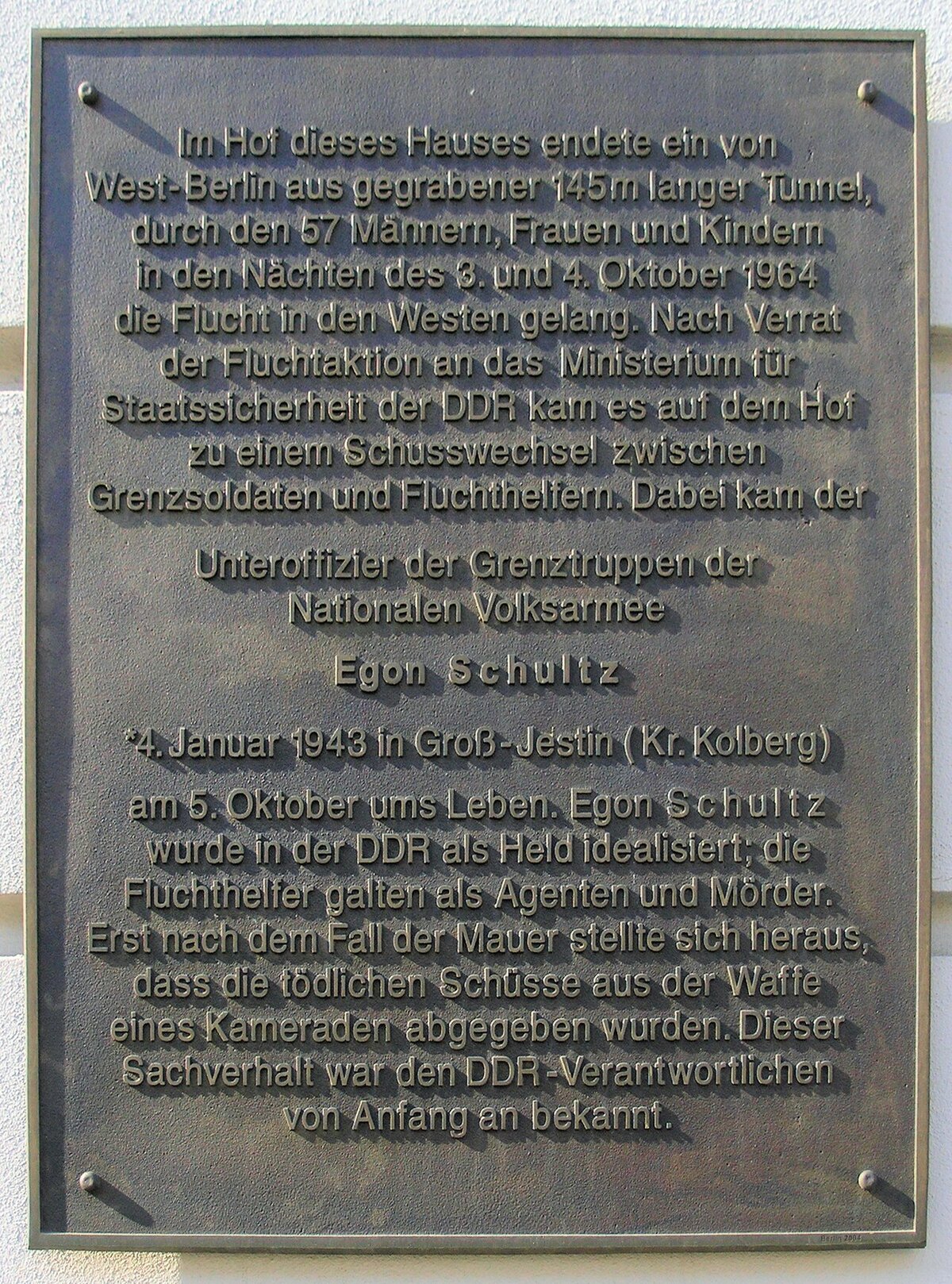
Tunnel 57 — largest tunnel escape
57 people escape through a 145-metre tunnel dug under Bernauer Straße — the largest single escape through a tunnel during the Wall's existence. During the operation, East German border guard Egon Schultz is fatally shot.
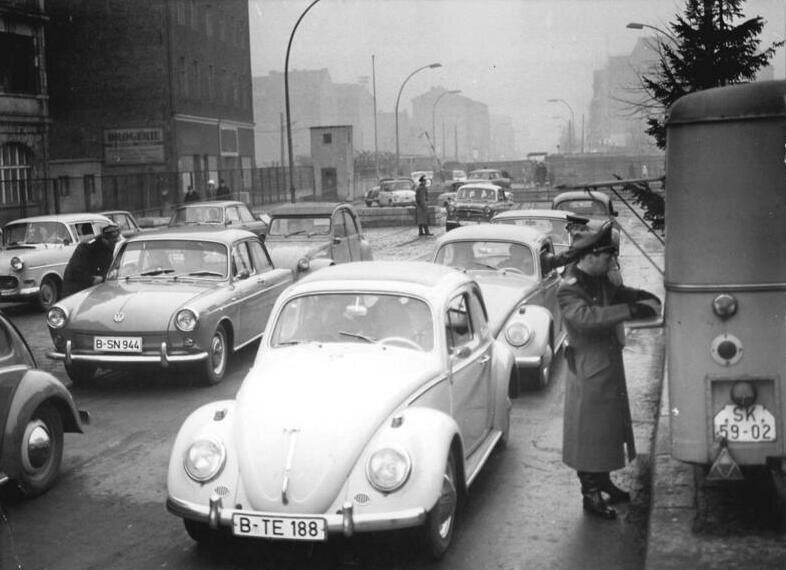
First Passierscheinabkommen
West Berliners are allowed to visit relatives in East Berlin for the first time since the Wall went up, during a brief Christmas pass agreement. Over 700,000 West Berliners cross in just 18 days.
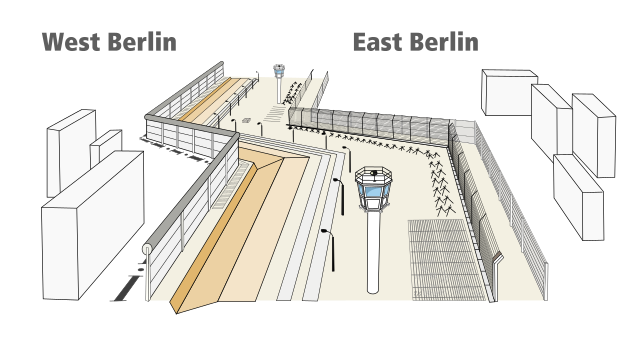 © Berlin Wall Map
Fourth-generation Wall completed
The Wall is rebuilt as 'Grenzmauer 75' — 3.6-metre-tall reinforced concrete segments topped with a smooth pipe to prevent grip. The death strip behind it is expanded with anti-vehicle trenches, signal fences, guard dogs, and over 300 watchtowers.
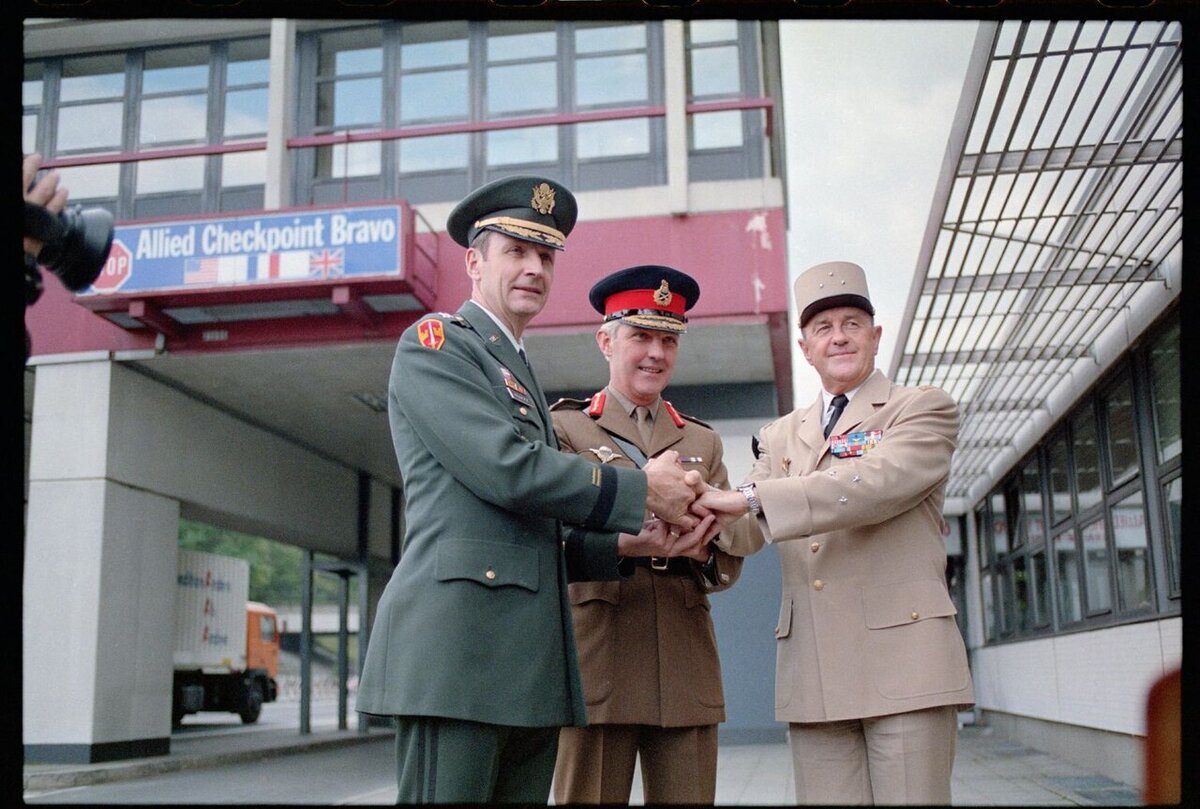
Four Power Agreement on Berlin
The US, UK, France, and the Soviet Union sign an agreement improving transit access between West Germany and West Berlin, and allowing West Berliners to visit East Berlin more easily. Tensions ease as detente begins.
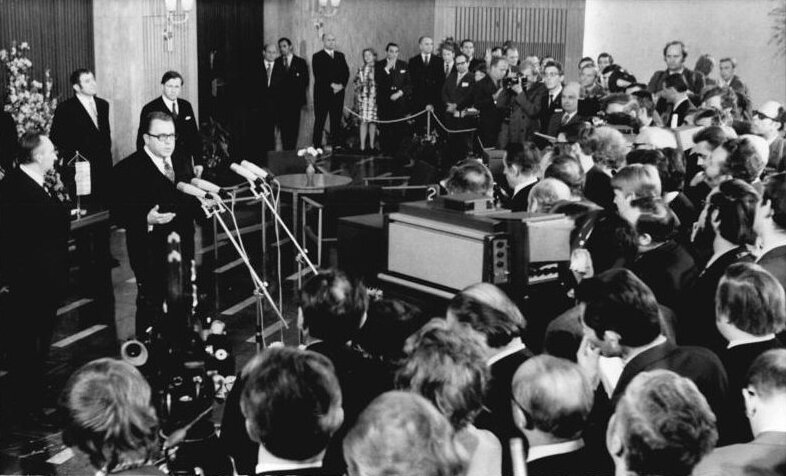
Basic Treaty between East and West Germany
East and West Germany sign the Grundlagenvertrag, recognising each other's existence and agreeing to develop normal relations. Both states join the United Nations in 1973.
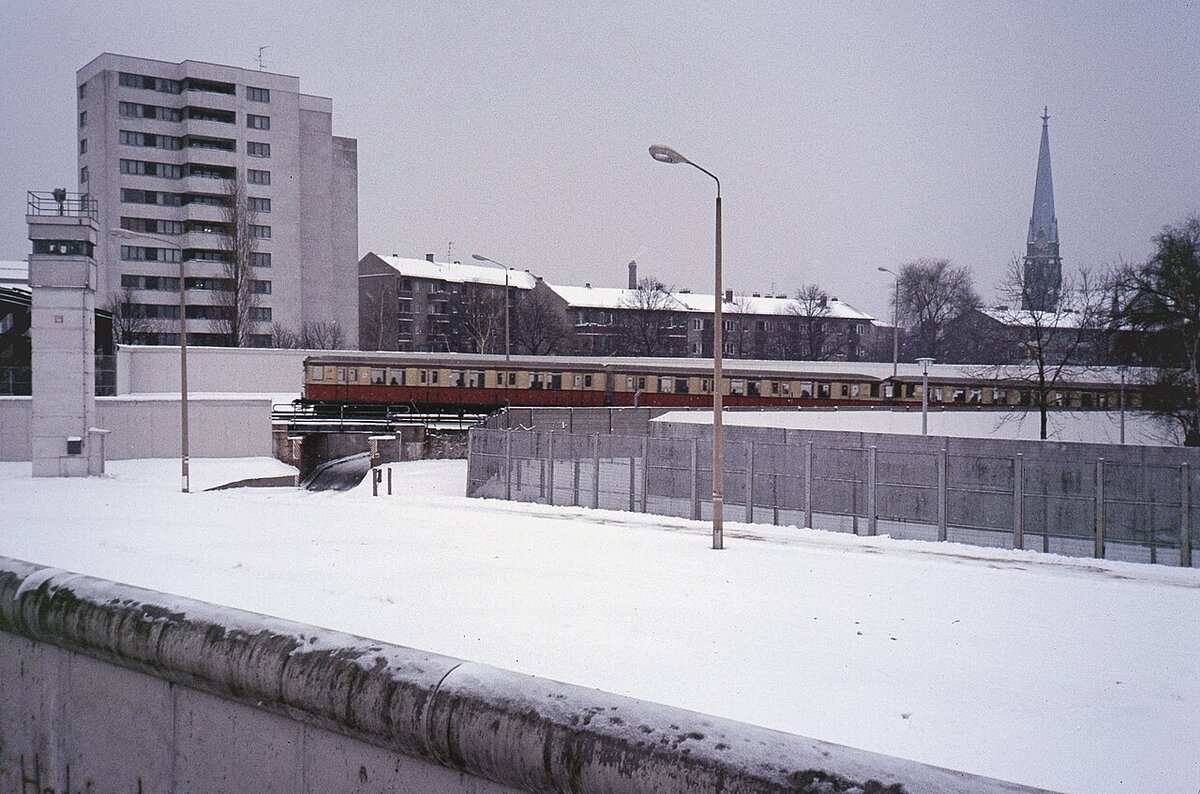
Ghost stations of the Berlin Wall
When the Wall goes up, West Berlin U-Bahn and S-Bahn lines that pass through East Berlin are sealed off. Trains pass through 15 stations without stopping — the platforms dark, patrolled by armed guards. Passengers can only glimpse the ghostly platforms as they speed through.
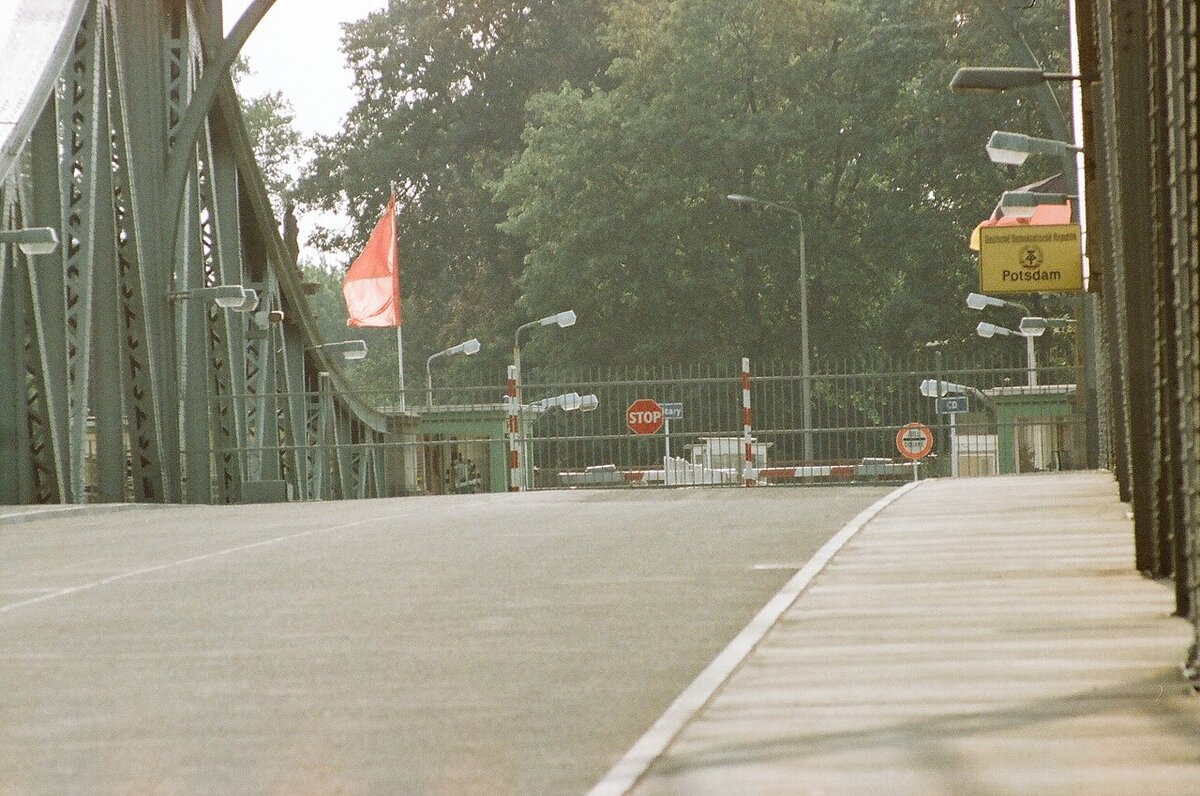
First spy exchange at Glienicke Bridge
American U-2 pilot Francis Gary Powers is exchanged for Soviet spy Rudolf Abel on Glienicker Brücke — the 'Bridge of Spies' between West Berlin and Potsdam. The bridge will be used for three major spy swaps during the Cold War.
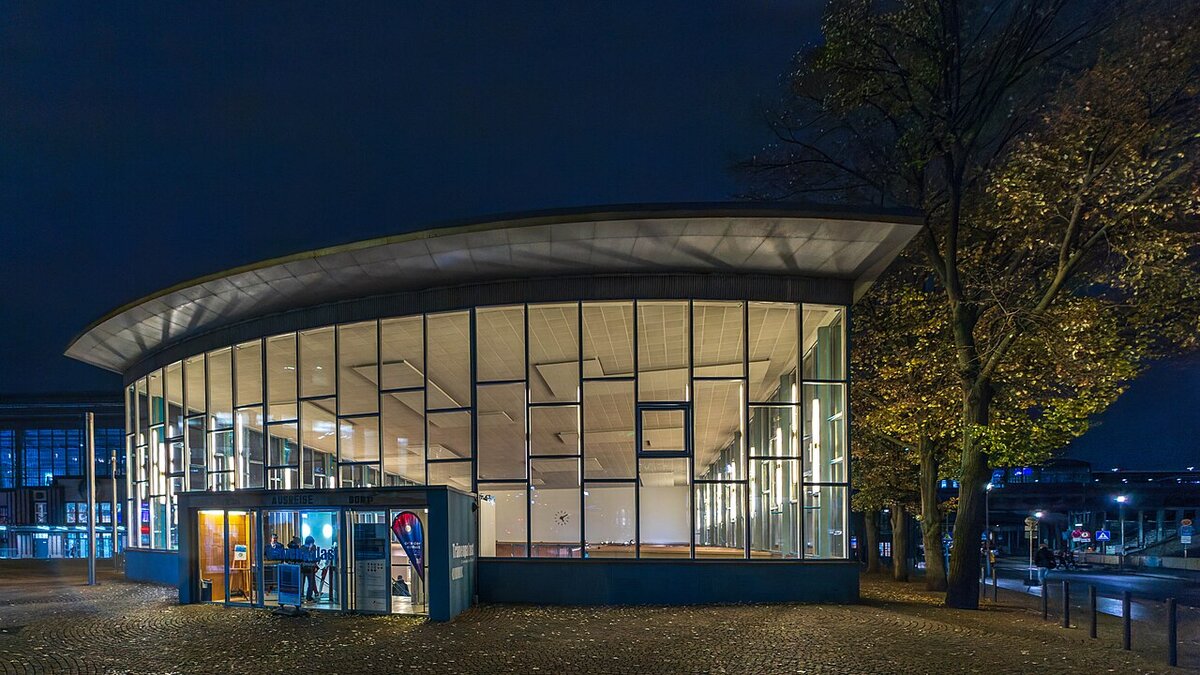
The Palace of Tears opens
The Tränenpalast (Palace of Tears) opens at Bahnhof Friedrichstraße as a departure hall for Westerners leaving East Berlin. The name comes from the tearful farewells between separated families as visitors return to the West.
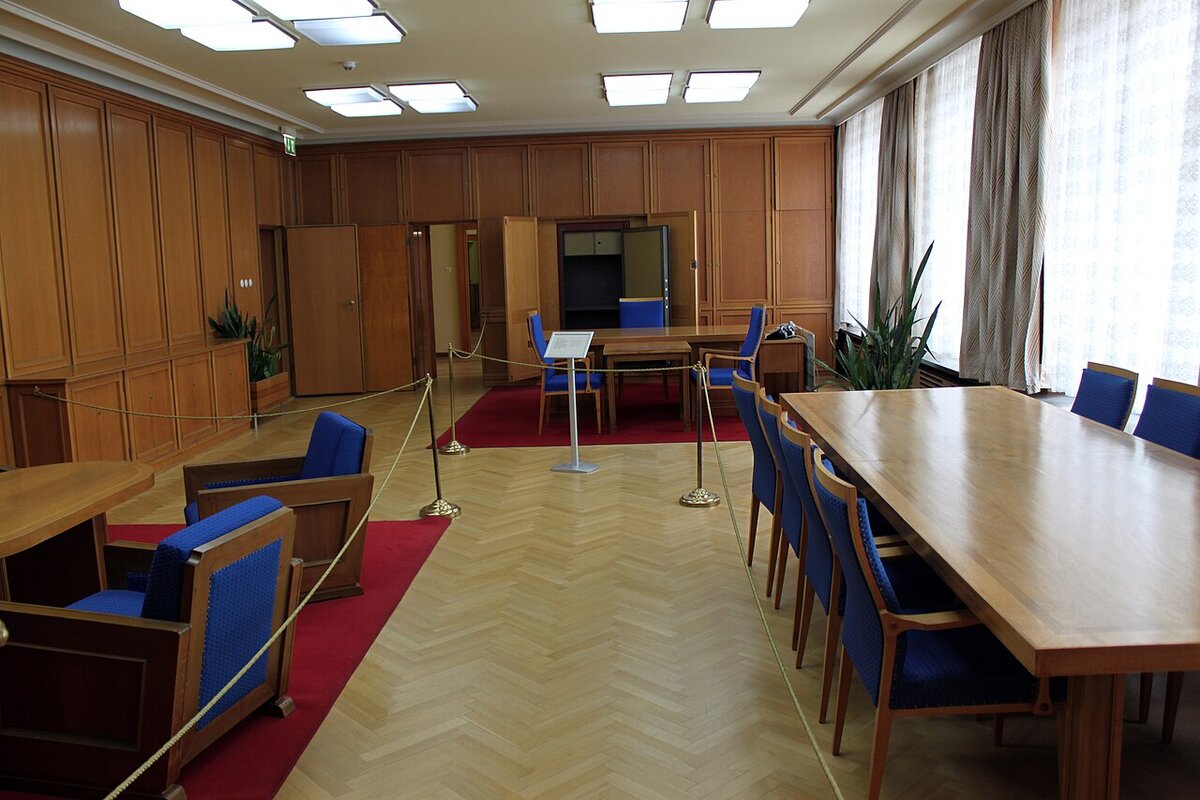
Stasi reaches peak surveillance
Under Erich Mielke, the Stasi (Ministry for State Security) grows into one of the most effective secret police forces in history, with 91,000 full-time employees and over 170,000 informants. One in every 63 East Germans works for the Stasi.
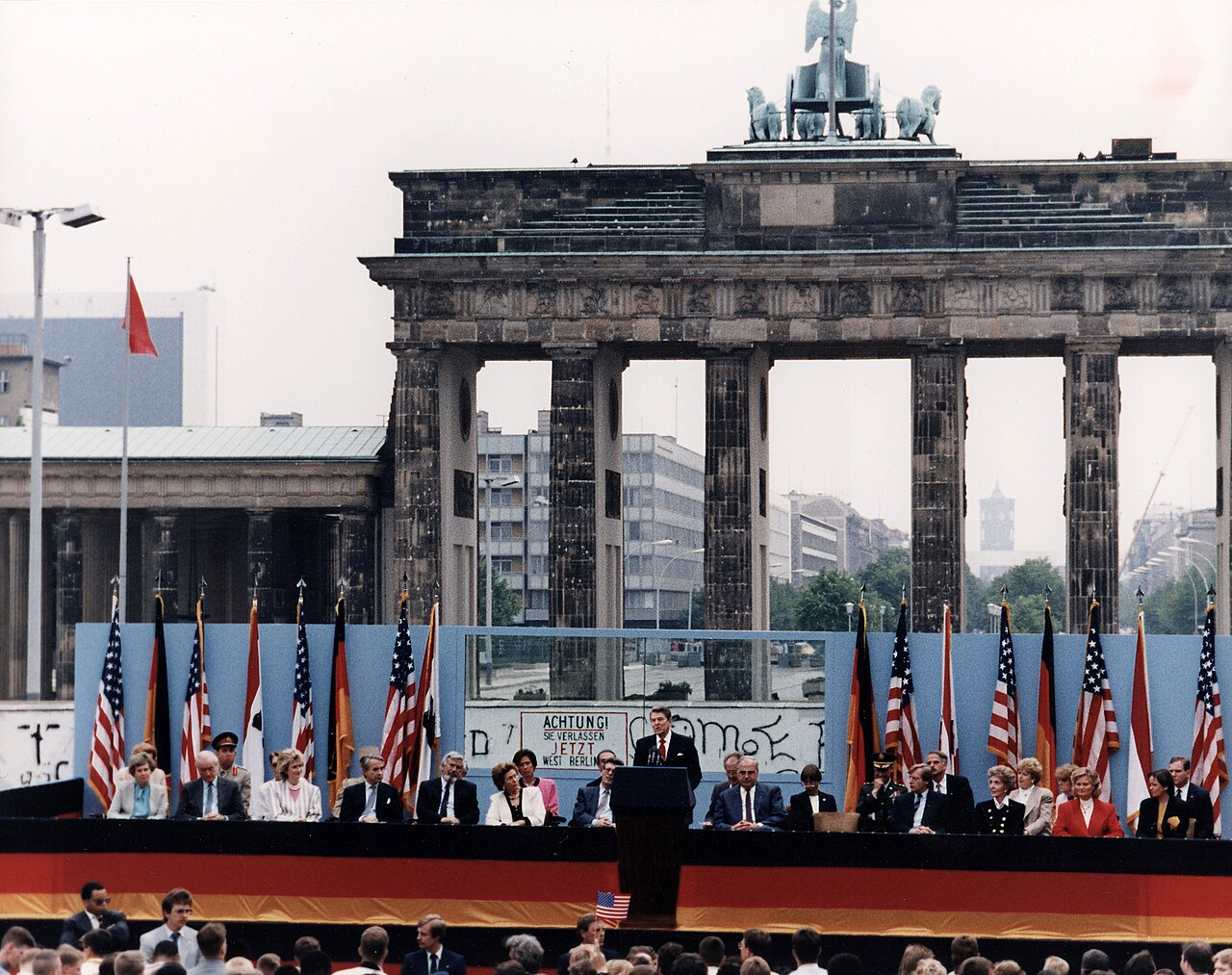
Reagan: "Tear down this wall!"
US President Ronald Reagan stands at the Brandenburg Gate and challenges Soviet leader Mikhail Gorbachev: "Mr. Gorbachev, open this gate! Mr. Gorbachev, tear down this wall!" The speech is controversial at the time but becomes iconic.
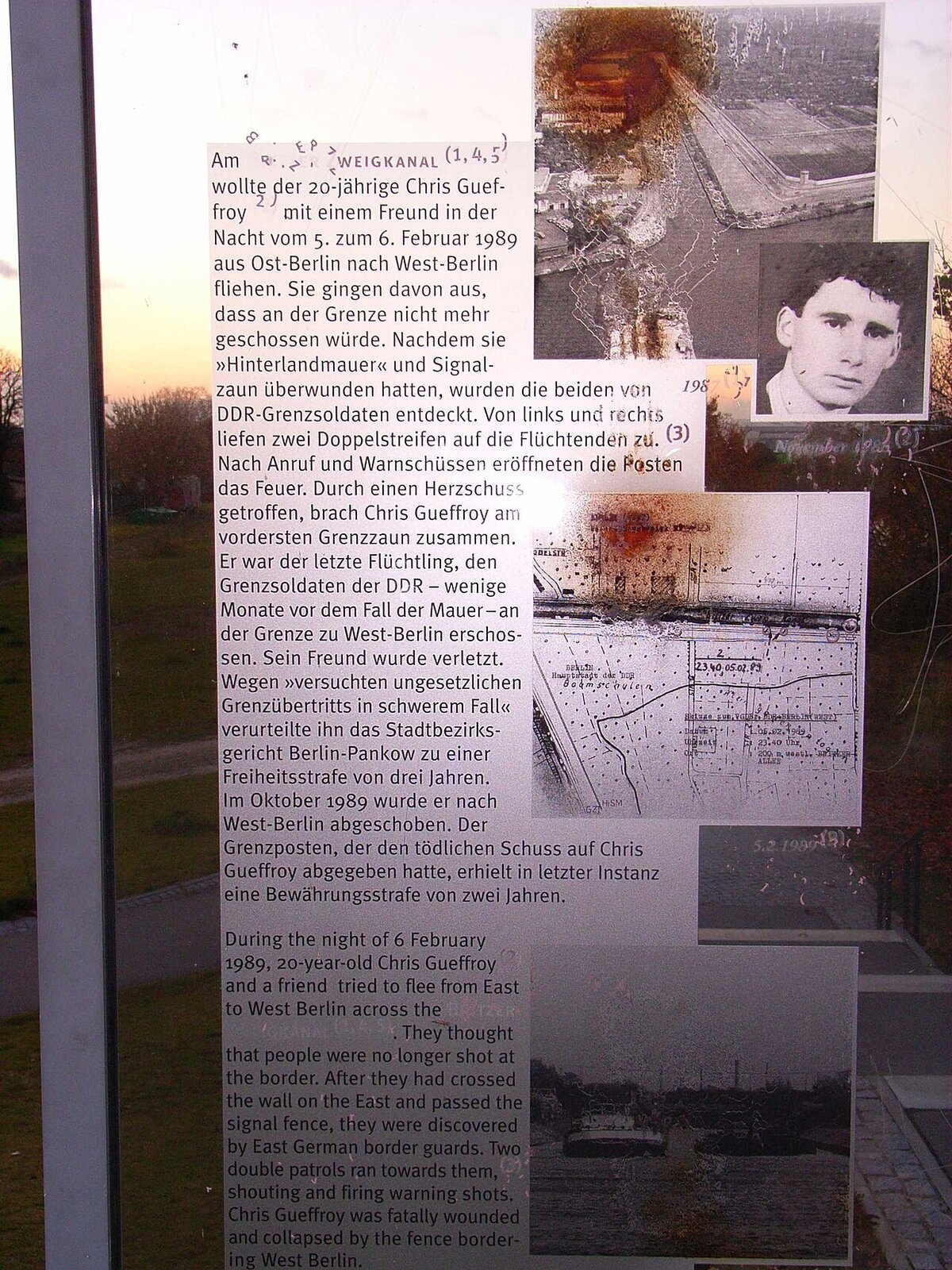
Chris Gueffroy — last person shot at the Wall
Chris Gueffroy, 20, is shot dead by border guards while attempting to cross the Britzer Verbindungskanal in Treptow. He is the last person killed by gunfire at the Berlin Wall. His friend Christian Gaudian is seriously wounded but survives.
Fall & Reunification
1989 – 1990Hungary opens its border with Austria
Hungary begins dismantling its border fence with Austria — the first breach in the Iron Curtain. Thousands of East Germans travel to Hungary and cross to the West, bypassing the Berlin Wall entirely.
Monday demonstrations begin in Leipzig
After the summer break, around 1,200 people gather outside the Nikolaikirche in Leipzig following the Monday peace prayers. It is the first of the weekly Monday demonstrations that will grow through the autumn into the largest protest movement in East German history.
Hungary opens its border to Austria
At midnight on 10/11 September, Hungary formally opens its border to Austria for East German citizens, abandoning the treaty that obliged it to hold them. Thousands cross in the first days and tens of thousands follow, tearing the first large hole in the Eastern Bloc's outer wall.
Genscher on the Prague embassy balcony
West German foreign minister Hans-Dietrich Genscher steps onto the balcony of the embassy in Prague, where thousands of East Germans have camped in the garden, and tells them their departure to the West has been agreed. His sentence is drowned out by cheering. Around 6,000 leave that night on sealed trains.
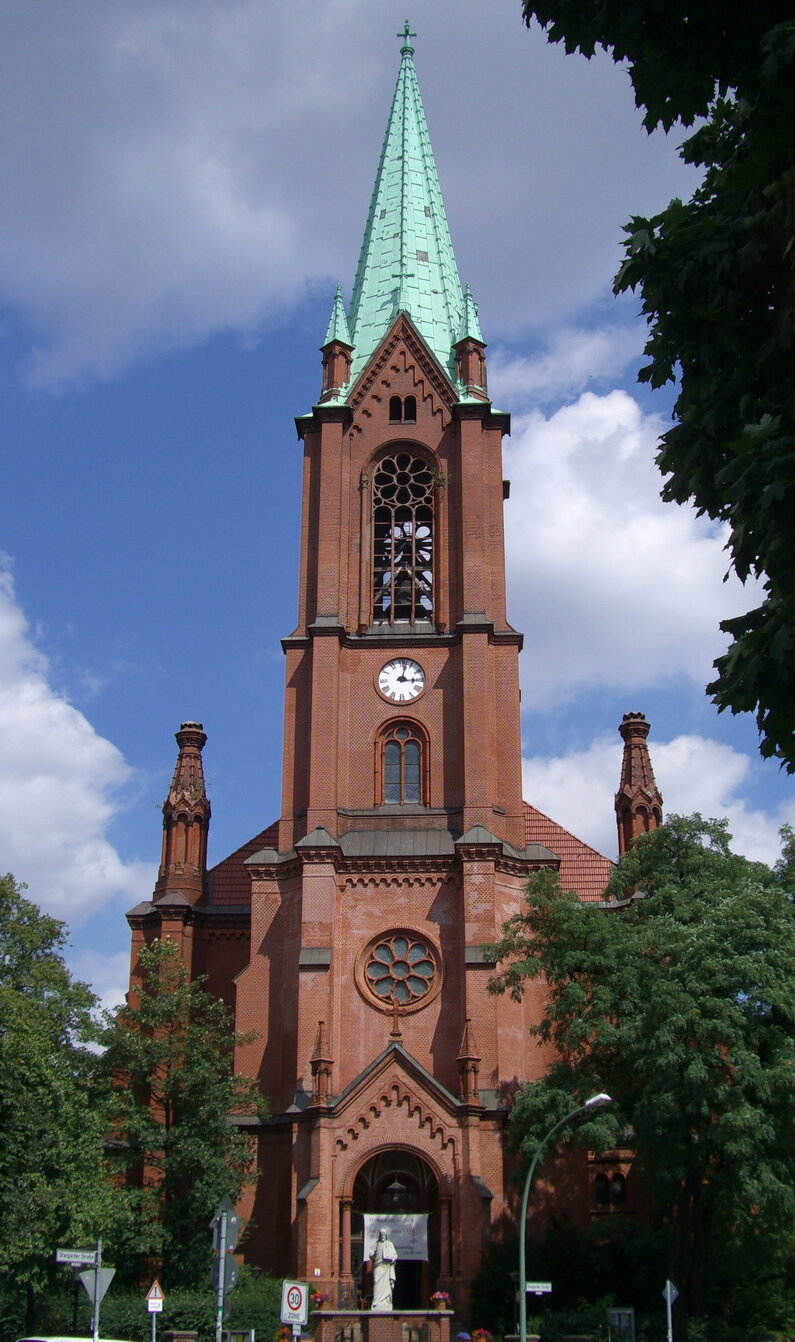
The vigil begins at the Gethsemanekirche
Opposition groups open a round-the-clock vigil at the Gethsemanekirche in Prenzlauer Berg under the motto "Wachet und betet" (Watch and Pray). A contact telephone in the parish hall collects reports of arrests from across the country and passes them to Western journalists. Within two days three thousand people are attending, and the forecourt fills with candles.
The GDR turns forty, and the police strike
East Germany celebrates its fortieth anniversary at the Palace of the Republic with Mikhail Gorbachev as guest of honour. That evening protests erupt across East Berlin. Riot police and Stasi units beat and arrest demonstrators through Prenzlauer Berg and around the Gethsemanekirche; more than a thousand people are detained over two nights. It is the last time the regime uses mass force in Berlin.
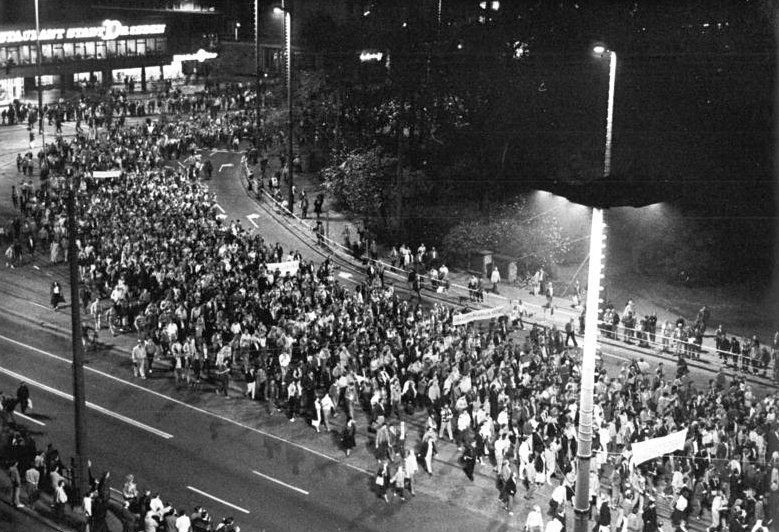
Monday demonstrations sweep East Germany
70,000 people march in Leipzig demanding reforms, chanting "Wir sind das Volk!" (We are the people!). Despite Stasi preparations for a violent crackdown, security forces stand down. The Monday demonstrations spread to cities across East Germany.
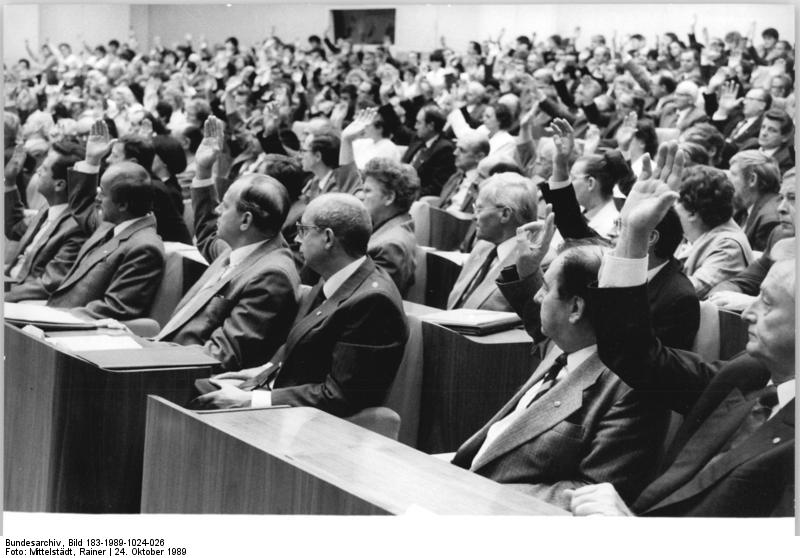
Honecker forced to resign
Erich Honecker, who ordered the construction of the Wall in 1961 and ruled East Germany for 18 years, is forced to resign by the Politburo. Egon Krenz replaces him but cannot stop the momentum of change.
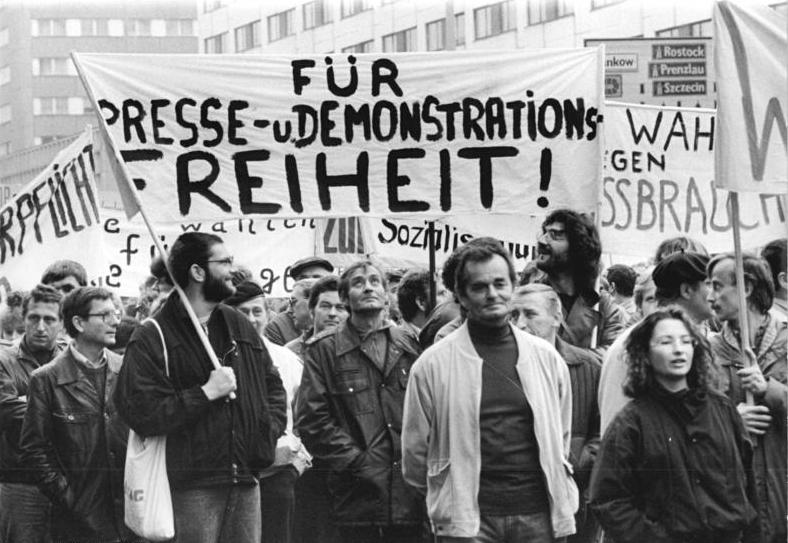
One million march in East Berlin
The largest demonstration in East German history takes place on Alexanderplatz. An estimated 500,000 to one million people demand free elections, free press, and freedom to travel. The government has lost control.
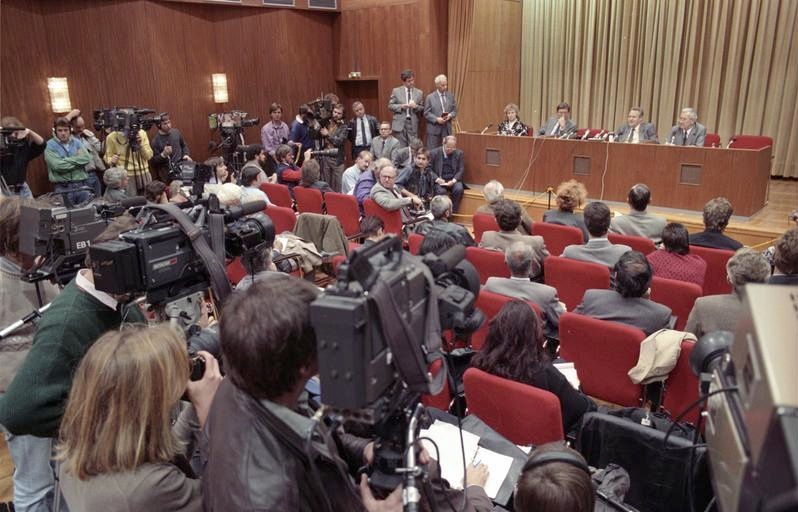
Schabowski's press conference blunder
At a live televised press conference, GDR spokesman Günter Schabowski is asked when the new travel regulations take effect. Shuffling through his papers, he replies: "Sofort, unverzüglich" — immediately, without delay. It was supposed to be a controlled, gradual opening. Instead, it triggers a stampede.
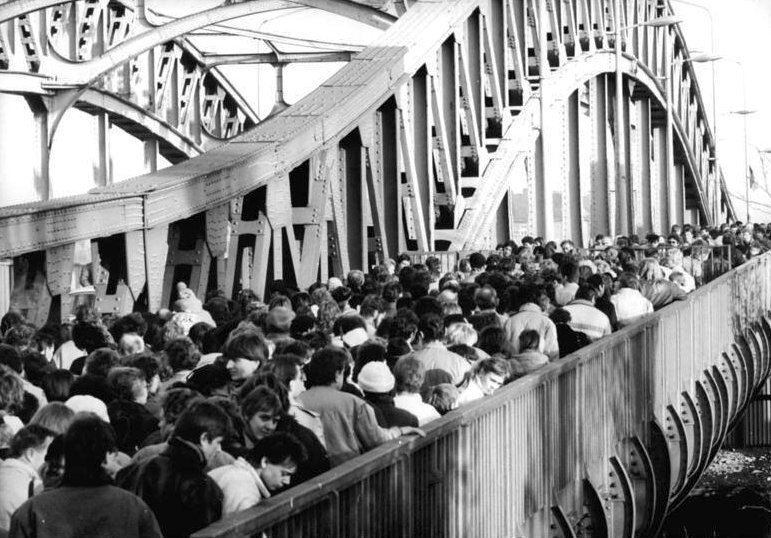
Bornholmer Straße — first checkpoint opens
At 11:30 PM, border guard commander Harald Jäger opens the Bornholmer Straße crossing on his own authority — overwhelmed by the massive, peaceful crowd demanding to pass. Thousands stream into West Berlin. Other checkpoints follow within minutes.
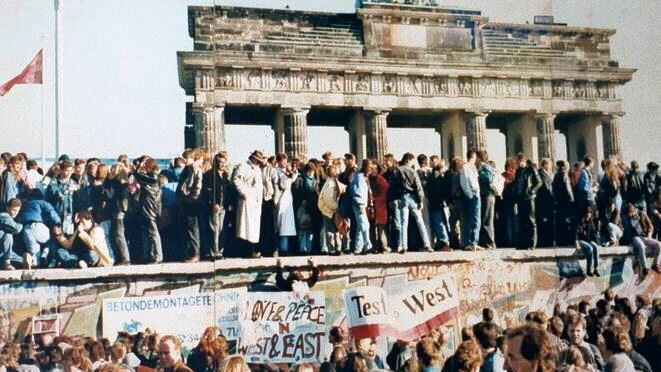
The Berlin Wall falls
All border crossings open. East and West Berliners climb on top of the Wall at Brandenburg Gate, dancing and celebrating. Strangers embrace. People begin chipping at the Wall with hammers and chisels — the 'Mauerspechte' (wall woodpeckers). After 10,316 days, the Wall has fallen.
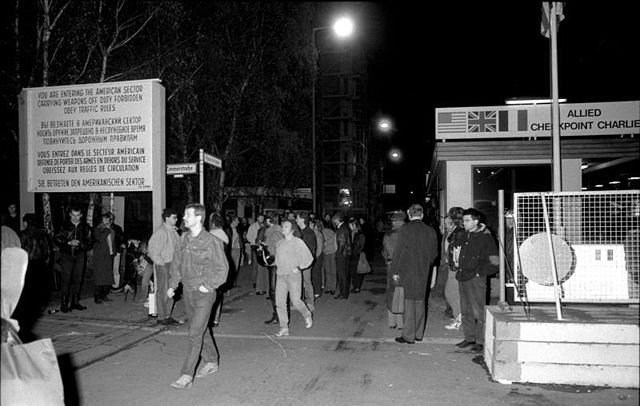
Checkpoint Charlie opens to pedestrians
Checkpoint Charlie, the most famous crossing point between East and West Berlin, opens to pedestrians. Thousands cross through the night. The allied military police watch as the Cold War's most iconic border point becomes a party.
East Germany's first free election
East Germans vote in the first free parliamentary election in the GDR's history, on a turnout of more than 93 percent. The Alliance for Germany, campaigning for rapid unification, wins 48 percent. The new Volkskammer, sitting in the Palace of the Republic, elects Lothar de Maizière head of a coalition government whose task is to negotiate joining the Federal Republic.
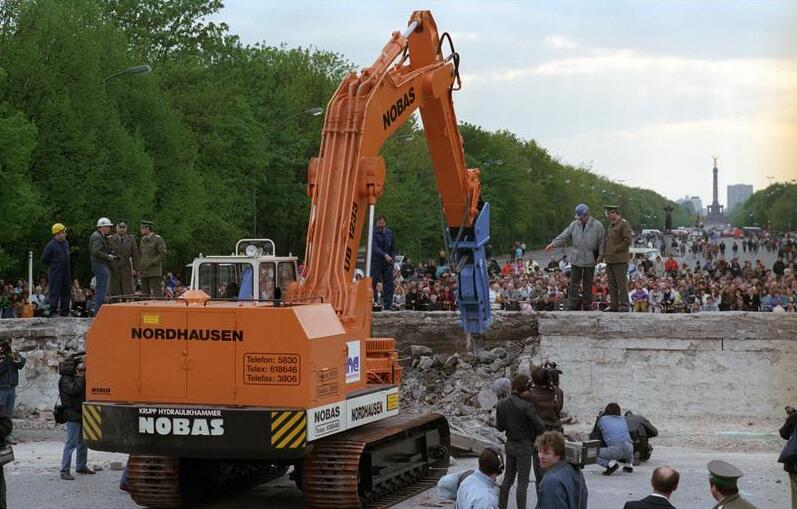
Official demolition of the Wall begins
East German military engineers begin systematically dismantling the Berlin Wall at Bernauer Straße. Over the following months, the entire 155 km barrier is removed, except for a few sections preserved as memorials.
The Deutsche Mark comes East
At midnight the monetary, economic and social union between the two German states takes effect, and the West German mark becomes the currency of the East. Wages, pensions and rents convert one to one, and so do savings up to a limit set by age. The same agreement ends the last personal checks at the inner-German border and around Berlin.
The Unification Treaty is signed
Wolfgang Schäuble, West German interior minister, and Günther Krause, parliamentary state secretary to the East German prime minister, sign the Einigungsvertrag in the Kronprinzenpalais on Unter den Linden. Its 45 articles set the terms on which the GDR will join the Federal Republic on 3 October, and make Berlin the capital of united Germany.
The Two Plus Four Treaty is signed
In the Hotel Oktjabrskaja in Moscow, representatives of the two German states and the four wartime Allies sign the Treaty on the Final Settlement with Respect to Germany. The Four Powers give up their rights over Germany as a whole and over Berlin, ending the city's four-power status after 45 years, and Soviet troops are to leave by the end of 1994.
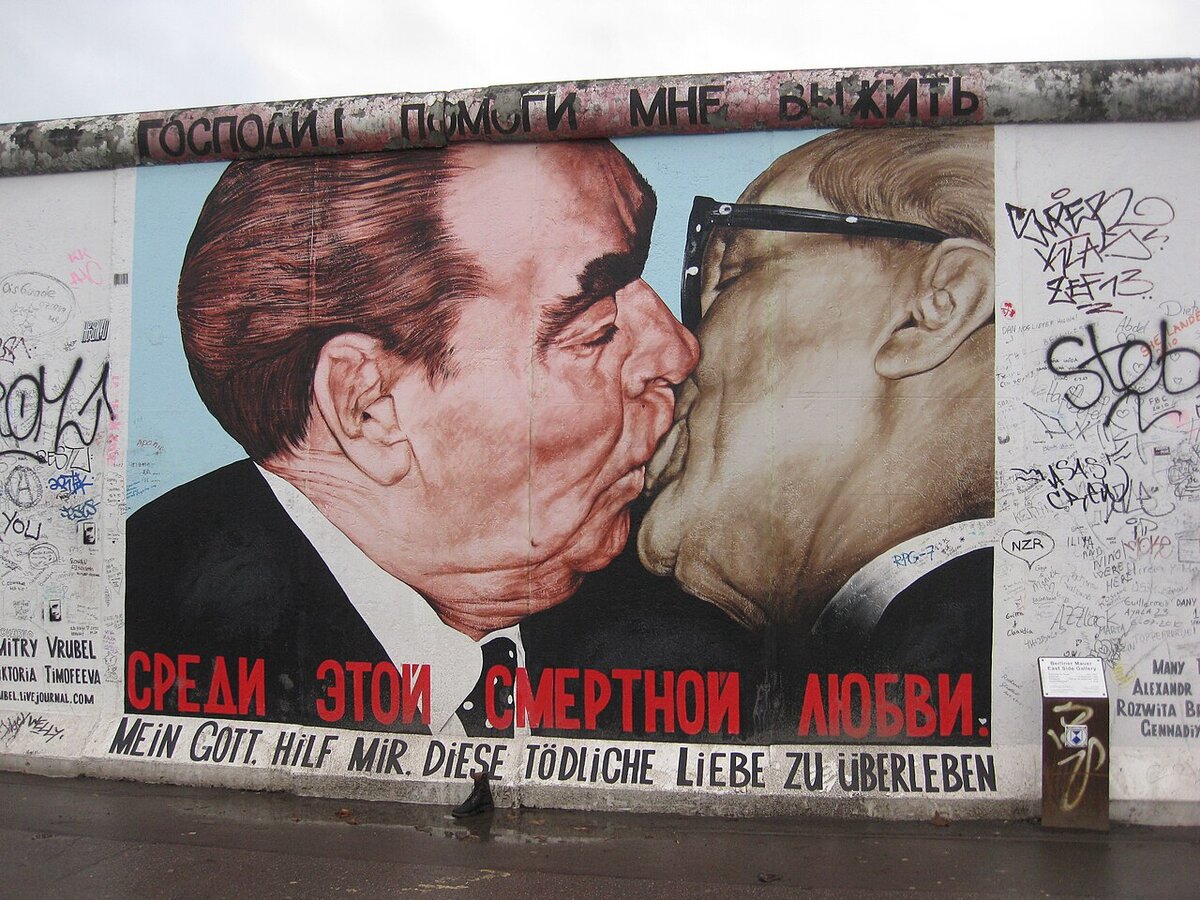
East Side Gallery painted
118 artists from 21 countries paint the 1,316-metre-long remaining section of the Wall along Mühlenstraße. It becomes the East Side Gallery — the world's longest open-air gallery and a monument to freedom and hope.

German Reunification
At midnight on October 3, the German Democratic Republic ceases to exist. East Germany joins the Federal Republic. The black, red, and gold flag is raised before the Reichstag in a unified Berlin. After 45 years of division, Germany is one country again.
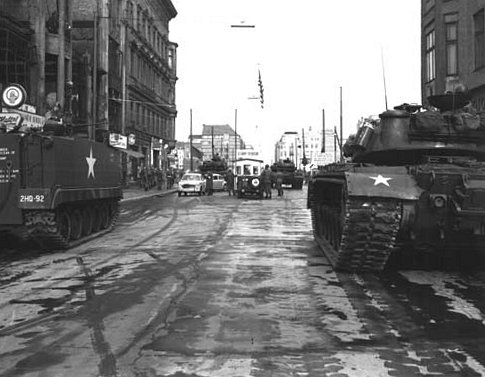
Checkpoint Charlie
East Side Gallery
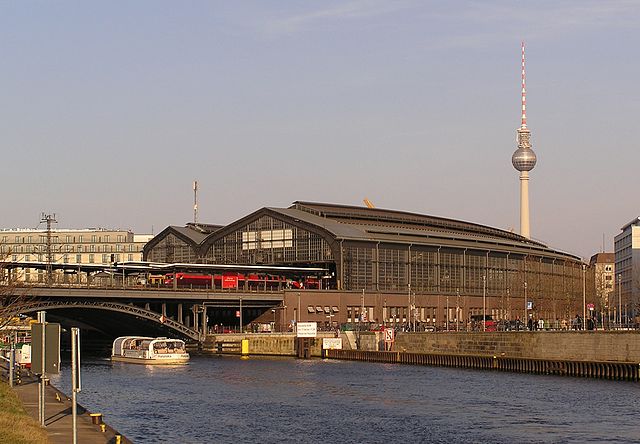
Bahnhof Friedrichstraße
History of the Berlin Wall: A Complete Guide (1961-1989)
65 Years Ago: US and Soviet Tanks Faced Off at Checkpoint Charlie
The Border Guards of the Berlin Wall: Conscripts, the Order to Shoot, and the Trials That Followed
9 November in Berlin: 37 Years Since the Wall Fell, and What’s On
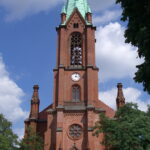
Gethsemanekirche
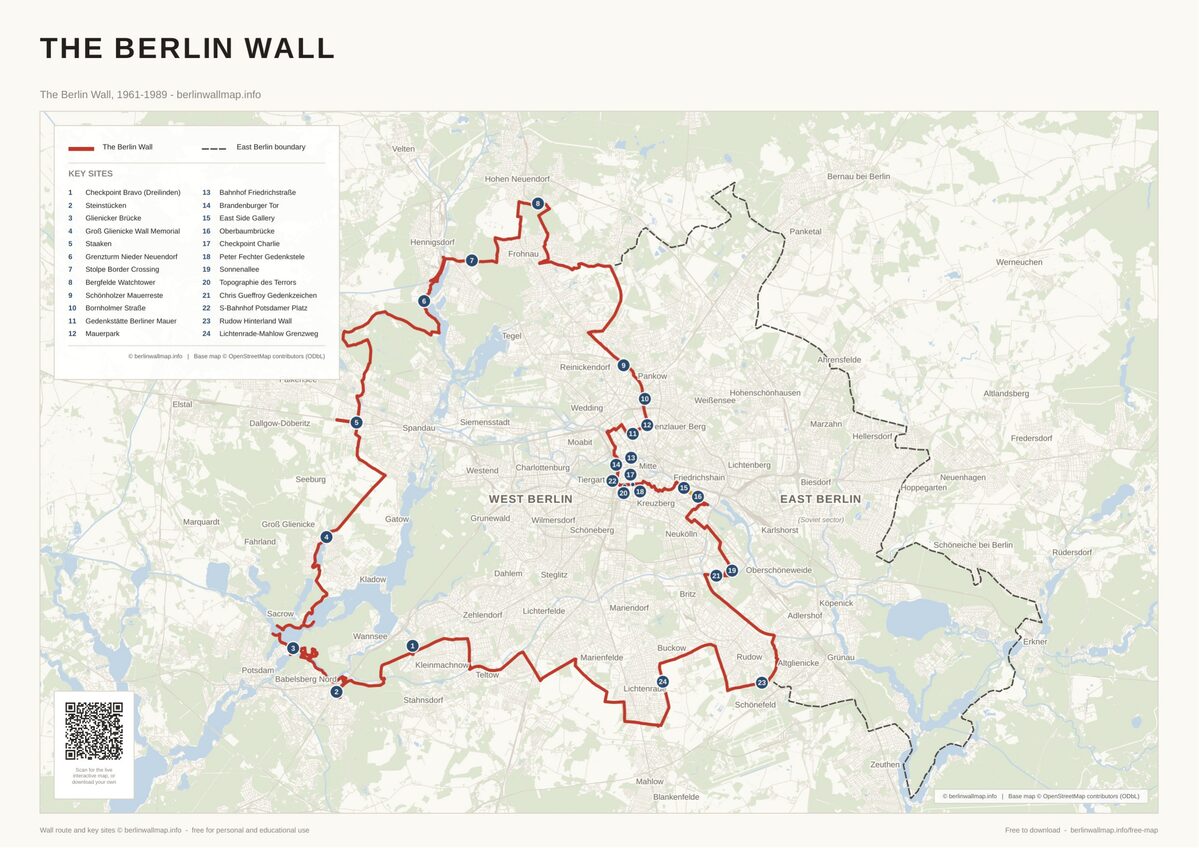
Free map downloads
Free printable PDF maps of the Berlin Wall.
Get the free maps →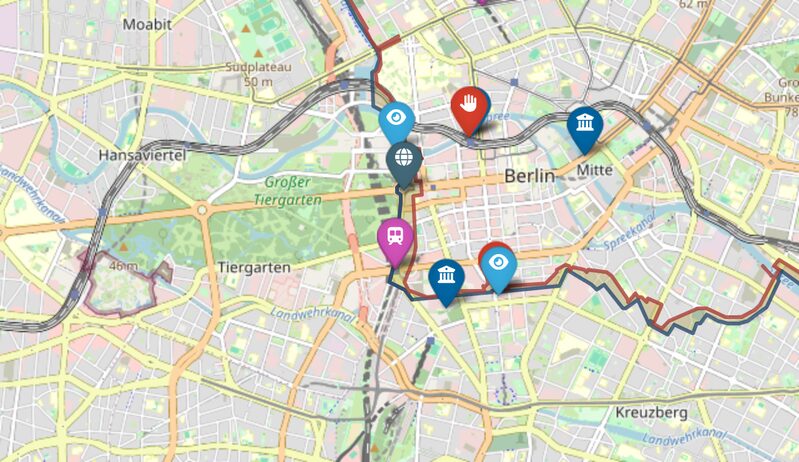
Embed Our Map
Add a free interactive Berlin Wall map to your website or blog.
Get embed code →