
Ghost Stations of the Berlin Wall: What They Were & Which You Can Visit Today
When the Berlin Wall went up in August 1961, not only did it divide streets and squares – it sliced through the city’s underground rail network. For the next 28 years, several West Berlin U-Bahn and S-Bahn lines ran through East Berlin, their trains slowing to a crawl through dimly lit, guard-patrolled platforms where no one was allowed to get on or off. Berliners called them Geisterbahnhöfe – ghost stations.
What Were the Ghost Stations?
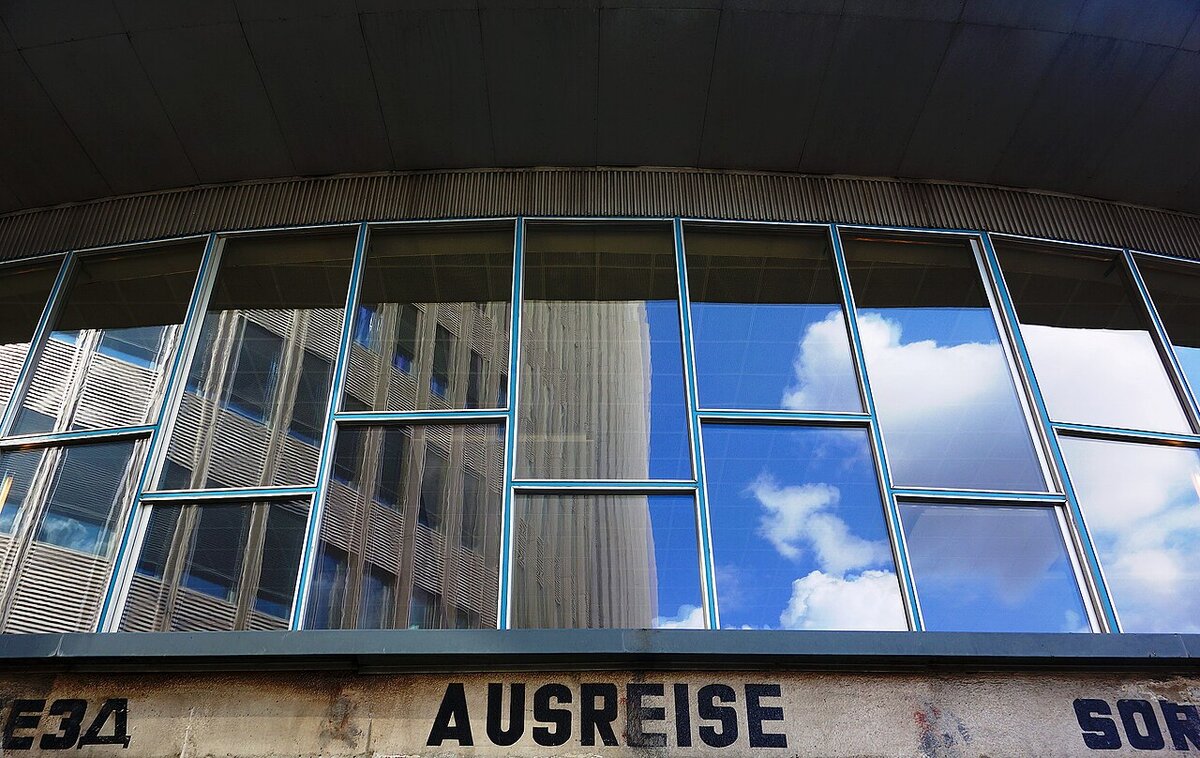
Ghost stations (Geisterbahnhöfe) were U-Bahn and S-Bahn stations that lay in East Berlin but sat on lines operated by West Berlin. Because the routes dipped under the eastern half of the divided city before returning to the West, the trains could not simply be cut in two. Instead, East Germany sealed the stations on these transit lines: exits were bricked up, stairways filled with concrete, and the platforms placed under armed guard.
West Berlin trains kept running, but they passed through these stations without stopping. Passengers stared out at deserted, half-lit platforms patrolled by East German border guards – a surreal, silent reminder of the division that ran beneath the city as well as across it. Only one station on these lines was an exception: Friedrichstraße, which operated as a tightly controlled border crossing, complete with the infamous “Palace of Tears” farewell hall.
How the Wall Split the U-Bahn and S-Bahn
On 13 August 1961, the day the border was sealed, Berlin’s once-unified transit network was severed overnight. Three lines were left running awkwardly across the divide:
- U6 (then line C) – ran north-south from West Berlin, through the eastern city centre, and back into the West. Its eastern stations became ghost stations, except for Friedrichstraße.
- U8 (then line D) – crossed beneath the eastern districts of Mitte, with every station in the East sealed shut.
- The north-south S-Bahn tunnel – carried Western S-Bahn trains under the heart of East Berlin, past sealed platforms at Potsdamer Platz, Brandenburger Tor, Oranienburger Straße and the Nordbahnhof.
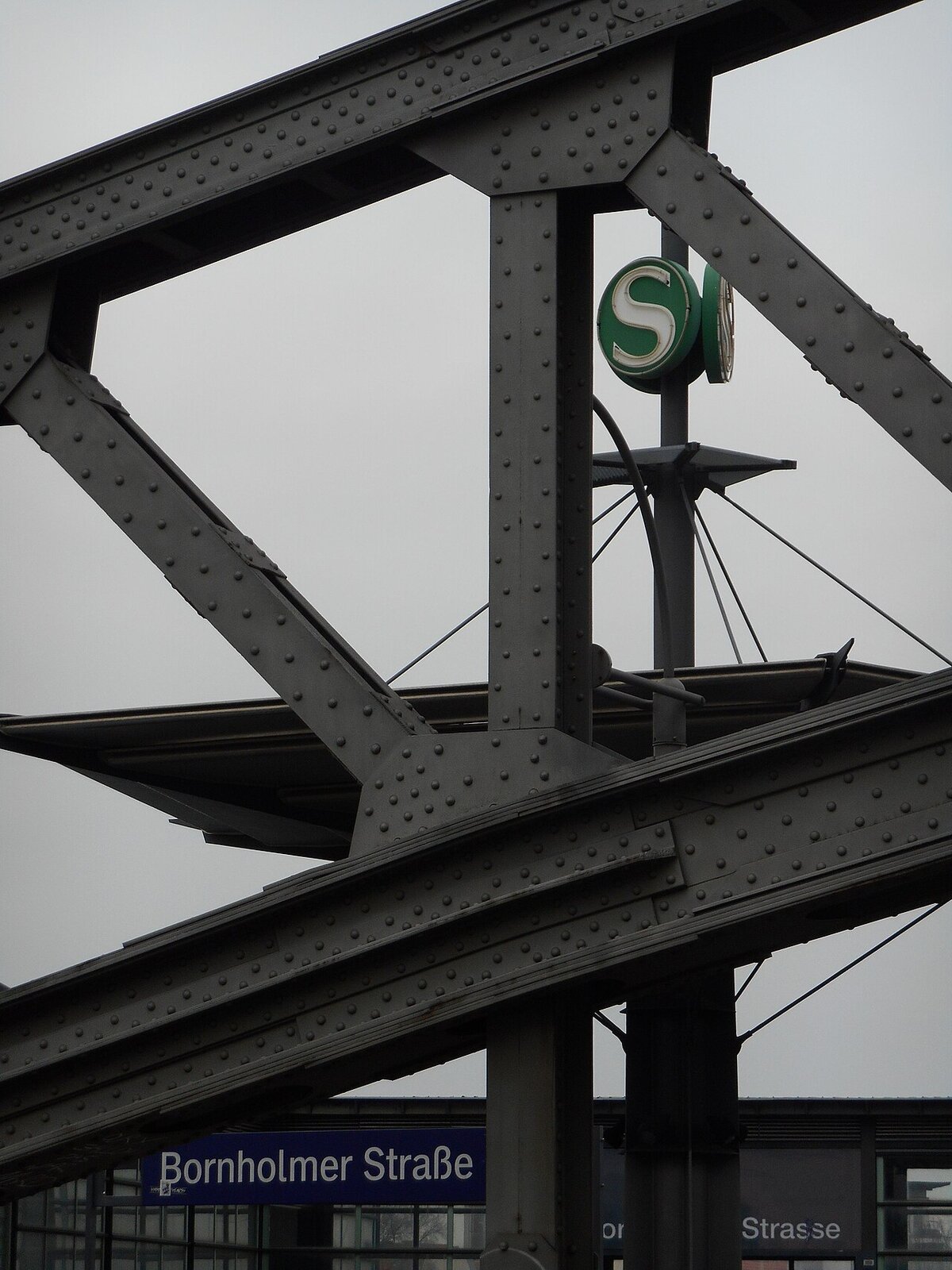
A handful of other stations, such as the above-ground S-Bahnhof Bornholmer Straße, were also caught on the wrong side of the fence. The result was a network where you could ride a West Berlin train directly underneath East Berlin without ever being able to step off in it.
Inside a Ghost Station
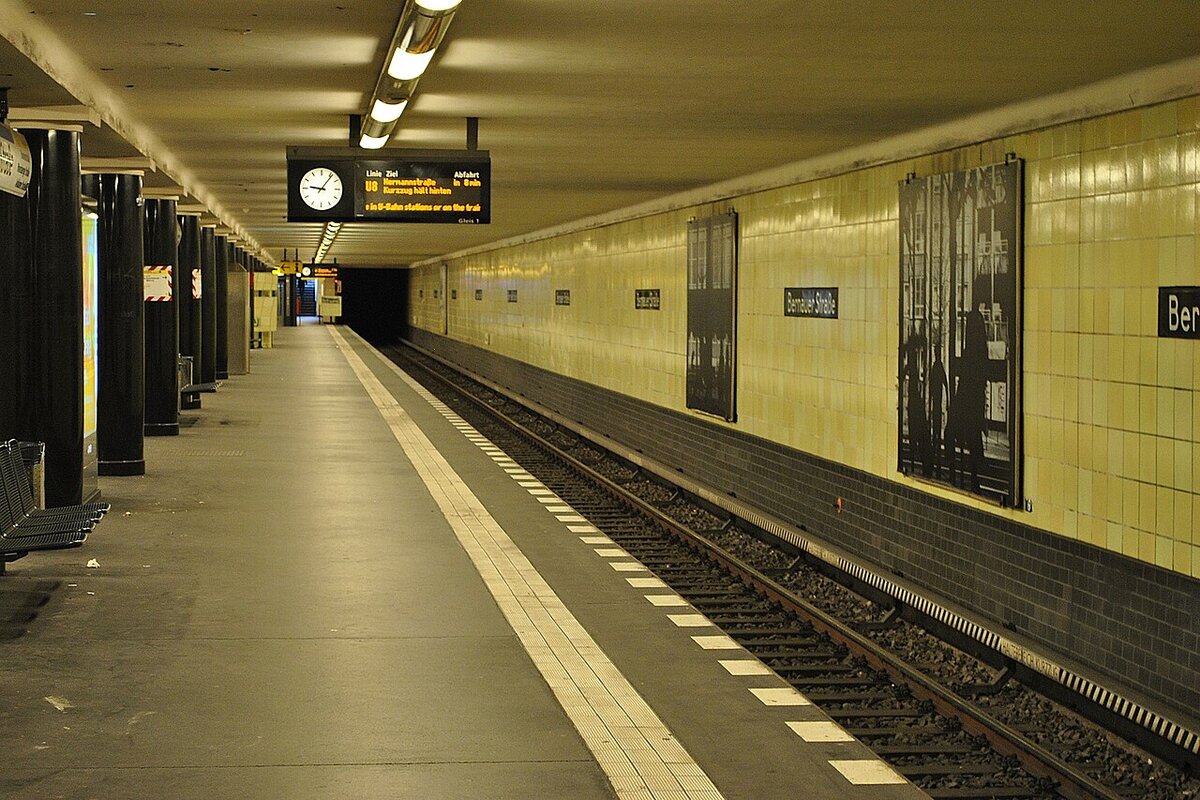
Conditions on the sealed platforms were eerie and tightly controlled. Lighting was kept low, signage was stripped away, and the station names were often removed entirely so that passing Western passengers could not orient themselves. Trains were ordered to reduce speed but never stop, so guards could watch for anyone attempting to jump aboard.
Each station was patrolled by armed members of the East German border regime, stationed in guard posts behind the platforms. Walkways were walled off and stairwells sealed with concrete to prevent escapes from above. Some stations were quietly renamed for political reasons: Schwartzkopffstraße on the U6 became “Walter-Ulbricht-Stadion” in 1951 and “Stadion der Weltjugend” in 1973 – changes visible only to guards and to Westerners peering through train windows.
When workers finally reopened some stations after 1989, they found them frozen in time. At U-Bahnhof Rosenthaler Platz, advertisements from 1961 were still hanging on the walls, untouched for nearly three decades.
Escape Attempts Underground
The sealed stations and the tunnels that connected them were an obvious temptation for those desperate to flee East Berlin. The border regime knew it, which is why the underground platforms were so heavily guarded and the connecting passages flooded with security measures. A few East Berliners did manage to use the tunnels and sealed stations to reach the West, though such attempts were extraordinarily dangerous.
The ghost stations were only one chapter in a much larger story of people risking everything to cross the border. For the full picture – tunnels, homemade aircraft, and dashes across no-man’s-land – see our guide to the daring escapes across the Berlin Wall.
All 15 Ghost Stations on the Map
Berlin had 15 ghost stations during the years of division. They cluster along three lines, and you can open any of them on our interactive map to see exactly where it sits relative to the Wall’s path.
U8 line (under Mitte): Bernauer Straße, Rosenthaler Platz, Weinmeisterstraße, Alexanderplatz (U8), and Jannowitzbrücke.
U6 line (north-south through the centre): Schwartzkopffstraße, Naturkundemuseum, Oranienburger Tor, Französische Straße, and Stadtmitte (U6).
The north-south S-Bahn tunnel: Nordbahnhof, Oranienburger Straße, Brandenburger Tor, and Potsdamer Platz – plus the only above-ground ghost station, Bornholmer Straße in Prenzlauer Berg.
Two of them, Alexanderplatz and Stadtmitte, were “split” stations: one platform served East Berliners normally while a physically separate platform on the Western line was sealed off just metres away.
Which Ghost Stations Can You Visit Today?
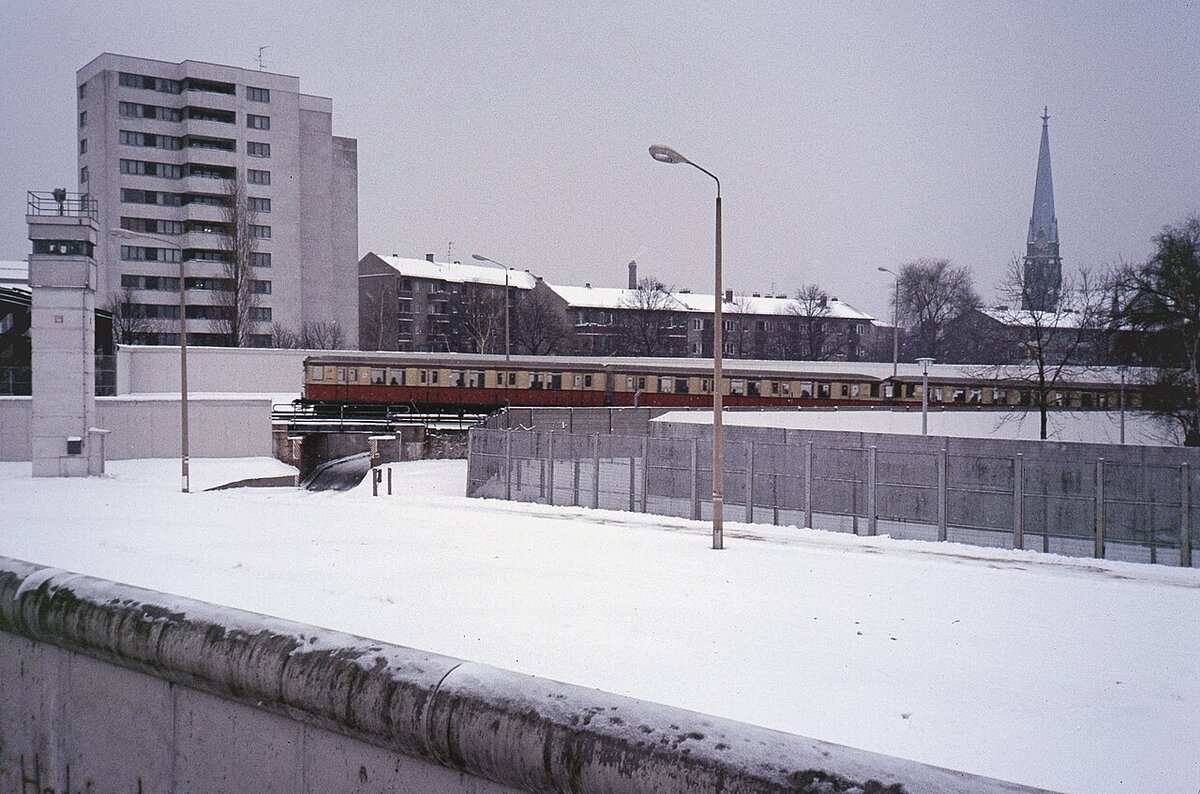
All 15 stations are back in normal service, so you can ride through every one of them on today’s U-Bahn and S-Bahn. But two stops are worth a deliberate visit:
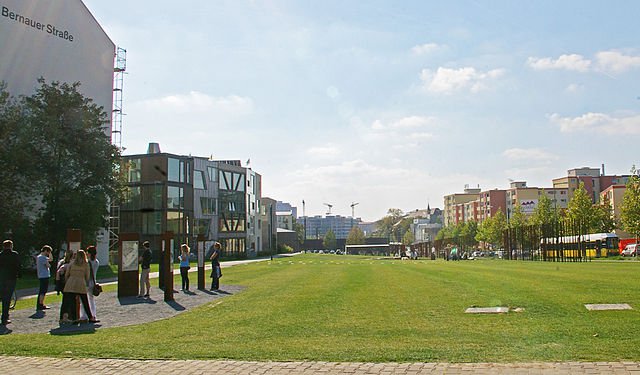
Nordbahnhof houses a free permanent exhibition, “Border and Ghost Stations in Divided Berlin,” telling the story of the sealed network. It is on the S-Bahn mezzanine (entrance on Gartenstraße) and is open during normal station hours – no ticket required. The nearby Berlin Wall Memorial on Bernauer Straße makes an ideal pairing for a half-day of Cold War history.
Potsdamer Platz and Brandenburger Tor sit directly beneath two of Berlin’s most famous landmarks, where the Wall once cut through the city above. Riding the S-Bahn between them traces the route Western passengers travelled blind for 28 years.
How the Ghost Stations Came Back to Life
When the Wall fell on the night of 9 November 1989, the ghost stations were among the first places to reopen – sometimes within days. Jannowitzbrücke on the U8 was the very first, reopening on 11 November 1989, just two days after the border opened, with a provisional checkpoint set up right on the platform. Rosenthaler Platz followed on 22 December 1989.
Through 1990 the rest came back one by one – Bernauer Straße in April, Oranienburger Straße in July. The very last to reopen was Potsdamer Platz, on 3 March 1992, after a full restoration of the north-south S-Bahn tunnel. With it, the last ghost of the divided network finally faded.
Frequently Asked Questions
What is a ghost station in Berlin?
A ghost station (Geisterbahnhof) was a U-Bahn or S-Bahn station in East Berlin that sat on a West Berlin line. From 1961 to 1989-92 these stations were sealed and guarded, and Western trains passed through them without stopping.
How many ghost stations were there?
There were 15 ghost stations across three lines: the U6, the U8, and the north-south S-Bahn tunnel, plus the above-ground S-Bahnhof Bornholmer Straße.
Can you still see the ghost stations?
Yes. All 15 are back in regular service. For the history, visit the free exhibition at Nordbahnhof S-Bahn station, open during normal station hours.
Was Friedrichstraße a ghost station?
No. Friedrichstraße was the one station on these lines where Western trains stopped – it operated as a heavily controlled border crossing, home to the “Palace of Tears” (Tränenpalast).
Explore every site of the divided city on our interactive Berlin Wall map, or trace the full story on our complete timeline of the Berlin Wall.
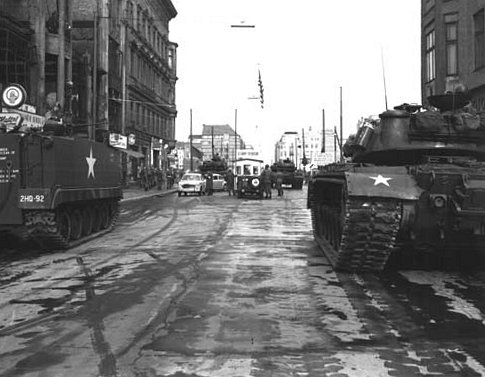
Checkpoint Charlie
East Side Gallery
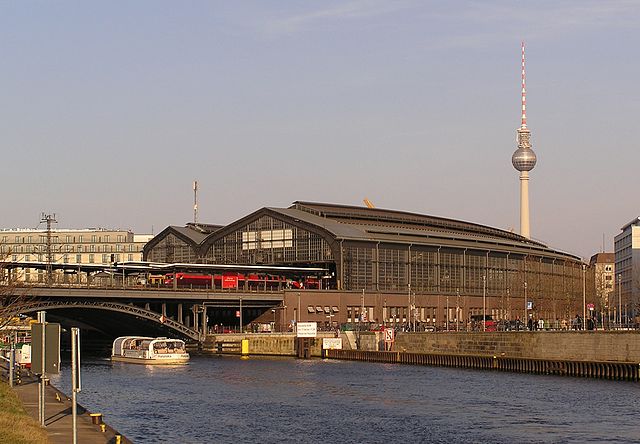
Bahnhof Friedrichstraße
History of the Berlin Wall: A Complete Guide (1961-1989)
65 Years Ago: US and Soviet Tanks Faced Off at Checkpoint Charlie
The Border Guards of the Berlin Wall: Conscripts, the Order to Shoot, and the Trials That Followed
9 November in Berlin: 37 Years Since the Wall Fell, and What’s On
Gethsemanekirche
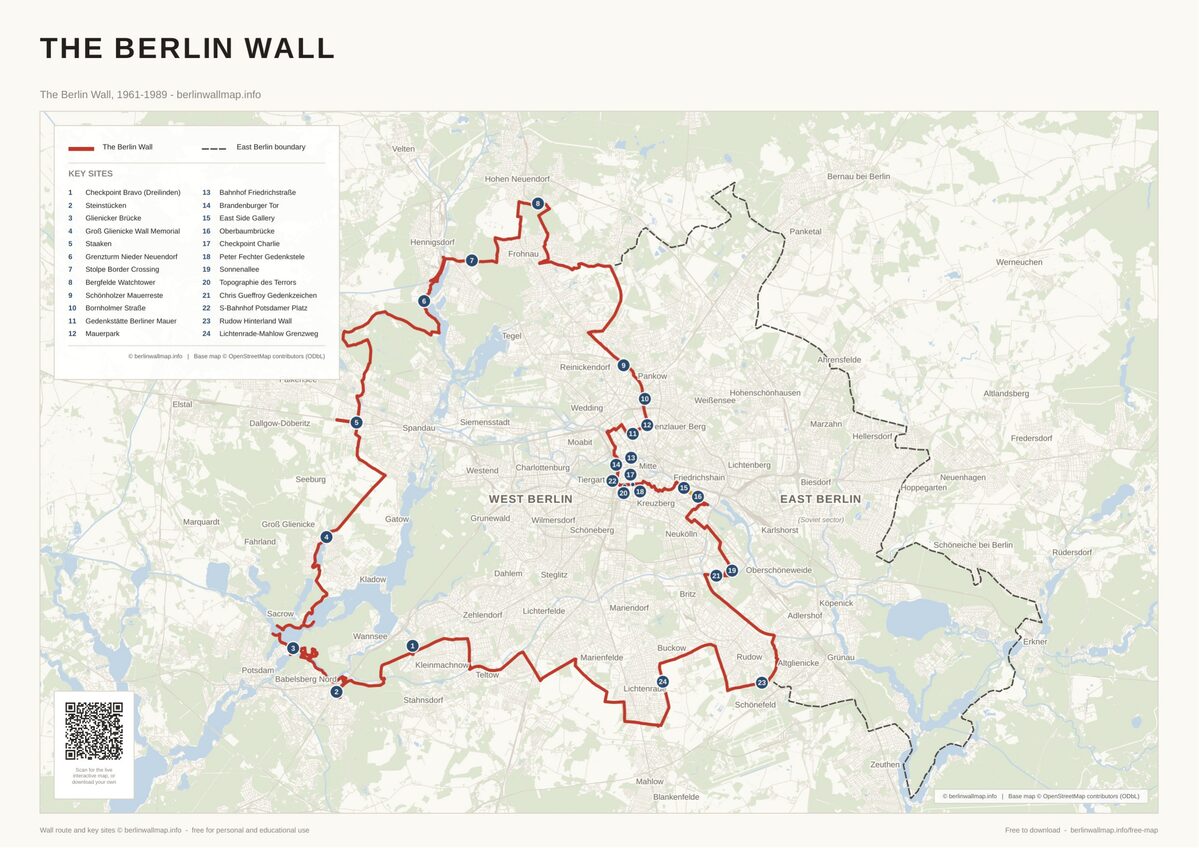
Free map downloads
Free printable PDF maps of the Berlin Wall.
Get the free maps →Explore the Timeline
Journey through Berlin Wall history from 1945 to 1990.
View Timeline →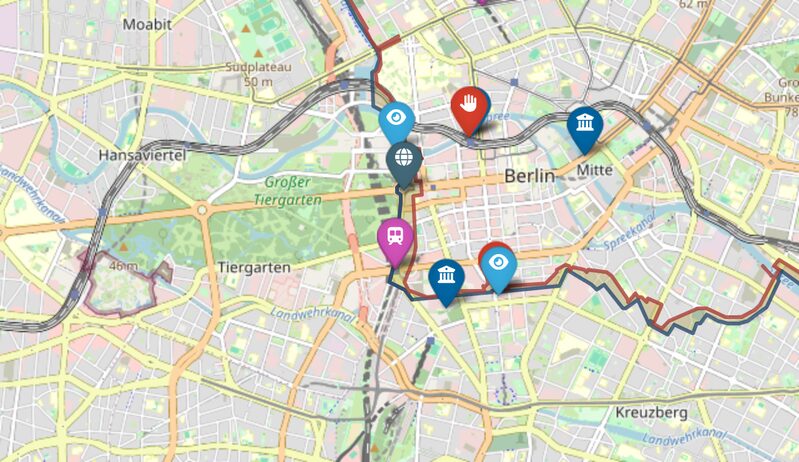
Embed Our Map
Add a free interactive Berlin Wall map to your website or blog.
Get embed code →