Glienicke Bridge: The Real Bridge of Spies and Its Cold War Spy Swaps
On a freezing February morning in 1962, two men walked towards each other across a steel bridge between West Berlin and Potsdam. One was an American U-2 pilot shot down over the Soviet Union; the other was the most important Soviet spy ever caught in the United States. When they passed the white line painted across the middle of the Glienicke Bridge, the Cold War’s most famous prisoner exchange was complete – and a quiet road bridge over the Havel river earned the name it still carries today: the Bridge of Spies.
Why Spies Were Swapped on This Bridge
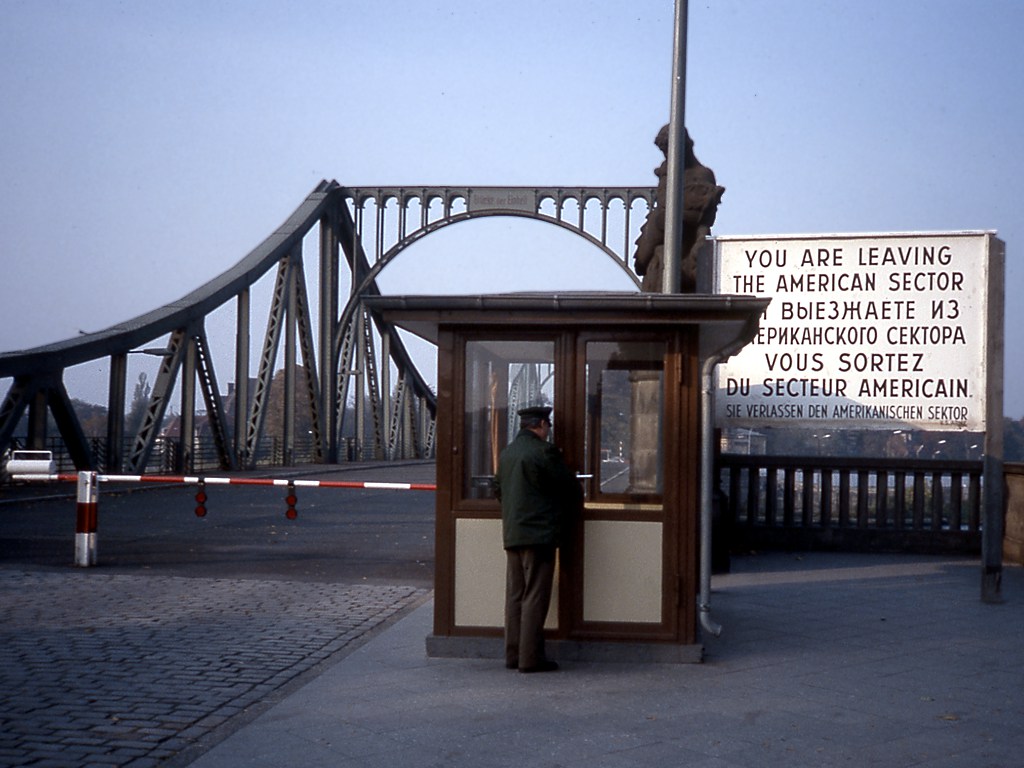
The Glienicke Bridge (Glienicker Brücke) crosses the Havel at a narrow point between Wannsee, on the southwestern edge of West Berlin, and Potsdam in East Germany. The border between the American sector and the GDR ran exactly across the middle of the bridge, marked by a painted white line.
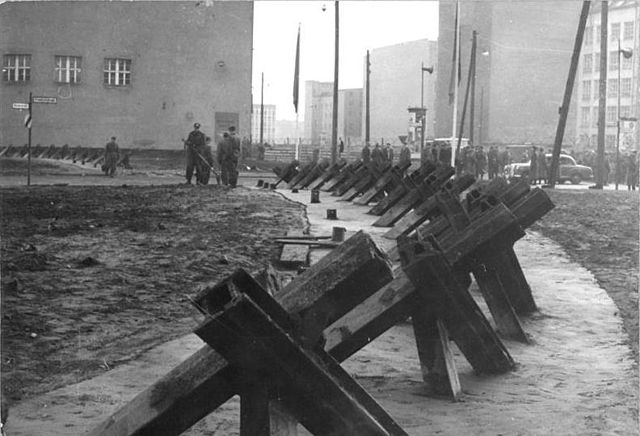
That geography made it perfect for discreet exchanges. Unlike Checkpoint Charlie or the Friedrichstrasse station, the bridge was far from the city centre and closed to ordinary traffic: East Germany barred West Berliners from crossing in 1952, and after the Wall went up in 1961 only Allied military personnel and accredited diplomats could use it at all. Potsdam, on the eastern bank, was home to the Soviet military command and KGB facilities, so the Soviets could deliver and receive prisoners away from cameras. Both sides could seal their end of the bridge completely – no crowds, no press, no surprises.
The Bridge of Unity
The steel arch bridge that stands today was inaugurated in 1907, the latest in a series of crossings at this spot serving the route between Berlin and Potsdam. After the Second World War the new East German state gave it a name heavy with unintended irony: Brücke der Einheit – the Bridge of Unity. For most of its existence under that name, the bridge united nothing. It stood sealed at the border, a gap of a few hundred metres that almost nobody was permitted to cross.
The lettering of that name can still be seen in Cold War photographs of the bridge’s arches, and the division it marked outlasted the name itself: the bridge only reopened to ordinary traffic on the evening of 10 November 1989, one day after the fall of the Berlin Wall, when Potsdamers streamed across on foot into West Berlin.
February 1962: Powers for Abel
The exchange that made the bridge famous took place on 10 February 1962. Francis Gary Powers, the CIA U-2 pilot shot down over Sverdlovsk on 1 May 1960 and sentenced to ten years by a Soviet court, was traded for Rudolf Abel – real name William Fisher – a KGB colonel who had run Soviet spy networks from a Brooklyn artist’s studio until his arrest in 1957.
The swap was negotiated by Abel’s American defence lawyer, James B. Donovan, whose back-channel talks in East Berlin also secured the release of a second prisoner: Frederic Pryor, an American economics student held by the East German Stasi. At the agreed hour, Powers and Abel were walked to the white line at the centre of the Glienicke Bridge and crossed simultaneously, while Pryor was released at Checkpoint Charlie in the centre of Berlin at almost the same moment.
June 1985: The Biggest Spy Swap of the Cold War
The bridge’s second exchange, on 11 June 1985, was the largest of the entire Cold War. After three years of negotiation – brokered, like all the bridge’s swaps, by the East German lawyer Wolfgang Vogel – the United States handed over four Eastern Bloc agents caught in the West. In return, 25 people imprisoned in East Germany and Poland for working with Western intelligence walked across the bridge to freedom.
The best known of the four going east was Marian Zacharski, a Polish intelligence officer serving a life sentence for stealing American radar and stealth secrets from a Hughes Aircraft engineer in California. The lopsided numbers – 25 for 4 – said much about how badly each side wanted its own people back.
February 1986: Shcharansky’s Defiant Walk
The third and final exchange, on 11 February 1986, was the only one the world watched. Anatoly Shcharansky, the Soviet dissident and refusenik who had spent nine years in prisons and labour camps on fabricated espionage charges, was released along with three Western agents in return for Karl Koecher – a Czech mole who had penetrated the CIA – and four other Eastern Bloc agents.
Shcharansky was ordered by his KGB escorts to walk straight across the bridge. In a final act of defiance, he zigzagged instead. Within hours he was on his way to Israel, where – as Natan Sharansky – he later became a government minister. Because the 1986 swap involved a famous political prisoner rather than anonymous agents, press photographers were allowed near the bridge for the first time, and the pictures fixed the “Bridge of Spies” in the world’s imagination.
The Spielberg Film
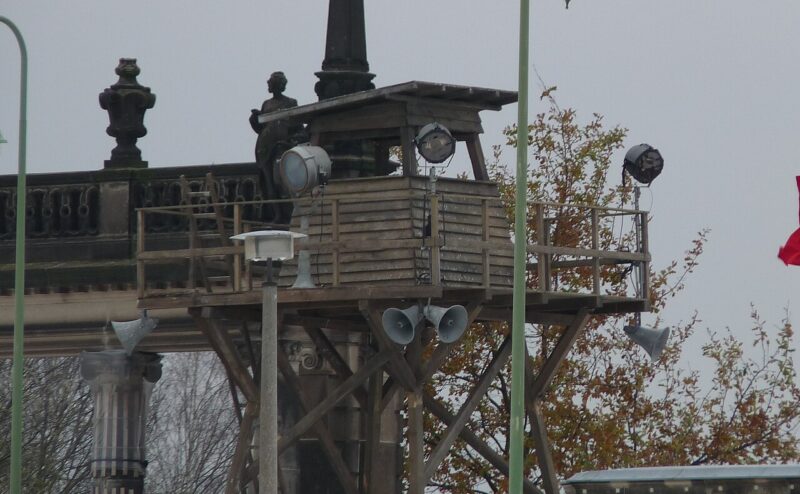
Steven Spielberg’s 2015 thriller Bridge of Spies tells the story of the 1962 exchange, with Tom Hanks as James Donovan and Mark Rylance in an Oscar-winning turn as Rudolf Abel. The final exchange scenes were shot on the real Glienicke Bridge, which was closed to traffic for several nights in late 2014 while film crews dressed it back into its Cold War state – watchtowers, floodlights and all.
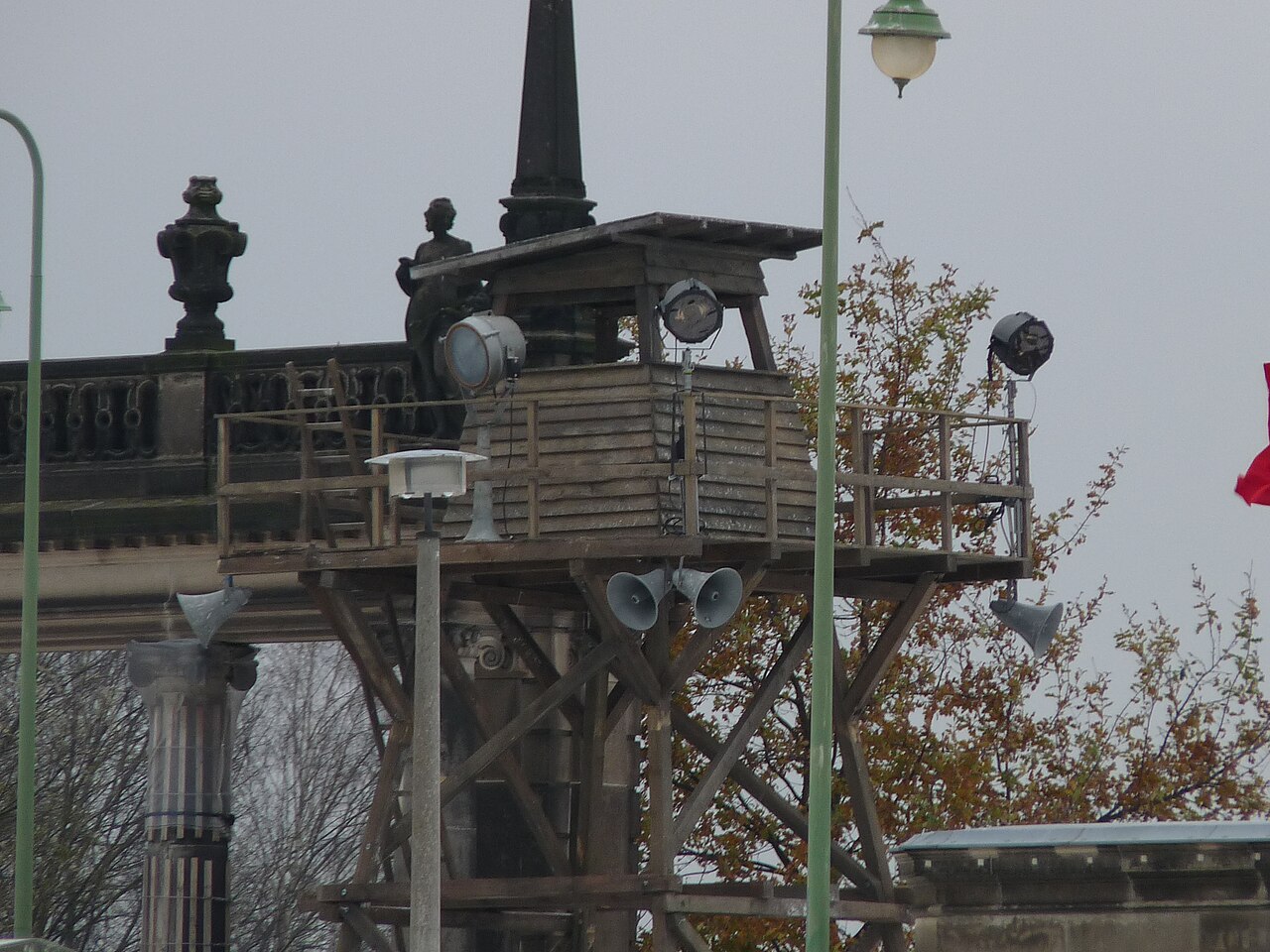
The film renewed worldwide interest in the bridge, and you will now find Bridge of Spies references on information boards and in the museum beside the Potsdam end. Just remember the film compresses events: the real exchange was quieter, colder and almost entirely unphotographed.
Visiting the Glienicke Bridge Today
The bridge is a public road bridge and can be visited at any time, free of charge. Walking across is the whole point: a metal strip across the roadway at the former border line reads “Deutsche Teilung bis 1989” (German division until 1989), and if you look closely you will notice the two halves of the bridge are painted in slightly different shades of green – when the bridge was repainted, the colours used on the Berlin and Potsdam sides never quite matched, and the difference has been kept as a deliberate reminder.
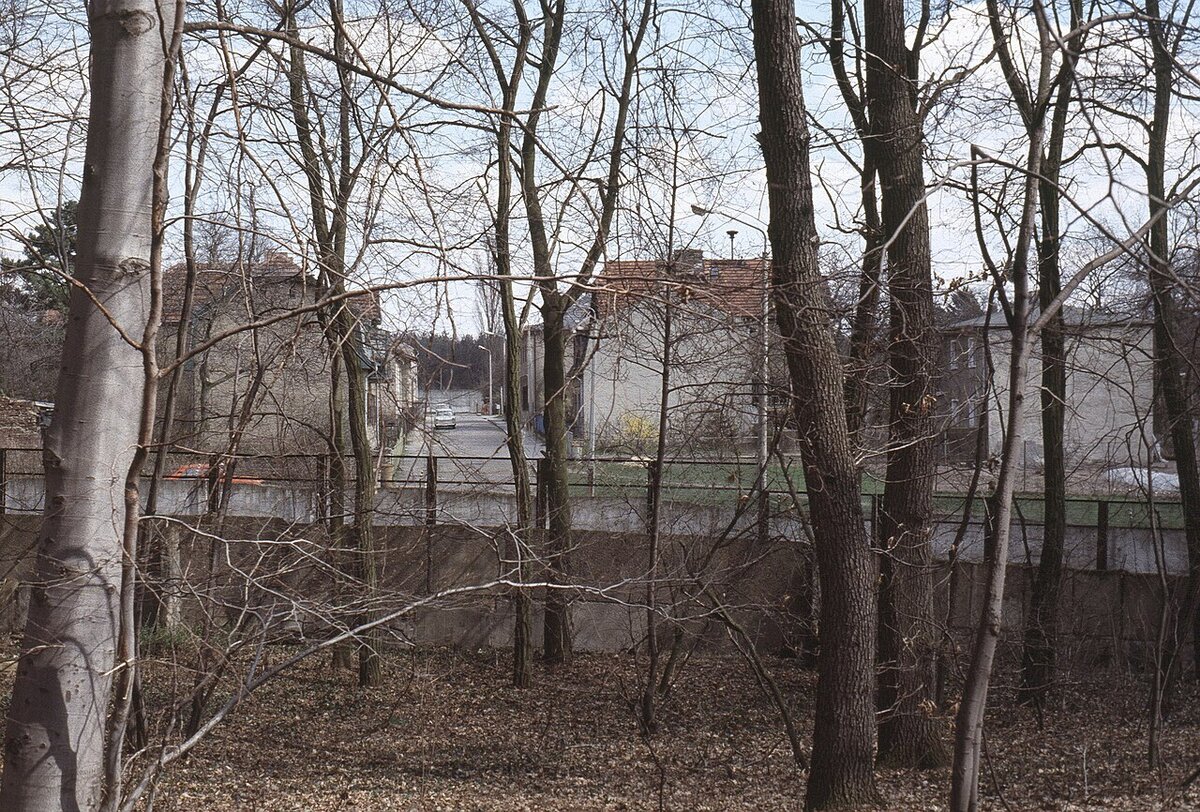
At the Potsdam end, the Villa Schöningen – once right beside the border installations – houses a small museum on the bridge’s history, the divided city and the spy exchanges (closed Mondays; check current hours before visiting). The Berlin end adjoins the UNESCO-listed park of Schloss Glienicke, and the former GDR enclave of Klein Glienicke lies just south of the bridge.
Getting there: from Berlin, take the S-Bahn (S1 or S7) to Wannsee, then bus 316 to its terminus at Glienicker Brücke – about 10 minutes. From Potsdam Hauptbahnhof, tram 93 runs to the same stop. The bridge sits in fare zone C, so use a Berlin ABC ticket. It also makes a natural stop on a day combining Potsdam’s palaces with Berlin’s Wall sites – see our guide to visiting the Berlin Wall in one day.
Cold War Sites Around the Bridge
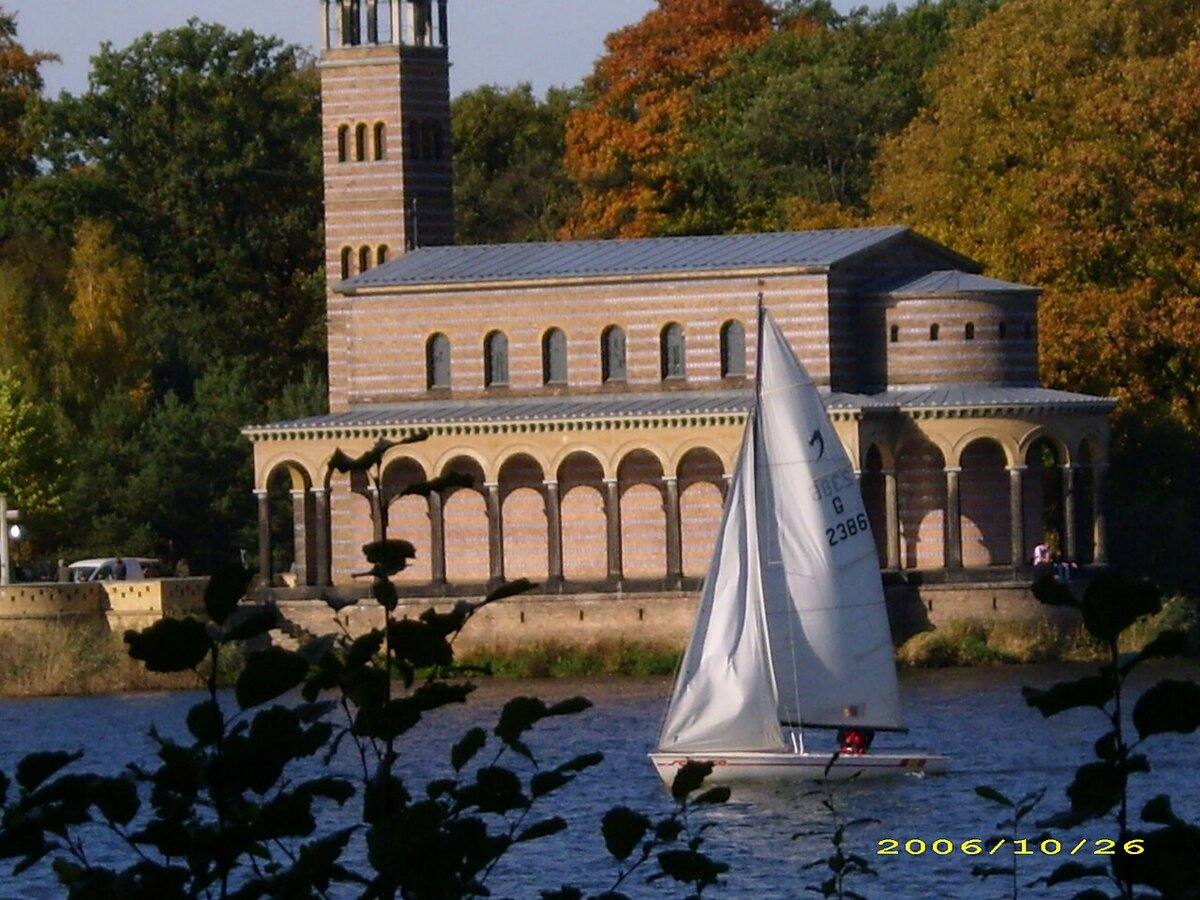
The quiet lakeland southwest of Berlin is full of Cold War history within a short distance of the bridge:
- Klein Glienicke – the GDR enclave wedged between West Berlin territory, reachable only via a single guarded bridge; residents needed special passes just to go home.
- Heilandskirche Sacrow – the lakeside church walled off by the border for 28 years, its tower standing in the death strip, visible from the West but unreachable from either side.
- Steinstücken – the most famous West Berlin exclave, an island of the American sector completely surrounded by East German territory.
- Checkpoint Bravo (Dreilinden) – the Allied checkpoint on the transit motorway between West Berlin and West Germany, a few kilometres east.
- Groß Glienicke Wall Memorial – the only surviving stretch of first-generation 1961 Wall, on the lake shore north of Potsdam.
Frequently Asked Questions
Why is the Glienicke Bridge called the Bridge of Spies?
Because the USA and the Soviet Union used it for three Cold War prisoner exchanges – in 1962, 1985 and 1986 – swapping roughly 40 captured agents and prisoners at the border line in the middle of the bridge. Western journalists coined the nickname; officially the GDR called it the Bridge of Unity.
How many spy exchanges happened on the bridge?
Three: Powers for Abel on 10 February 1962, the 25-for-4 swap of June 1985, and the Shcharansky exchange of 11 February 1986.
Can you walk across the Glienicke Bridge?
Yes. It is an ordinary road bridge between Berlin and Potsdam with footpaths on both sides, open at all times. The former border is marked by a metal strip in the roadway.
Was Bridge of Spies filmed on the real bridge?
Yes. Spielberg shot the exchange scenes on the Glienicke Bridge itself in late 2014, with the bridge closed overnight and redressed as the 1962 border crossing.
Did any exchanges happen at Checkpoint Charlie?
Spies were swapped at the Glienicke Bridge, but the 1962 deal had one exception: American student Frederic Pryor was released at Checkpoint Charlie at the same moment Powers and Abel crossed the bridge.
Explore the bridge and every other site of the divided city on our interactive Berlin Wall map, or trace the full story on our complete timeline of the Berlin Wall.
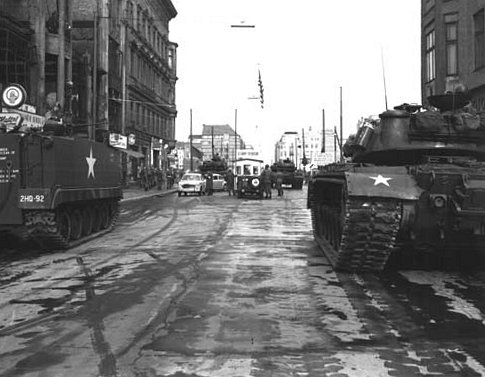
Checkpoint Charlie
East Side Gallery
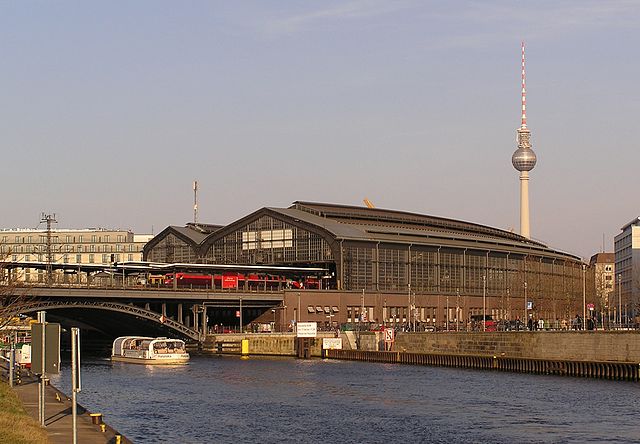
Bahnhof Friedrichstraße
History of the Berlin Wall: A Complete Guide (1961-1989)
65 Years Ago: US and Soviet Tanks Faced Off at Checkpoint Charlie
The Border Guards of the Berlin Wall: Conscripts, the Order to Shoot, and the Trials That Followed
9 November in Berlin: 37 Years Since the Wall Fell, and What’s On
Gethsemanekirche
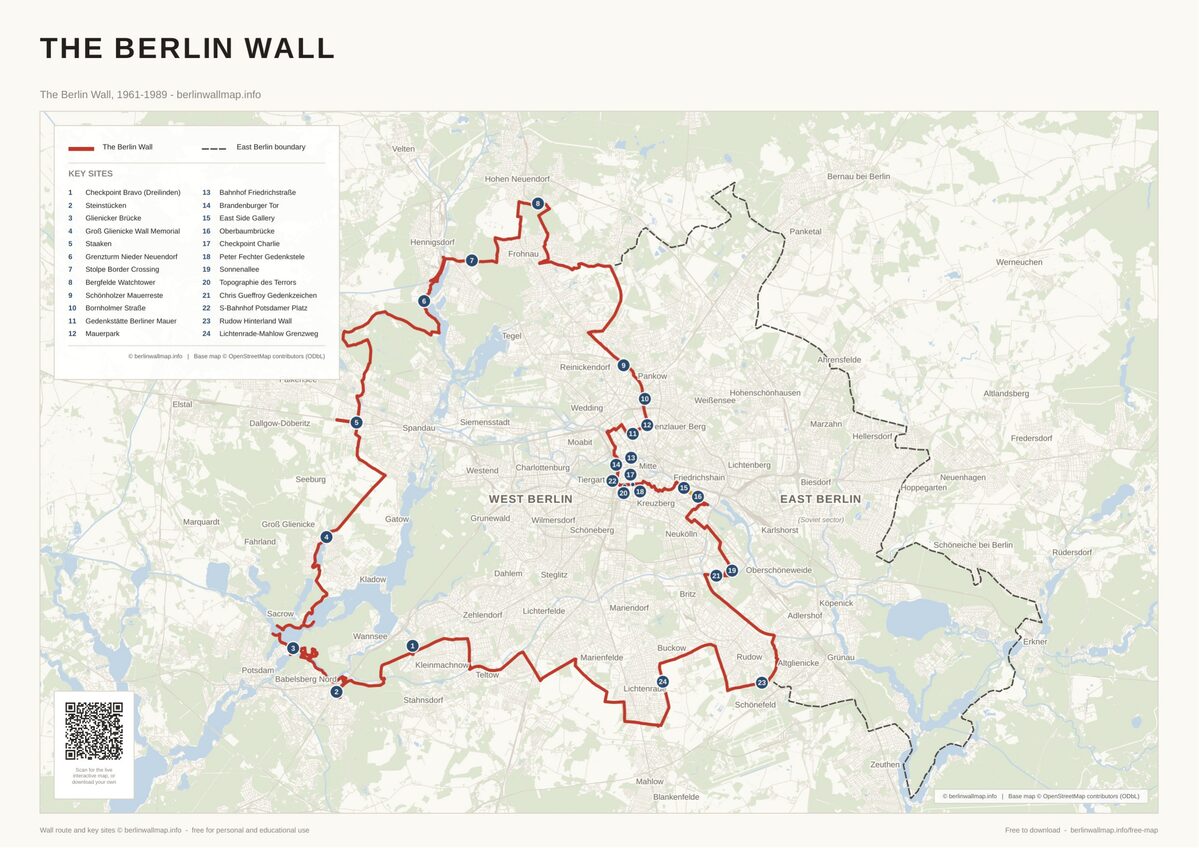
Free map downloads
Free printable PDF maps of the Berlin Wall.
Get the free maps →Explore the Timeline
Journey through Berlin Wall history from 1945 to 1990.
View Timeline →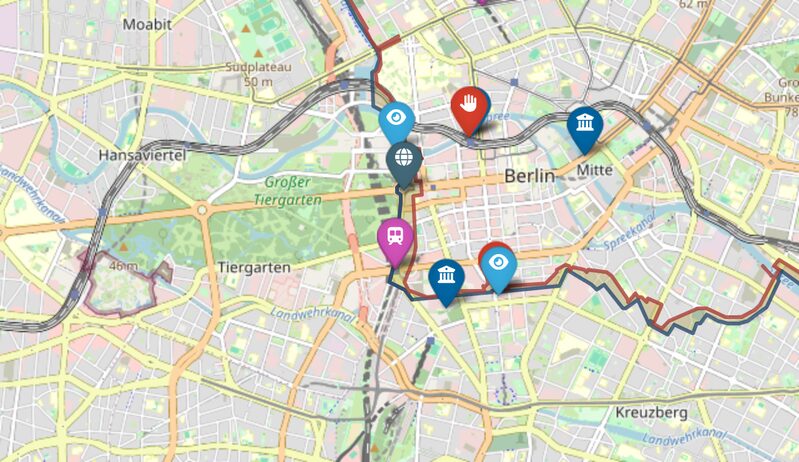
Embed Our Map
Add a free interactive Berlin Wall map to your website or blog.
Get embed code →