
History of the Berlin Wall: A Complete Guide (1961-1989)
The Berlin Wall was a fortified concrete barrier that physically and ideologically divided Berlin from 1961 to 1989, separating the democratic West Berlin from the communist East Berlin and surrounding East Germany. Built by the German Democratic Republic (GDR) to prevent mass emigration to the West, the Wall became the defining symbol of the Cold War and the Iron Curtain.
Prefer to explore visually? Follow the same story on the interactive Berlin Wall timeline, with a live map for every event.
The Road to Division: 1945-1961
After Nazi Germany’s defeat in 1945, the Allied powers divided Berlin into four occupation zones: American, British, French, and Soviet. By 1949, two separate German states had emerged. The Federal Republic of Germany (West Germany) was established in May 1949, followed by the German Democratic Republic (East Germany) in October. Berlin, located deep within East German territory, remained divided.
Throughout the 1950s, East Germany hemorrhaged citizens. Between 1949 and 1961, approximately 3.5 million East Germans fled to the West, many through the open border in Berlin. This “brain drain” included doctors, engineers, teachers, and skilled workers whose departure threatened to collapse the East German economy. By the summer of 1961, up to 1,000 people were crossing to West Berlin every single day.
The Wall Goes Up: August 13, 1961
In the early hours of Sunday, August 13, 1961, East German soldiers and construction workers began sealing the border with barbed wire, concrete posts, and makeshift barriers. The operation, codenamed “Rose,” had been planned in secrecy between GDR leader Walter Ulbricht and Soviet Premier Nikita Khrushchev. Berliners woke to find their city severed overnight.
The initial barbed-wire fence was quickly replaced by a crude concrete block wall. Families were torn apart. Streets that had connected neighborhoods for centuries were suddenly dead ends. Windows in buildings along the border were bricked up. Some East Berliners made desperate last-minute escapes, jumping from upper-story windows into West Berlin before the openings were sealed.
The western Allies protested but took no military action. U.S. President John F. Kennedy sent Vice President Lyndon Johnson and 1,500 American troops along the Autobahn to West Berlin as a show of resolve, but accepted the Wall as preferable to a military confrontation that could escalate into nuclear war.
Anatomy of the Wall
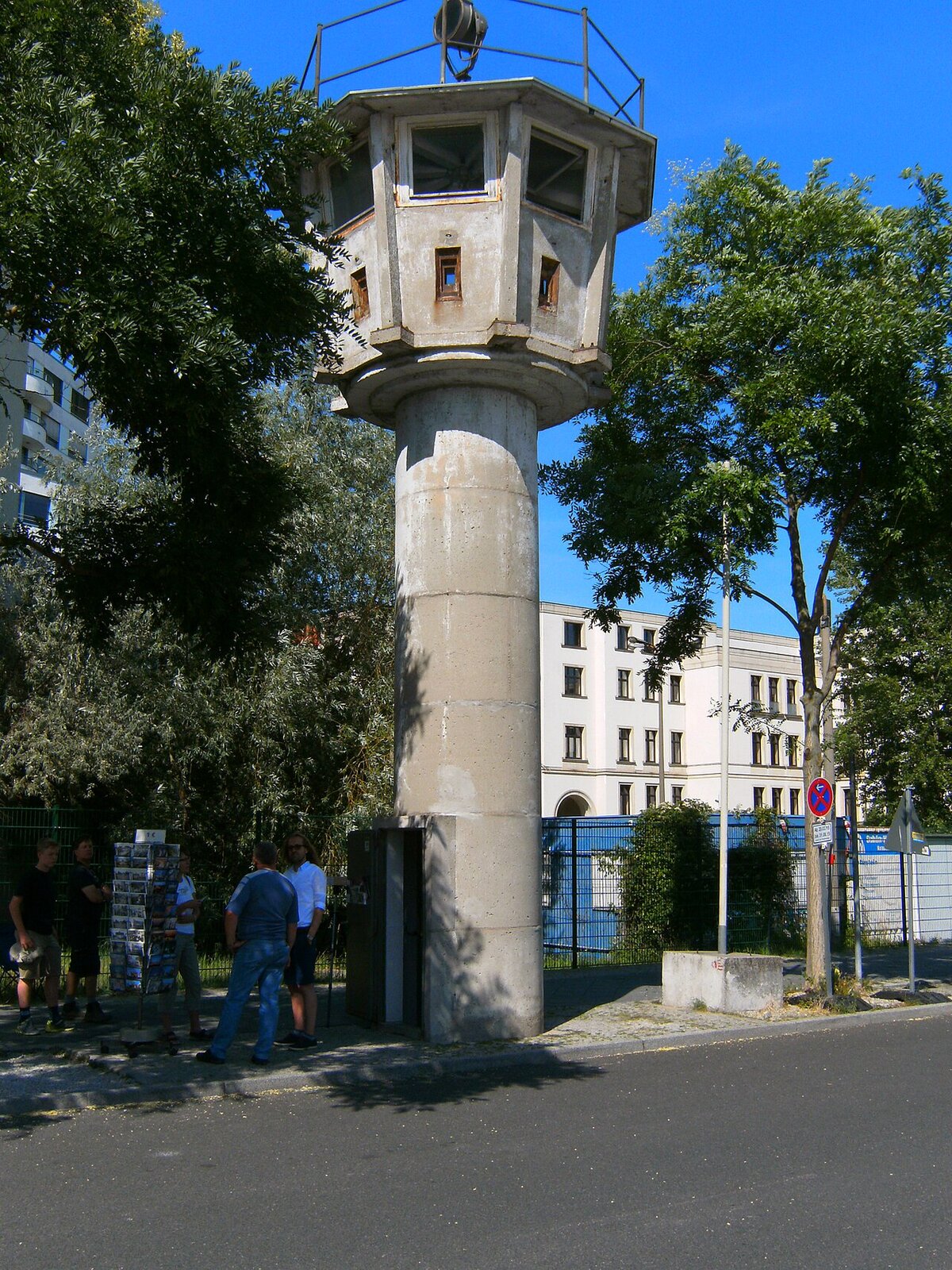
What most people picture as “the Wall” was actually the final iteration, known as the Grenzmauer 75, completed in 1975. It consisted of 45,000 reinforced concrete segments, each 3.6 meters tall and 1.2 meters wide, topped with a smooth pipe to prevent handholds. But this outer wall was only the most visible element of an elaborate death zone.
The full border fortification system, visible on our interactive map, included an inner wall, a “death strip” ranging from 30 to 150 meters wide, anti-vehicle trenches, beds of steel spikes, raked sand strips to reveal footprints, over 300 watchtowers, guard dog runs, and trip-wire-activated automatic guns. More than 11,000 soldiers patrolled the border with orders to shoot anyone attempting to cross.
The Wall stretched 155 kilometers (96 miles) around all of West Berlin: 43 kilometers dividing East and West Berlin directly, and 112 kilometers separating West Berlin from surrounding East Germany.
Key Moments: 1961-1989
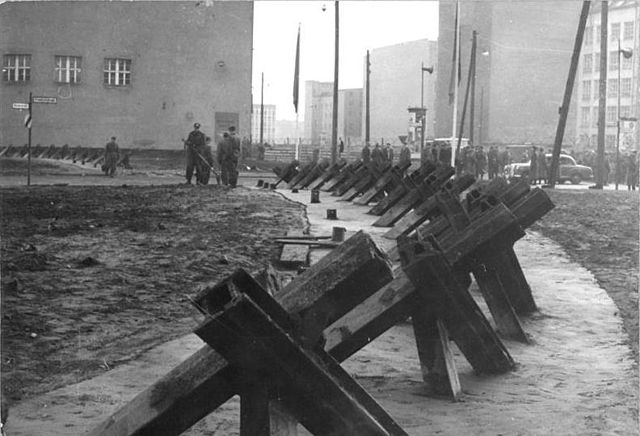
1961: The Standoff at Checkpoint Charlie
In October 1961, a dispute over diplomatic access rights at Checkpoint Charlie led to a tense 16-hour standoff, with American and Soviet tanks facing each other just meters apart. It was the closest the Cold War came to direct armed confrontation in Berlin and underscored the city’s role as a potential flashpoint for World War III.
1962: The Death of Peter Fechter
On August 17, 1962, 18-year-old Peter Fechter was shot while trying to climb over the Wall near Checkpoint Charlie. He fell back into the death strip on the Eastern side, where he lay bleeding and crying for help for nearly an hour while East German guards refused to assist him. Western onlookers and soldiers watched helplessly. His death, witnessed by the world’s media, became a defining moment in the Wall’s history.
1963: Kennedy’s “Ich bin ein Berliner”
On June 26, 1963, President Kennedy delivered his famous speech at the Rathaus Schöneberg, declaring solidarity with West Berlin. Speaking to an audience of 400,000, he proclaimed: “All free men, wherever they may live, are citizens of Berlin, and therefore, as a free man, I take pride in the words: Ich bin ein Berliner.” The speech galvanized Western resolve and gave hope to those living behind the Wall.
1964: Tunnel 57
In October 1964, West Berlin students completed Tunnel 57, a 145-meter tunnel dug from a disused bakery in West Berlin to a building on Strelitzer Strasse in the East. Over two nights, 57 people crawled through the narrow passage to freedom, making it one of the most successful escape operations in the Wall’s history. A lesser-known but equally daring operation was Tunnel 29, completed in 1962, through which 29 people escaped.
1971: Four Power Agreement
The Quadripartite Agreement on Berlin, signed in September 1971, eased some tensions. West Berliners were allowed to visit East Berlin and East Germany for the first time in years, though under strict conditions. The agreement improved transit access but did nothing to dismantle the Wall itself.
1987: Reagan’s “Tear Down This Wall”
On June 12, 1987, U.S. President Ronald Reagan stood at the Brandenburg Gate and challenged Soviet leader Mikhail Gorbachev: “Mr. Gorbachev, tear down this wall!” Though initially dismissed by some as political theater, the speech is now seen as a pivotal moment in the Wall’s final years.
Daily Life in a Divided City
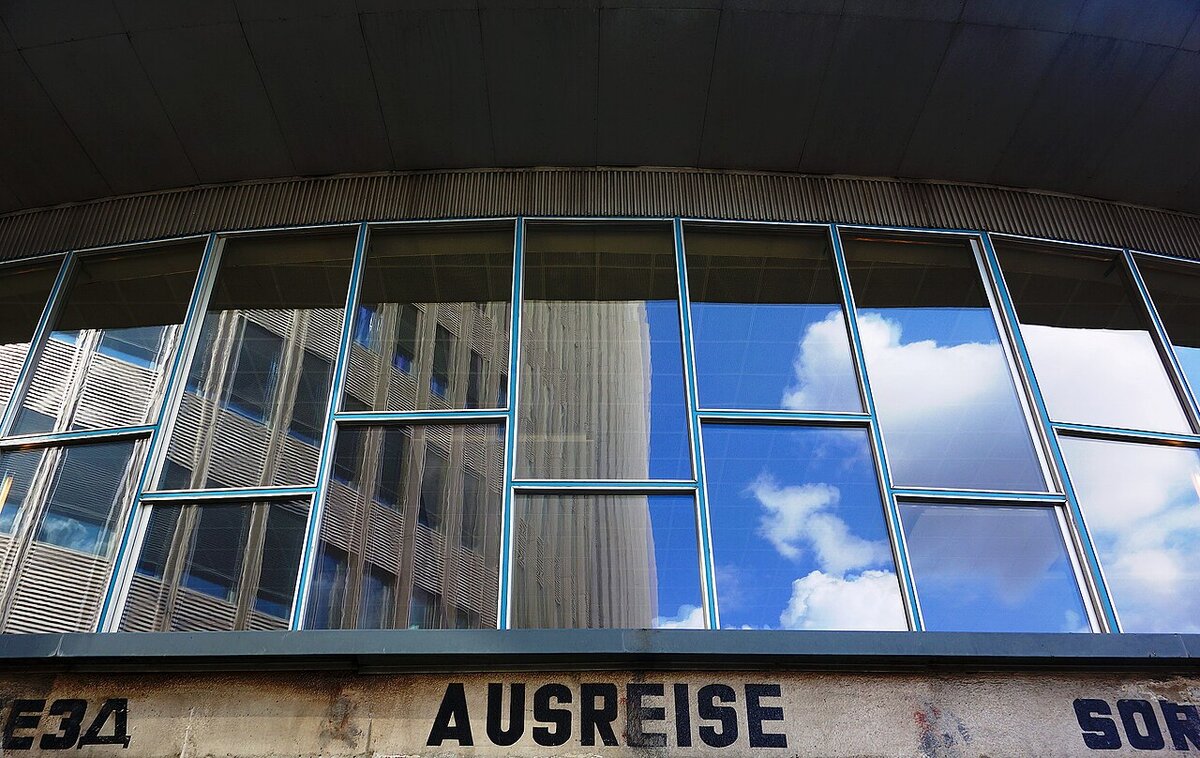
For 28 years, Berliners lived with the Wall as an inescapable fact of daily life. West Berliners could apply for day passes to visit East Berlin through controlled crossings, enduring long waits and searches at border checkpoints like the Tränenpalast, the “Palace of Tears,” so named for the emotional farewells between families who didn’t know when they would see each other again.
East Berliners lived under constant surveillance by the Ministerium für Staatssicherheit (Ministry for State Security), better known as the Stasi. With an estimated 91,000 full-time employees and over 170,000 informants, the Stasi maintained an atmosphere of pervasive suspicion. Today, the Stasi Museum and the former detention center at Hohenschönhausen preserve this history for visitors.
Life in East Berlin was characterized by shortages of consumer goods, restricted travel, and political conformity, but also by a distinct culture of solidarity and improvisation. The DDR Museum in Berlin offers an immersive look at everyday life behind the Wall.
The Fall: November 9, 1989
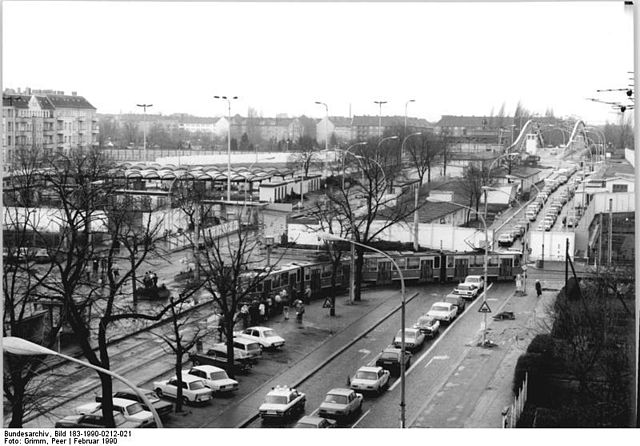
By 1989, the Soviet bloc was crumbling. Hungary opened its border with Austria in May, allowing East Germans to flee westward. Mass protests erupted across East Germany, with hundreds of thousands marching in Leipzig and Berlin demanding reform.
On the evening of November 9, 1989, GDR spokesman Günter Schabowski announced new travel regulations at a press conference. When asked when the new rules would take effect, he fumbled through his notes and replied: “Immediately, without delay.” Within hours, tens of thousands of East Berliners surged to the border crossings. Overwhelmed guards at Bornholmer Straße became the first to open their gates at 11:30 PM, and the other crossings followed. The Wall had fallen.
Jubilant crowds from both sides climbed atop the Wall at the Brandenburg Gate, danced, embraced strangers, and began chipping away at the concrete with hammers. The images were broadcast worldwide.
Reunification: October 3, 1990
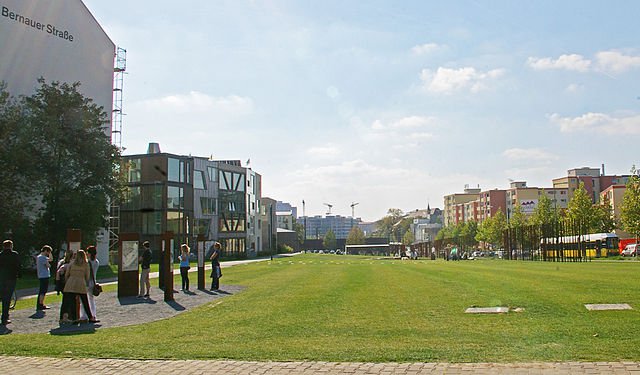
The Wall opened on November 9, 1989, but East Germany outlived it by almost eleven months. The GDR still had its own government, its own currency and its own border troops, and through most of 1990 the question was not whether the two Germanys would join but how quickly.
On March 18, 1990, East Germans voted in the first free parliamentary election in the GDR’s history, and the parties campaigning for rapid unification won it comfortably. Taking the Wall down became official work that June: on June 13, GDR border troops began clearing the fortifications at the corner of Bernauer Strasse and Ackerstrasse, with a public celebration on the former death strip. The men dismantling the Wall were the same Grenztruppen who had guarded it. That stretch is now the Gedenkstätte Berliner Mauer, where a section was deliberately left standing.
On July 1 the West German mark became the currency of the East, and the same agreement ended the last personal checks at the inner-German border and around Berlin. The Einigungsvertrag, the unification treaty, was signed on August 31, and the Two Plus Four Treaty, negotiated by the two German states and the four wartime Allies, was signed in Moscow on September 12 and cleared the way for full German sovereignty.
At midnight on October 3, 1990, the GDR acceded to the Federal Republic under Article 23 of the Basic Law. Brandenburg, Mecklenburg-Vorpommern, Saxony, Saxony-Anhalt and Thuringia became federal states again, and East and West Berlin became a single city.
That is why the German national holiday falls on October 3 rather than November 9. The night the Wall opened is the more famous date, but November 9 is also the anniversary of the 1938 pogrom against Germany’s Jews, which ruled it out as a day of celebration. October 3 also replaced June 17, the West German holiday that had commemorated the 1953 uprising in the East.
The Wall Today
Most of the Wall was demolished in 1990, with fragments sold as souvenirs or donated to museums around the world. Today, several significant sections and memorial sites preserve the Wall’s memory. The Gedenkstätte Berliner Mauer (Berlin Wall Memorial) on Bernauer Strasse offers the most comprehensive documentation of the border fortifications. The East Side Gallery, a 1.3-kilometer stretch covered in murals, has become one of Berlin’s most visited landmarks. The Topographie des Terrors exhibition documents the broader apparatus of Nazi and state terror.
Explore all of these sites and more on our interactive Berlin Wall map, or browse our complete listing of historical places and facts about the Berlin Wall.
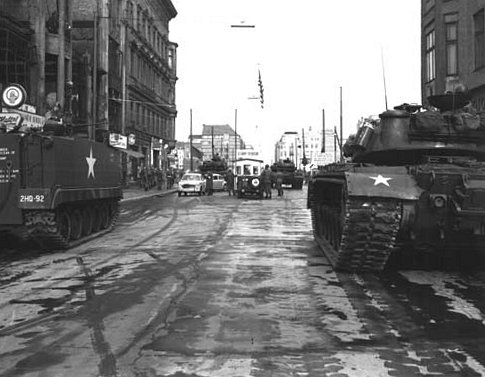
Checkpoint Charlie
East Side Gallery
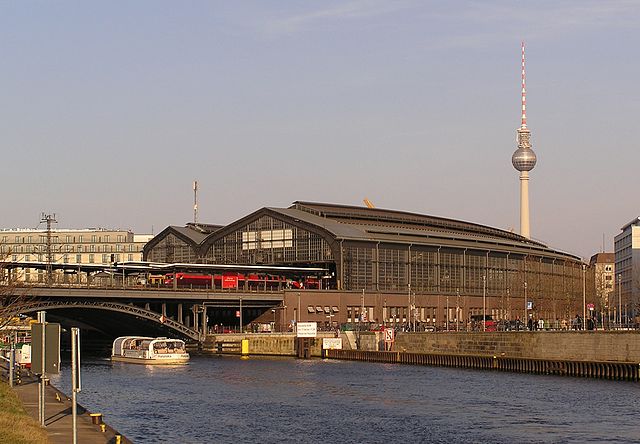
Bahnhof Friedrichstraße
History of the Berlin Wall: A Complete Guide (1961-1989)
65 Years Ago: US and Soviet Tanks Faced Off at Checkpoint Charlie
The Border Guards of the Berlin Wall: Conscripts, the Order to Shoot, and the Trials That Followed
9 November in Berlin: 37 Years Since the Wall Fell, and What’s On
Gethsemanekirche
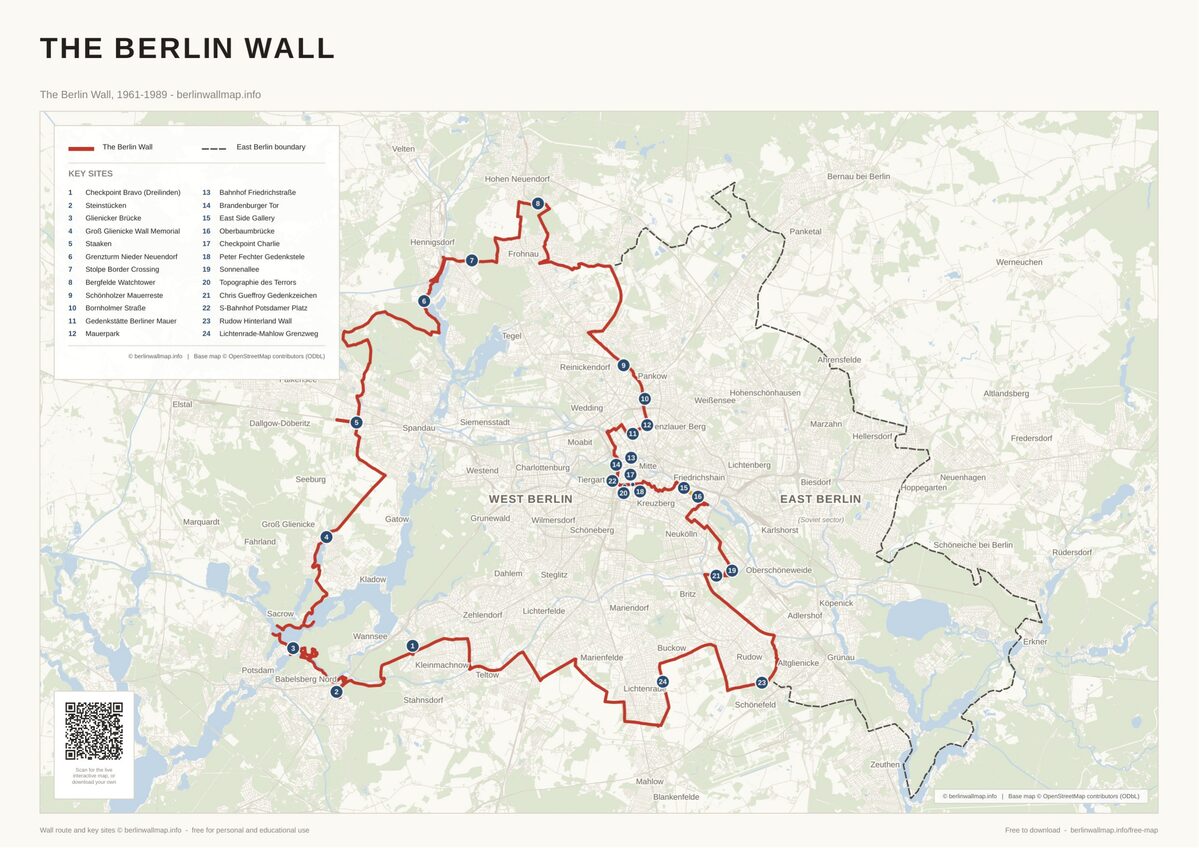
Free map downloads
Free printable PDF maps of the Berlin Wall.
Get the free maps →Explore the Timeline
Journey through Berlin Wall history from 1945 to 1990.
View Timeline →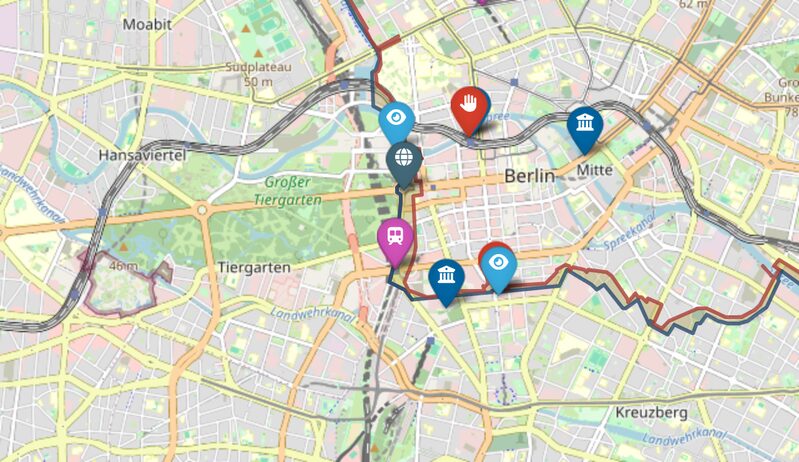
Embed Our Map
Add a free interactive Berlin Wall map to your website or blog.
Get embed code →