The Stasi: East Germany’s Secret Police
The Berlin Wall was the visible face of East Germany’s dictatorship. The invisible one sat in a sprawling office complex in the Lichtenberg district, where the Ministry for State Security – the Stasi – kept watch over an entire nation. By the time the Wall fell in 1989, the Stasi had around 91,000 full-time employees and a network of at least 170,000 unofficial informants: proportionally the largest secret police apparatus in history. This is the story of how it worked, how it ended – and where you can confront it in Berlin today, in the offices and prison cells it left behind.
What Was the Stasi?
The Ministerium für Staatssicherheit (Ministry for State Security, MfS – “Stasi” for short) was founded on 8 February 1950, only four months after East Germany itself. Modelled on the Soviet secret police, it answered neither to parliament nor to the courts but to the ruling SED party, and it described its own role in exactly those terms: the “shield and sword of the party”. It was a domestic secret police, a foreign intelligence service, and a criminal investigation authority rolled into one, with its own remand prisons, its own officer academy, and even its own football club.
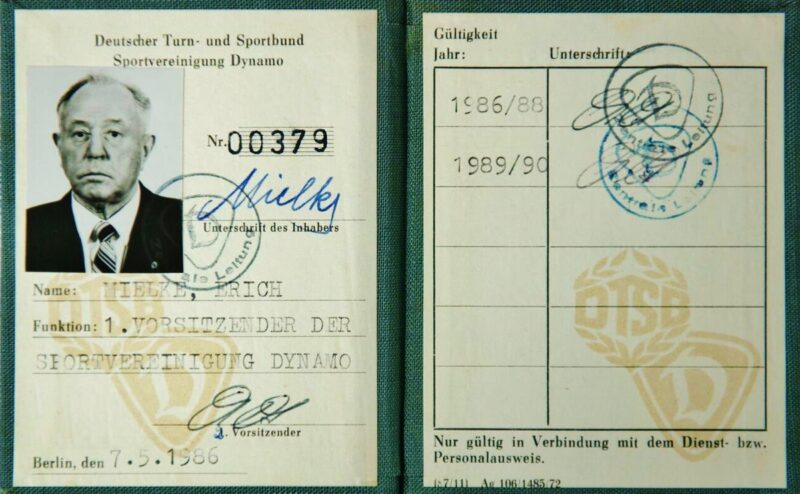
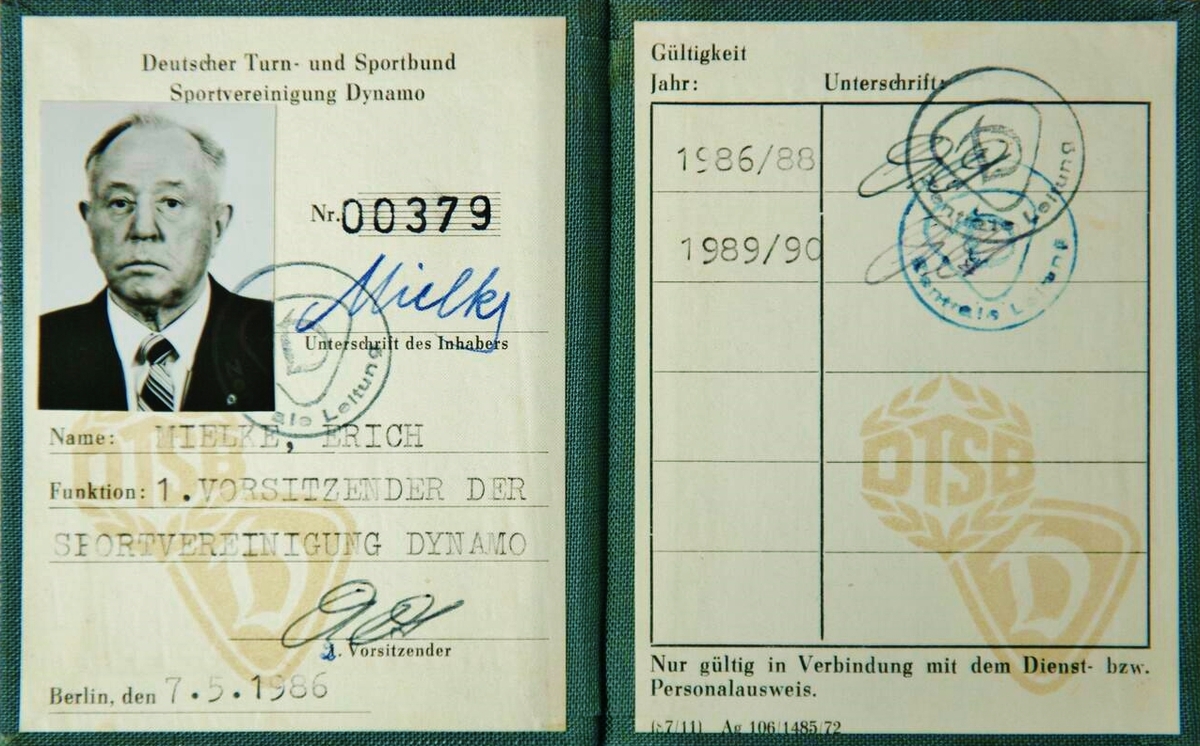
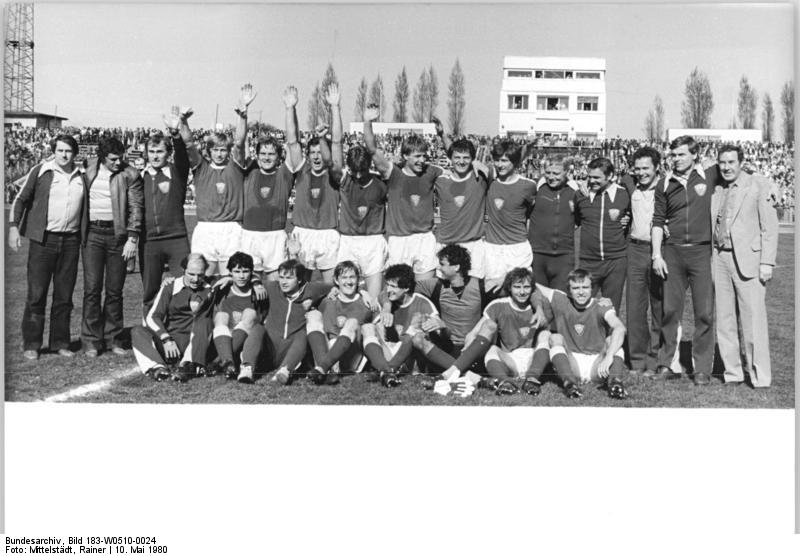
That club was no footnote. Mielke himself served as first chairman of the Sportvereinigung Dynamo, the sports association of the security organs, and its Berlin football team – BFC Dynamo – was his pet project. With the ministry’s patronage came convenient refereeing and first pick of the country’s talent, and BFC Dynamo won the East German championship ten years in a row between 1979 and 1988. Fans of every other club knew them as the Schiebermeister – the cheating champions – and jeering them was one of the few acts of defiance an ordinary East German could get away with.
Its real job was not catching criminals. It was detecting dissent before dissent could organize – and for that, the Stasi set out to know everything about everyone. East Germans joked about it quietly, in kitchens and never on the phone, calling it VEB Horch und Guck: the state-owned enterprise “Listen and Look”.
The scale still astonishes. At its peak the Stasi employed roughly one full-time officer for every 180 East German citizens – a density of surveillance far beyond Hitler’s Gestapo or the Soviet KGB. Counting the unofficial informants, by the 1970s and 80s about one in every 63 East Germans was working for the Stasi in some form. It accumulated personal files on around six million people in a country of just under seventeen million.
Erich Mielke and the Normannenstrasse Headquarters
From 1957 until the regime’s final weeks in 1989, the ministry was run by one man: Erich Mielke, a veteran communist street fighter who had fled to Moscow in 1931 after the shooting of two Berlin policemen. The murders followed him across the century – in 1993 a reunified Germany convicted the 85-year-old Mielke for them, the only crime for which the most feared man in East Germany ever went to prison. He was sentenced to six years; counting his time on remand he served about five, and was released in 1995 on grounds of age and ill health – the larger proceedings over the deaths at the Wall were abandoned because he was deemed unfit to stand trial. Mielke died in a Berlin nursing home on 21 May 2000, aged 92.
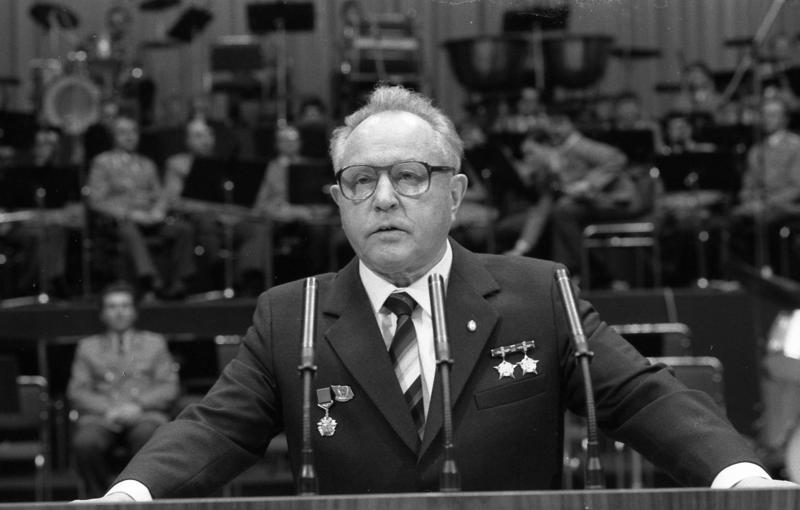
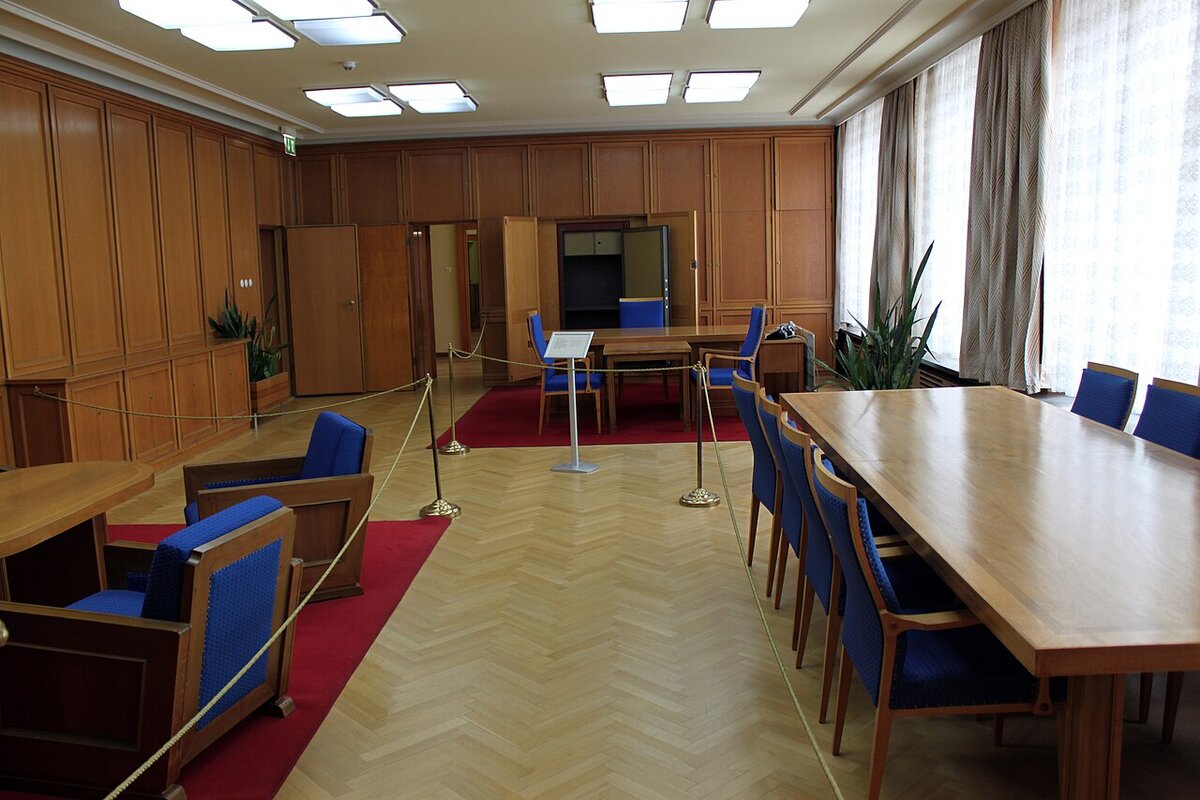
Under Mielke, the headquarters on Normannenstraße in Lichtenberg grew into a sealed city within the city: dozens of buildings with thousands of staff, plus canteens, shops and archives, hidden behind an unremarkable street front. At its heart stood Haus 1, where Mielke worked – and where his office, conference room and private quarters survive today exactly as he left them, preserved as the centrepiece of the Stasi Museum.
An Army of Informants
The Stasi’s full-time officers were only the skeleton of the system. Its flesh and blood were the Inoffizielle Mitarbeiter (unofficial collaborators, or IMs) – ordinary East Germans who reported on the people around them. At the end there were at least 170,000 of them: neighbours reporting on neighbours, colleagues on colleagues, pastors on their congregations, students on their teachers, and in some of the most painful cases uncovered later, husbands and wives on each other.
Some informed out of conviction, some for small privileges or career advancement, and many because they had been pressured or blackmailed into it. Their reports fed an apparatus that opened private mail by the steam-kettle load, tapped telephones, drilled pinhole cameras through apartment walls, and filmed dead-letter drops from vans with hidden lenses.
The most notorious detail is also the strangest: the Stasi kept Geruchskonserven – smell samples. Suspects were made to sit on yellow cloths during interrogation, or had their laundry secretly raided, and the cloths were sealed in glass jars so that tracker dogs could later match a person to an anonymous leaflet or a meeting place. Rows of these jars are on display in the Stasi Museum today.
The Stasi and the Berlin Wall
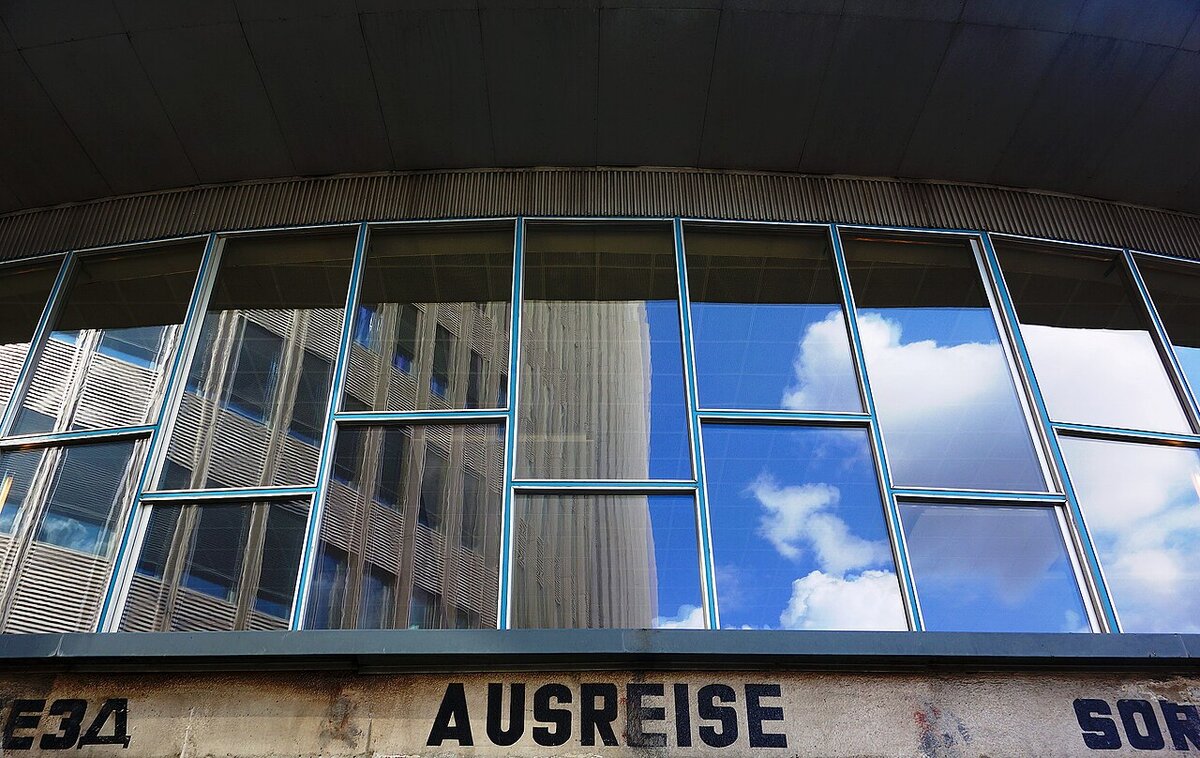
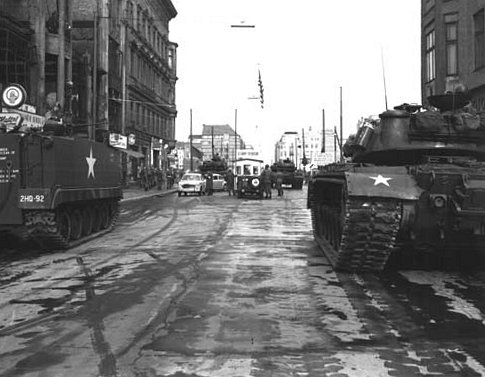
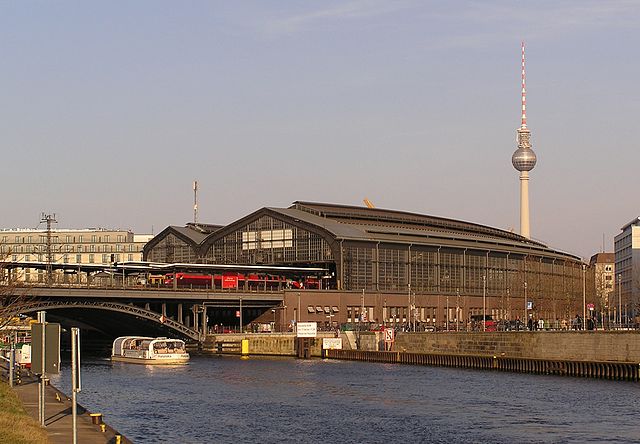
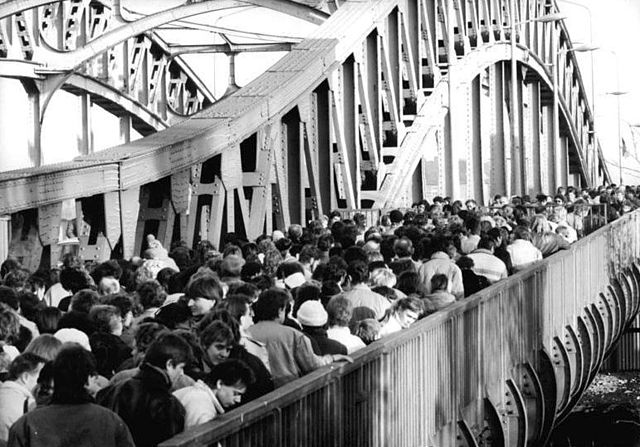
The Berlin Wall itself was guarded by the border troops – but the system that decided who crossed it, and what happened to those who tried without permission, belonged to the Stasi. Every application to travel west passed through MfS vetting. And at the border crossings, the unsmiling officers who checked passports – including those in the famous Tränenpalast, the “Palace of Tears” departure hall at Friedrichstraße station – were not regular border guards at all, but Stasi officers of the Passport Control Units wearing border-guard uniforms.
The Stasi’s border work reached far beyond the checkpoints. Its units hunted escape plans before they could be carried out, infiltrated the West Berlin networks of escape helpers and tunnel builders, and treated Republikflucht – “flight from the republic” – as a serious crime. A failed escape attempt typically meant arrest by the Stasi, interrogation in its remand prison, and a prison sentence. Even successful escapees were not free of the ministry: it watched and harassed defectors and their families for years, which is why Conrad Schumann, the border guard whose leap over the barbed wire became world-famous, still feared the Stasi’s reach in his Bavarian village decades after his escape.
Abroad, the ministry’s foreign intelligence arm, the HVA under spymaster Markus Wolf, ran agents throughout West Germany – one of them, Günter Guillaume, worked so close to Chancellor Willy Brandt that the affair forced Brandt’s resignation in 1974. When East and West traded captured agents, the deals were brokered through East Berlin lawyer Wolfgang Vogel, who worked hand in hand with the MfS – and carried out on the Glienicke Bridge.
Zersetzung: Breaking People Quietly
In the 1970s the Stasi’s methods changed. East Germany had won international recognition and signed the Helsinki Accords; mass arrests of dissidents had become diplomatically embarrassing. So in 1976 the ministry codified a subtler weapon in its directive 1/76: Zersetzung, literally “decomposition”.
Instead of arresting a target, the Stasi would quietly dismantle their life. Rumours were planted among friends and colleagues. Careers stalled for no explainable reason. Marriages were broken up with forged letters hinting at affairs. Mail arrived opened, or not at all. In the most disorienting cases, agents entered apartments while the occupants were out and simply moved things – furniture shifted, pictures rehung, alarm clocks reset – until victims doubted their own sanity. Many never learned why their lives had unravelled until they read their files decades later, and former targets still live with the psychological damage today.
Hohenschoenhausen: The Stasi’s Secret Prison
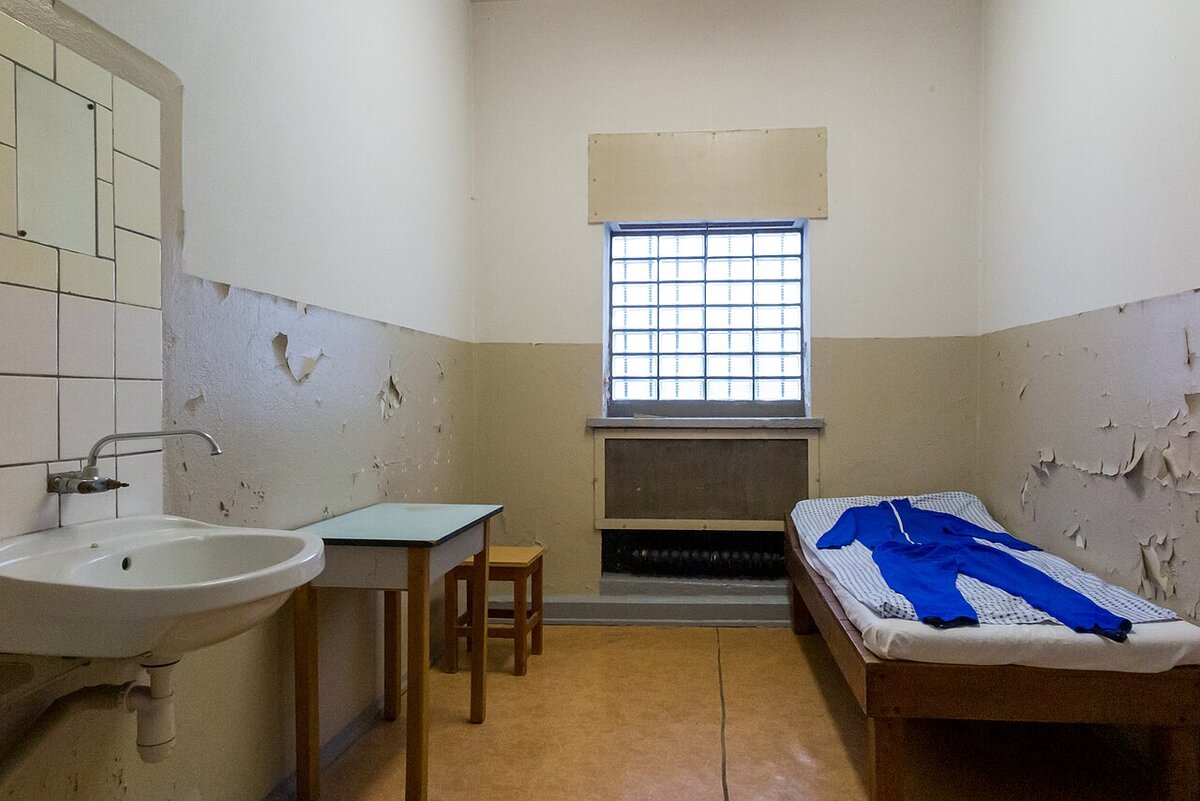
Those the Stasi did arrest disappeared into a place that officially did not exist. The central remand prison at Berlin-Hohenschönhausen sat inside a sealed military zone that was left as a blank space on East Berlin city maps. Prisoners arrived in windowless vans disguised as bakery or laundry trucks, driven in circles for hours so that they could not tell where they were – many believed they had left Berlin entirely.
The site began as a Soviet camp and NKVD prison after 1945, complete with the notorious “U-Boot” – the submarine – a basement of damp, windowless cells where prisoners of the early years were broken with cold, water and darkness. The Stasi took the prison over in 1951 and gradually traded physical brutality for psychological methods: total isolation, sleep deprivation, disorientation, and interrogations engineered to convince prisoners that their case was hopeless and their friends had betrayed them. More than 11,000 people passed through its cells, among them many caught attempting to cross the Wall.
The End: Storming the Stasi Headquarters
In the autumn of 1989, as the protests swelled and the Wall fell, the Stasi’s world collapsed with astonishing speed. On 13 November 1989, four days after the Wall opened, the 81-year-old Mielke stood before parliament and stammered the sentence East Germans would never let him forget: “Ich liebe euch doch alle” – “But I love you all.” The chamber laughed at the most feared man in the country.
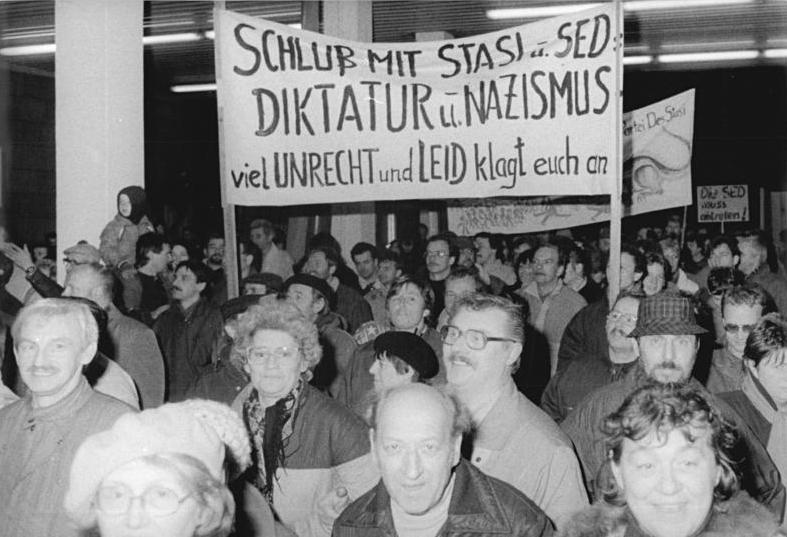
Inside the ministry, the shredders were already running. As officers destroyed the most incriminating files, citizens noticed the smoke and the trucks – and acted. On 4 December 1989 demonstrators occupied the Stasi’s regional office in Erfurt, and citizens’ committees seized one district headquarters after another to stop the destruction. On 15 January 1990, tens of thousands surrounded and stormed the Normannenstraße headquarters itself. By the spring of 1990 the ministry that had watched East Germany for forty years was dissolved.
The Files Today: Reading What the Stasi Knew
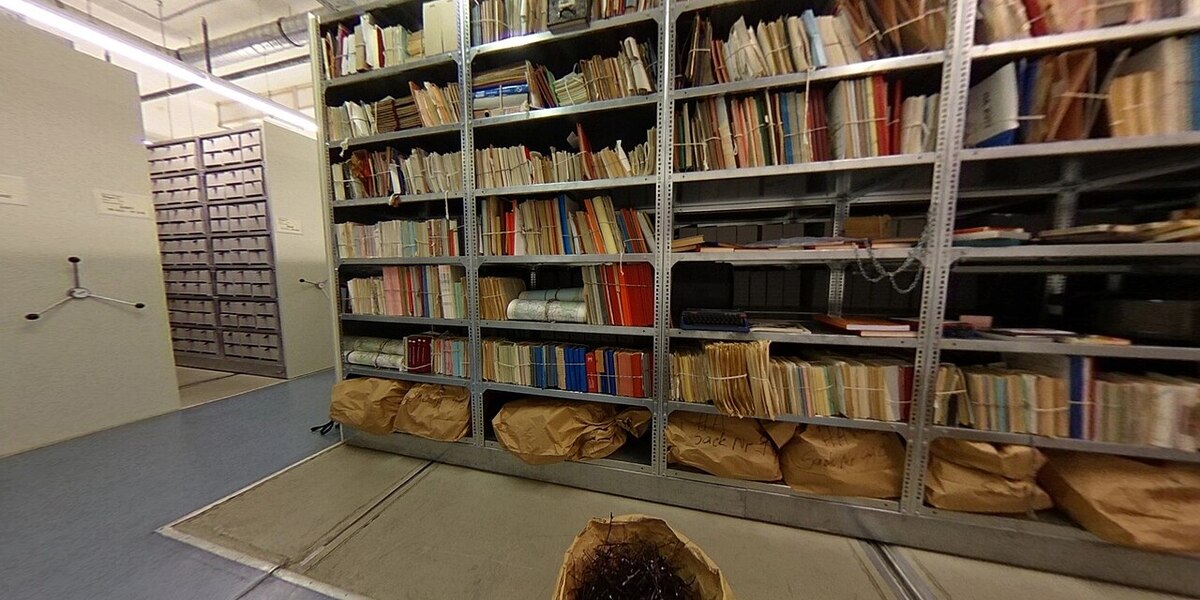
What the citizens’ committees saved is one of the most extraordinary archives on earth: about 111 kilometres of shelved files, along with millions of index cards, photographs and tapes – plus more than 15,000 sacks of torn paper rescued from the shredding rooms, which archivists have been piecing back together ever since.
Since January 1992, every citizen has had the right to read their own Stasi file, and millions have applied. For many it was a second reckoning with the dictatorship: files revealed which friend, colleague or relative had been the informant in their life. The archive – the Stasi Records Archive, part of Germany’s Federal Archives since 2021 – still sits on the old ministry campus at Normannenstraße, now reinvented as a “Campus for Democracy”. The Oscar-winning film The Lives of Others (2006) ends with exactly this scene: a former surveillance target sitting in the reading room, discovering what the Stasi knew.
Visiting the Stasi Sites in Berlin Today
Two places in Berlin let you walk through this story, and they complement each other perfectly: the desk where the surveillance was ordered, and the cells where it ended.
The Stasi Museum occupies Haus 1 of the former headquarters at Ruschestraße 103 in Lichtenberg. You can stand in Mielke’s preserved office, see the surveillance technology – hidden cameras in watering cans and tree stumps, the smell-sample jars – and trace how the ministry penetrated every corner of East German life. The museum is open daily; take the U5 to Magdalenenstraße, about ten minutes from Alexanderplatz, and allow one and a half to two hours.
The Hohenschönhausen Memorial preserves the Stasi’s central remand prison at Genslerstraße 66. Access is by guided tour only – and the tours are the point: many are led by former inmates, who walk you through the U-Boot cells, the interrogation rooms and their own stories. English-language tours run daily; book ahead in summer. Take tram M5 to Freienwalder Straße or bus 256 to Genslerstraße, and allow at least two hours.
Both sites are in Lichtenberg and can be combined into a single, sobering day. To complete the picture, stop downtown at the Tränenpalast at Friedrichstraße station, where the Stasi’s passport controllers processed travellers in the “Palace of Tears” – its free exhibition shows the border regime from the traveller’s side of the booth.
Frequently Asked Questions
What does “Stasi” stand for?
Stasi is short for Staatssicherheit (state security) – the everyday name for the Ministerium für Staatssicherheit (Ministry for State Security, MfS), East Germany’s secret police and intelligence service from 1950 to 1990.
How many people worked for the Stasi?
At the end, around 91,000 full-time employees plus at least 170,000 unofficial informants – in a country of under seventeen million. Counting informants, roughly one in every 63 East Germans worked for the Stasi, a density of surveillance greater than that of the Gestapo or the KGB.
Can you visit Stasi sites in Berlin?
Yes. The Stasi Museum in the former headquarters (with Mielke’s preserved office) is open daily, and the former remand prison at Hohenschönhausen can be visited on guided tours, many led by former prisoners. Both are in Lichtenberg, easily reached by U5 and tram.
Can people still read their Stasi files?
Yes. Since January 1992 anyone can apply to see their own file, and millions have done so. The files are managed by the Stasi Records Archive, part of Germany’s Federal Archives since 2021, on the former ministry campus in Berlin-Lichtenberg.
Which film best shows how the Stasi worked?
The Lives of Others (Das Leben der Anderen, 2006), which won the Academy Award for Best Foreign Language Film, follows a Stasi officer eavesdropping on an East Berlin playwright. Its depiction of wiretapped apartments, pressured informants and the reading room of the Stasi files is the best introduction to this chapter of German history on screen.
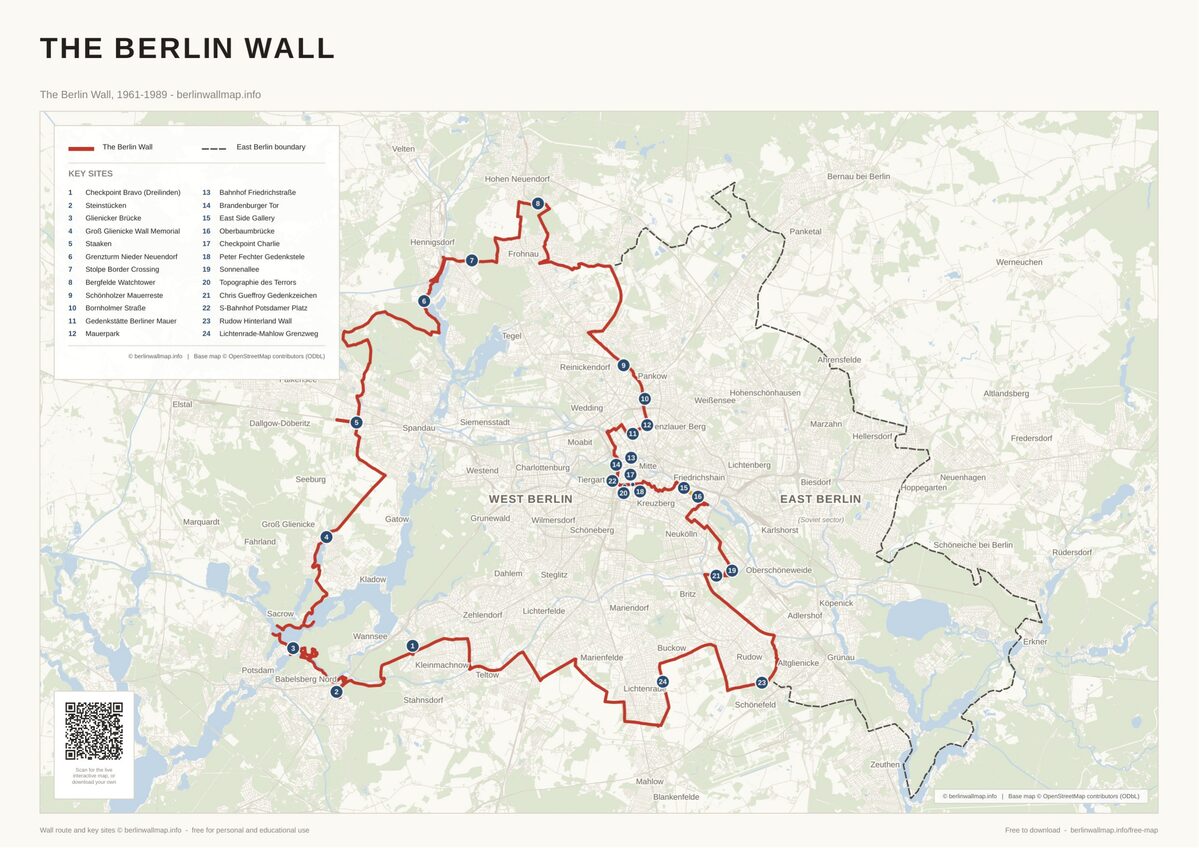
Stand in Mielke’s office, walk the prison corridors – and find every other site of the divided city on our interactive Berlin Wall map, or see the Stasi’s rise and fall in context on the Berlin Wall history timeline.

Free map downloads
Free printable PDF maps of the Berlin Wall.
Get the free maps →Explore the Timeline
Journey through Berlin Wall history from 1945 to 1990.
View Timeline →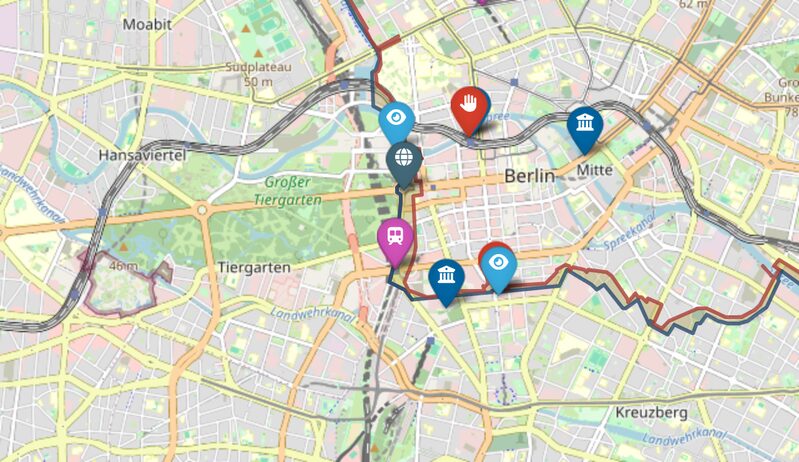
Embed Our Map
Add a free interactive Berlin Wall map to your website or blog.
Get embed code →