Conrad Schumann: The Soldier Who Jumped to Freedom
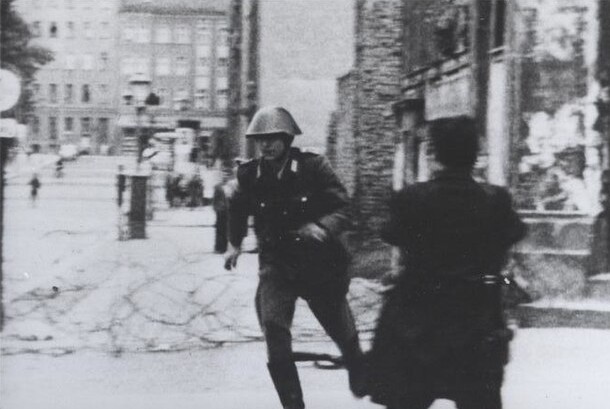
Three days after East Germany sealed the border, a 19-year-old guard named Conrad Schumann stood watch over a low coil of barbed wire on the corner of Ruppiner Straße and Bernauer Straße. Across the wire, in the West, a crowd was watching him. At around four in the afternoon on 15 August 1961, he took a short run, flung away his cigarette, and jumped – over the wire, out of the East, and into one of the most famous photographs of the twentieth century.
Who Was Conrad Schumann?
Hans Conrad Schumann was born on 28 March 1942 in Zschochau, a village in rural Saxony not far from Leipzig. He trained as a shepherd before joining the East German police, completing non-commissioned officer school in Dresden. By the summer of 1961 he was a 19-year-old Unteroffizier (sergeant) in the Bereitschaftspolizei, East Germany’s barracked riot police, and he had been posted to Berlin.
When the border was sealed on 13 August 1961, the Wall did not yet exist as the concrete barrier most people picture today. In those first days it was mostly coils of barbed wire, hastily strung along the sector boundary and guarded by young soldiers like Schumann. He was sent to the corner of Bernauer Straße, a street that would become one of the most tragic addresses of the divided city: the buildings stood in the East, but their pavement lay in the West.
The Leap: 15 August 1961
On the afternoon of 15 August, Schumann was guarding the low barbed-wire barrier at the Ruppiner Straße corner. The photograph makes the leap look like a sudden impulse, but it was closer to a quietly arranged plan. Since 13 August, crowds of West Berliners had been gathering along the new boundary to watch the barrier go up and to call across to relatives on the other side, and West Berlin police patrolled their side of the line. Chain-smoking and pacing his post, Schumann began discreetly signalling his intentions to the people opposite. He trod the wire down a little with his boot, and in a low voice – so his fellow guards would not hear – he let the Westerners nearest him know that he meant to jump.
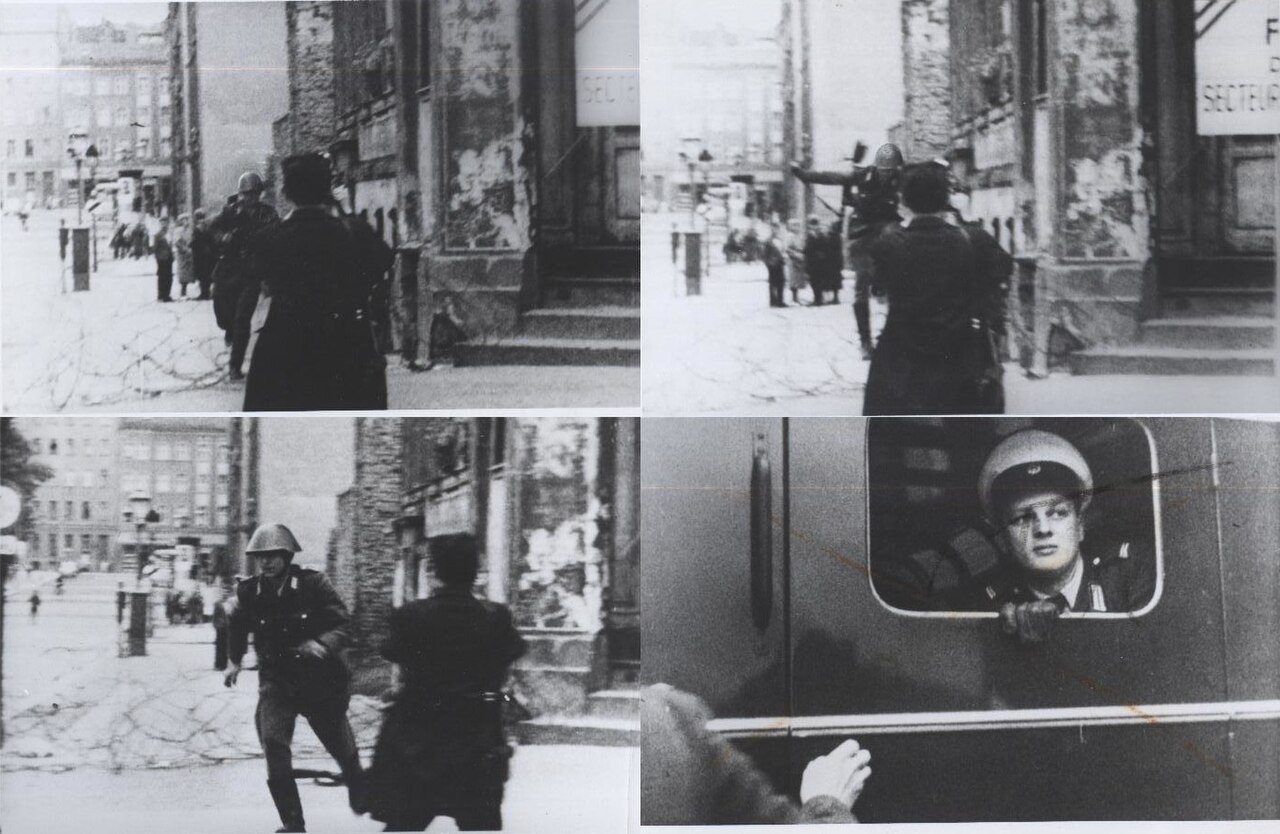
The West side responded without giving him away. Word reached the West Berlin police, who edged a van up to within a few metres of the wire and left its back door open. A young press photographer, Peter Leibing, had been tipped off by police that a guard might try to run, and he was waiting at the corner with his camera ready. To keep the other East German guards from noticing, onlookers and photographers turned their lenses and their attention pointedly toward Schumann’s colleagues further along the line, drawing watchful eyes away from him.
This is the answer to the obvious question – why nobody on the Eastern side stopped him. Schumann’s intent was never broadcast; it was passed quietly to the West, while the men beside him were deliberately distracted and looking the other way. At around four o’clock, in the moment his comrades’ backs were turned, he made his move: he ran, threw away his cigarette, leapt over the barbed wire, and let his PPSh submachine gun slip from his shoulder as he jumped. He landed in the West, dashed to the open door of the van, and was driven away at speed. By the time the other guards turned back, he was already gone.
The Photograph That Defined the Cold War
The photographer waiting at the corner was Peter Leibing, a 19-year-old apprentice with the Hamburg agency Contipress. Leibing had trained as a photographer of horse racing, and he later said he anticipated Schumann’s jump much as he would a horse clearing a fence – his camera fixed on the spot, ready to release the shutter the instant the leap began. When Schumann jumped, Leibing pressed the shutter at exactly the right instant: the soldier suspended in mid-air, knees bent, gun slung back, the wire below him.
The image ran in newspapers around the world and was soon given a title that captured everything it represented: “Sprung in die Freiheit” – the Leap into Freedom. A West German film cameraman also captured the moment on motion film, but it is Leibing’s single frame that endures. It became shorthand for the whole human drama of the Wall: an ordinary young man, in uniform, choosing one side over the other in the space of a single second. The photograph is now held in collections worldwide and remains, more than sixty years on, the defining image of escape from East Germany.
Why the Image Mattered So Much
Schumann’s leap came at the perfect – and most painful – moment. The barbed wire was only two days old. The world had not yet absorbed what East Germany had done, and here, frozen in a single photograph, was its meaning: the state was now so determined to keep its people in that it would wall off a city, and even its own soldiers wanted out.
For West Berlin and its allies it was a propaganda gift, proof that people fled communism rather than toward it. For East Germany it was an embarrassment that hardened its resolve. Over the following weeks and months the improvised wire was replaced by concrete blocks, then by the towering, guarded barrier the world would come to know. The escape of a single guard helped convince the Western public that the new frontier was not a security measure but a prison wall – a judgement history has shared.
Life in the West
While his photograph travelled the world, Schumann himself was kept well out of sight. In the West he was debriefed at length – in his own later words, the authorities “squeezed him like a lemon” – and was then quietly resettled far from Berlin, in rural Bavaria. He had no wish to be a public figure, and for the rest of his life he stayed largely out of the spotlight that his photograph never left.
In Bavaria he built an ordinary working life. He worked for a time as a caregiver and at a winery before settling into a long career as a machine setter at the Audi plant in Ingolstadt, where he stayed until the end of his life. He married a local woman, had a son, and made his home in a village in Upper Bavaria. Bavaria, he would later say, was the only place that ever truly felt like home.
Fear, Family, and the Shadow of the Stasi
Settled though he was, Schumann never found peace of mind. By jumping he had abandoned his post and left his family and his homeland behind in Saxony, and in the eyes of the East he was now a deserter and a traitor to the Republic – offences that carried heavy prison sentences. He feared the reach of the East German state for the rest of his life. Defectors were not always safe even in the West, where the Stasi was known to hunt down those who had fled, and Schumann did not dare go back. Even after the Berlin Wall fell, nearly thirty years after his jump, he still found it hard to return, afraid of how the people he had left behind would receive him.
His fear was not misplaced. When he did go back to Saxony after reunification, the homecoming was painful: some of his relatives, and many of his former police colleagues, still regarded him as a traitor who had abandoned them, and wanted nothing to do with him. He had freed himself in a single second in 1961, yet he never quite escaped the weight of what it had cost him. “Only since the ninth of November 1989,” he said after the Wall came down, “have I felt truly free” – and even that freedom did not bring him peace.
Schumann struggled with depression through much of his later life. On 20 June 1998, he took his own life in the orchard of his home near Kipfenberg in Upper Bavaria. He was 56 – remembered now not only for the bravest second of his life, but as one of the Berlin Wall’s lasting casualties.
Where It Happened: Visiting the Spot Today
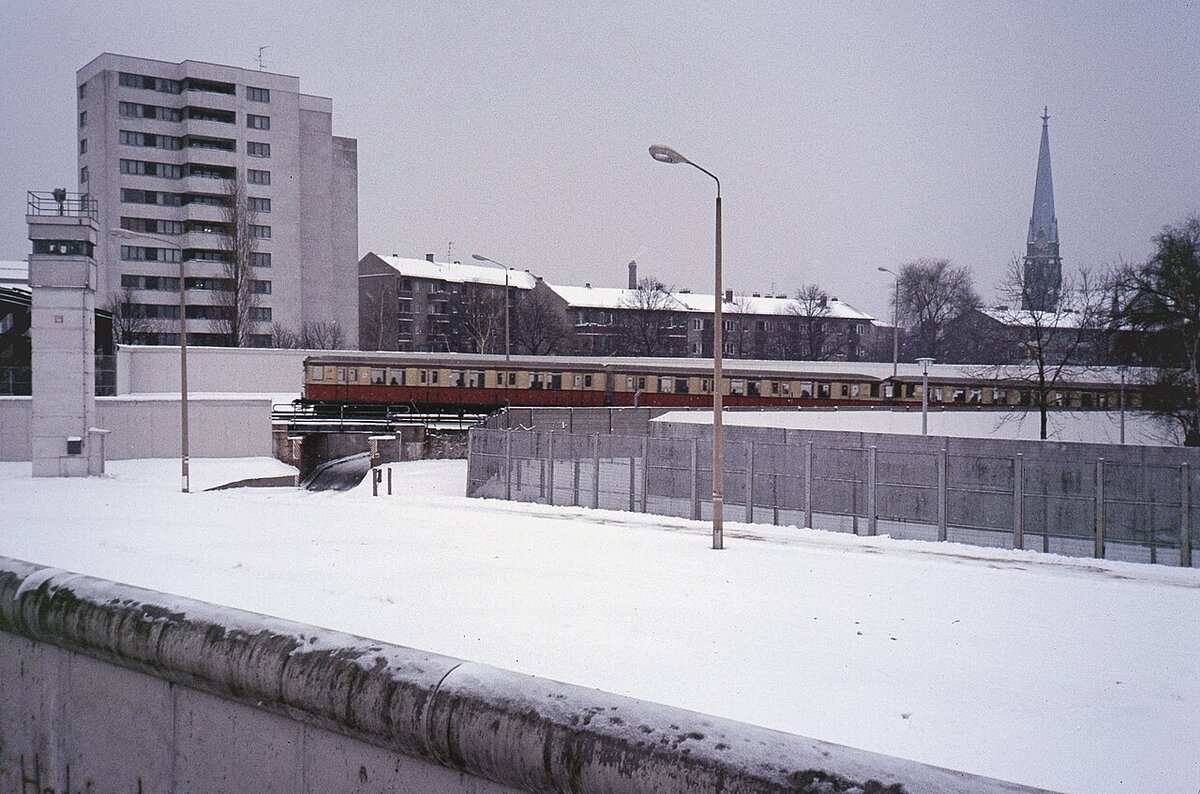
The corner where Schumann jumped is on Bernauer Straße, today the heart of the Berlin Wall Memorial (Gedenkstätte Berliner Mauer) – the most important place in the city to understand how the Wall worked and what it cost. The open-air memorial runs for over a kilometre along the former border strip, with a preserved section of Wall, a watchtower, the Window of Remembrance, and a documentation centre with a viewing tower.
The leap itself is marked nearby: a sculpture and a large reproduction of Leibing’s photograph stand close to the original location on the corner of Bernauer Straße and Ruppiner Straße, so you can stand roughly where Schumann stood and see the image set against the real street. The memorial is open daily and free to enter, and it is easy to reach: take the U8 to Bernauer Straße, the S-Bahn (S1, S2, S25, S26) to Nordbahnhof, or the M10 tram, which runs the length of the site. Plan an hour or two, and pair it with the nearby Nordbahnhof ghost-station exhibition for a fuller picture of the divided city.
One Leap Among Thousands of Escapes
Schumann was the first border guard photographed escaping, but he was far from the only person to flee. In the months after 13 August 1961, with the barrier still incomplete, hundreds slipped across wire, swam canals, or climbed from the windows of the Bernauer Straße tenements before those windows were bricked up. As the Wall grew more sophisticated, so did the escapes: tunnels, hidden compartments in cars, homemade hot-air balloons, and forged papers. Many succeeded; many were caught; at least 140 people died at the Berlin Wall.
For the wider story of how East Berliners risked everything to reach the West, read our guide to the daring escapes across the Berlin Wall, or follow the events year by year on our interactive Berlin Wall timeline, where Schumann’s leap sits among the moments that defined the divided city.
Frequently Asked Questions
Who was the soldier who jumped over the Berlin Wall?
He was Conrad Schumann, a 19-year-old East German border guard. On 15 August 1961, three days after the border was sealed, he leapt over the barbed wire on Bernauer Straße and escaped to West Berlin. The moment was captured by photographer Peter Leibing.
Where did Conrad Schumann jump?
On the corner of Ruppiner Straße and Bernauer Straße, in what is now the Berlin Wall Memorial. A sculpture and a reproduction of the famous photograph mark the spot today.
How did he escape without being stopped?
Schumann signalled his plan only to the Western side, where police quietly positioned a van with its door open. As he prepared to jump, onlookers and photographers drew the attention of the other East German guards toward the far end of the line. Schumann went the instant their backs were turned and was driven away before they could react.
Who took the photo of the leap?
Peter Leibing, a 19-year-old apprentice photographer working for the Hamburg agency Contipress. He had waited nearly an hour, anticipating the jump, and captured Schumann in mid-air. The image is known as “Sprung in die Freiheit” (Leap into Freedom).
What happened to Conrad Schumann afterwards?
He settled in Bavaria and worked at the Audi plant in Ingolstadt. He never felt entirely safe and said he only felt truly free after the Wall fell in 1989. Struggling with depression, he took his own life near Kipfenberg in 1998, aged 56.
Explore the corner where it happened, and every other site of the divided city, on our interactive Berlin Wall map.
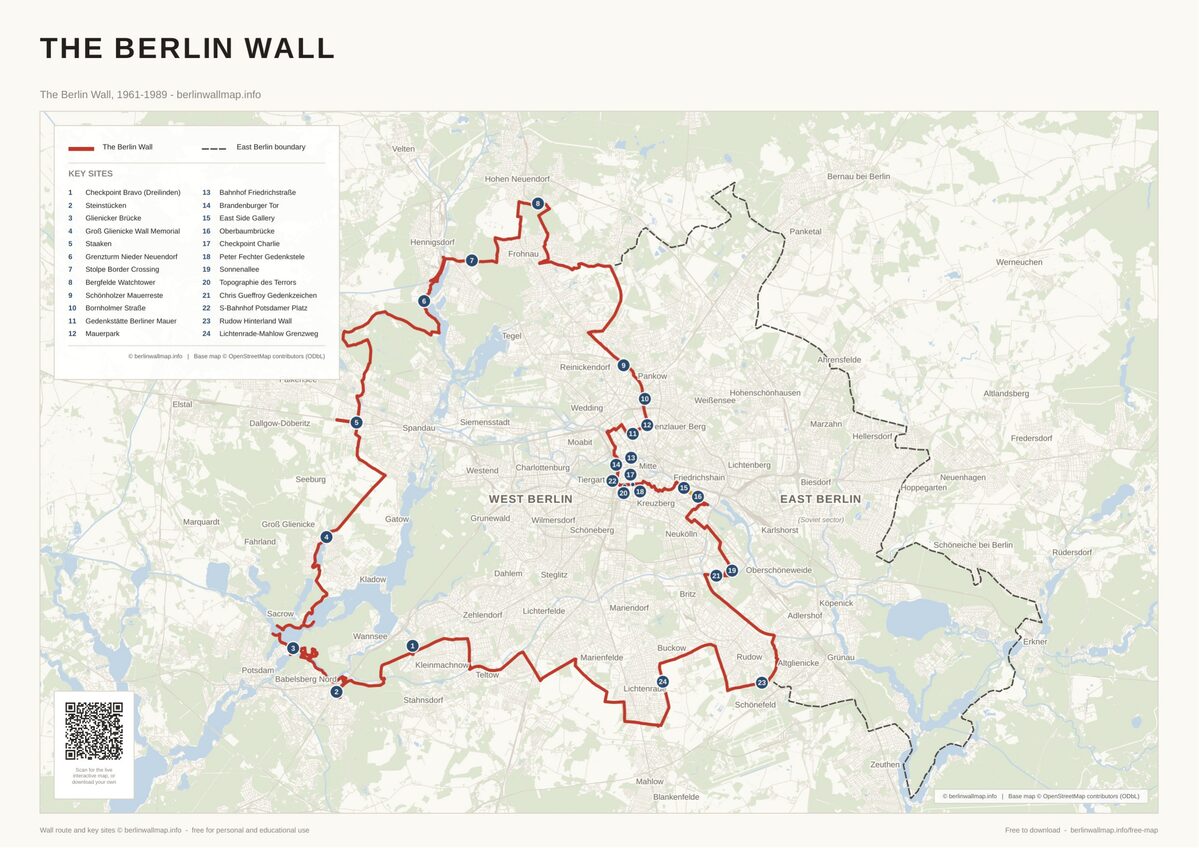
Free map downloads
Free printable PDF maps of the Berlin Wall.
Get the free maps →Explore the Timeline
Journey through Berlin Wall history from 1945 to 1990.
View Timeline →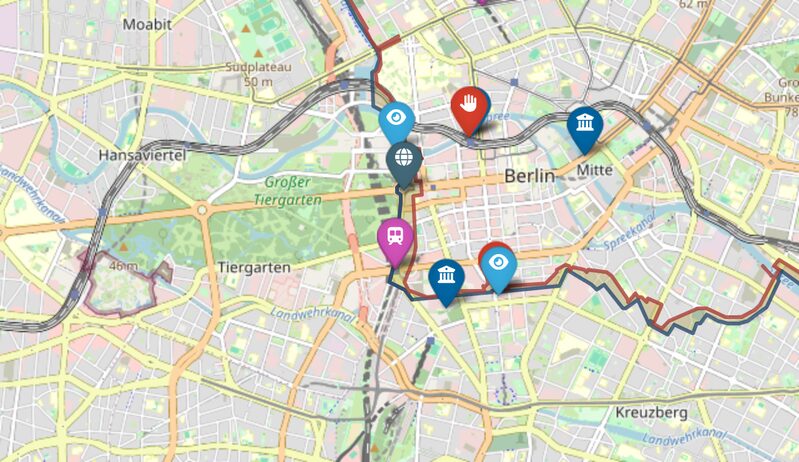
Embed Our Map
Add a free interactive Berlin Wall map to your website or blog.
Get embed code →