How was the Berlin Wall guarded?
The Berlin Wall was one of the most heavily fortified borders in history, designed with multiple layers of obstacles that made escape almost impossible.
From the East Berlin side, a would-be escapee faced the following obstacles:
The Hinterland Wall: An inner wall or fence, typically 2–3 metres high, that marked the beginning of the restricted border zone. Simply approaching this wall without authorisation was a criminal offence.
Signal fence: An electrified fence wired with alarms. Touching it triggered alerts at the nearest guard post and sometimes signal flares that illuminated the area.
Dog runs: Long cables to which guard dogs were tethered, allowing them to patrol a strip of the border.
Anti-vehicle trenches: Deep ditches designed to stop cars or trucks from being driven through the border.
Patrol road: A concrete road running parallel to the Wall, used by military vehicles and foot patrols. Guards patrolled 24 hours a day, working in pairs.
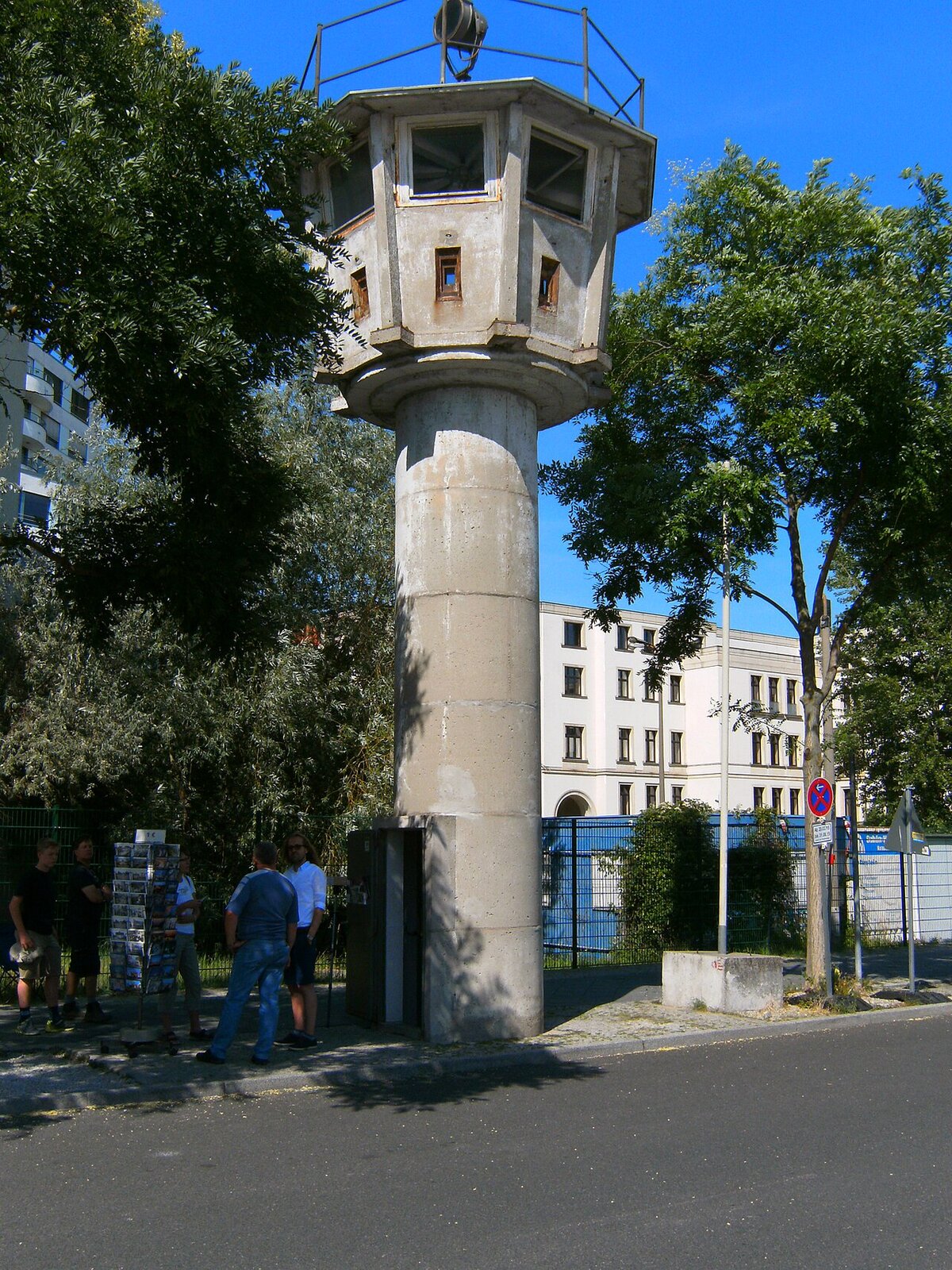
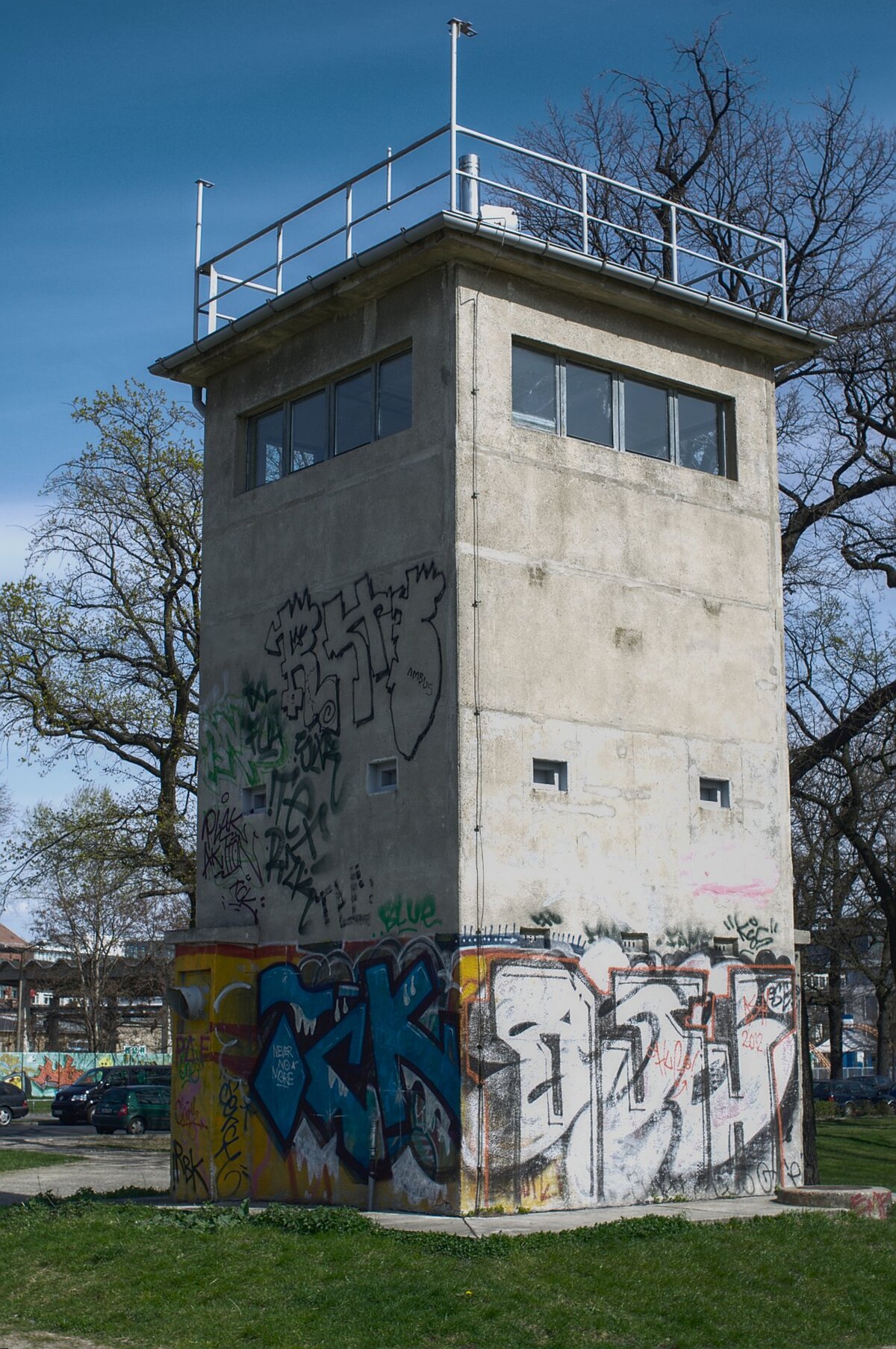
Watchtowers: 302 observation towers were spaced along the Wall, each manned by armed guards with searchlights and a direct telephone line to command. The watchtower on Erna-Berger-Straße is one of the few that survive.
Control strip: A raked sand or gravel strip designed to reveal footprints. It was inspected regularly and smoothed after each patrol.
The Wall itself: The final obstacle, the 3.6-metre-high fourth-generation concrete wall topped with a smooth pipe. Even if someone made it this far, scaling it under fire and floodlights was nearly impossible.
The entire system was overseen from command posts connected by telephone and radio. In total, the border fortifications employed around 47,000 guards, backed by minefields in some rural sections (though not in Berlin itself) and standing orders to shoot to kill.
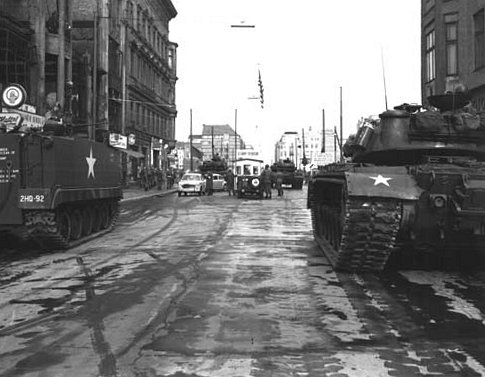
Checkpoint Charlie
East Side Gallery
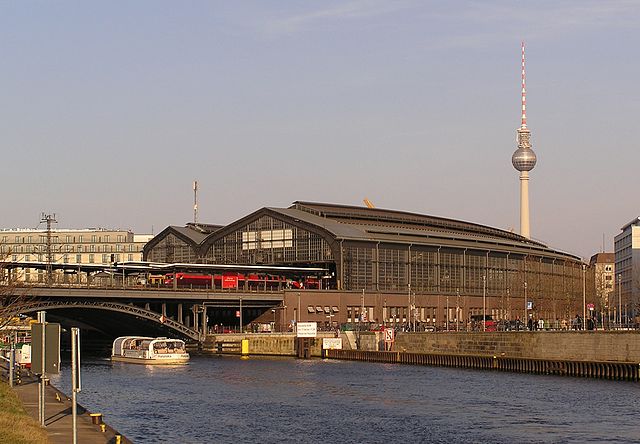
Bahnhof Friedrichstraße
History of the Berlin Wall: A Complete Guide (1961-1989)
65 Years Ago: US and Soviet Tanks Faced Off at Checkpoint Charlie
The Border Guards of the Berlin Wall: Conscripts, the Order to Shoot, and the Trials That Followed
9 November in Berlin: 37 Years Since the Wall Fell, and What’s On
Gethsemanekirche
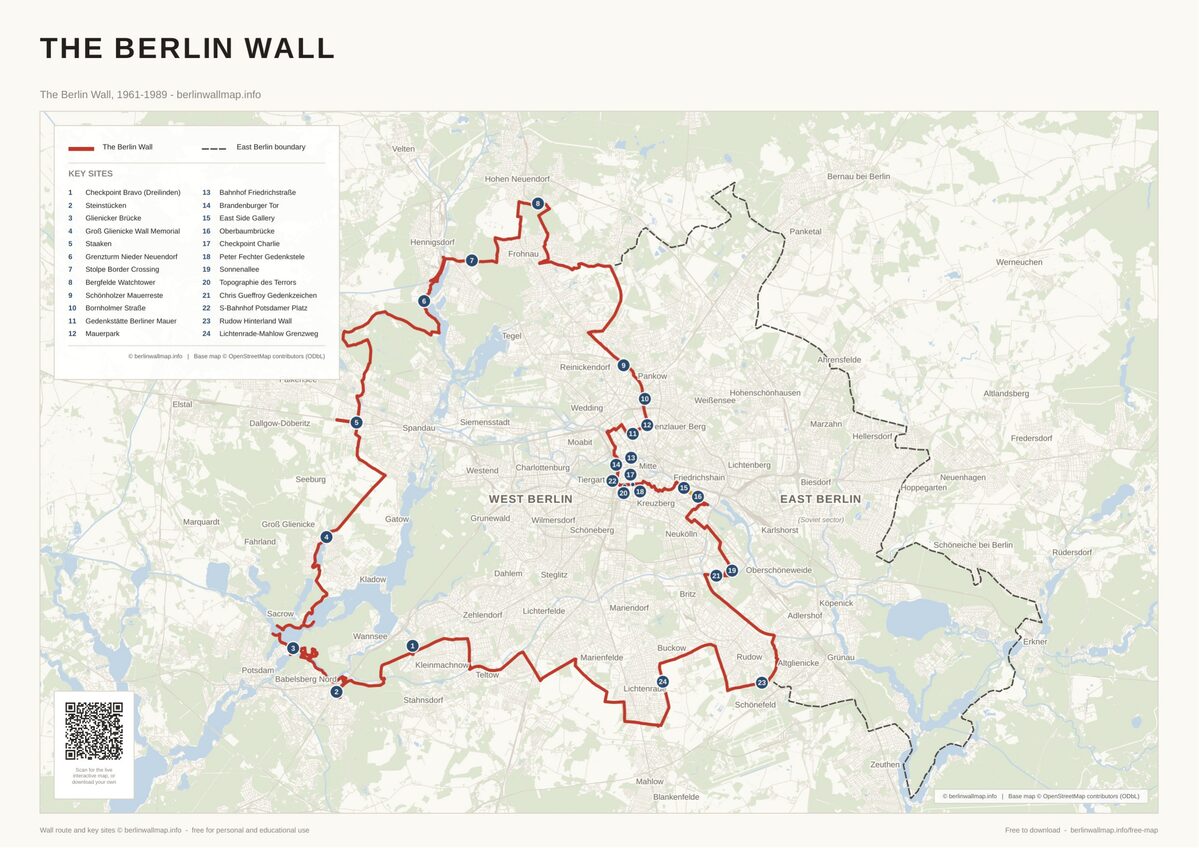
Free map downloads
Free printable PDF maps of the Berlin Wall.
Get the free maps →Explore the Timeline
Journey through Berlin Wall history from 1945 to 1990.
View Timeline →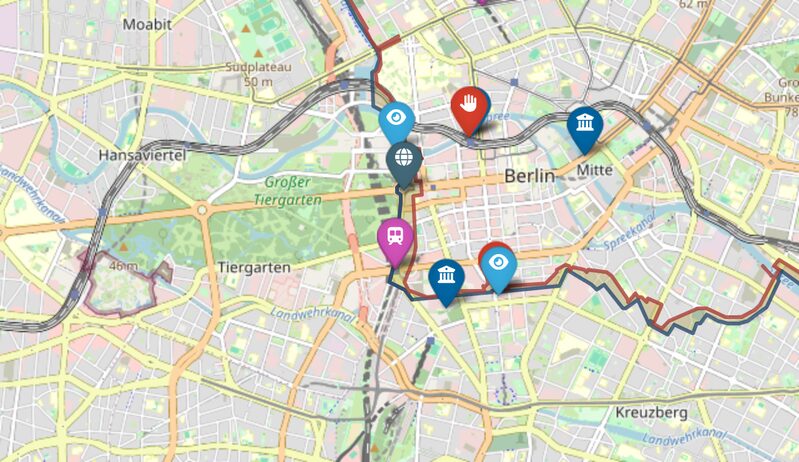
Embed Our Map
Add a free interactive Berlin Wall map to your website or blog.
Get embed code →