What happened to the Berlin Wall after reunification?
The dismantling of the Berlin Wall began almost immediately after it opened on 9 November 1989 and was largely complete within two years.
In the days and weeks following 9 November, ordinary Berliners, nicknamed Mauerspechte (wall woodpeckers), attacked the Wall with hammers, pickaxes, and chisels, chipping away pieces as souvenirs. The sound of hammering on concrete became the soundtrack of the revolution.
Official demolition began on 13 June 1990. East German military engineers and private contractors used cranes and heavy machinery to dismantle the 45,000 concrete segments. Most of the Wall was crushed and recycled as aggregate for road construction, an ignominious end for one of history’s most infamous structures.
Some segments were set aside for sale. In 1990, a Monte Carlo auction sold Wall segments painted by famous artists for up to 20,000 Deutsche Marks each. Sections were sent to museums, governments, and organisations worldwide, pieces of the Berlin Wall can now be found in over 40 countries, from the Ronald Reagan Presidential Library in California to the gardens of the Vatican.
The commercial appetite for Wall souvenirs created its own cottage industry. Street vendors at Checkpoint Charlie and the Brandenburg Gate began selling painted concrete chips, though many were, and still are, of dubious authenticity, likely chipped from ordinary demolition rubble and spray-painted.
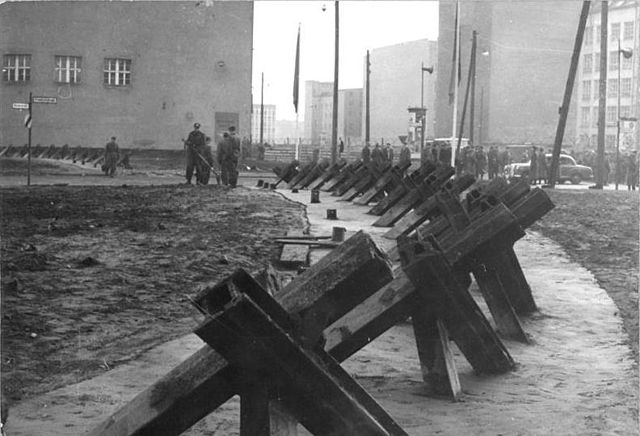
Within the city, the authorities marked the Wall’s former path with a double row of cobblestones set into streets and pavements, a subtle but effective memorial that can be traced throughout the city. The 160km Berliner Mauerweg (Berlin Wall Trail) follows the entire former border and is popular with walkers and cyclists.
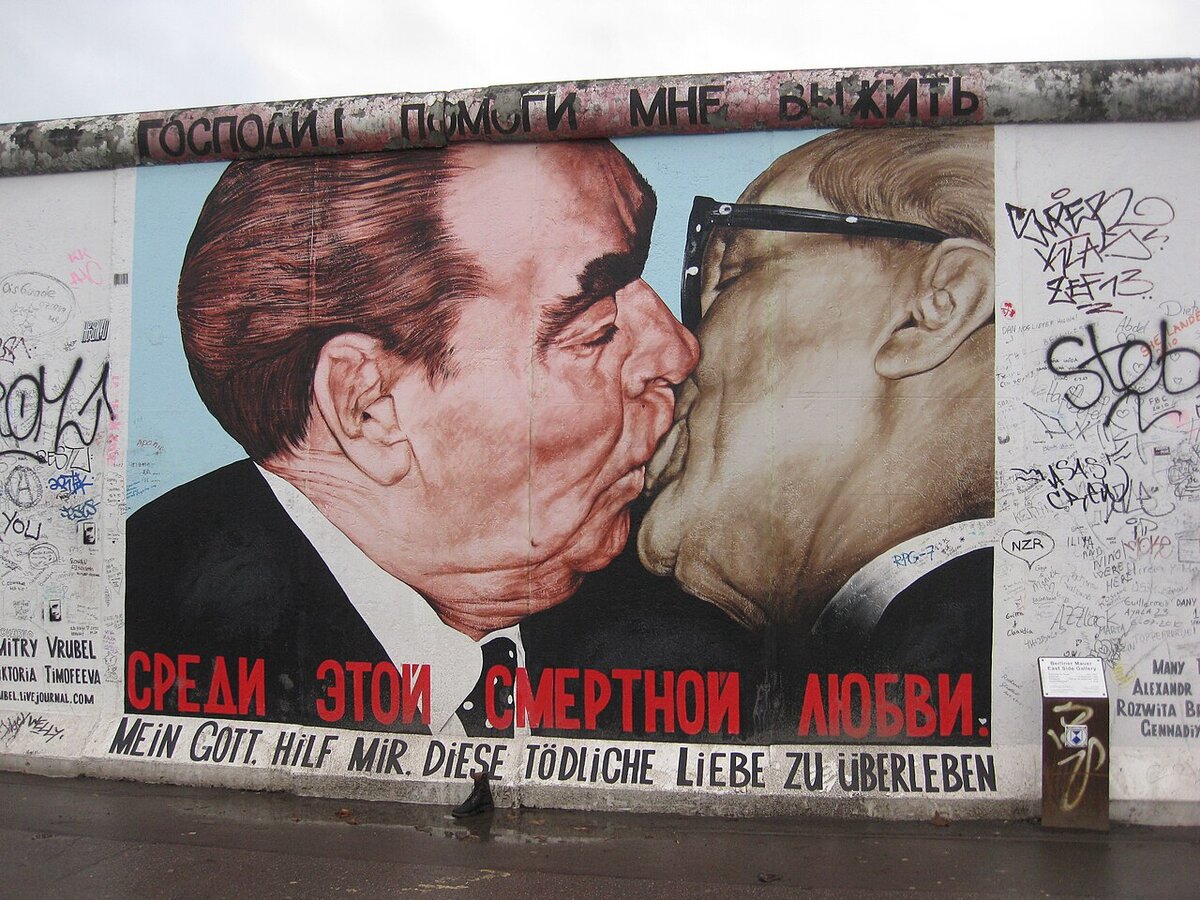
Several sections were deliberately preserved as memorials. The East Side Gallery, Bernauer Straße Memorial, and the segment at the Topographie des Terrors remain as powerful reminders of the division. Germany’s official annual remembrance of the Wall is held on 9 November at the Bernauer Straße memorial site.
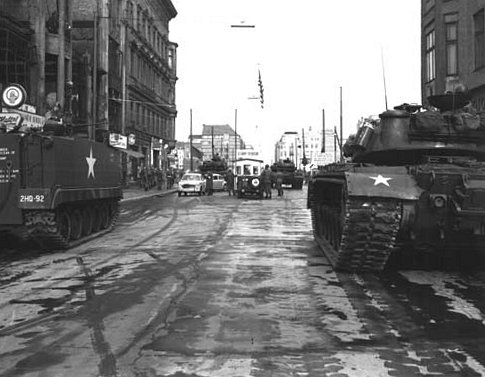
Checkpoint Charlie
East Side Gallery
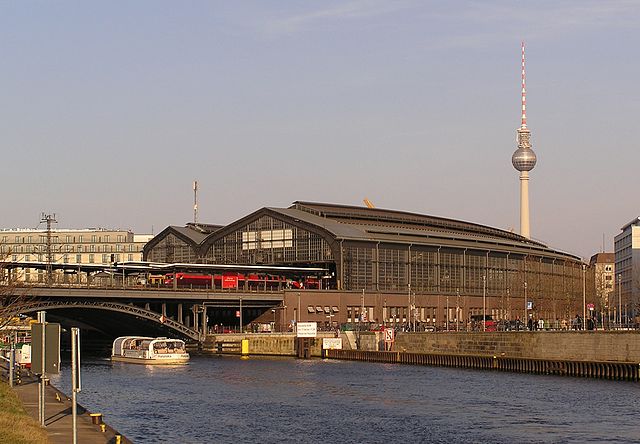
Bahnhof Friedrichstraße
History of the Berlin Wall: A Complete Guide (1961-1989)
65 Years Ago: US and Soviet Tanks Faced Off at Checkpoint Charlie
The Border Guards of the Berlin Wall: Conscripts, the Order to Shoot, and the Trials That Followed
9 November in Berlin: 37 Years Since the Wall Fell, and What’s On
Gethsemanekirche
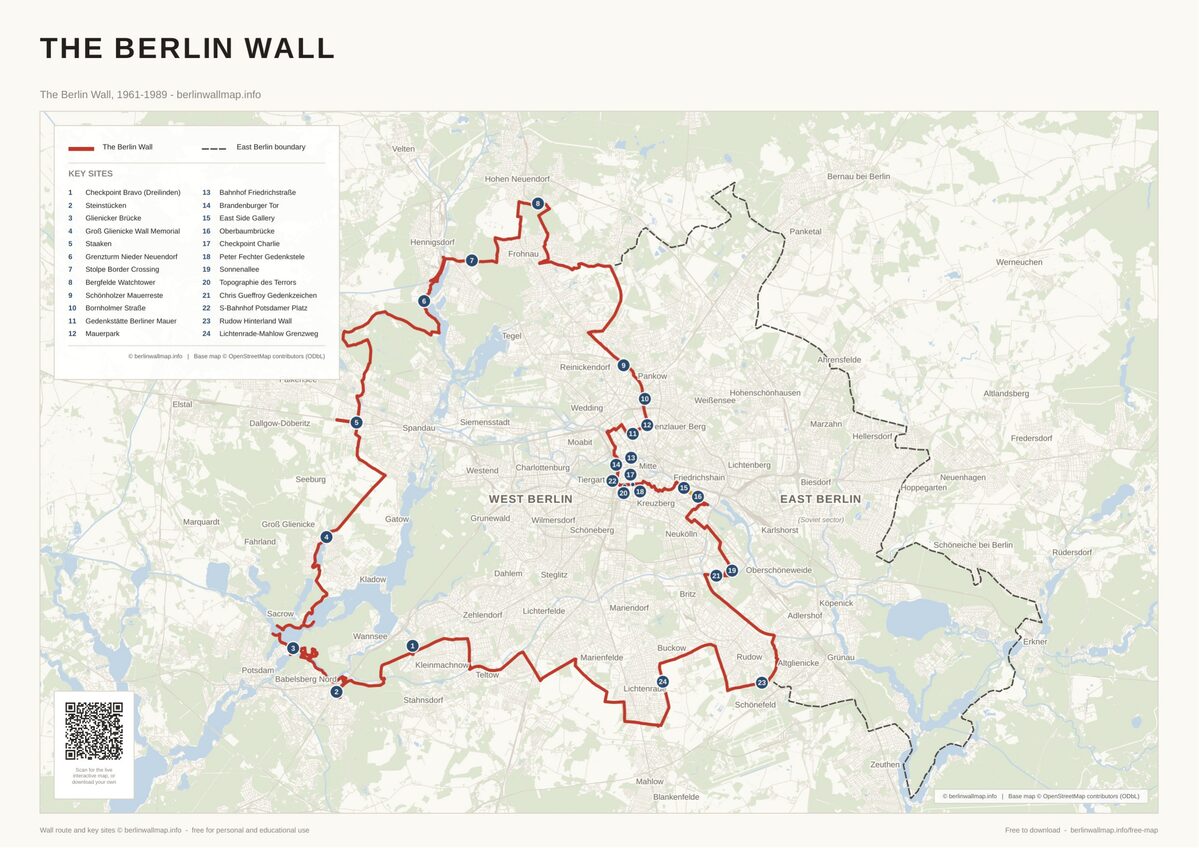
Free map downloads
Free printable PDF maps of the Berlin Wall.
Get the free maps →Explore the Timeline
Journey through Berlin Wall history from 1945 to 1990.
View Timeline →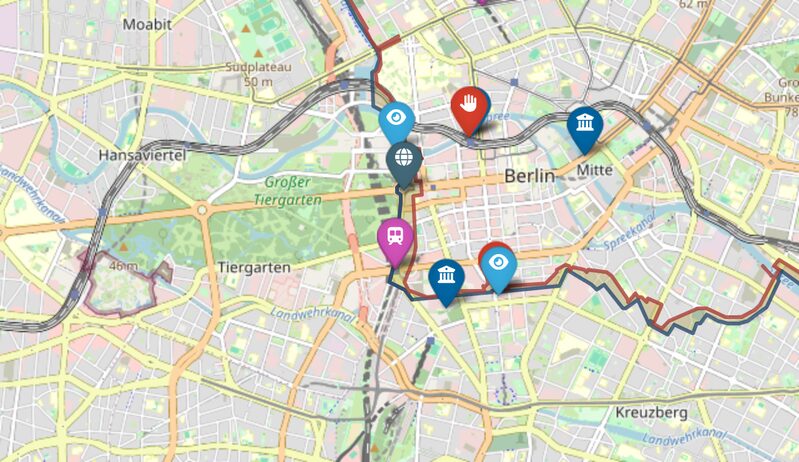
Embed Our Map
Add a free interactive Berlin Wall map to your website or blog.
Get embed code →