When did the Berlin Wall fall?
The Berlin Wall fell on 9 November 1989.
The Wall had stood for 28 years, 2 months, and 27 days – from 13 August 1961 until that extraordinary night in November 1989.
The fall was not the result of a single event but the culmination of months of growing pressure: mass emigration through Hungary and Czechoslovakia, the Monday demonstrations in Leipzig, and the replacement of hardline leader Erich Honecker with Egon Krenz.
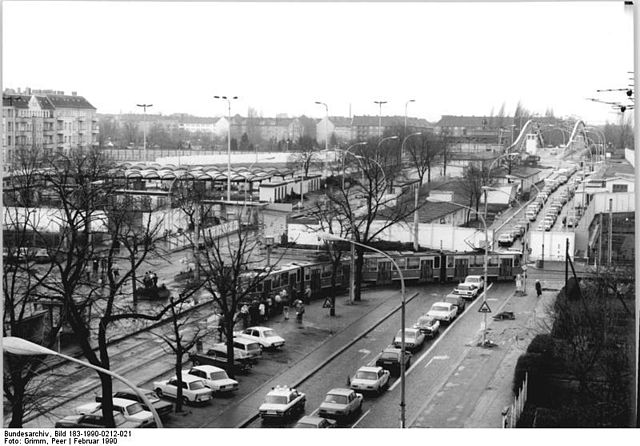
The immediate trigger was a bungled press conference by East German spokesman Günter Schabowski, who mistakenly announced that new travel regulations were effective “immediately.” Thousands of East Berliners rushed to the crossing points, and overwhelmed border guards opened the gates – first at Bornholmer Straße, then at all other crossings.
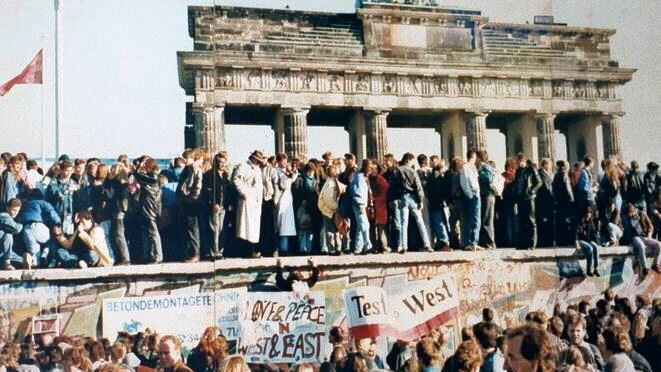
The scenes of jubilant crowds dancing on the Wall at the Brandenburg Gate became one of the defining images of the 20th century. Germany was formally reunified less than a year later, on 3 October 1990.
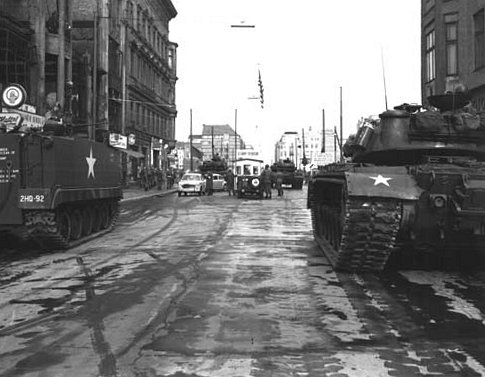
Checkpoint Charlie
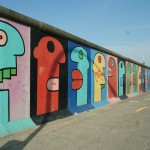
East Side Gallery
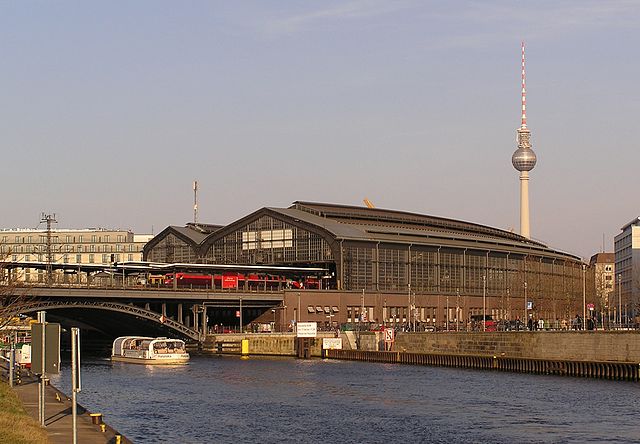
Bahnhof Friedrichstraße

History of the Berlin Wall: A Complete Guide (1961-1989)
65 Years Ago: US and Soviet Tanks Faced Off at Checkpoint Charlie
The Border Guards of the Berlin Wall: Conscripts, the Order to Shoot, and the Trials That Followed
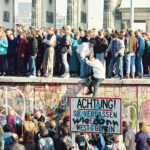
9 November in Berlin: 37 Years Since the Wall Fell, and What’s On
Gethsemanekirche
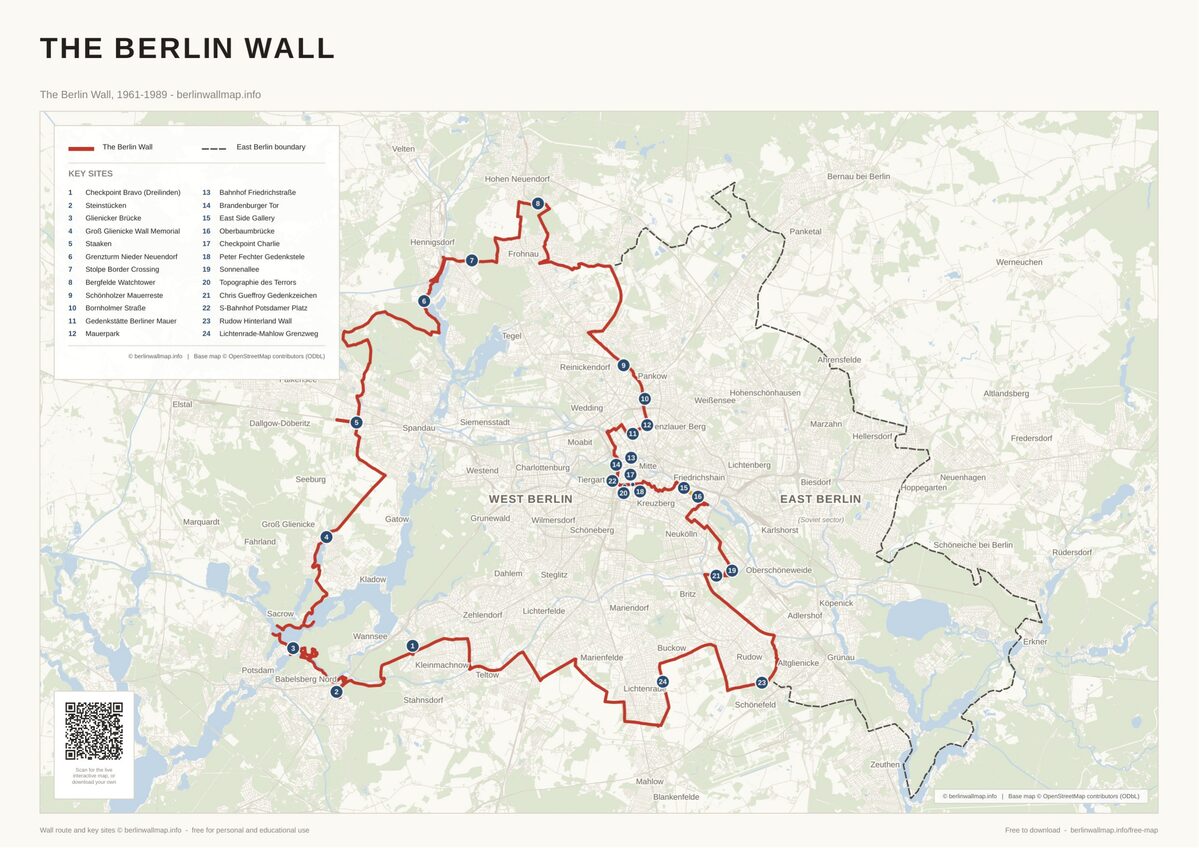
Free map downloads
Free printable PDF maps of the Berlin Wall.
Get the free maps →Explore the Timeline
Journey through Berlin Wall history from 1945 to 1990.
View Timeline →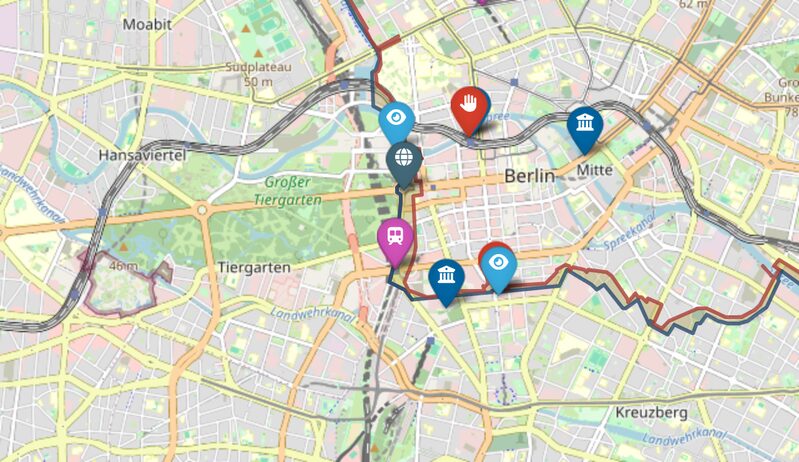
Embed Our Map
Add a free interactive Berlin Wall map to your website or blog.
Get embed code →