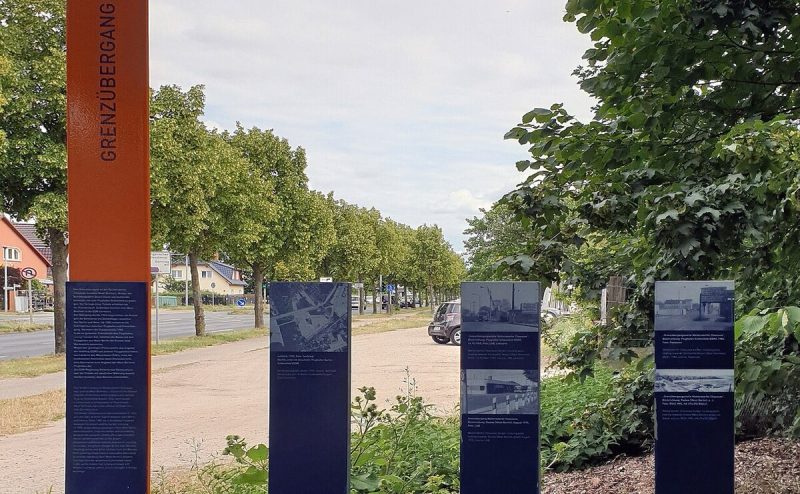
Waltersdorfer Chaussee Crossing
The Waltersdorfer Chaussee Crossing was a unique transit checkpoint created specifically for West Berliners travelling to Schonefeld Airport in East Berlin. Opening in 1963, it served a purely practical function in the otherwise rigid border system.
When the Wall went up in 1961, West Berliners lost access to Schonefeld, East Berlin’s main airport. The Waltersdorfer Chaussee crossing was established in 1963 to allow transit to the airport without entering East Berlin proper. Passengers were escorted by bus along a designated route, with passport controls conducted at the crossing.
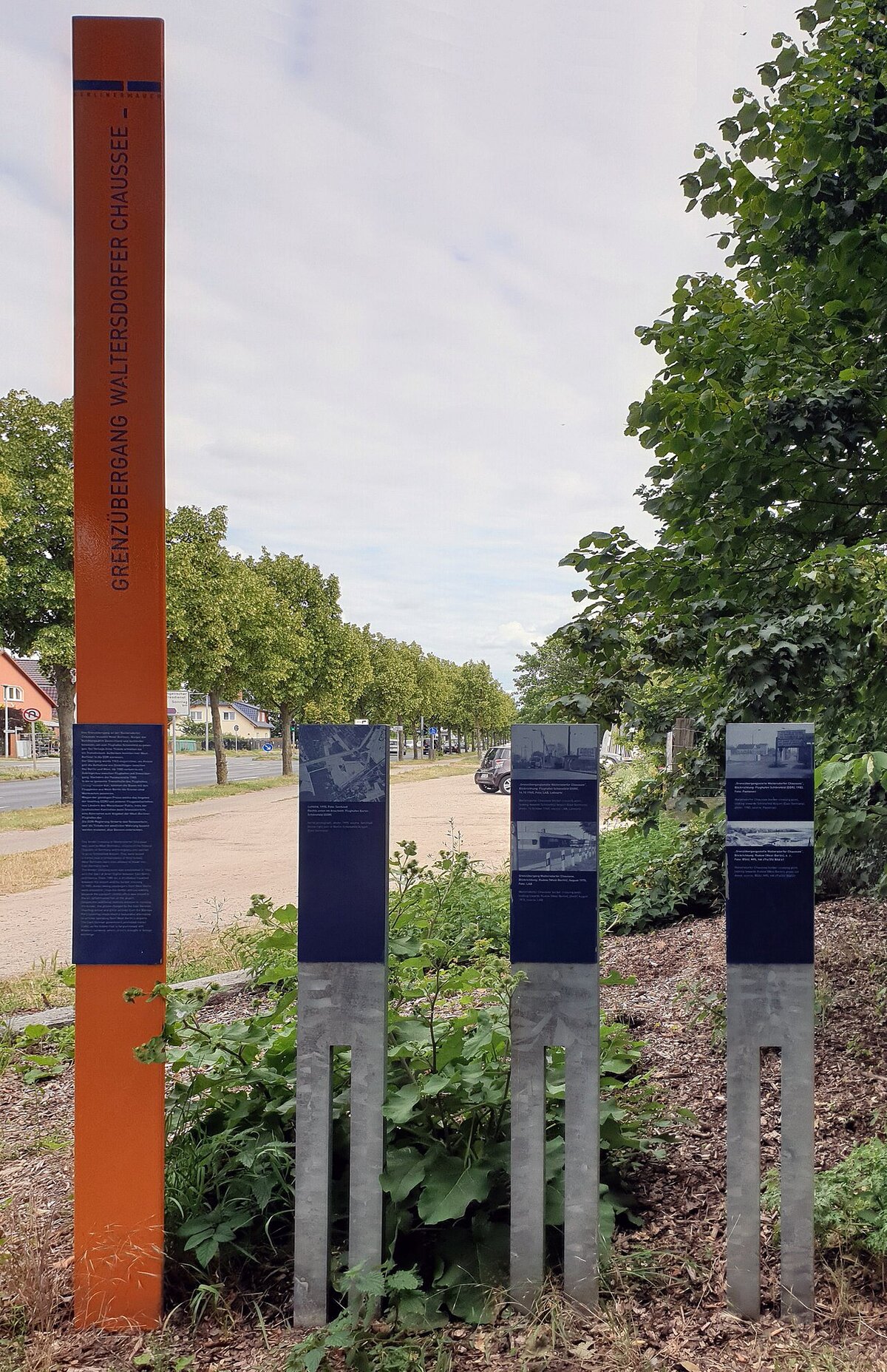
Memorial plaque, Grenzübergang, Waltersdorfer Chaussee, Berlin-Rudow, Germany (Photo: OTFW, Berlin)
In 1980, a shuttle bus service was introduced to streamline the process. After 1985, passport control was moved to a transit hall at the airport itself, reducing the checkpoint’s role. The crossing continued to operate until the Wall fell in November 1989.
Today, few physical remains of the crossing survive. The construction of the A113 motorway in the 1990s demolished most of the border infrastructure. A memorial plaque marks the approximate location of the former checkpoint.
Memorial plaque, Grenzübergang, Waltersdorfer Chaussee, Berlin-Rudow, Germany (Photo: OTFW, Berlin)
Gallery


Affiliate link - we may earn a commission
Nearby Berlin Wall Sites



Affiliate link - we may earn a commission
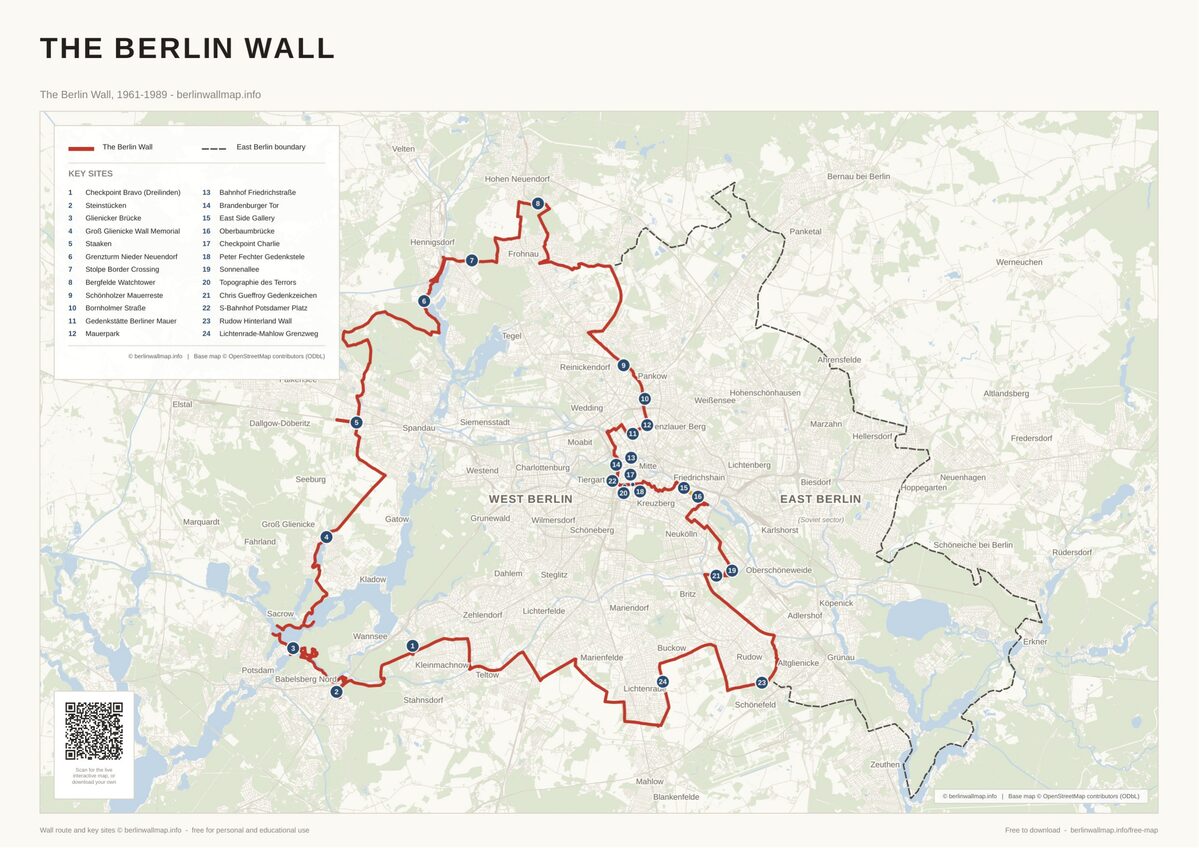
Free map downloads
Free printable PDF maps of the Berlin Wall.
Get the free maps →Explore the Timeline
Journey through Berlin Wall history from 1945 to 1990.
View Timeline →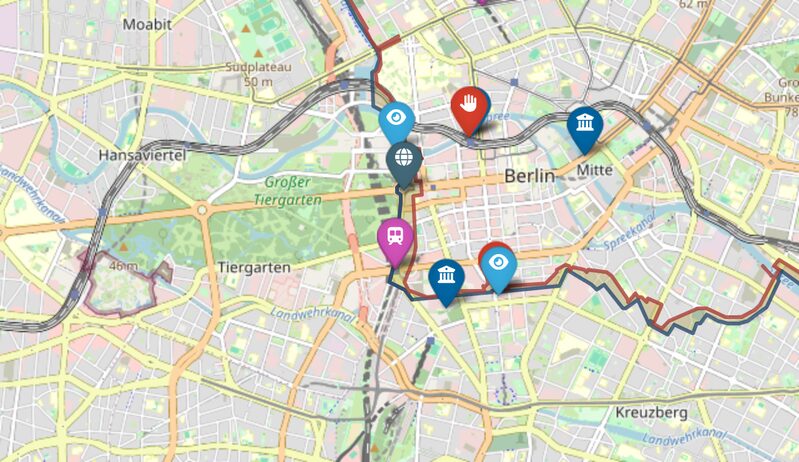
Embed Our Map
Add a free interactive Berlin Wall map to your website or blog.
Get embed code →