Berlin Wall Cold War Sites
Alexanderplatz Demonstration
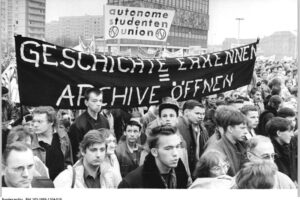
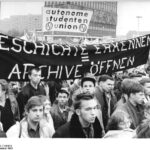
On 4 November 1989, between 200,000 and 500,000 people filled this square in the largest non-state demonstration in East German history and the first legally permitted protest organised by private citizens. Twenty-six speakers addressed the crowd from a flatbed truck, among them Christa Wolf, Stefan Heym and Jens Reich, while East German television broadcast it live. The demands were free elections, press freedom, an end to Stasi surveillance and a new constitution. Five days later the Berlin Wall fell. No monument marks the event, but the square where half a million people found their voice is unmistakable.
More...Berlin Spy Tunnel Memorial
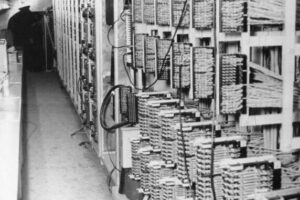
An information stele and three panels of photographs stand in a quiet meadow park on the southeastern edge of Berlin, marking where the CIA and MI6 dug a 450-metre tunnel under the sector border to tap the telephone cables of the Soviet army. It is one of the few sites on the Berlin Wall Trail […]
More...Brandenburger Tor
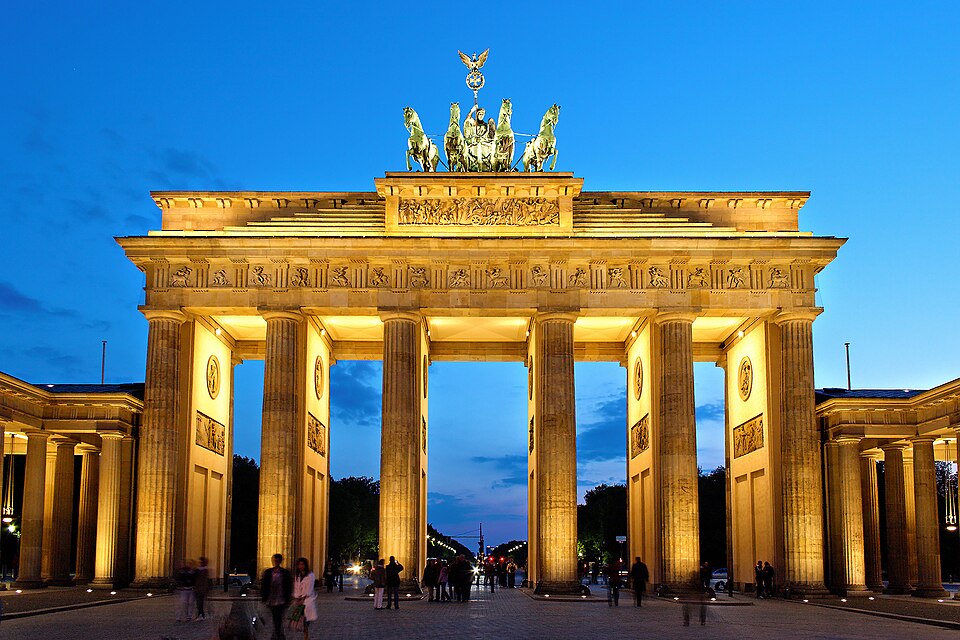
The Brandenburg Gate became the main symbol of Berlin’s division. From 1961 to 1989, it stood inaccessible in the death strip, visible but unreachable from both sides. On 22 December 1989, the gate was reopened as over 100,000 people gathered to celebrate. Today it is the main site for reunification events.
More...Eiskeller Exclave
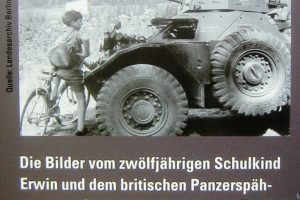
The Eiskeller exclave was one of the strangest geographical anomalies of the Cold War. Three West Berlin farmsteads, connected to the main city by a corridor just four metres wide and 800 metres long, became an island of freedom surrounded by GDR territory.
More...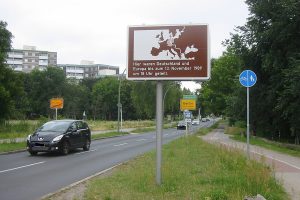
Gethsemanekirche
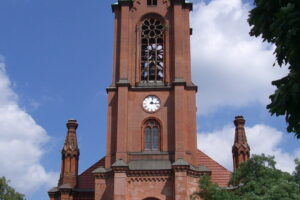
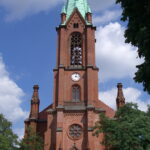
This Prenzlauer Berg church became the centre of Berlin’s peaceful revolution in autumn 1989. From 2 October, opposition groups held a round-the-clock vigil here, with a contact telephone relaying arrest reports to Western media. On 7 October, police and Stasi units beat and arrested hundreds of demonstrators around the church in the last mass use of force against protesters in Berlin. Today a memorial plaque, Karl Biedermann’s relief “Resistance” and Ernst Barlach’s bronze “Geistkämpfer” (Spirit Fighter) commemorate the autumn of 1989. The Blessing Christ statue outside the west portal was rescued from the demolished Versöhnungskirche that once stood on the death strip.
More...Gleim-Tunnel
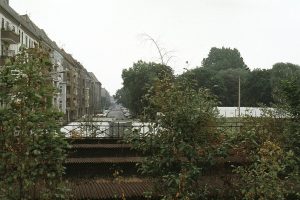
The Gleim-Tunnel is a 130-metre street tunnel built in 1905 beneath the railway tracks between Prenzlauer Berg and Wedding. During the Cold War, the Berlin Wall ran directly through its centre, sealing it shut for 29 years.
More...Hansa Studios
Hansa Studios, in the historic Meistersaal concert hall at Köthener Straße 38, stood right beside the Berlin Wall by Potsdamer Platz. Between 1976 and 1978 the building became the creative refuge of David Bowie and Iggy Pop: Bowie recorded much of “Heroes” (1977) here and produced Iggy Pop’s albums The Idiot and Lust for Life in the same rooms. The control room of the big studio looked out over the death strip, and the title track of “Heroes”, with its lovers kissing “by the Wall”, was inspired by that view. The 1910 hall is a protected monument and still works as a recording studio and event space today.
More...Heilandskirche Sacrow
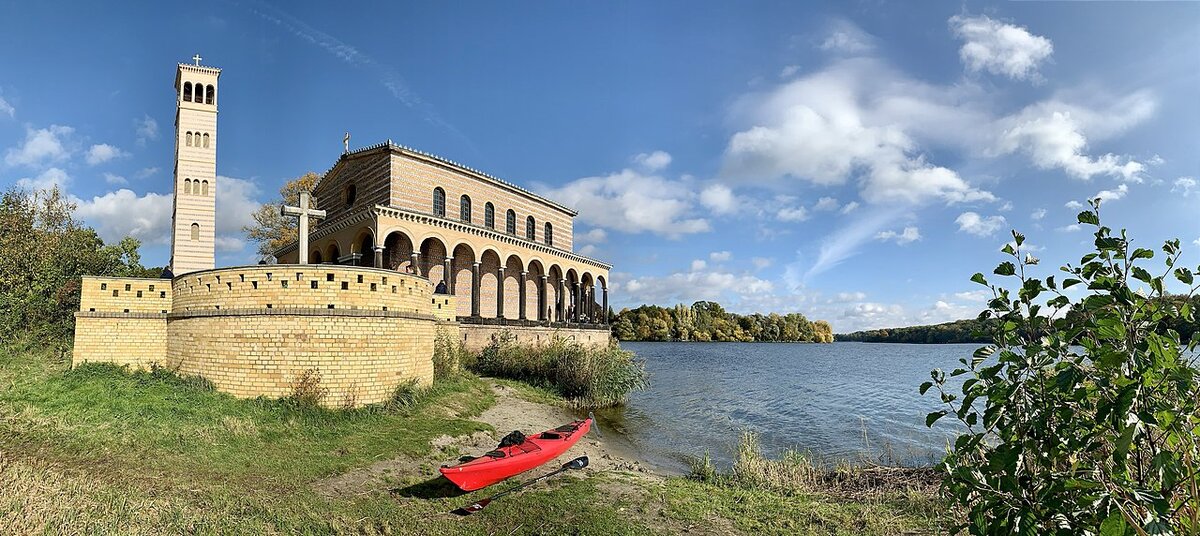
Heilandskirche Sacrow, the Church of the Redeemer, is a striking Italianate church on the banks of the Havel near Potsdam. Walled off for 28 years during the division of Germany, it became one of the most powerful symbols of the Berlin Wall’s impact on daily life.
More...Internationales Pressezentrum
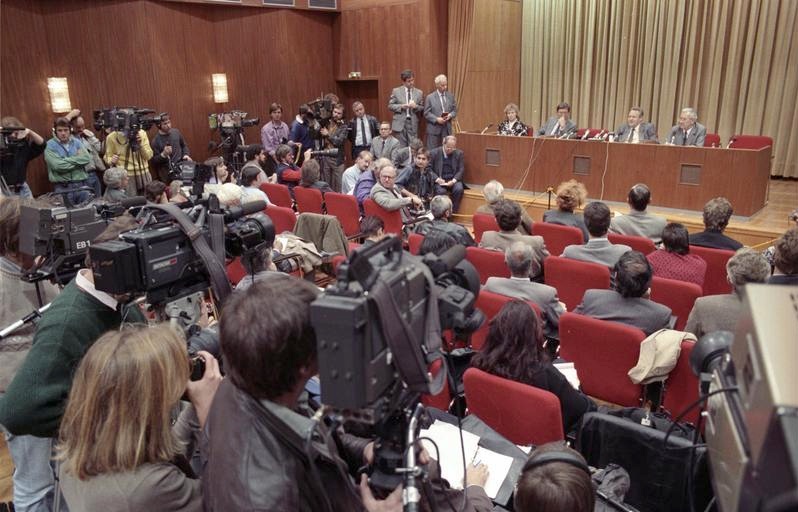
The GDR’s official press centre for foreign correspondents, where Günter Schabowski held his historic press conference on 9 November 1989. Asked when new travel regulations would take effect, he replied “sofort, unverzüglich” (immediately, without delay) — triggering the rush to the border crossings that brought down the Berlin Wall. The building on Mohrenstraße (renamed Anton-Wilhelm-Amo-Straße in 2025) now belongs to the Federal Ministry of Justice; the original press room no longer exists, but an art installation marks the event.
More...Klein Glienicke
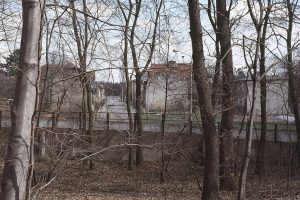
Klein Glienicke was a GDR enclave wedged between West Berlin and Potsdam, accessible only through a single surveilled bridge. Its residents lived in near-total isolation for 28 years, surrounded on three sides by territory they could see but never enter.
More...Rathaus Schöneberg
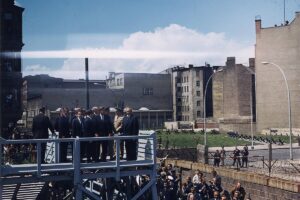
Schöneberg Town Hall served as West Berlin’s city hall from 1949 to 1991, after the historic Rotes Rathaus fell within the Soviet sector. It is best known as the site of President Kennedy’s famous “Ich bin ein Berliner” speech on 26 June 1963, delivered to a crowd of over 120,000 on the square now named John-F.-Kennedy-Platz. The tower houses a replica of the American Liberty Bell, donated by 16 million Americans in 1950 and rung daily at noon. Today the building serves as the Tempelhof-Schöneberg district hall.
More...Teufelsberg
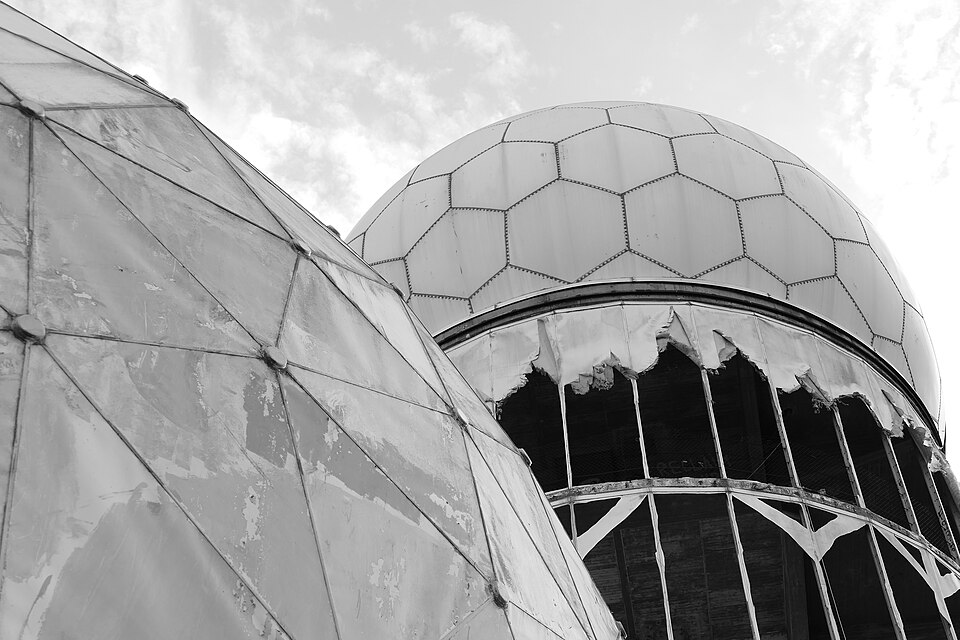
An artificial hill built from 26 million cubic metres of World War II rubble in the Grunewald forest. The US National Security Agency built a listening station on its summit to intercept Eastern Bloc communications during the Cold War. The abandoned geodesic radomes are now a street art destination and offer panoramic views of Berlin.
More...
Free map downloads
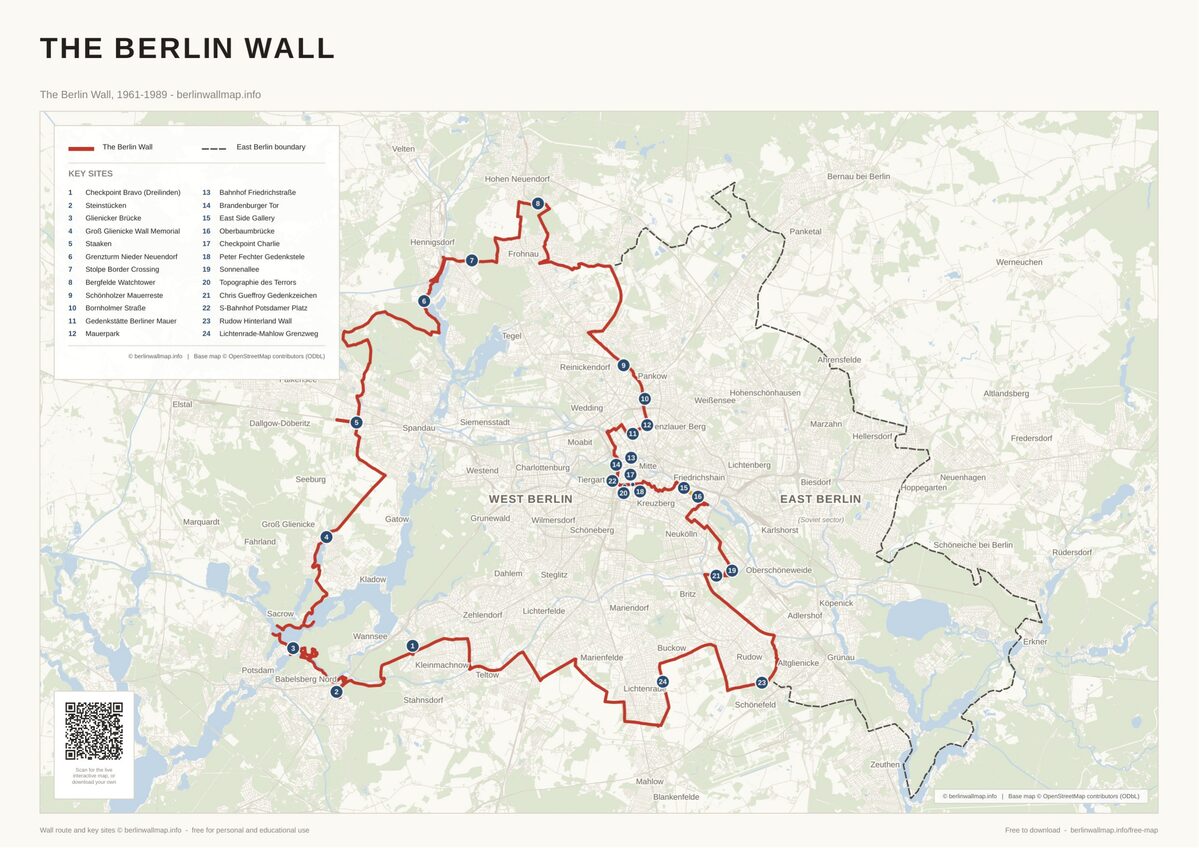
Free printable PDF maps of the Berlin Wall.
Get the free maps →Explore the Timeline
Journey through Berlin Wall history from 1945 to 1990.
View Timeline →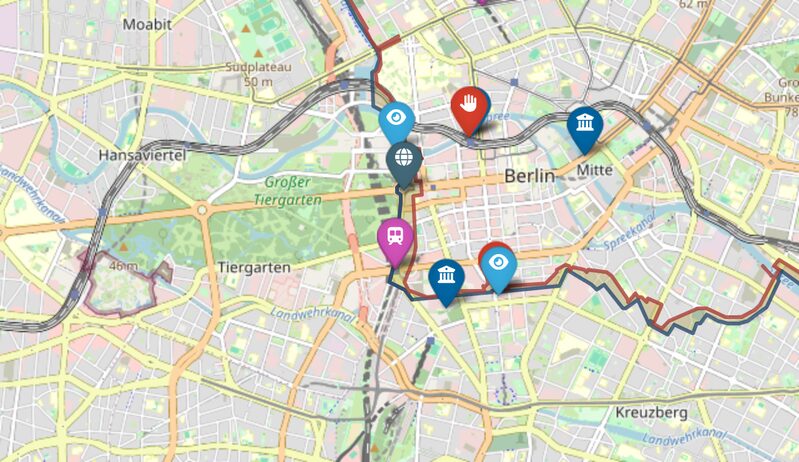
Embed Our Map
Add a free interactive Berlin Wall map to your website or blog.
Get embed code →