Berlin Wall Museums
Berliner Unterwelten
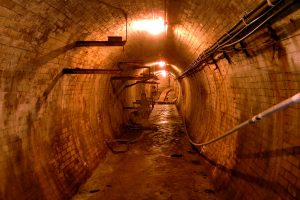
The Berliner Unterwelten association offers guided tours through underground bunkers and escape tunnels near Bernauer Straße, revealing the hidden infrastructure of Cold War Berlin.
More...DDR Museum
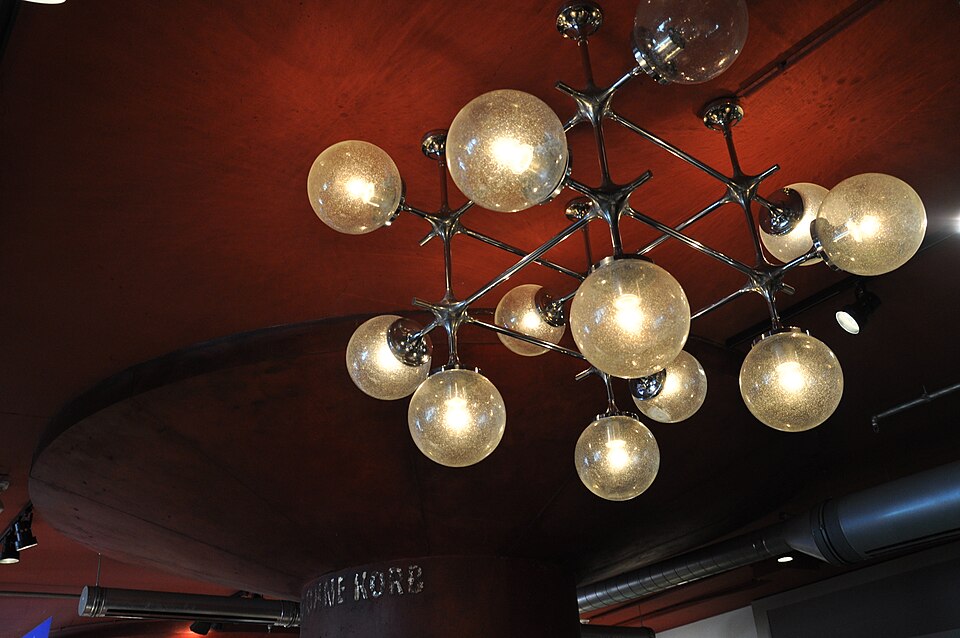
An interactive museum dedicated to everyday life in East Germany. Visitors can sit in a Trabant, explore a reconstructed East German apartment, and learn about the state surveillance, education system, and culture of the GDR. One of Berlin’s most popular museums, offering a vivid picture of life behind the wall.
More...Gedenkstätte Berlin-Hohenschönhausen
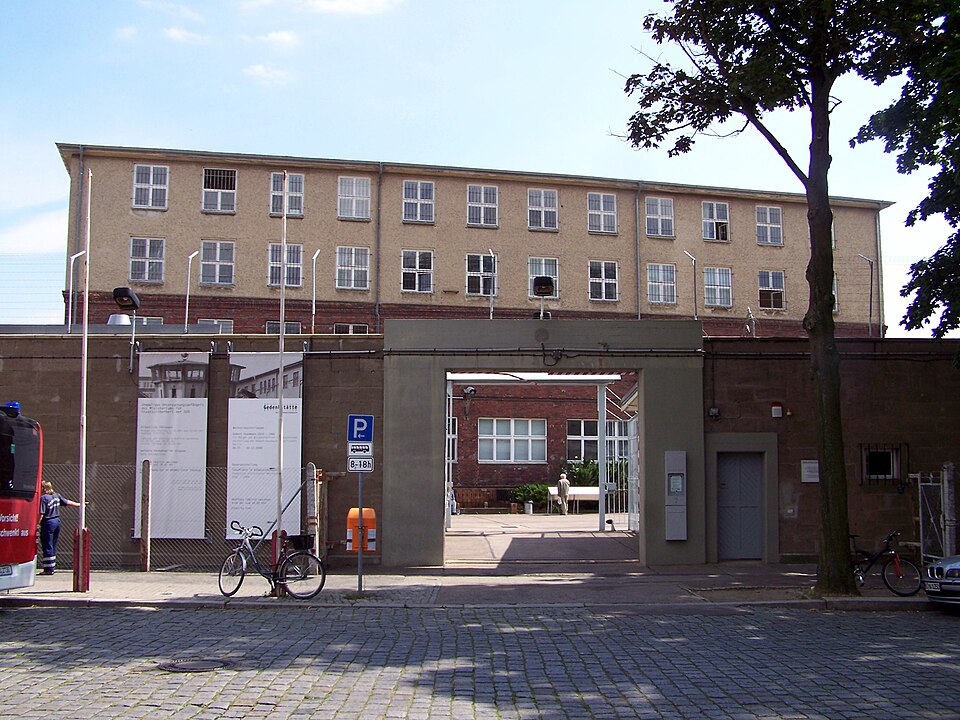
The former central remand prison of the East German Ministry for State Security (Stasi), where political prisoners were interrogated and detained under brutal conditions. Tours are often led by former inmates who describe their experiences of isolation cells, sleep deprivation, and psychological torture. A deeply affecting memorial to the victims of political repression.
More...Mauermuseum – Haus am Checkpoint Charlie
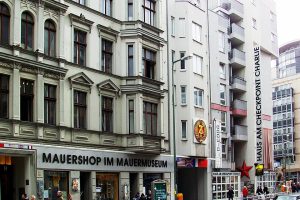
Founded in 1962 by human rights activist Rainer Hildebrandt, this museum documents the ingenuity and desperation of escape attempts from East Berlin. Exhibits include a homemade hot air balloon, a modified car with a hidden compartment, and a one-person submarine. Located directly at Checkpoint Charlie, it draws over 850,000 visitors per year.
More...Notaufnahmelager Marienfelde
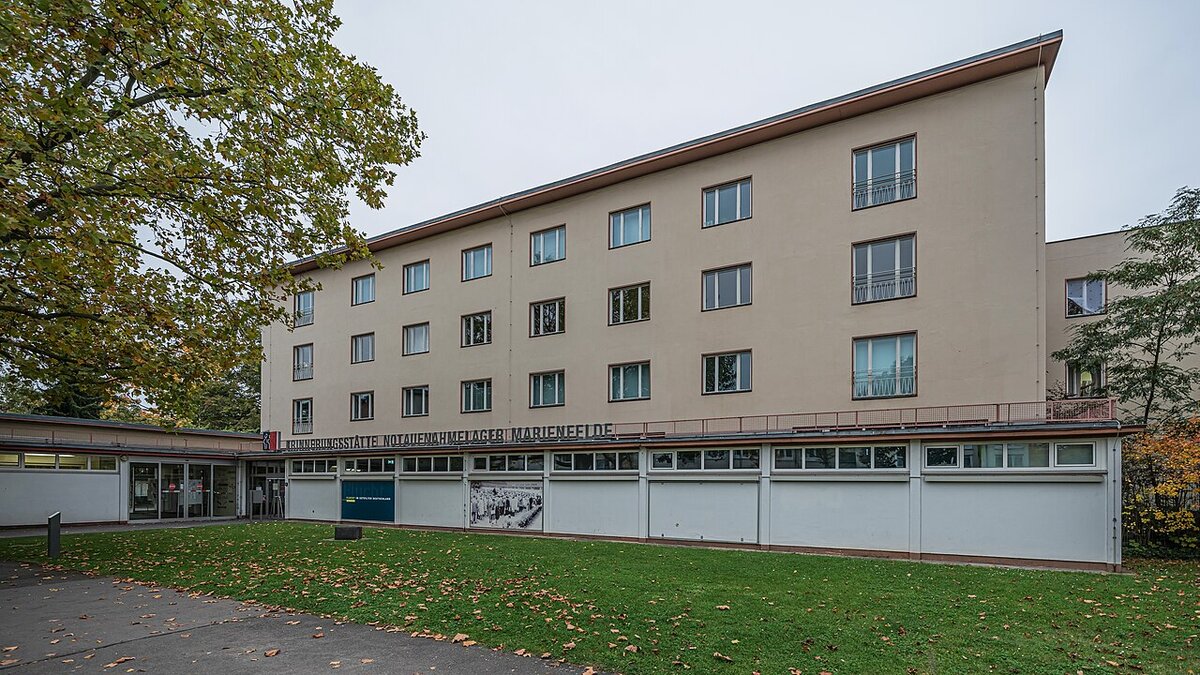
The Marienfelde Emergency Reception Centre processed over 1.35 million refugees from East Germany between 1953 and 1990. Today it houses a museum documenting the history of flight from the GDR.
More...Stasi Museum
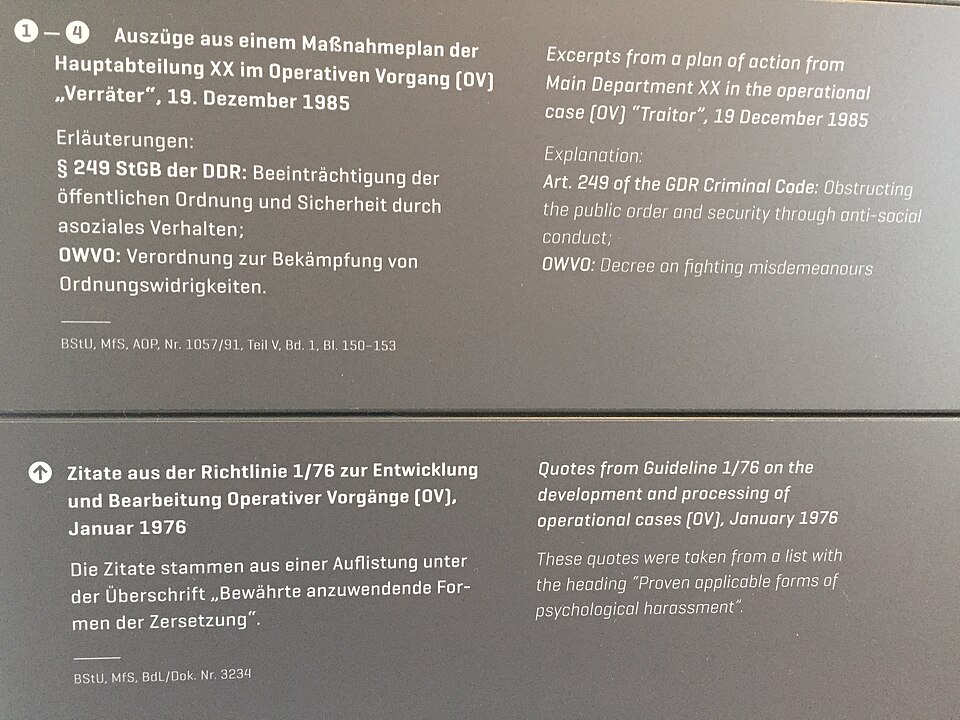
Located in the former headquarters of the Ministry for State Security in Lichtenberg, this museum preserves the office of Stasi chief Erich Mielke exactly as it was. Exhibits document the vast surveillance apparatus that monitored East German citizens, including mail interception equipment, hidden cameras, and the infamous smell samples used to track dissidents.
More...Topographie des Terrors
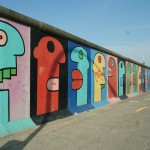
Built on the site of the former Gestapo and SS headquarters, this documentation center features a 200m section of the original Berlin Wall along Niederkirchnerstraße. Unlike the East Side Gallery, this stretch has never been repainted and shows its original weathered state. One of Berlin’s most visited memorial sites, with free outdoor and indoor exhibitions.
More...Tränenpalast
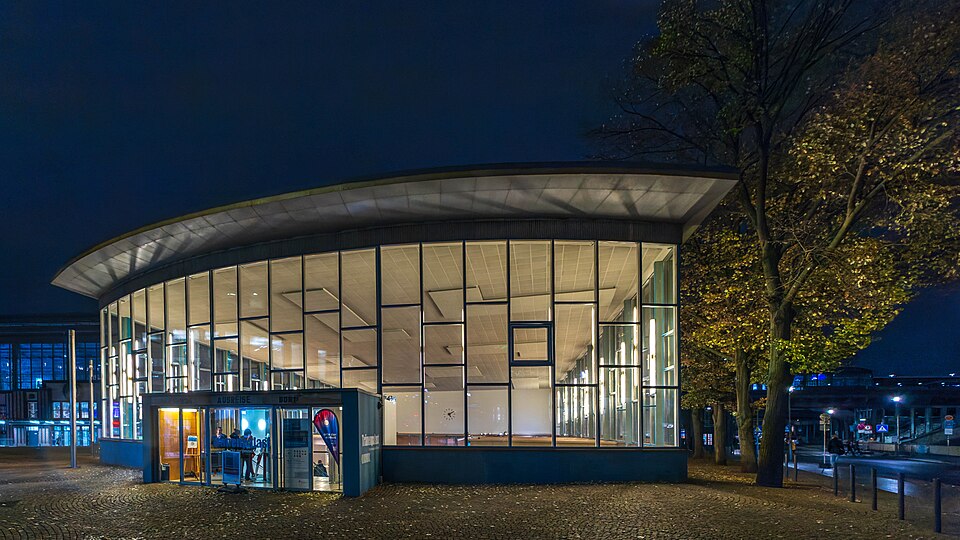
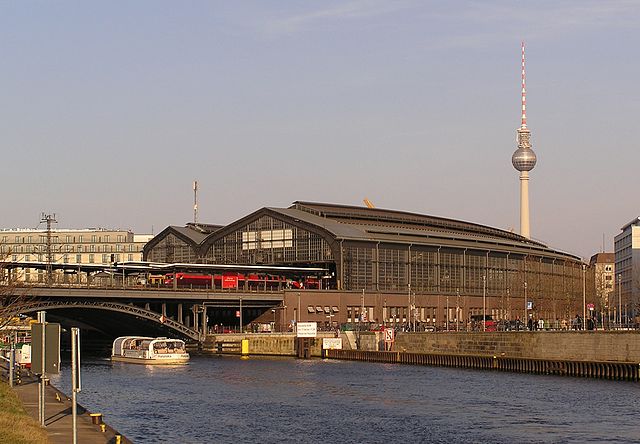
The “Palace of Tears” was the departure hall at Friedrichstraße station where East Germans said goodbye to visiting Western relatives, often not knowing when they would meet again. The glass pavilion earned its name from the tears shed at these farewells. Now a free museum with a permanent exhibition on daily life in divided Germany.
More...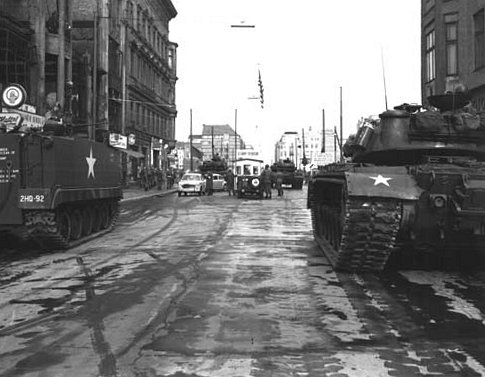
Free map downloads
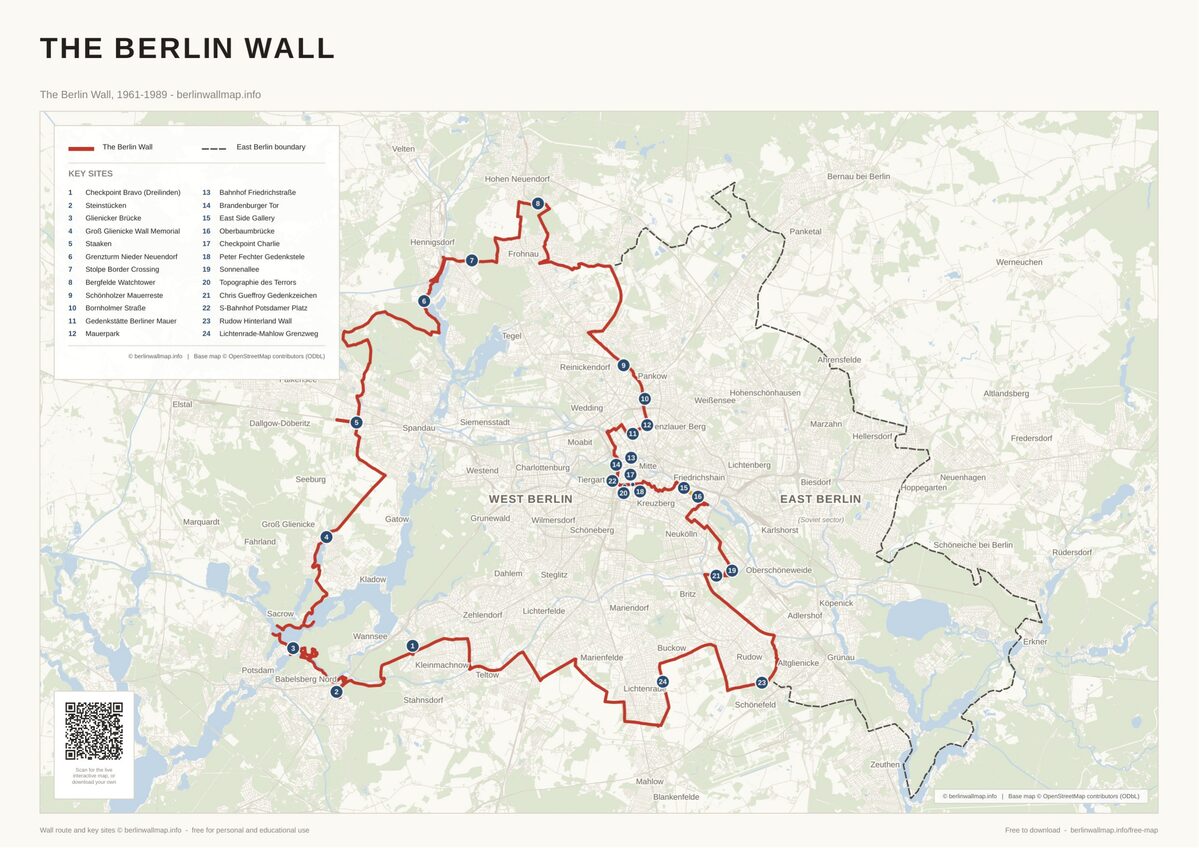
Free printable PDF maps of the Berlin Wall.
Get the free maps →Explore the Timeline
Journey through Berlin Wall history from 1945 to 1990.
View Timeline →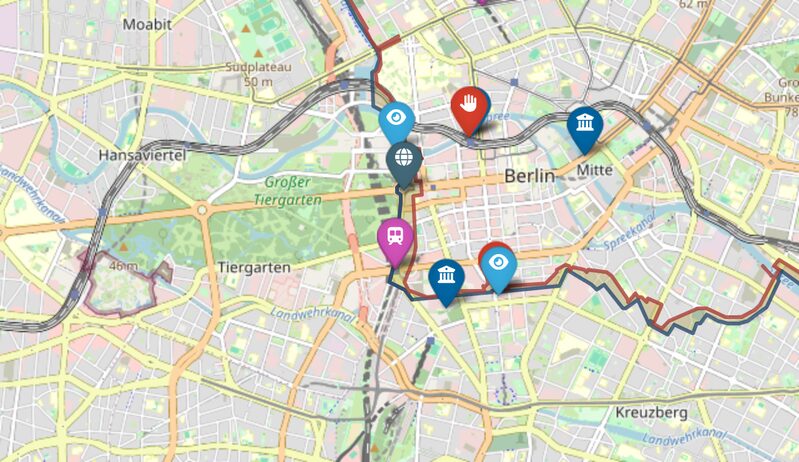
Embed Our Map
Add a free interactive Berlin Wall map to your website or blog.
Get embed code →