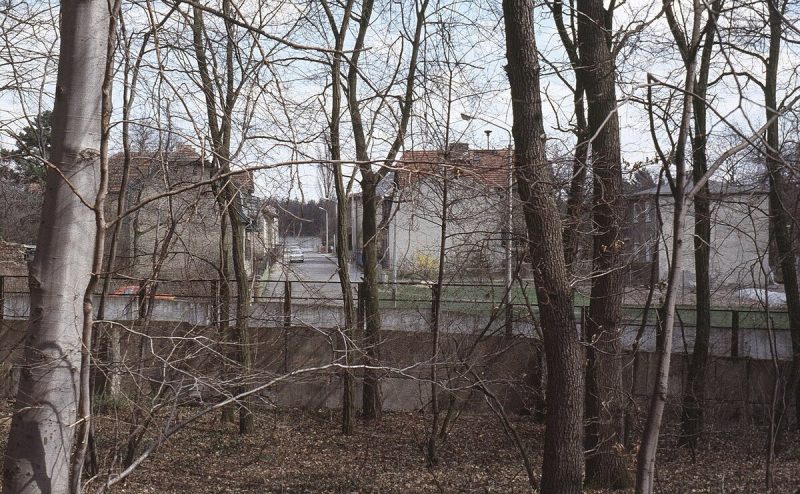
Klein Glienicke
Klein Glienicke was a GDR enclave wedged between West Berlin and Potsdam, accessible only through a single surveilled bridge. Its residents lived in near-total isolation for 28 years, surrounded on three sides by territory they could see but never enter.
The small settlement of Klein Glienicke sits at the southwestern tip of Potsdam, between the Glienicker Lake and the park of Babelsberg Palace. During the Cold War, the border ran around three sides of the community, leaving only the Parkbrücke (Park Bridge) as the sole connection to the rest of the GDR.
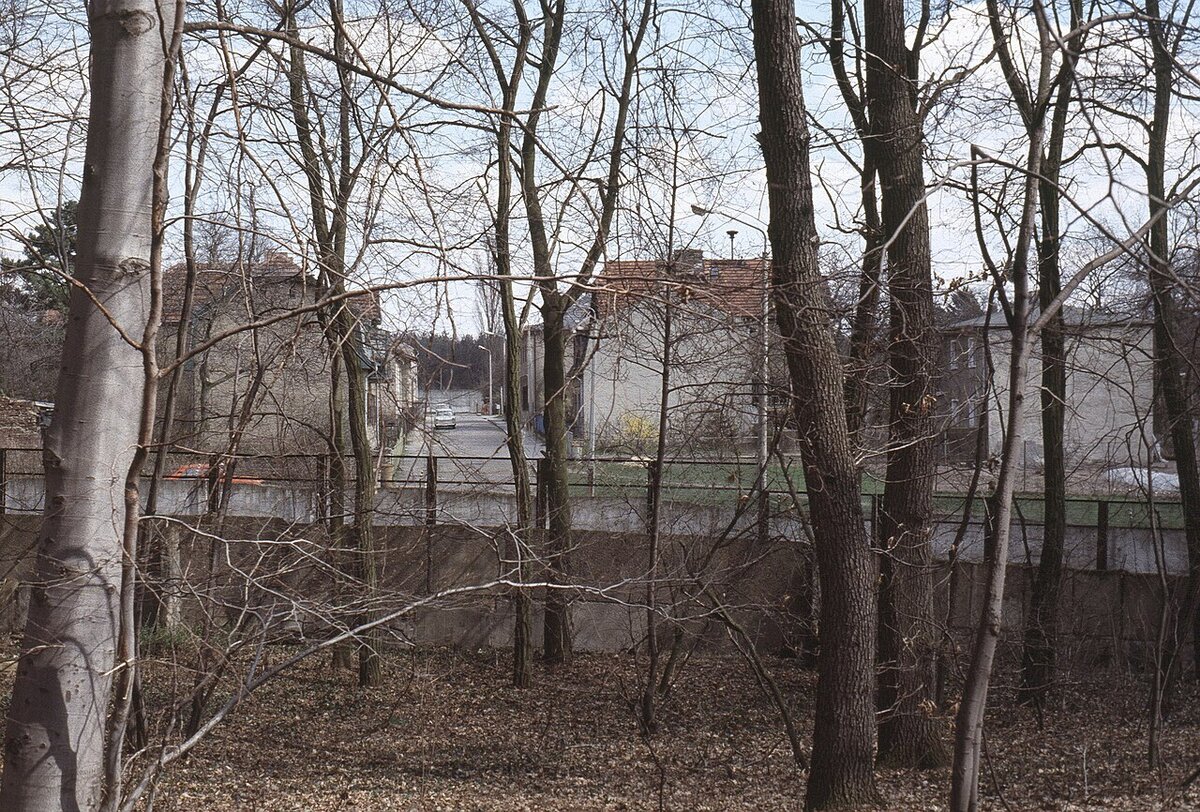
Tannenstraße in Klein Glienicke von West-Berlin (Böttcherberg) aus gesehen (Photo: Roehrensee)
Residents called their enclave “der Blinddarm” (the appendix) because of its dead-end geography. Every crossing of the Parkbrücke was monitored by border guards, and visitors required special permits. The bridge itself was too narrow for large vehicles, adding to the community’s sense of isolation. Despite being just metres from the gardens of West Berlin, the residents of Klein Glienicke lived under constant surveillance.
After reunification, the bridge was opened to unrestricted traffic and the area became a popular walking and cycling route. The Berlin Wall Trail crosses at Parkbrücke, and the nearby Glienicker Brücke (the famous “Bridge of Spies”) is just a short walk away.
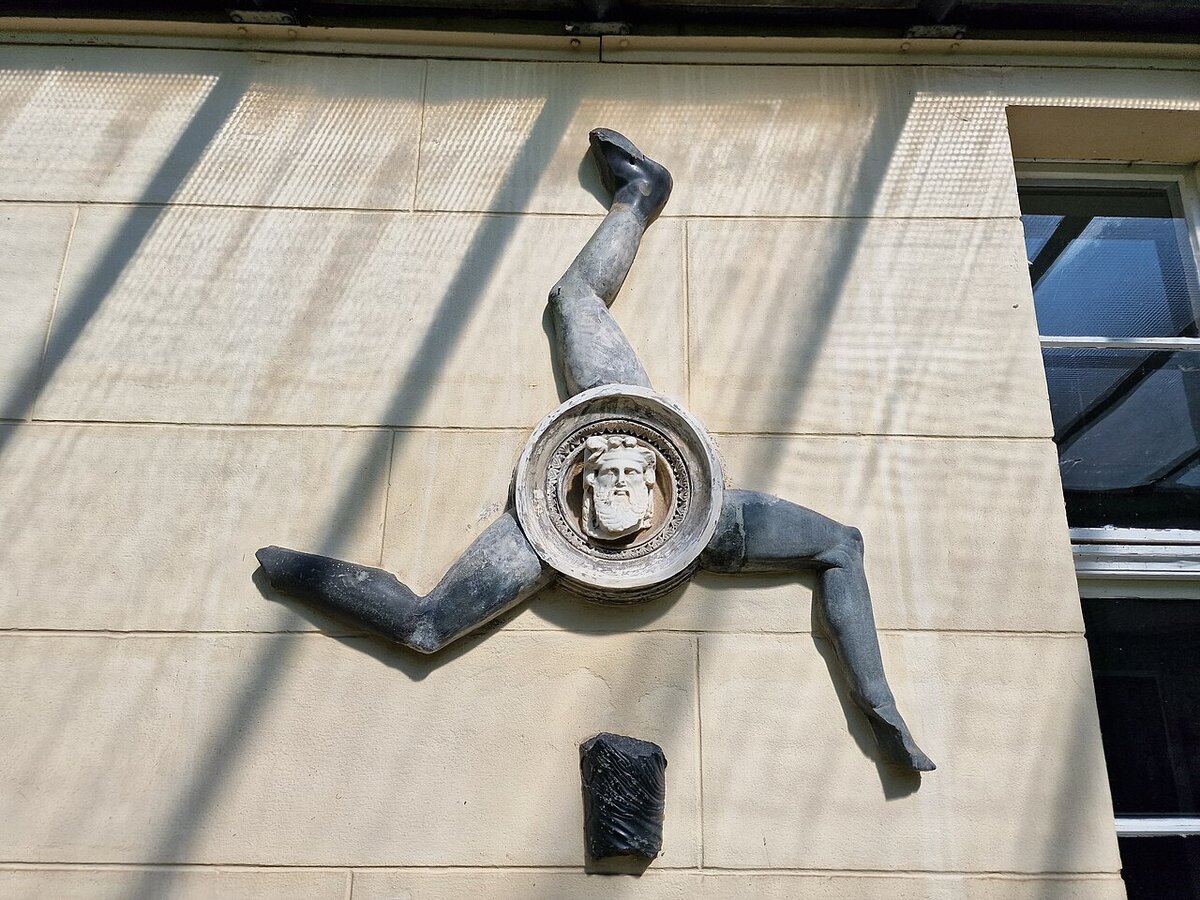
Trinacria of Sicily on the wall at Klein-Glienicke Castle, Berlin-Wannsee (Photo: Rigorius)
Gallery


Nearby Berlin Wall Sites


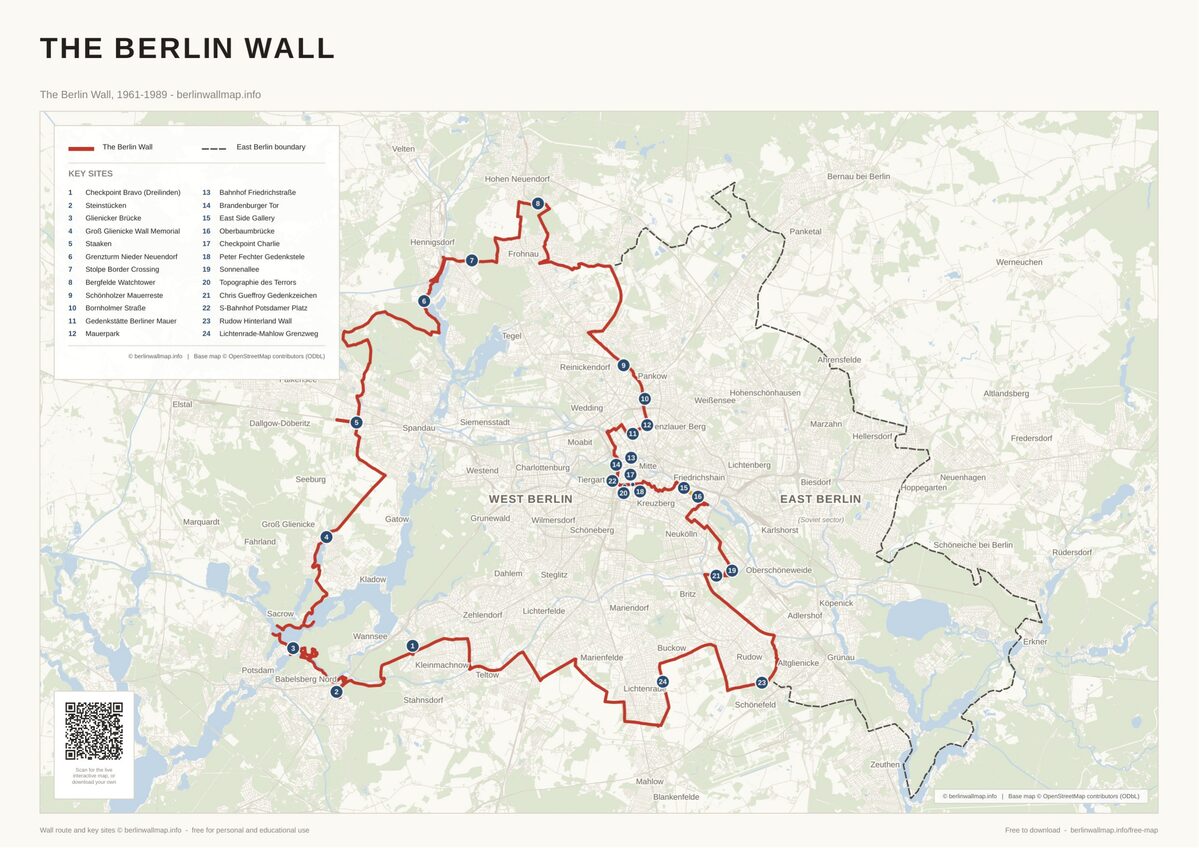
Free map downloads
Free printable PDF maps of the Berlin Wall.
Get the free maps →Explore the Timeline
Journey through Berlin Wall history from 1945 to 1990.
View Timeline →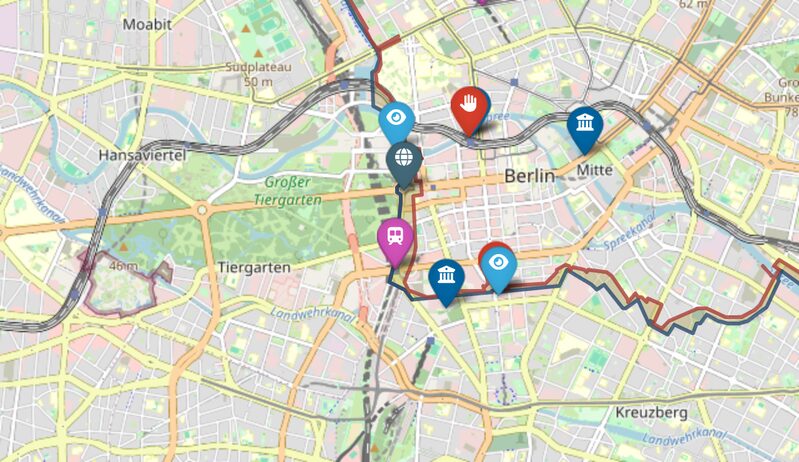
Embed Our Map
Add a free interactive Berlin Wall map to your website or blog.
Get embed code →