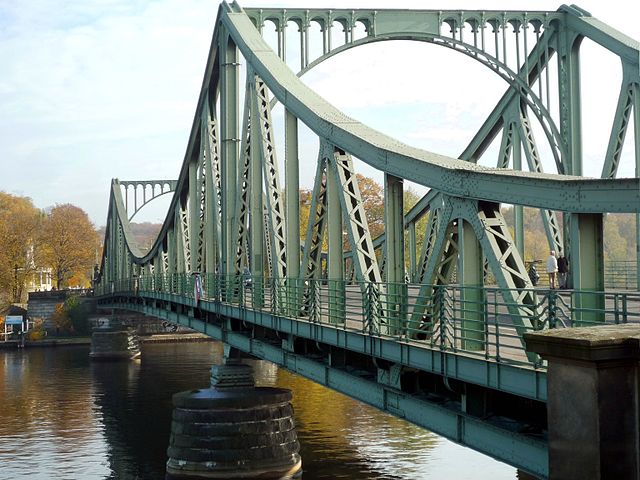
Glienicker Brücke
A bridge spanning the Havel river, connecting Wannsee with the Brandenburg capital, Potsdam. Spies captured during the Cold War were often exchanged here, earning it the moniker “Bridge of Spies”. The East German authorities closed the bridge to West Berliners on 27 May 1952, and was closed to East Berliners after construction of the Berlin Wall.
The bridge became world-famous as the site of Cold War spy exchanges between East and West. The first exchange took place on 10 February 1962, when captured American U-2 pilot Francis Gary Powers was swapped for convicted Soviet spy Rudolf Abel. Further exchanges followed in 1985 and 1986, the latter involving Soviet dissident Natan Sharansky. Steven Spielberg’s 2015 film “Bridge of Spies” brought the story to a new global audience.
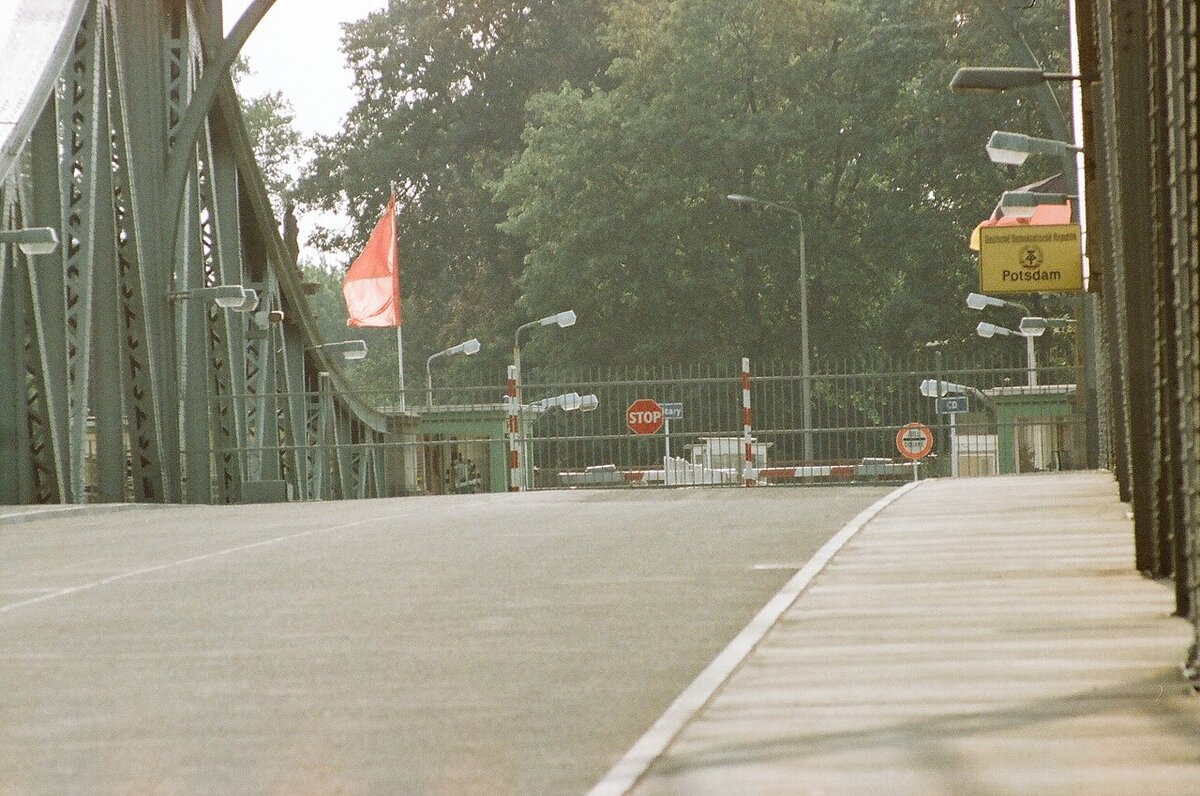
Glienicker Brücke border crossing 1987 (Photo: Jochims)

The bridge became world-famous as the site of Cold War spy exchanges between East and West. The first exchange took place on 10 February 1962, when captured American U-2 pilot Francis Gary Powers was swapped for convicted Soviet spy Rudolf Abel. Further exchanges followed in 1985 and 1986, the latter involving Soviet dissident Natan Sharansky. Steven Spielberg’s 2015 film “Bridge of Spies” brought the story to a new global audience.
The bridge was opened to the public on 10 November 1989, the day after the Berlin Wall fell, when jubilant crowds streamed across from both sides. Today the bridge connects the Berlin district of Wannsee with the Brandenburg capital, Potsdam, and a small exhibition at the midpoint marks the former border line.
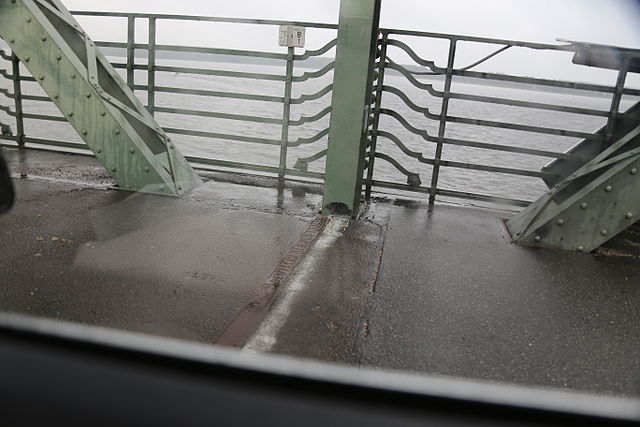
Midpoint of the Glienicker Brudge, site of East/West spy exchanges during Cold War (Photo: Drrcs15)

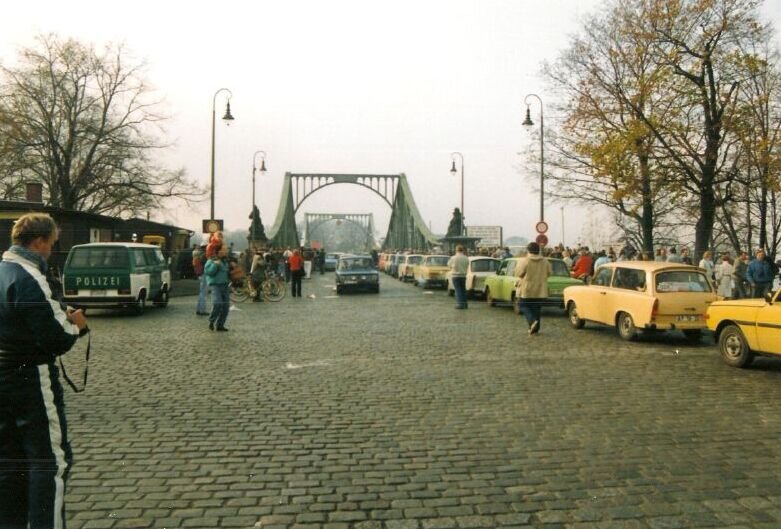
Cars line up to cross border after the fall of the Wall in 1989 (Photo: Gavin Stewart)

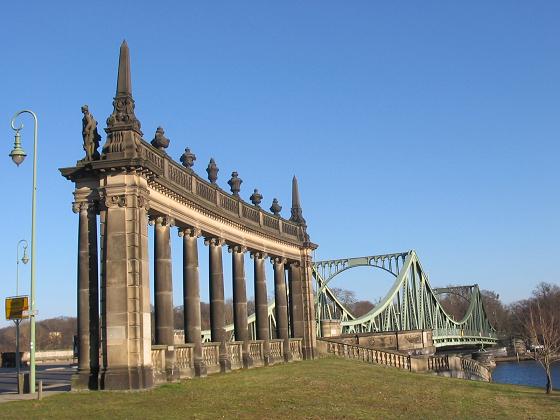
Glienicker Brücke, view from Potsdam (Photo: Lienhard Schulz)

Gallery


Affiliate link - we may earn a commission
Nearby Berlin Wall Sites
See all Berlin Wall sites near Glienicker Brücke →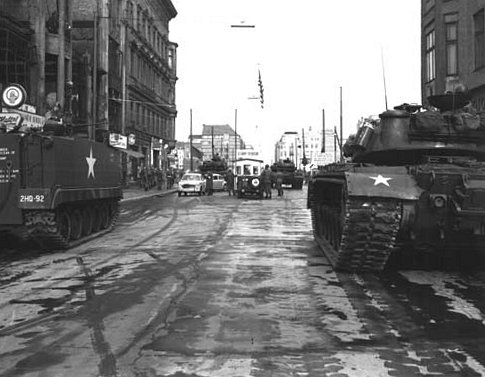
Checkpoint Charlie
East Side Gallery
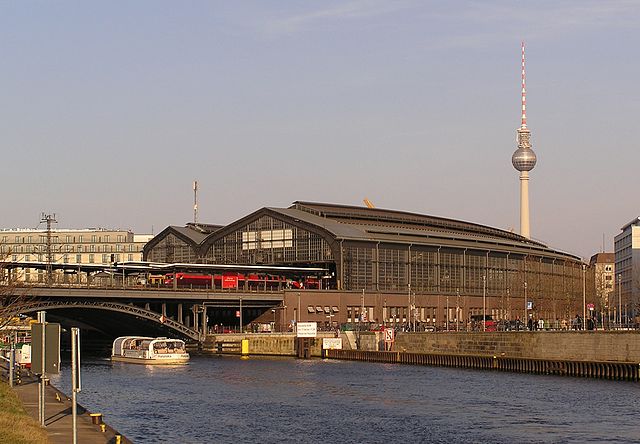
Bahnhof Friedrichstraße
History of the Berlin Wall: A Complete Guide (1961-1989)
65 Years Ago: US and Soviet Tanks Faced Off at Checkpoint Charlie
The Border Guards of the Berlin Wall: Conscripts, the Order to Shoot, and the Trials That Followed
9 November in Berlin: 37 Years Since the Wall Fell, and What’s On
Gethsemanekirche
Affiliate link - we may earn a commission
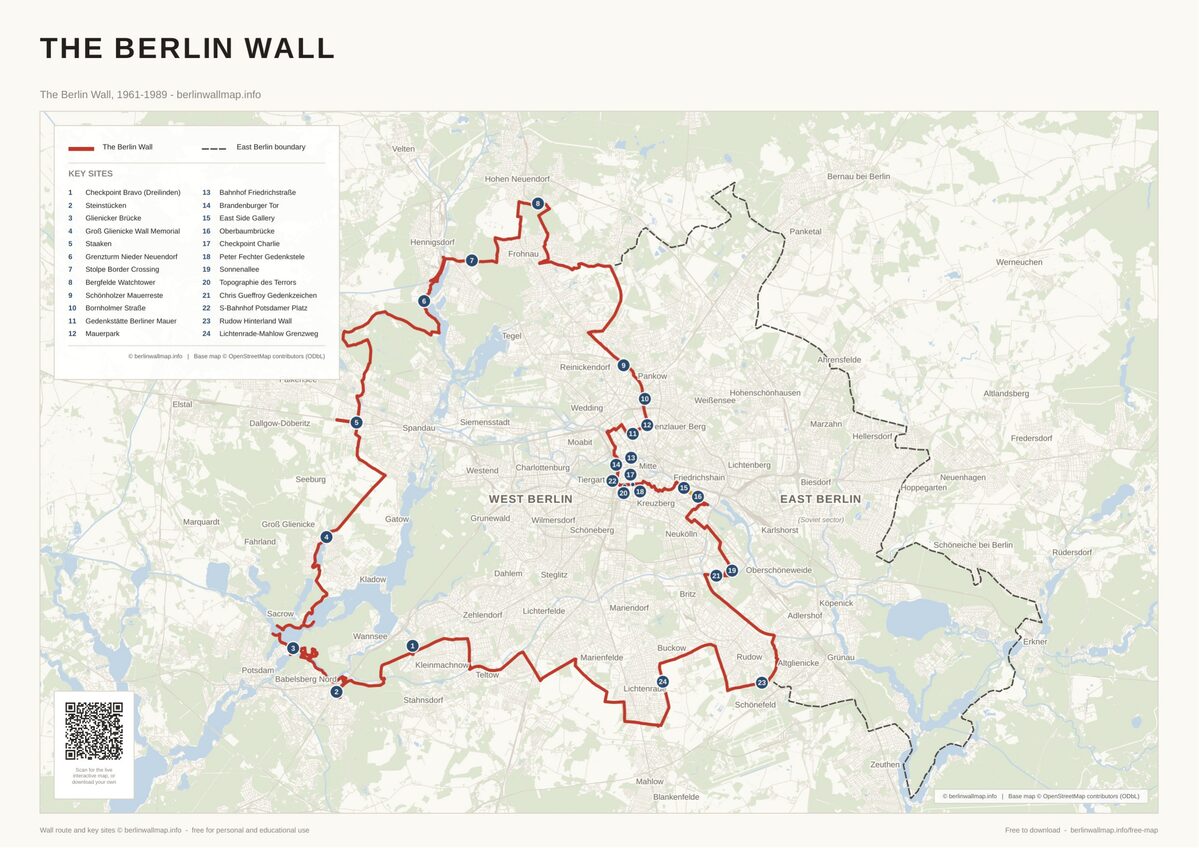
Free map downloads
Free printable PDF maps of the Berlin Wall.
Get the free maps →Explore the Timeline
Journey through Berlin Wall history from 1945 to 1990.
View Timeline →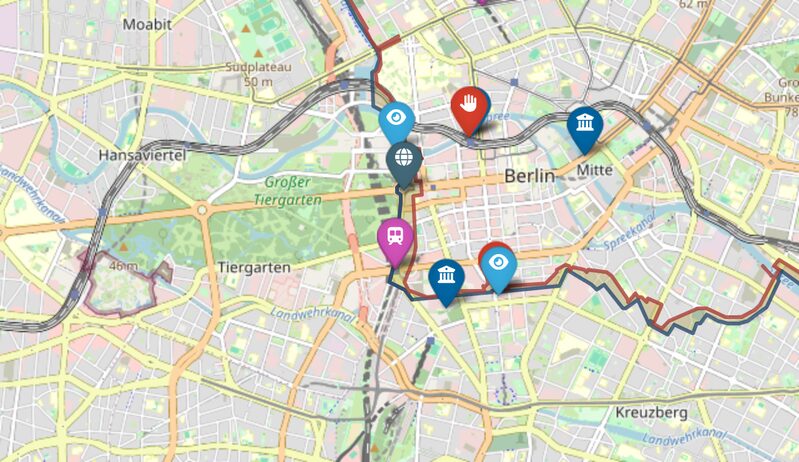
Embed Our Map
Add a free interactive Berlin Wall map to your website or blog.
Get embed code →