Eiskeller Exclave
The Eiskeller exclave was one of the strangest geographical anomalies of the Cold War. Three West Berlin farmsteads, connected to the main city by a corridor just four metres wide and 800 metres long, became an island of freedom surrounded by GDR territory.
The name “Eiskeller” (ice cellar) comes from the area’s unusually cold microclimate, caused by a natural depression that traps cold air. Temperatures here can be up to 10 degrees Celsius colder than in the rest of Berlin, making it the coldest spot in the city.
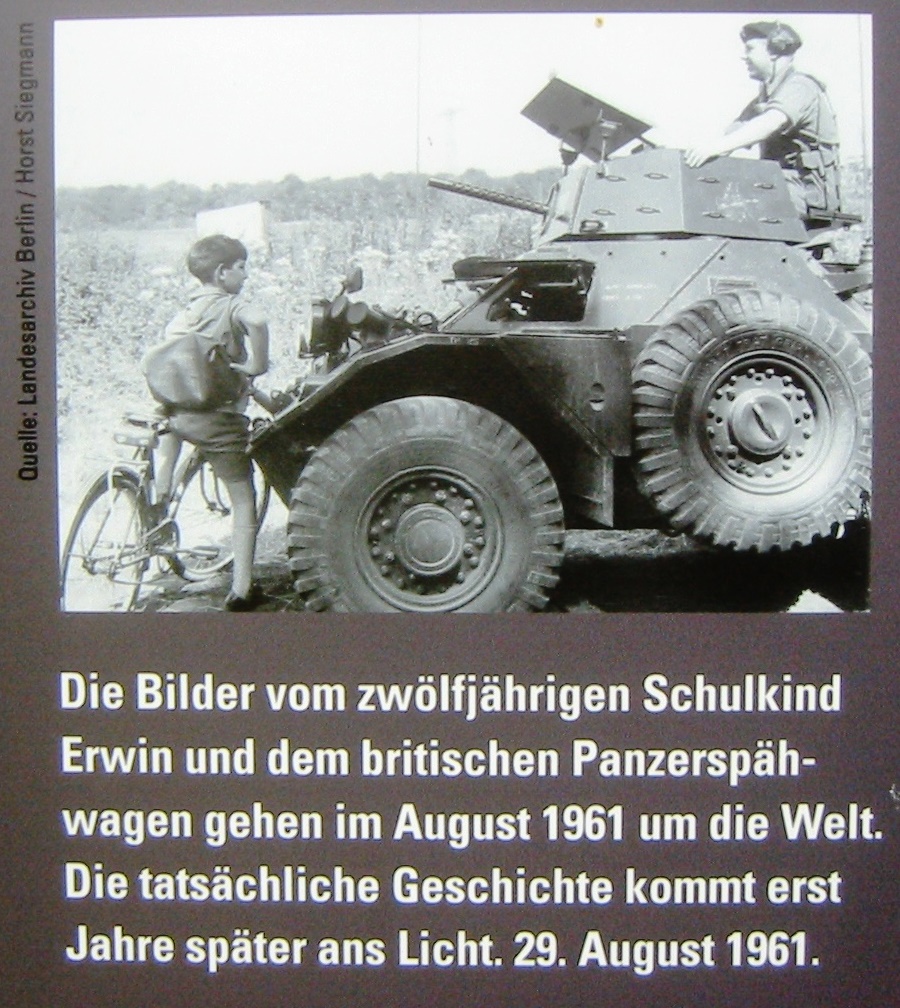
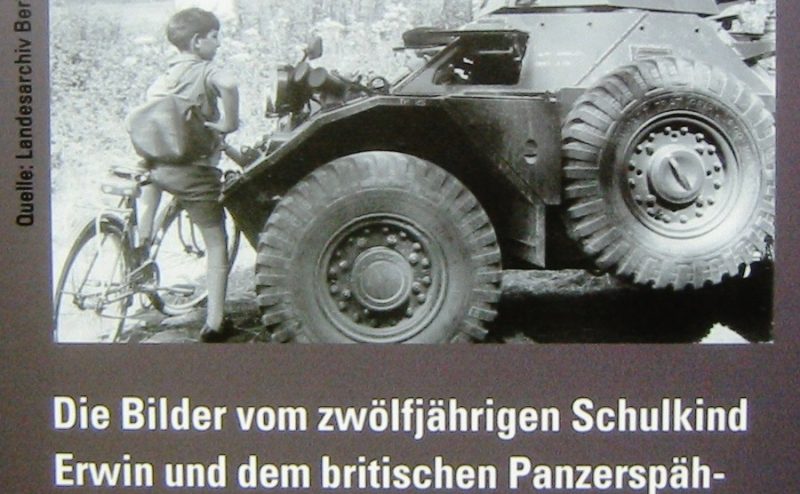
Erwin Schabe cycling the Eiskeller corridor in 1961 behind a British armoured scout car (Photo: Assenmacher (reproduction))
The exclave became world-famous through a photograph taken in 1961, shortly after the Wall went up. It shows 12-year-old Erwin Schabe cycling to school along the corridor behind a British armoured scout car, sent to escort him after he reported that East German police had stopped him and held him for hours. The image of a child going to school under armed escort was published around the world. German accounts say Schabe admitted years later that he had invented the incident because he did not want to go to school; no source names the interview, so it is best treated as the story about the story.
At its peak, only about a dozen people lived in the Eiskeller exclave. They had to travel along the narrow corridor, which was fenced on both sides, to reach the rest of West Berlin. British military police maintained a presence to ensure access. Today the area is a recreational green space, and the corridor path is part of the Berlin Wall Trail.
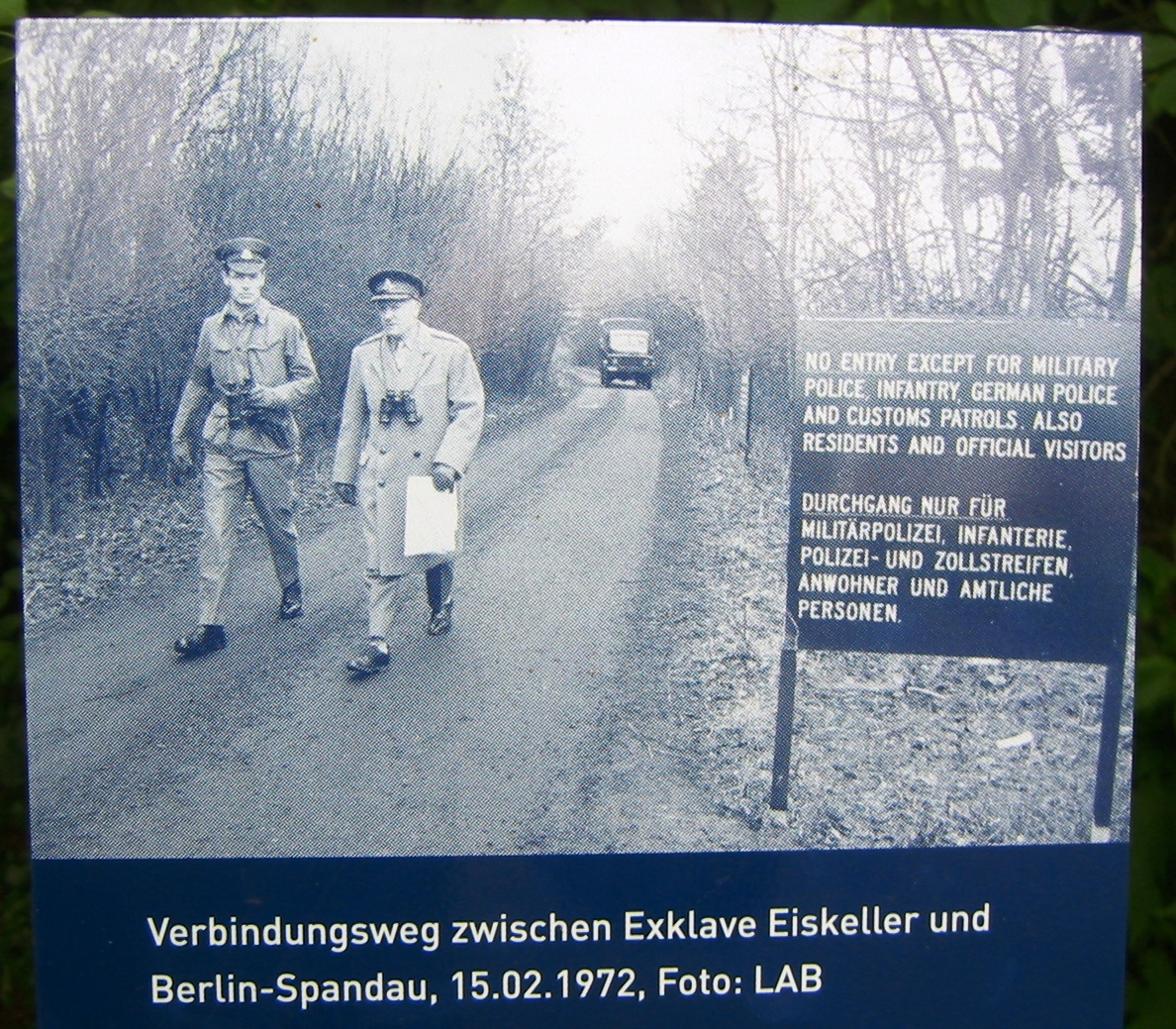
The connecting path to the exclave, reproduced from a public information stele of the Chronik der Mauer (Photo: Assenmacher)
Gallery


Nearby Berlin Wall Sites
See all Berlin Wall sites near Eiskeller Exclave →



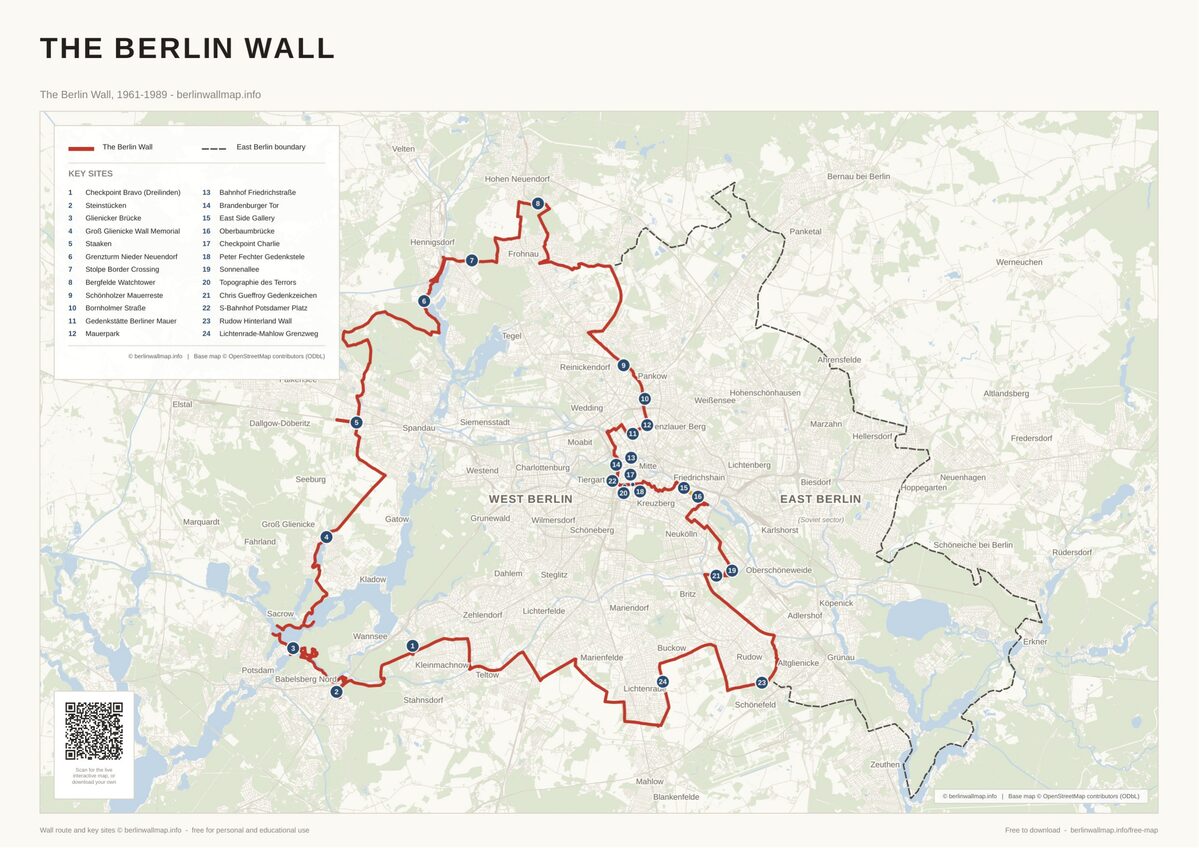
Free map downloads
Free printable PDF maps of the Berlin Wall.
Get the free maps →Explore the Timeline
Journey through Berlin Wall history from 1945 to 1990.
View Timeline →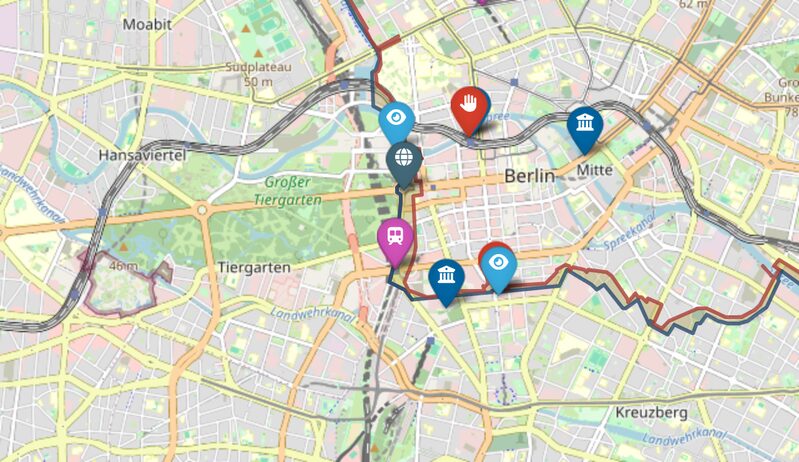
Embed Our Map
Add a free interactive Berlin Wall map to your website or blog.
Get embed code →