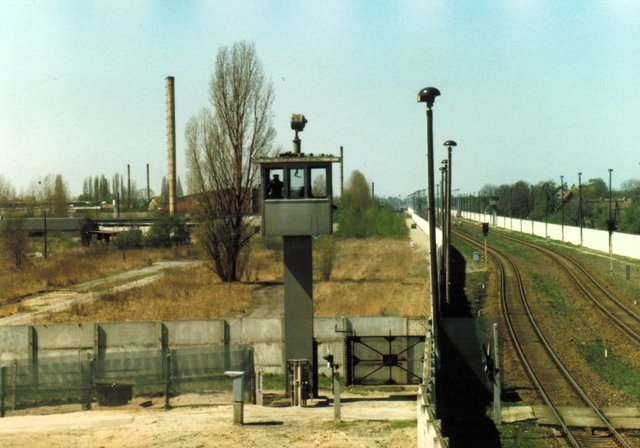
Staaken
Staaken, on the west-most outskirts of West Berlin, was home to several different rail and road crossings during the cold war years. Albrechtshof rail crossing was closed in 1961 after possibly one of the most dramatic GDR escapes: East German engineer Harry Deterling crashed a whole train through the barriers towards Gartenstadt Staaken in West Berlin. A separate rail road border crossing was opened by the GDR in 1976, for rail transit to western Germany, and there was also a road crossing at Heerstraße.
Nearby: Spandau War Memorial, Fort Haneburg
On 5 December 1961, East German locomotive engineer Harry Deterling made one of the most dramatic escapes of the Cold War. He drove a passenger train at full speed through the closed Albrechtshof border crossing, crashing through the barriers towards Gartenstadt Staaken in West Berlin. Twenty-four passengers and seven family members who were in on the plan escaped to freedom in what became known as the “Last Train to Freedom.” The East German authorities permanently closed the Albrechtshof crossing immediately afterwards.
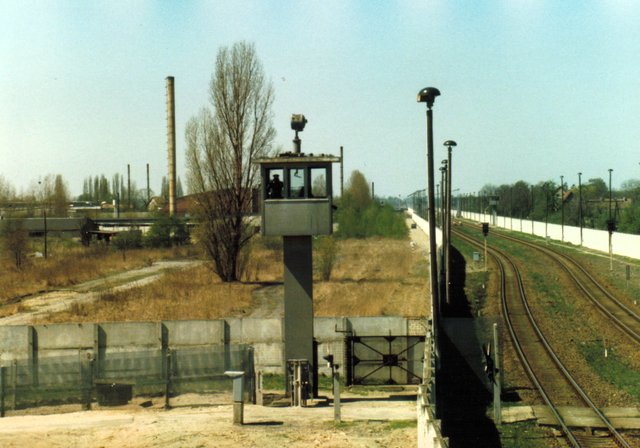
Staaken railway crossing, 1986 (Photo: Florian Schäffer)

After the Deterling escape, the East German authorities permanently closed the Albrechtshof crossing and reinforced the border defences. A separate railway border crossing was opened by the GDR in 1976 at Staaken station, used for transit rail traffic between West Berlin and western Germany. There was also a road crossing at Heerstraße, mainly used for commercial transit and inter-German travel.
Today Staaken is a quiet residential area on Berlin’s western outskirts. Little visible trace of the border remains, though the nearby Spandau War Memorial and Fort Hahneberg – a 19th-century fortress that sat in the death strip for decades – recall the area’s military history.
Show me on the mapGallery


Affiliate link - we may earn a commission
Nearby Berlin Wall Sites
See all Berlin Wall sites near Staaken →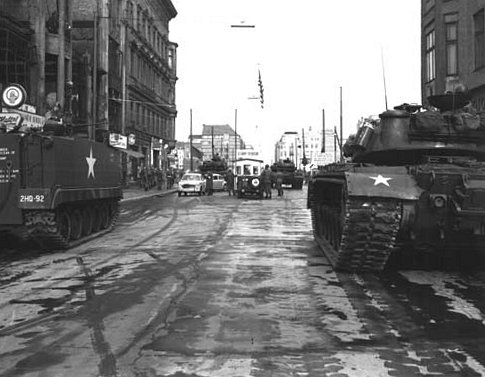
Checkpoint Charlie
East Side Gallery
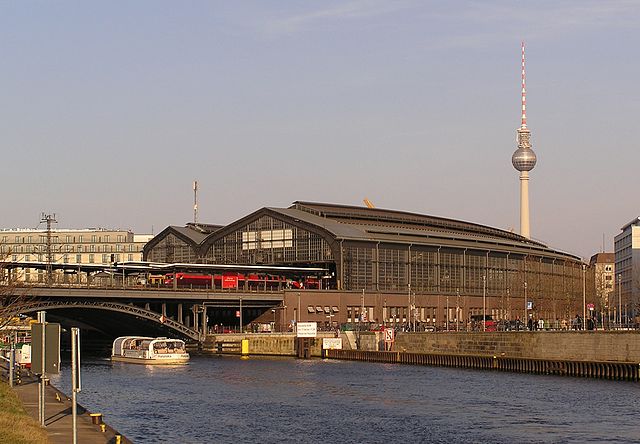
Bahnhof Friedrichstraße
History of the Berlin Wall: A Complete Guide (1961-1989)
65 Years Ago: US and Soviet Tanks Faced Off at Checkpoint Charlie
The Border Guards of the Berlin Wall: Conscripts, the Order to Shoot, and the Trials That Followed
9 November in Berlin: 37 Years Since the Wall Fell, and What’s On
Gethsemanekirche
Affiliate link - we may earn a commission
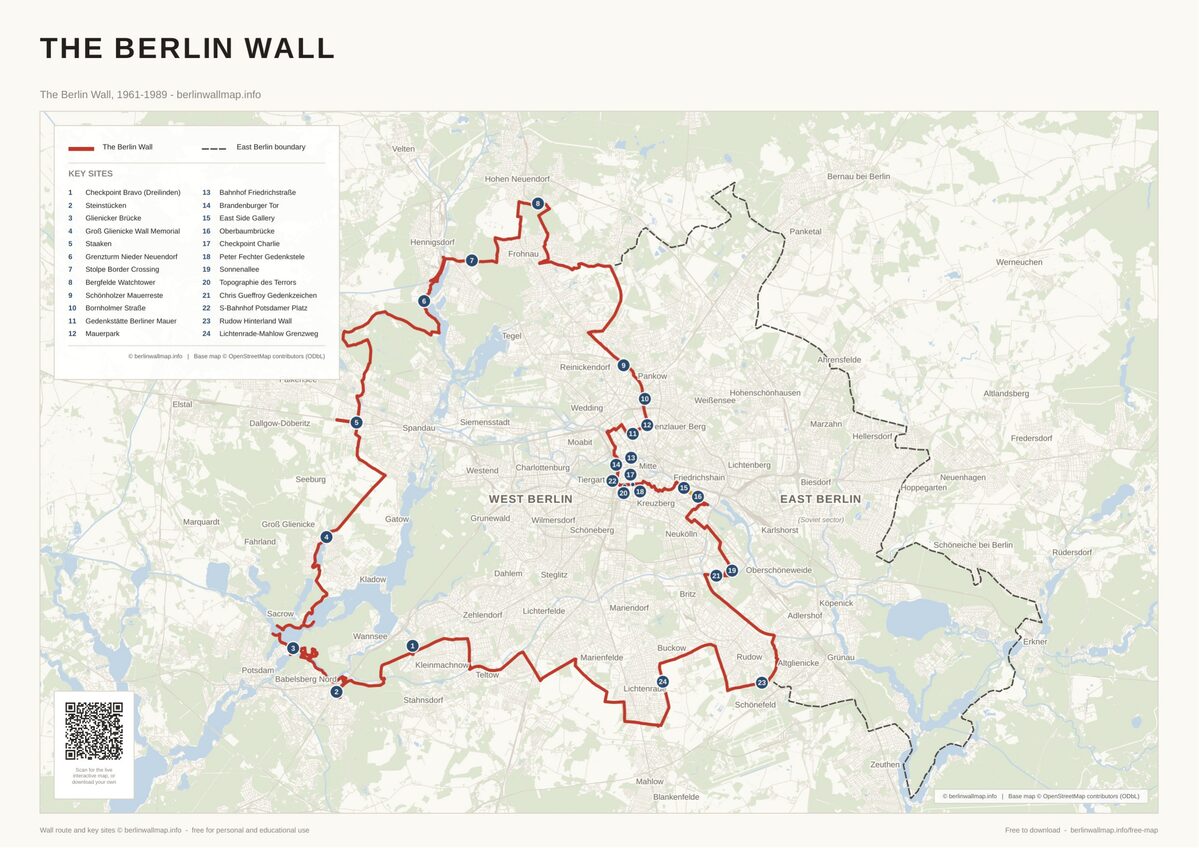
Free map downloads
Free printable PDF maps of the Berlin Wall.
Get the free maps →Explore the Timeline
Journey through Berlin Wall history from 1945 to 1990.
View Timeline →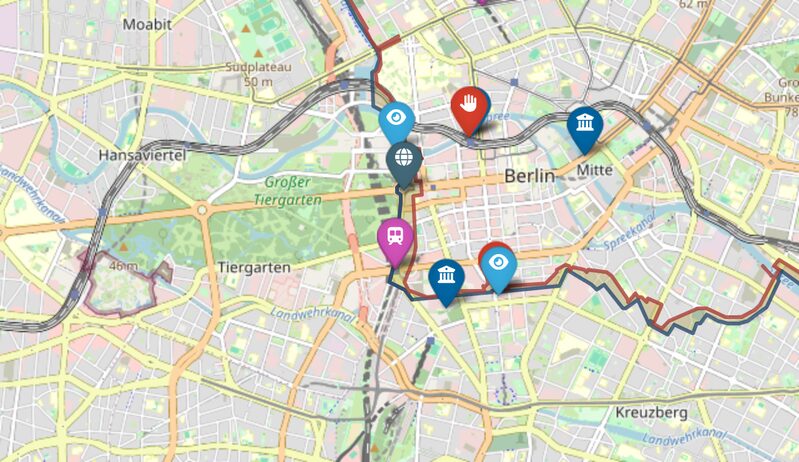
Embed Our Map
Add a free interactive Berlin Wall map to your website or blog.
Get embed code →