Rathaus Schöneberg
Schöneberg Town Hall served as West Berlin’s city hall from 1949 to 1991, after the historic Rotes Rathaus fell within the Soviet sector. It is best known as the site of President Kennedy’s famous “Ich bin ein Berliner” speech on 26 June 1963, delivered to a crowd of over 120,000 on the square now named John-F.-Kennedy-Platz. The tower houses a replica of the American Liberty Bell, donated by 16 million Americans in 1950 and rung daily at noon. Today the building serves as the Tempelhof-Schöneberg district hall.
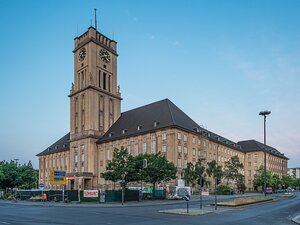
A Rathaus is a German town hall or city hall — the seat of local government. Built between 1911 and 1914, Rathaus Schöneberg originally served as the municipal hall for the independent city of Schöneberg before it was incorporated into Greater Berlin in 1920. The four-storey sandstone building is distinguished by its 70-metre clock tower, which dominates the surrounding neighbourhood.
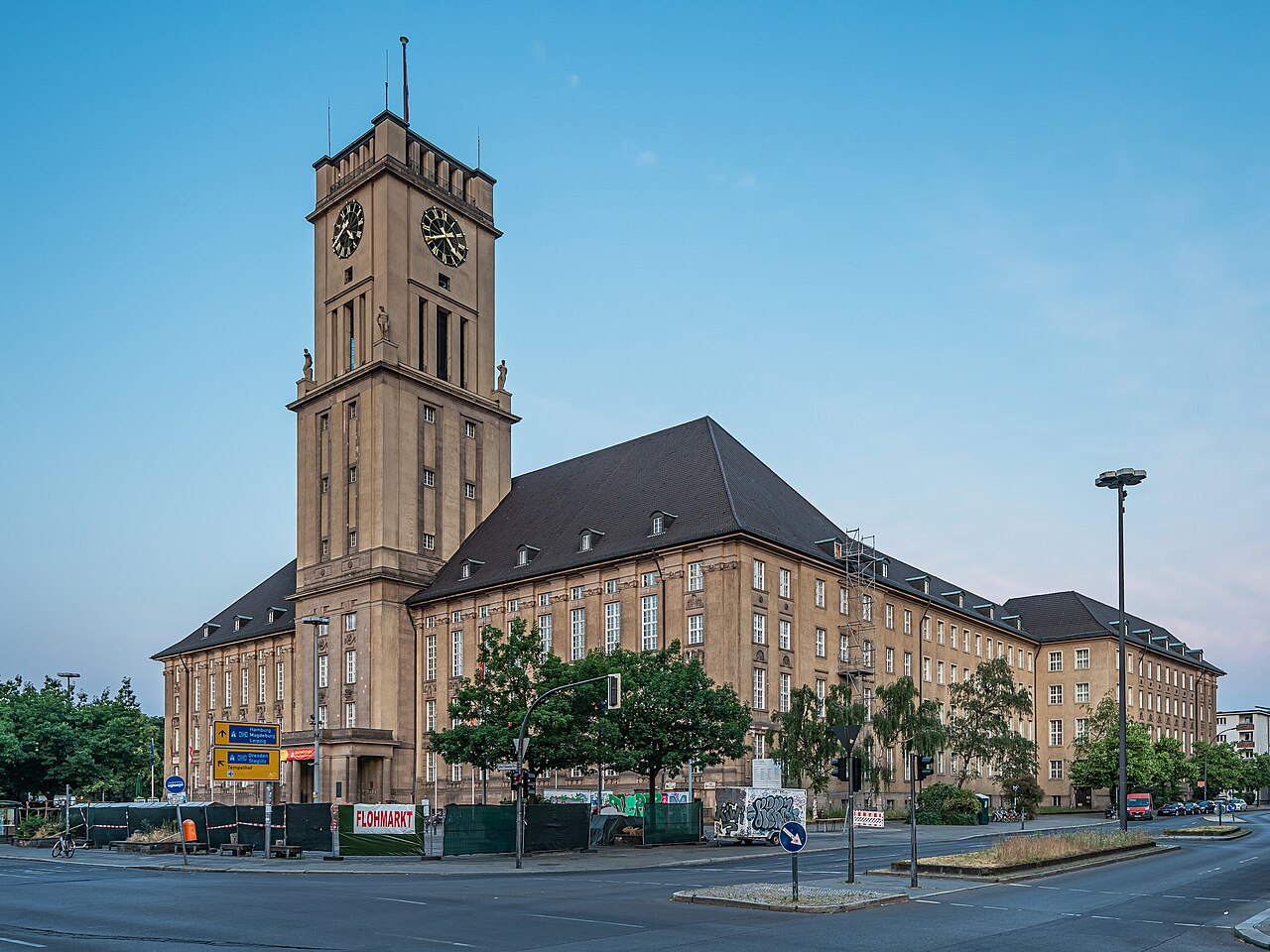
Rathaus Schöneberg, West Berlin’s city hall from 1949 to 1991 (Photo: A.Savin)

When Berlin was divided after the Second World War, the historic Rotes Rathaus on Alexanderplatz fell within the Soviet sector, making it inaccessible to the West Berlin government. In 1949, Rathaus Schöneberg became the seat of the West Berlin Senate and Governing Mayor — a role it would hold for 42 years. Willy Brandt, who later won the Nobel Peace Prize for his Ostpolitik, governed from this building as mayor from 1957 to 1966. During his tenure the Berlin Wall was built, transforming the square outside into a focal point for protest rallies and demonstrations of solidarity with the divided city.
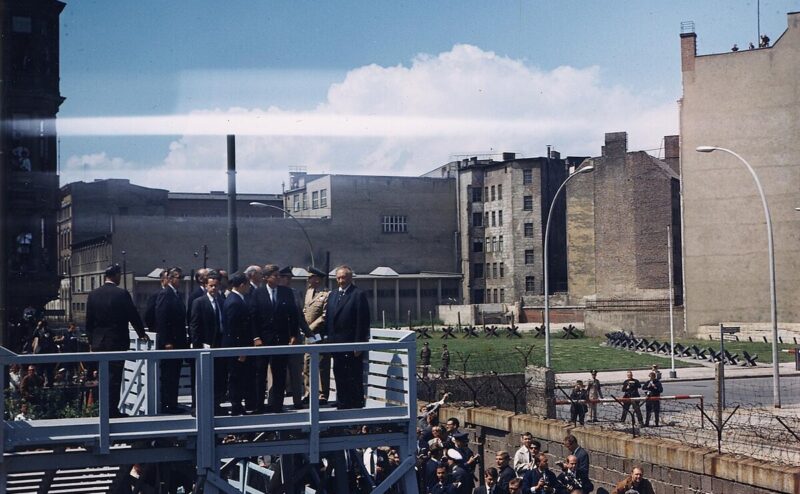
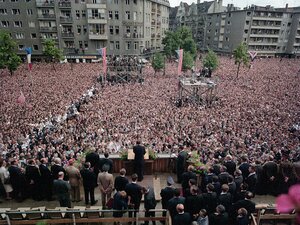
On 26 June 1963, less than two years after the Wall went up, President John F. Kennedy addressed a crowd of over 120,000 from the steps of the Rathaus. In one of the most famous speeches of the Cold War, he declared: “Two thousand years ago, the proudest boast was Civis Romanus sum. Today, in the world of freedom, the proudest boast is Ich bin ein Berliner.” A persistent urban legend claims Kennedy accidentally called himself a jelly donut — but this myth was invented two decades later in a 1983 novel. Berliners understood him perfectly, and the crowd erupted in cheers. The square was renamed John-F.-Kennedy-Platz in his honour after his assassination later that year.
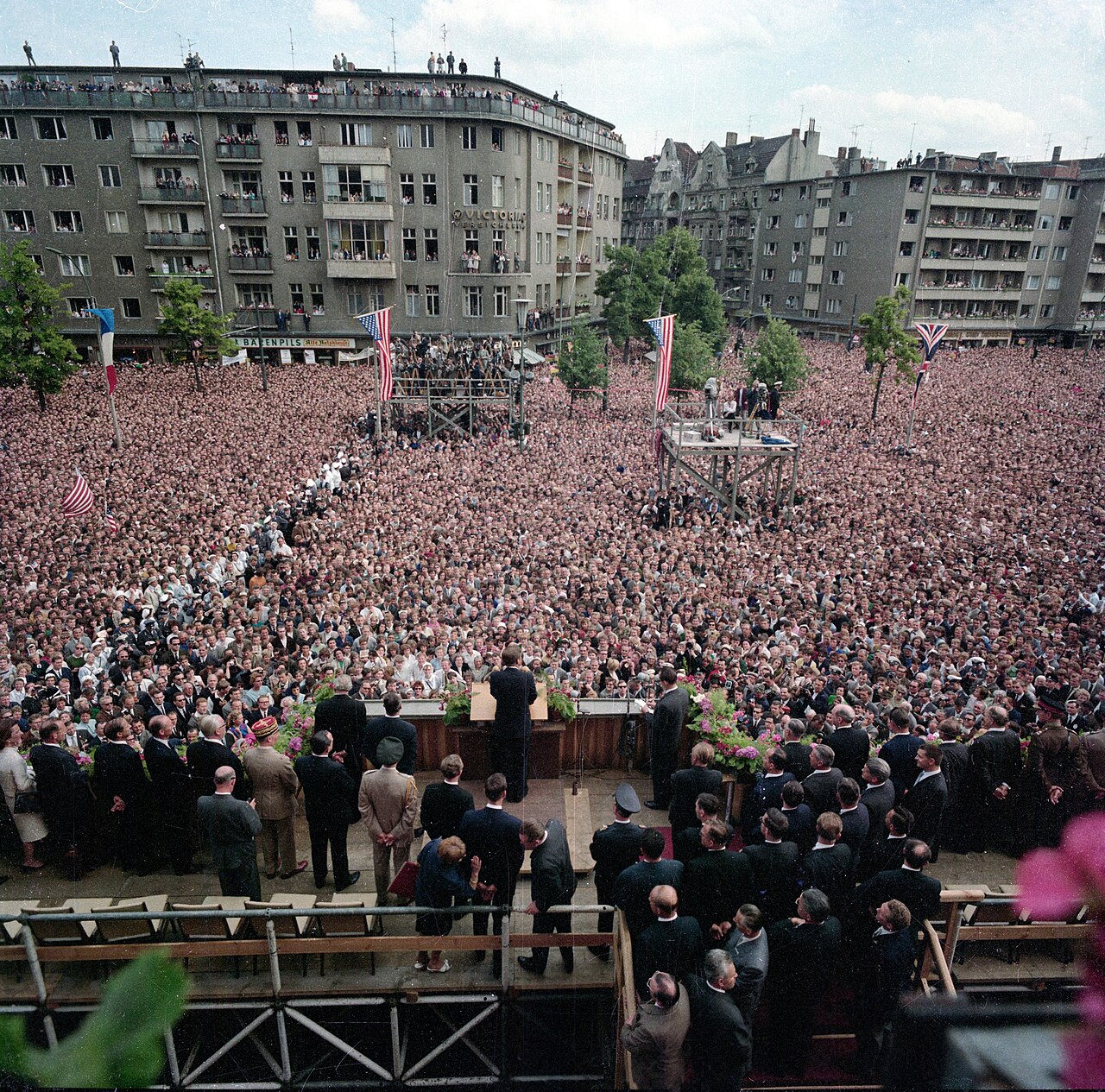
President Kennedy delivers his “Ich bin ein Berliner” speech to a crowd of over 120,000, 26 June 1963 (Photo: Robert Knudsen, White House)

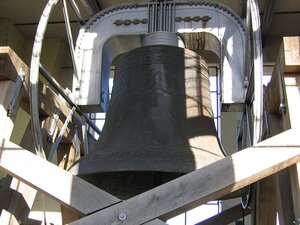
In the 70-metre tower hangs the Freedom Bell (Freiheitsglocke), a replica of the Liberty Bell in Philadelphia. It was cast as part of the American “Crusade for Freedom” campaign, funded by donations from some 16 million Americans, and installed in 1950. General Lucius D. Clay, who had organised the Berlin Airlift just two years earlier, inaugurated the bell in a ceremony broadcast worldwide. The Freedom Bell is rung every day at noon and has been tolled to mark historic events, including German reunification in 1990.
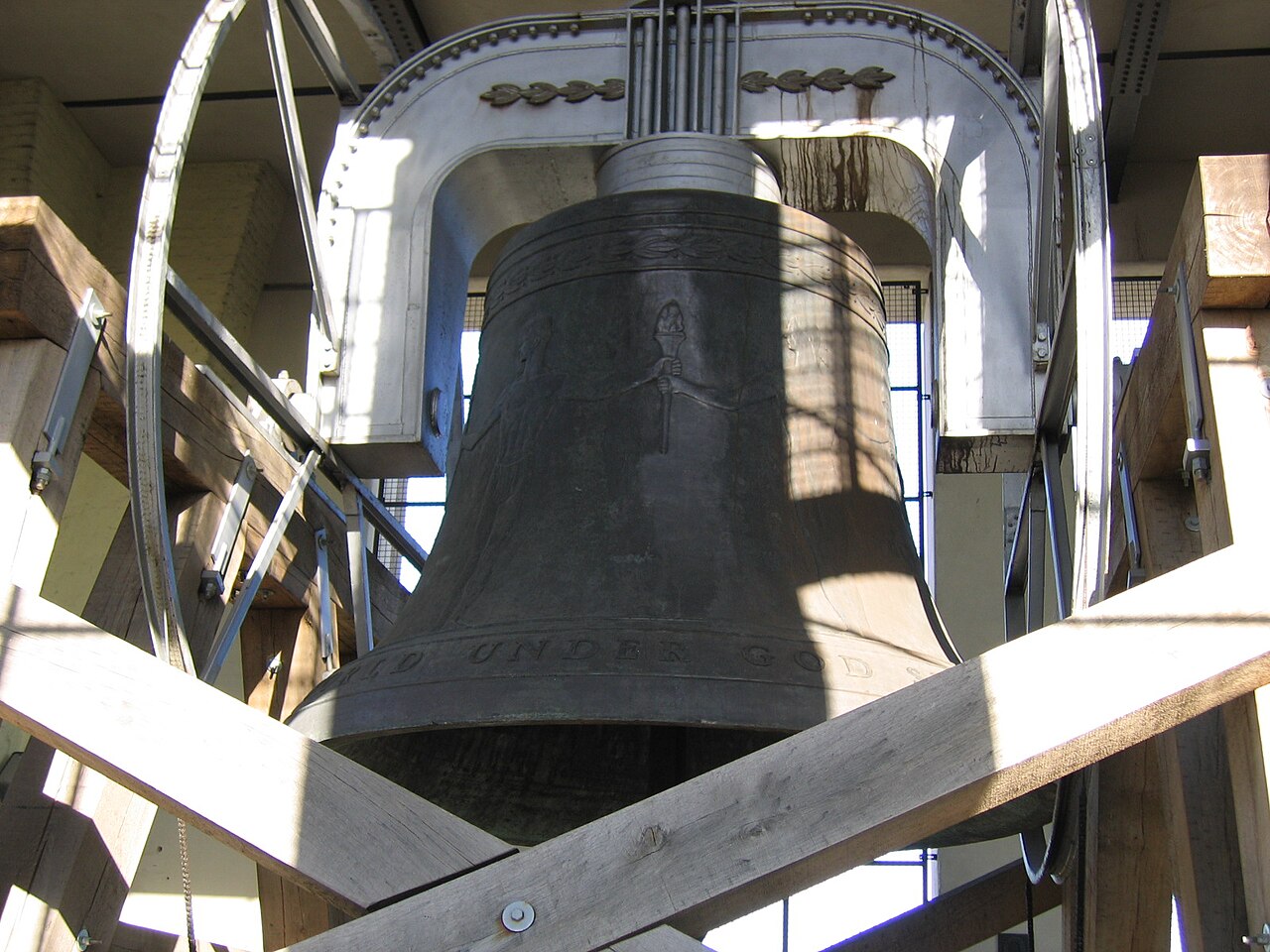
The Freedom Bell (Freiheitsglocke) in the Rathaus Schöneberg tower, a gift from 16 million American donors in 1950 (Photo: ANKAWU)

After reunification the Berlin government moved back to the Rotes Rathaus, and Rathaus Schöneberg became the administrative headquarters of the Tempelhof-Schöneberg district, which it remains today. Inside, a memorial room commemorates Kennedy’s 1963 visit, and since 2005 an exhibition titled “We Were Neighbours” documents the biographies of Jewish residents of Schöneberg and Tempelhof under the Nazi regime. The square in front hosts a popular weekend flea market. The building is easily reached via the U4 line to Rathaus Schöneberg station.
Show me on the mapGallery
Nearby Berlin Wall Sites
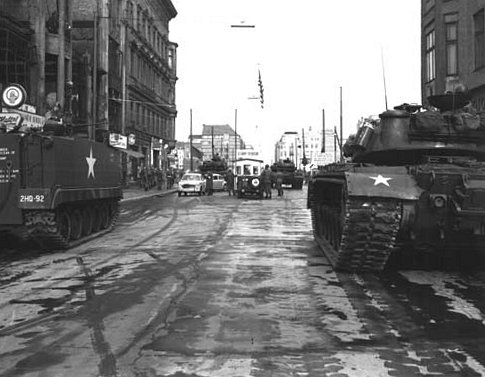
Checkpoint Charlie
East Side Gallery
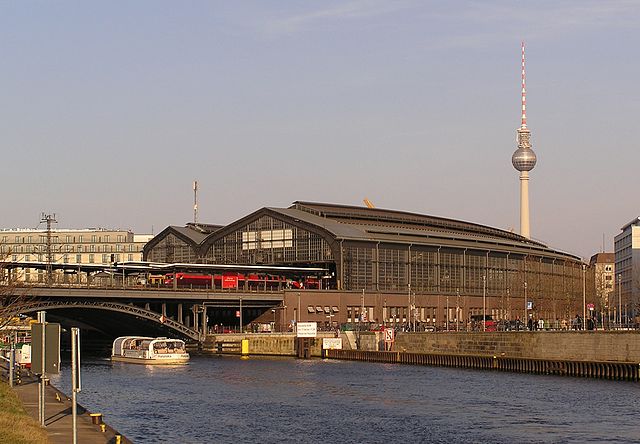
Bahnhof Friedrichstraße
History of the Berlin Wall: A Complete Guide (1961-1989)
65 Years Ago: US and Soviet Tanks Faced Off at Checkpoint Charlie
The Border Guards of the Berlin Wall: Conscripts, the Order to Shoot, and the Trials That Followed
9 November in Berlin: 37 Years Since the Wall Fell, and What’s On
Gethsemanekirche
Free map downloads
Free printable PDF maps of the Berlin Wall.
Get the free maps →Explore the Timeline
Journey through Berlin Wall history from 1945 to 1990.
View Timeline →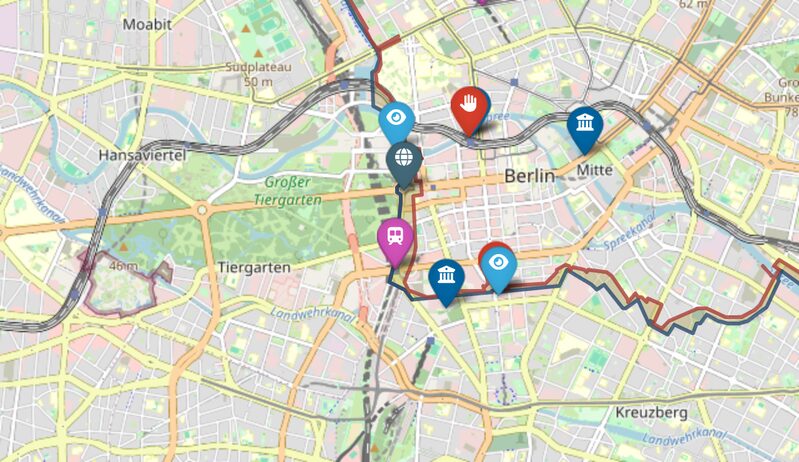
Embed Our Map
Add a free interactive Berlin Wall map to your website or blog.
Get embed code →