
Berlin Wall Sites with Kids & Family
Visiting Berlin Wall sites with children can be a meaningful experience, but not every site is suitable for all ages. Some museums deal with detention, surveillance, and death in ways that may be overwhelming for younger visitors. This guide helps families choose the right sites, avoid the ones that might be too intense, and plan a comfortable half-day itinerary that keeps everyone engaged.
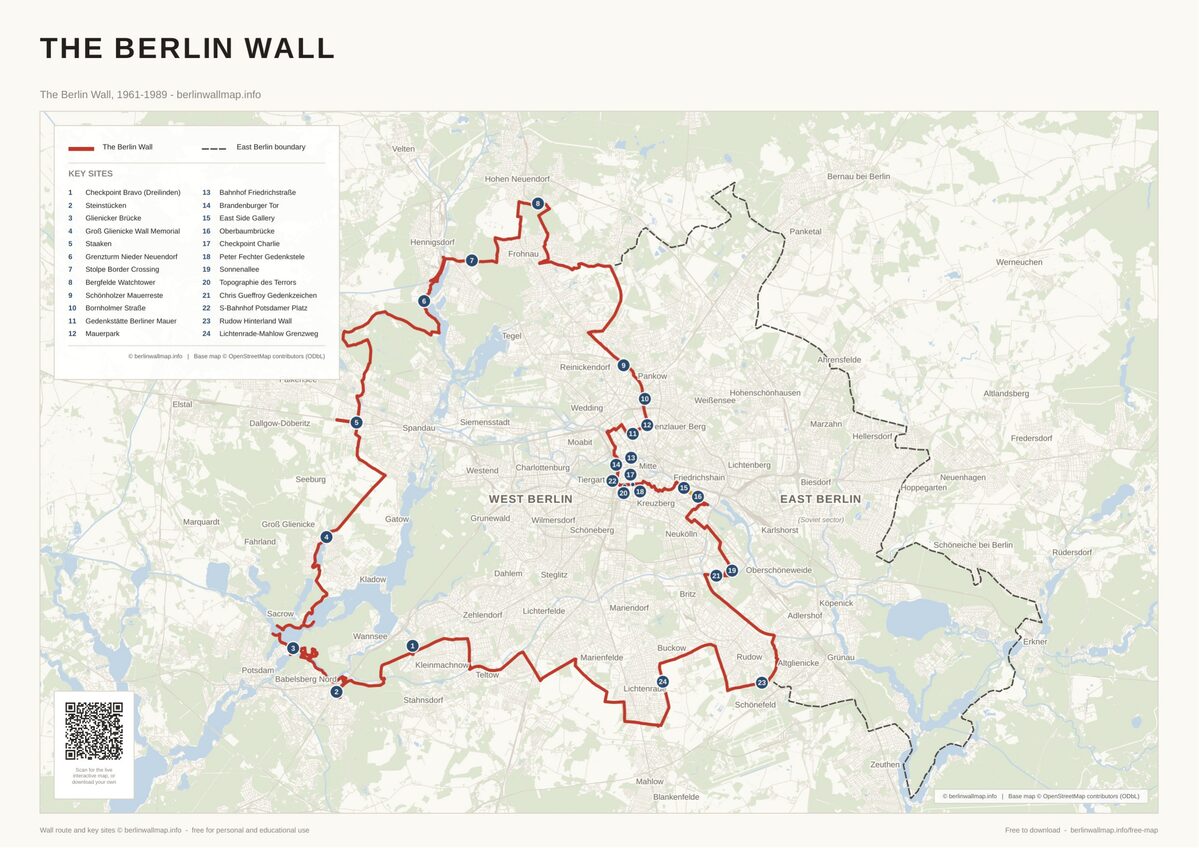
All sites mentioned here are on our interactive Berlin Wall map, so you can plan your route in advance.
Best Sites for Families
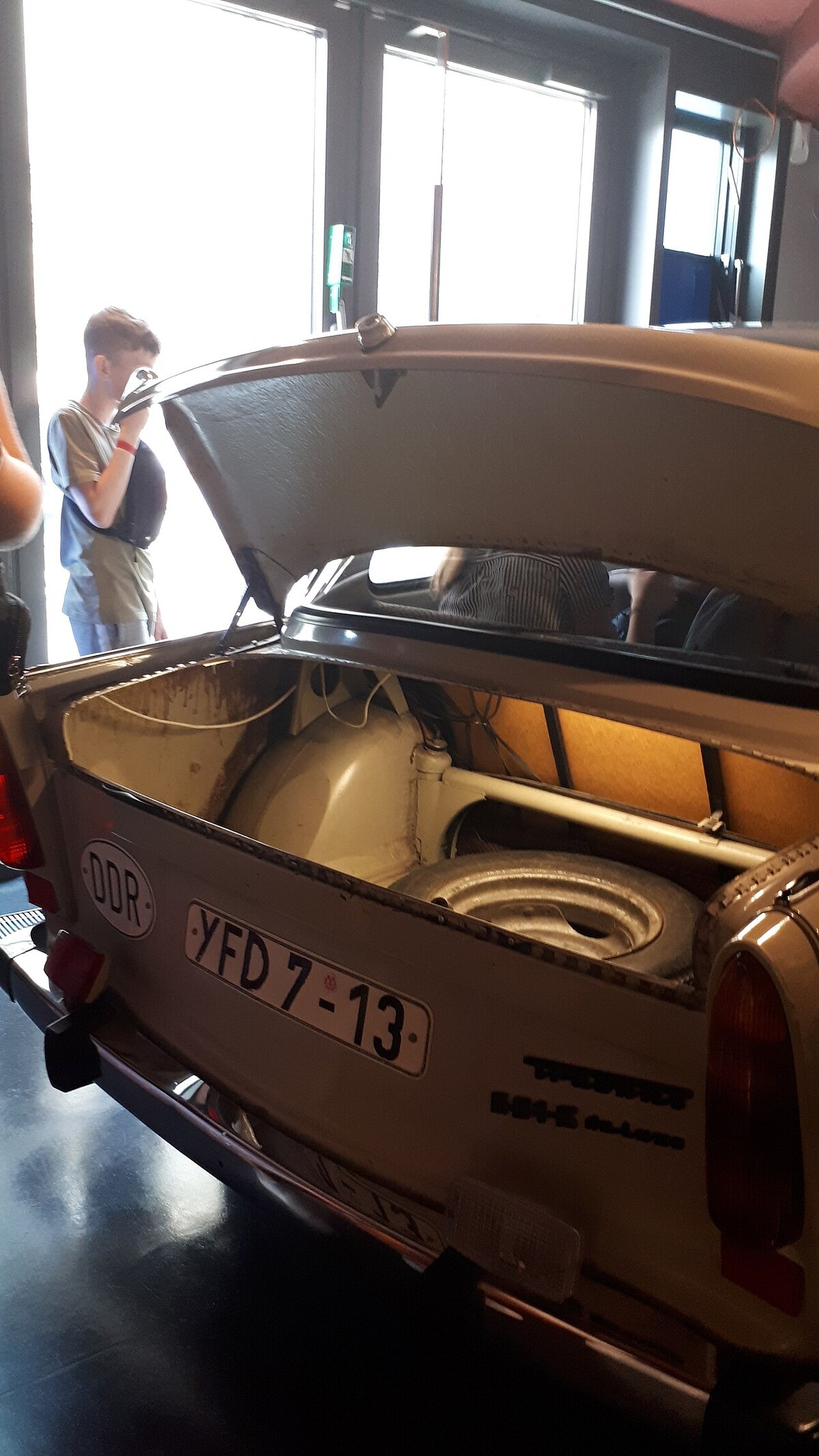
DDR Museum
The DDR Museum near Alexanderplatz is the most family-friendly Berlin Wall attraction. It is hands-on and interactive: children can sit in a Trabant car, walk through a reconstructed East German apartment (complete with 1970s wallpaper and bugged telephone), try on Young Pioneer uniforms, and learn what daily life was like behind the Wall. The exhibits focus on everyday objects and routines rather than violence, making them accessible for children aged 6 and up. The museum is not large, so a visit takes about 60 to 90 minutes – a manageable length for younger visitors.
Practical note: The museum is fully accessible with strollers. There is a small cafe on site.
East Side Gallery
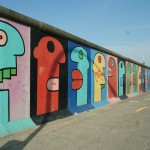
The East Side Gallery is an outdoor gallery of over 100 murals painted on 1.3 kilometers of the Berlin Wall. Children enjoy the colorful artwork, and the open-air setting means they can move freely. Older children will recognize some of the famous images, while younger ones will simply enjoy the spectacle. The riverside path beside the Gallery is flat and stroller-friendly.
Practical note: There are ice cream shops and cafes along Mühlenstraße. The Spree riverbank is unfenced in places – keep an eye on small children near the water.
Mauerpark
Mauerpark sits in the former death strip between Prenzlauer Berg and Wedding. A section of the Hinterlandmauer still stands along the park’s edge, and children can see it while playing in the adjacent playground and climbing areas. On Sundays, the park hosts a large flea market and an open-air karaoke session in the amphitheater that older children love. The park is a perfect stop to combine a bit of history with a break from structured sightseeing.
Practical note: Multiple playgrounds, plenty of grass for running. Cafes and food stalls nearby, especially on Sundays.
Berlin Wall Memorial (Bernauer Straße)
The outdoor exhibition at the Berlin Wall Memorial on Bernauer Straße works well with older children (roughly 8 and up). The preserved border fortifications, watchtower foundations, and escape tunnel sites are visually dramatic and help children understand the physical reality of the Wall. The Documentation Centre has a viewing platform that gives a clear overview of how the death strip was laid out. Younger children may find the information panels too text-heavy, but the physical structures themselves are impressive and easy to grasp.
Practical note: The outdoor area is stroller-accessible. The visitor centre has restrooms. Allow about 60 minutes.
Sites That May Be Too Intense for Young Children
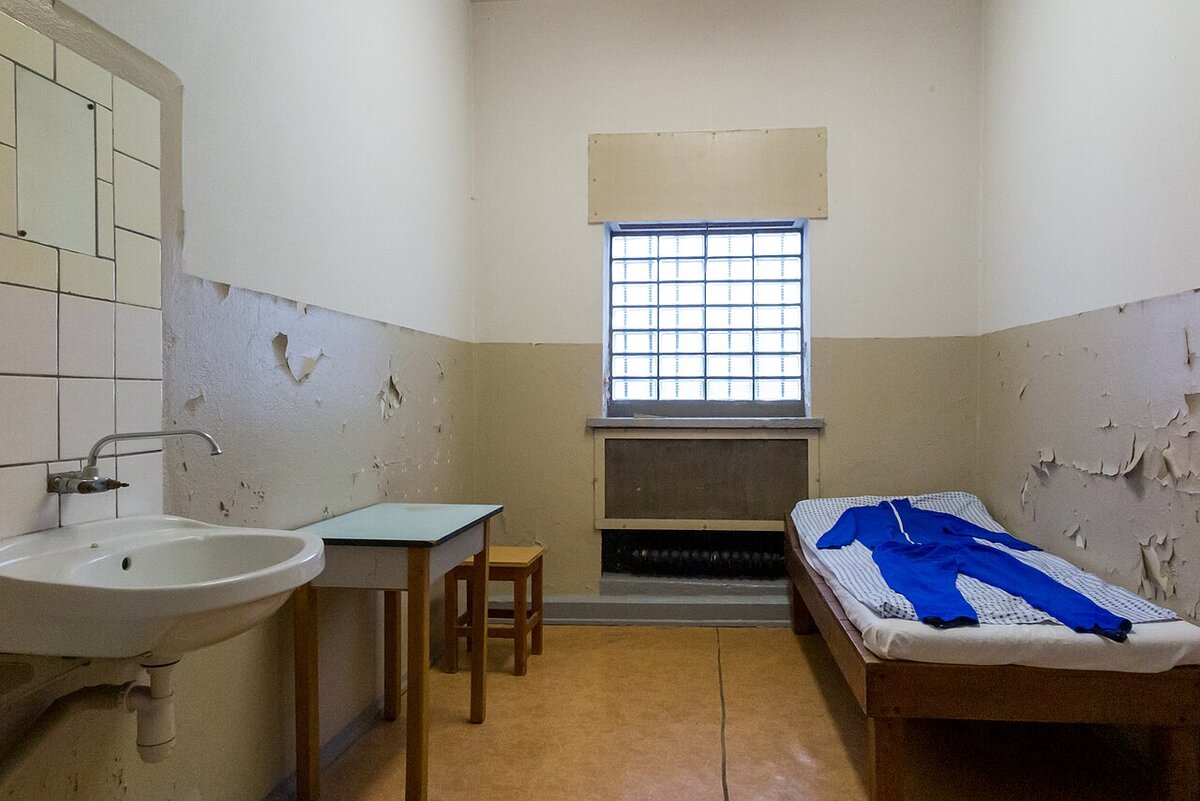
Hohenschönhausen Memorial
The Gedenkstätte Berlin-Hohenschönhausen, the former Stasi remand prison, is an extraordinary and deeply affecting place. Guided tours are led by former inmates who describe interrogation techniques, isolation cells, and psychological torture in vivid detail. This is generally not suitable for children under 12. Teenagers studying the Cold War, however, often find it the most impactful site in Berlin. Use your judgment based on your child’s maturity.
Topographie des Terrors
The Topographie des Terrors documents Nazi persecution and contains graphic photographs. The outdoor section with the Wall is fine for all ages, but the indoor exhibition is better suited to older teenagers and adults.
Family Half-Day Itinerary
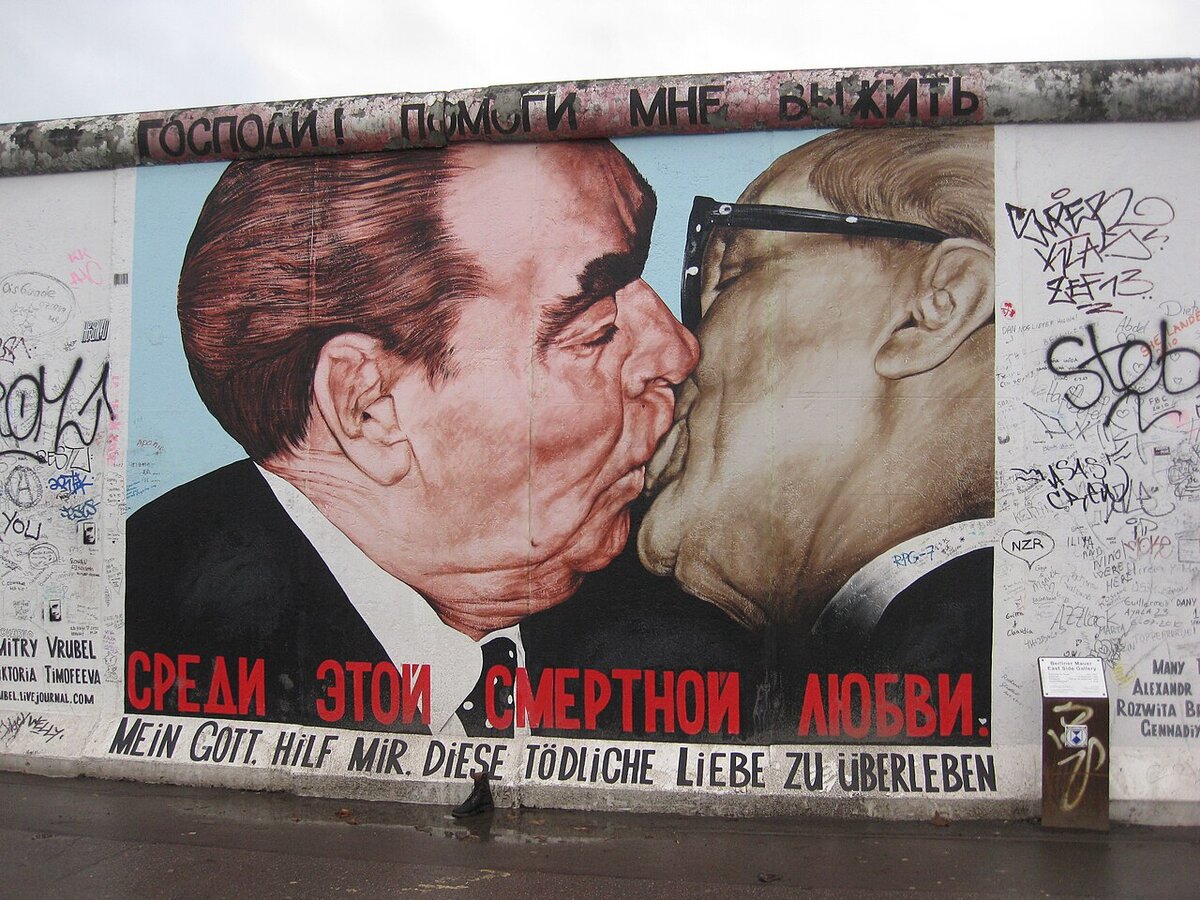
This itinerary covers three sites in about 4 hours, with breaks built in.
Morning: DDR Museum (10:00 – 11:30)
Start at the DDR Museum. Take the S-Bahn to Hackescher Markt and walk 5 minutes to the museum. Allow 60 to 90 minutes for the interactive exhibits. Children will enjoy the hands-on displays; adults will appreciate the social history.
Midday Break: Lunch at Hackescher Markt (11:30 – 12:30)
Walk back to the Hackescher Höfe area for lunch. There are plenty of family-friendly restaurants, bakeries, and ice cream shops in the courtyards and surrounding streets.
Afternoon: East Side Gallery (13:00 – 14:30)
Take the S-Bahn from Hackescher Markt to Ostbahnhof (one stop on the S3, S5, S7, or S9). Walk north to the start of the East Side Gallery. Stroll along the murals at your own pace. You do not need to walk the entire 1.3 kilometers – the most famous paintings are in the first half. End at Oberbaumbrücke for a great photo opportunity, then take the U1 or walk into Kreuzberg.
Optional Extension: Mauerpark
If you have energy left and it is a Sunday, head to Mauerpark (U2 to Eberswalder Straße) for the flea market and playground. On other days, the park is quieter but still a pleasant stop with a visible wall section and good play areas.
General Tips for Families
- Pacing: Two or three sites per day is plenty with children. Berlin Wall history is emotionally heavy, and even short visits require processing time.
- Context: Before your trip, watch an age-appropriate documentary or read a children’s book about the Wall. The story makes much more sense when children have some background.
- Transport: A family day ticket (Familienkarte) for BVG covers two adults and up to three children for around 25 EUR and works on all buses, trams, U-Bahn, and S-Bahn.
- Strollers: All U-Bahn and S-Bahn stations have elevators (though some are occasionally out of service). The DDR Museum, East Side Gallery, and Mauerpark are all stroller-friendly.
- Our map: Use the interactive Berlin Wall map to show children where you are going and let them choose additional stops.

Free map downloads
Free printable PDF maps of the Berlin Wall.
Get the free maps →Explore the Timeline
Journey through Berlin Wall history from 1945 to 1990.
View Timeline →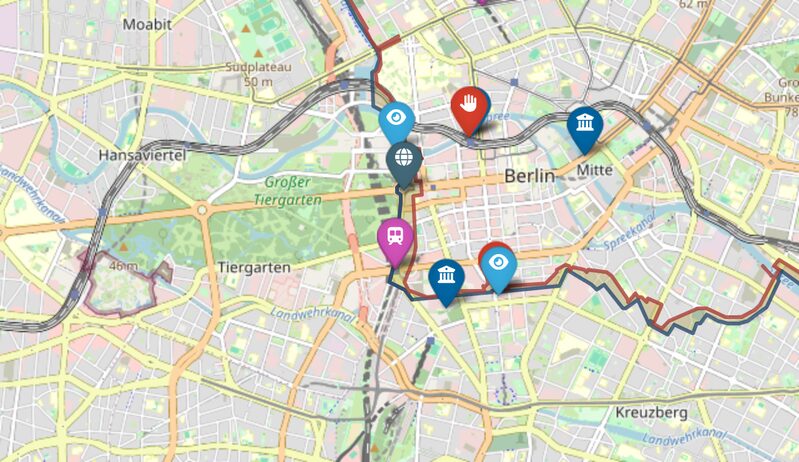
Embed Our Map
Add a free interactive Berlin Wall map to your website or blog.
Get embed code →