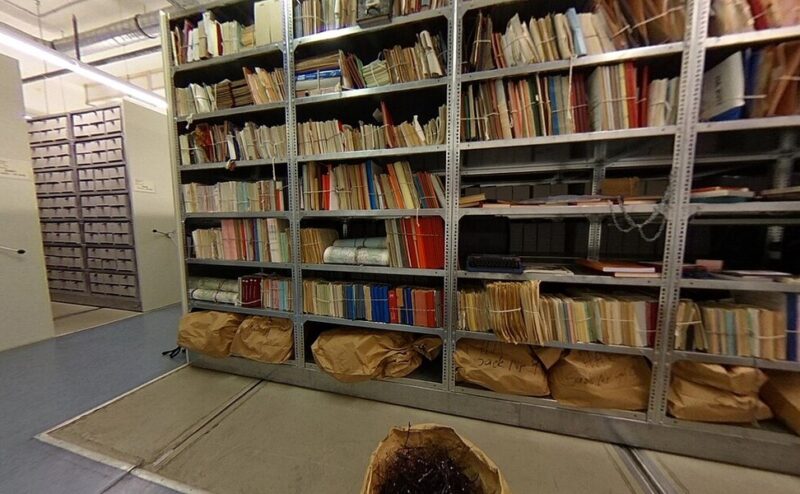
Half-Day Tour: Stasi and Surveillance
This half-day tour visits the two sites where the Stasi’s machinery of surveillance and repression is most viscerally preserved: the ministry headquarters where Erich Mielke ran his spy empire, and the secret remand prison where political detainees were broken through psychological torture. Both are in the northeast of Berlin, connected by a short tram ride. Allow 4–5 hours including transit and guided tours.
Best for: Anyone interested in the human cost of the surveillance state, the mechanics of authoritarian control, and stories of individual resistance. Both sites appear on our interactive map.
Site 1: Stasi Museum – inside the machine
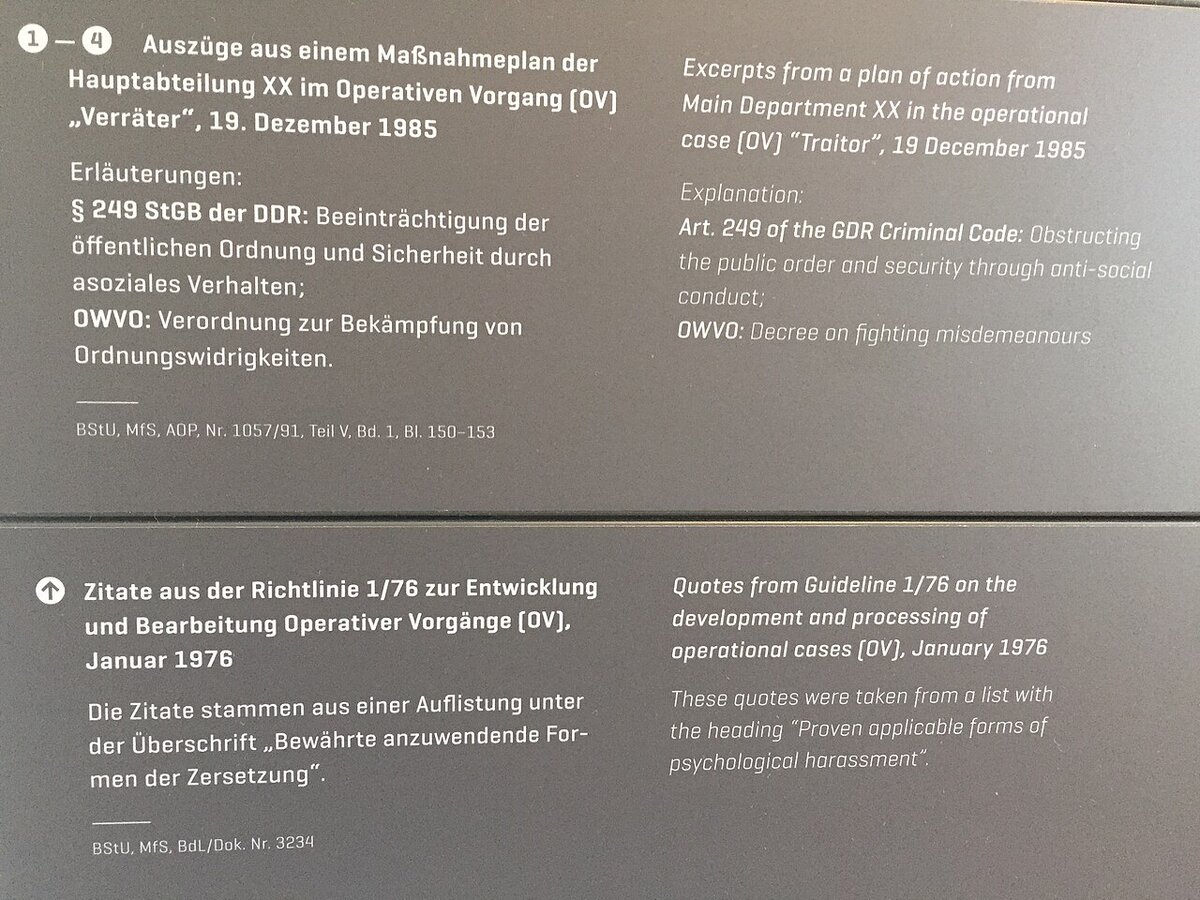
The Stasi Museum occupies House 1 of the former Ministry for State Security headquarters on Normannenstraße. At its peak the Stasi employed around 91,000 officers and over 170,000 informants to monitor 16 million citizens – one of the most extensive surveillance operations in history.
On the second floor you can enter the preserved office of Minister Erich Mielke, unchanged since November 1989 – wood panelling, blue furniture, multiple telephones, and his red briefcase containing files on his own boss, Erich Honecker. Three floors of exhibits display surveillance cameras disguised in watering cans, body-odour samples stored in jars for tracking by dogs, and equipment from the postal interception department that opened, photographed, and resealed up to 90,000 letters per day.
On 15 January 1990, demonstrators stormed this building, opening it to the public for the first time in decades. Allow about 90 minutes.
Getting there: U5 to Magdalenenstraße, then a 5-minute walk north to Rüschestraße 103.
Transit to Site 2: Tram M5 or M6 from Frankfurter Allee toward Hohenschönhausen (about 25 minutes). Check tour times before you set out – entry is by guided tour only.
Site 2: Hohenschönhausen – the hidden prison
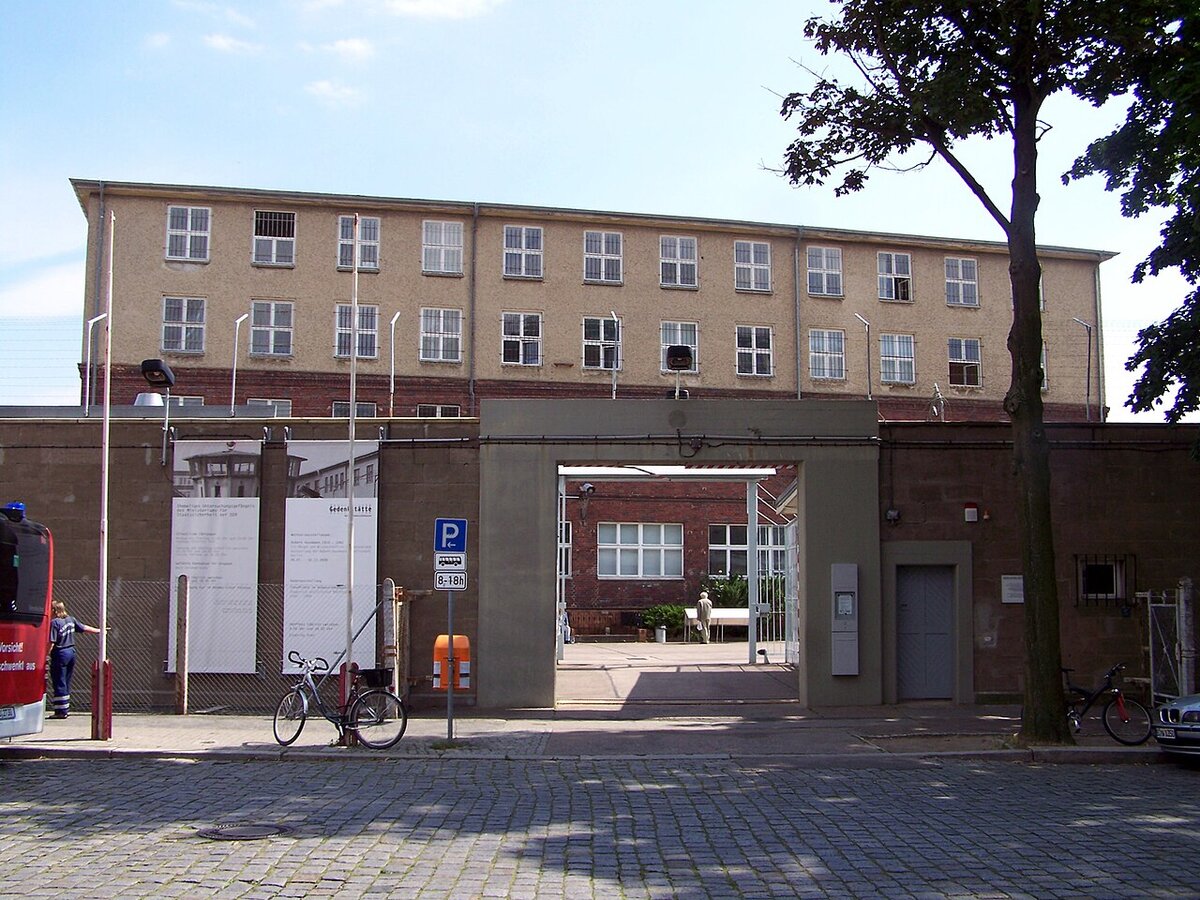
Gedenkstätte Berlin-Hohenschönhausen is the former central remand prison of the Stasi, hidden for decades in a restricted military zone that appeared on no city map. Beginning as a Soviet NKVD camp in 1945, the Stasi took it over in 1951. More than 11,000 people were imprisoned here for political reasons over the following four decades.
Early prisoners endured physical brutality; by the 1960s the Stasi had refined its methods to psychological destruction – total isolation, sleep deprivation, windowless cells under artificial light, and threats against families. The aim was to break people without leaving marks.
Guided tours, often led by former prisoners who describe their experiences in the very rooms where they were held, run several times daily in English. You will see the “submarine” – the damp, unlit Soviet-era cells in the basement – and the later Stasi-built wing with its clinical corridors and interrogation rooms designed to disorient. It is an uncomfortable, essential visit that grounds everything you have seen earlier in the human cost of the surveillance state. Allow about 90 minutes for the tour.
Practical notes
- Total time: 4–5 hours including transit and visits.
- Book Hohenschönhausen tours online in advance, especially for English-language slots. Tours run at fixed times.
- The Stasi Museum is open daily; Hohenschönhausen is guided-tour only (no independent visits).
- A Berlin AB ticket covers all journeys on this route.
- These two sites pair naturally: the Stasi Museum shows how the system worked from the top, and Hohenschönhausen shows what it did to individuals.
- For central Berlin spy sites, see our Central Berlin walking tour. For the western outposts, see Western Spy Stations. Or combine all five in our Full-Day Tour: Cold War Espionage Trail.
- Browse all locations on our places page or interactive map.
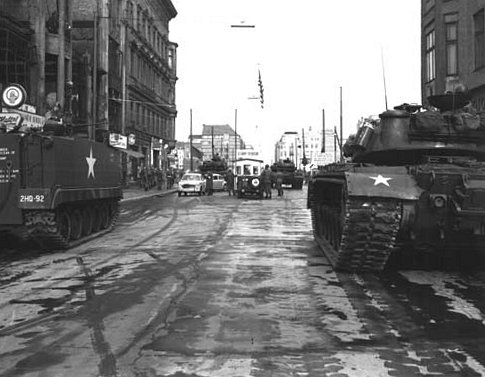
Checkpoint Charlie
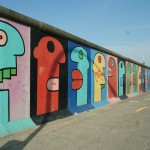
East Side Gallery
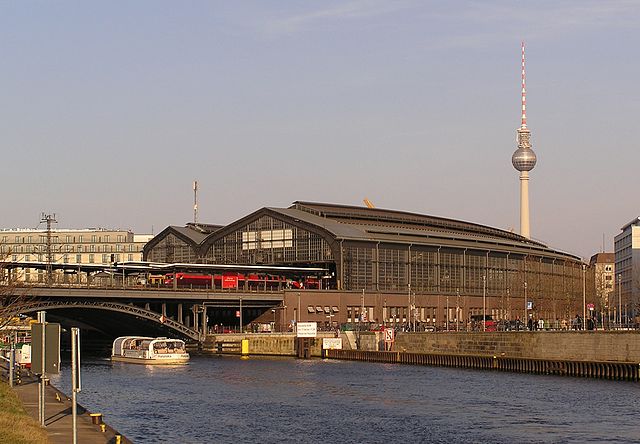
Bahnhof Friedrichstraße
History of the Berlin Wall: A Complete Guide (1961-1989)
65 Years Ago: US and Soviet Tanks Faced Off at Checkpoint Charlie
The Border Guards of the Berlin Wall: Conscripts, the Order to Shoot, and the Trials That Followed
9 November in Berlin: 37 Years Since the Wall Fell, and What’s On
Gethsemanekirche
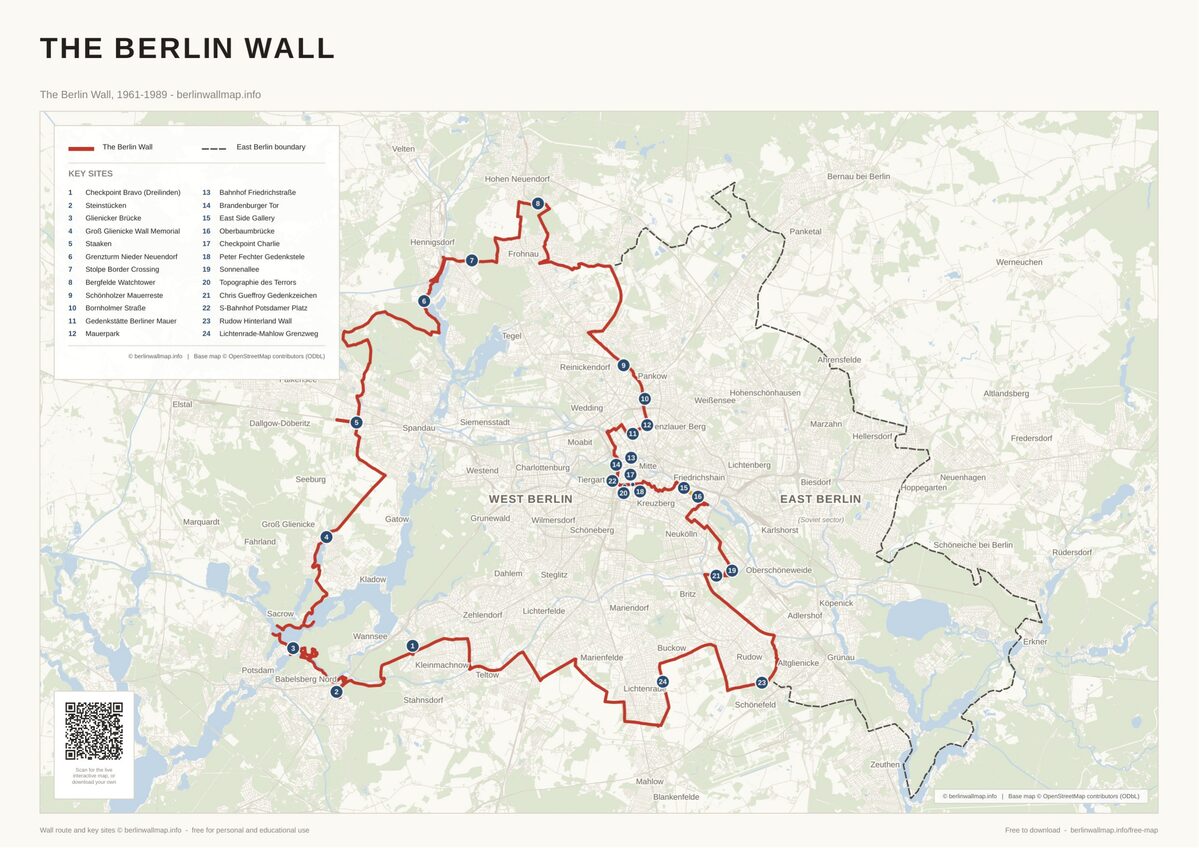
Free map downloads
Free printable PDF maps of the Berlin Wall.
Get the free maps →Explore the Timeline
Journey through Berlin Wall history from 1945 to 1990.
View Timeline →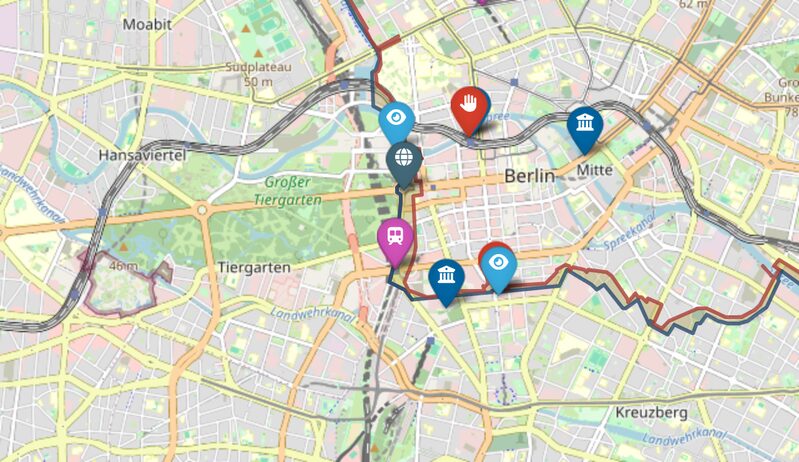
Embed Our Map
Add a free interactive Berlin Wall map to your website or blog.
Get embed code →