The Border Guards of the Berlin Wall: Conscripts, the Order to Shoot, and the Trials That Followed
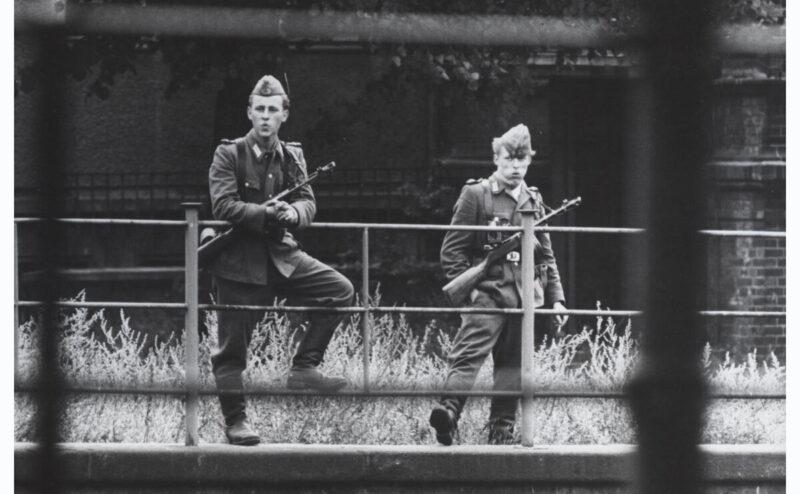
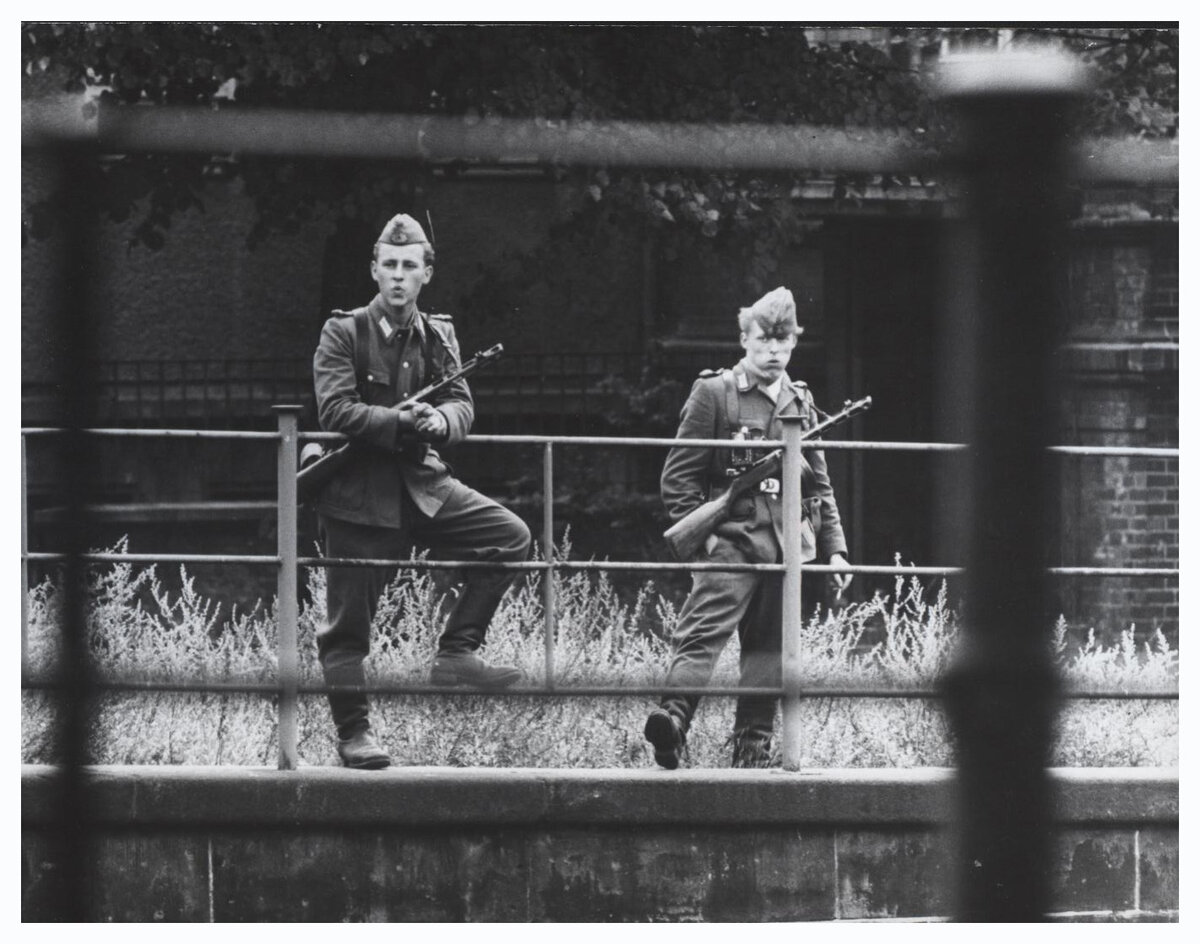
At its peak, around 50,000 soldiers of the Grenztruppen der DDR guarded the border around West Berlin and along the inner-German frontier. Most were conscripts, eighteen or nineteen years old, posted not where they had volunteered but where the state needed bodies in the watchtowers. They patrolled in pairs, watched each other as closely as they watched the border, and lived under standing orders to open fire on anyone trying to cross. About 2,500 of them defected to the West. Eight died on duty at the Berlin Wall. After reunification, more than a hundred stood trial for the killings they had carried out or ordered. This is their story, from the barracks and the death strip to the courtrooms and the surviving watchtowers you can visit in Berlin today.
Who Guarded the Wall?
The Grenztruppen (border troops) were not ordinary soldiers. They formed a separate branch of the East German armed forces, distinct from the regular Nationale Volksarmee and answering to their own command, though the Stasi kept its own informants inside every unit, watching the watchers. (At the border crossings themselves, the passport-control officers were actually Stasi men in border-guard uniforms.) Until 1971 the border troops were under direct NVA command; after that they operated as an independent formation, the Kommando der Grenztruppen, reflecting just how central the border was to the regime’s survival. (For a short overview of the border-guard system, see our guide to who the East German border guards were and how the Berlin Wall was guarded.)
Service was compulsory. Every young man in the GDR faced eighteen months of military duty, and the border troops got their share of the intake, screened in advance. Relatives in West Germany meant automatic exclusion. So did a record of political dissent, active church membership, or anything else that might give a guard a reason to keep running once he was on the wrong side of the fence. Nobody served near home.
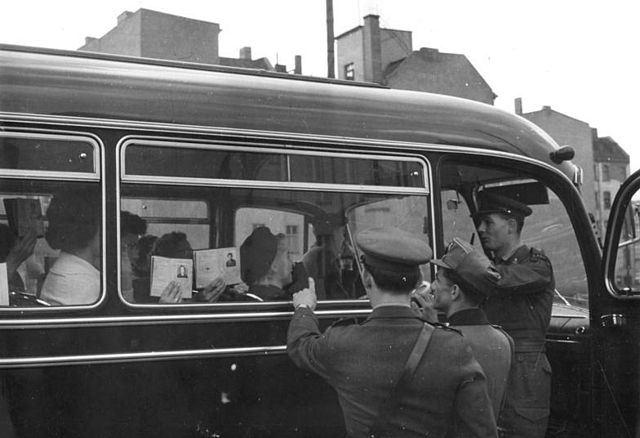
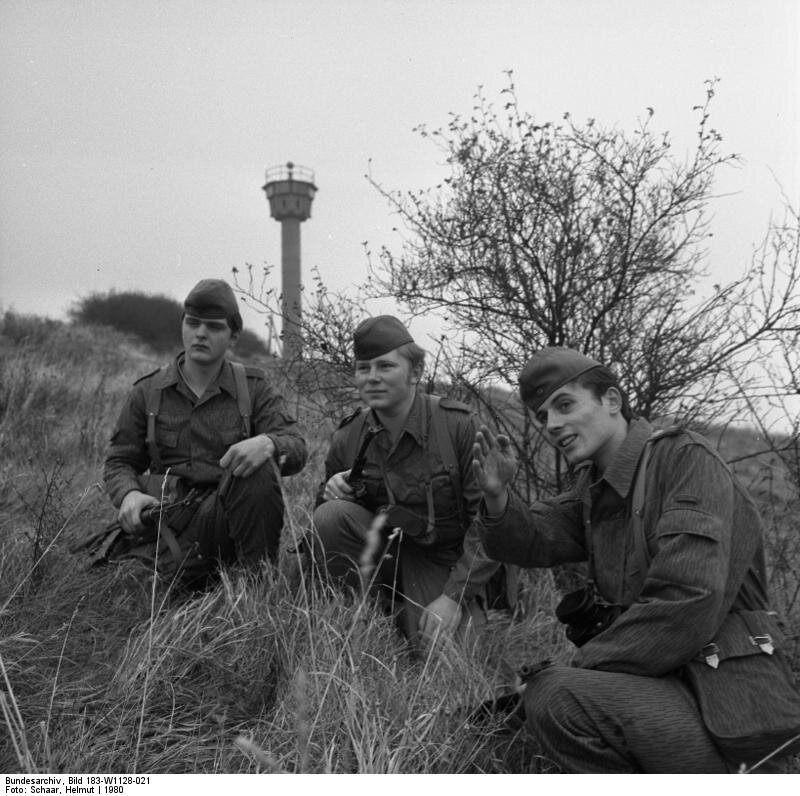
Training was as much political as military. Up to half the instruction time was ideological: lectures on the class enemy, the threat from the West, the heroism of the border service. The practical half taught marksmanship, patrol technique, and the use of the border fortifications: the signal fences, the dog runs, the mines, the vehicle traps. The message behind both halves was the same: anyone crossing the border without authorisation was a traitor to the socialist state, and stopping them was a soldier’s highest duty.
On duty, guards patrolled in pairs or threes, never alone, and never out of each other’s sight. The pairings were assigned only at the start of each shift, and friends were kept apart. The arrangement was not about teamwork. It was about surveillance: each guard was expected to prevent the other from deserting, and a fleeing comrade was to be shot without warning. The reward for killing an escapee was real: the Medaille für vorbildlichen Grenzdienst (Medal for Exemplary Border Service), a cash bonus, sometimes an early promotion. The penalty for failing to shoot was equally real: disciplinary action, demotion, or a stint in a military prison.
The Schießbefehl: The Order to Shoot
After the Wall fell, the East German leadership denied that any formal shoot-to-kill order had ever existed. The archival record tells a different story. The Schießbefehl was not a single document but a chain of written orders and oral instructions stretching from 1961 to 1989, each reinforcing the same message: stop border crossers by any means, up to and including lethal force.
The chain began weeks after the Wall went up. On 20 September 1961, Erich Honecker, then the SED secretary responsible for security, ordered the border troops “gegen Verräter und Grenzverletzer (…) die Schusswaffe anzuwenden” (“to use firearms against traitors and border violators”). Two follow-up orders that autumn and winter, Befehl 76/61 and Befehl 101/62, spelled out the practical expectation: guards were to train to hit “mit dem ersten Schuss” (“with the first shot”).
The language hardened over time. On 3 May 1974, Honecker told the National Defence Council: “muss bei Grenzdurchbruchsversuchen von der Schusswaffe rücksichtslos Gebrauch gemacht werden” (“firearms must be used ruthlessly in border-breakthrough attempts”). In 1982, the GDR codified it in law: §27 of the Grenzgesetz (Border Act) defined the firearm as “die äußerste Maßnahme der Gewaltanwendung gegenüber Personen” (“the ultimate measure of force against persons”). And at every shift handover, the posting order , the same words at every handover, remembered by every guard who served: “Grenzverletzer sind festzunehmen oder zu vernichten” (“Border violators are to be arrested or annihilated”).
The order was quietly suspended only once, in December 1981, during a visit by West German Chancellor Helmut Schmidt, and reimposed as soon as he left. It remained in force until Chris Gueffroy was shot dead at the Britz canal on 5 February 1989, the last person killed trying to cross the Berlin Wall. Seven weeks later, Honecker secretly lifted the order on 3 April 1989, in a sentence that reads like a regime already sensing its own end: “Lieber einen Menschen abhauen lassen, als in der jetzigen politischen Situation die Schusswaffe anzuwenden” (“Better to let someone escape than to use firearms in the current political situation”).
The Guards Who Defected
The same system built to stop civilians from escaping also lost thousands of its own soldiers. Over the life of the Wall, around 7,000 border troops attempted to desert to the West. About 2,500 of them made it. The rest, roughly 5,500, were caught and sent to prison, where sentences for desertion could run to several years.
The most famous of them all jumped on his third day of duty. On 15 August 1961, two days after the border closed, nineteen-year-old Conrad Schumann sprinted over a low coil of barbed wire on Bernauer Straße and into a waiting West Berlin police car. The photograph of his leap became one of the defining images of the Cold War. Schumann lived in Bavaria for the rest of his life, but the leap never let him go. He struggled with guilt and depression, and took his own life in 1998.
Not every deserter escaped forward. Manfred Smolka, a border-police first lieutenant, fled west in 1958. A year later the Stasi lured him back to the border with the promise that his wife and child would follow. It was a trap. Smolka was arrested, put through a show trial in Erfurt, sentenced to death on 5 May 1960, and executed by guillotine in Leipzig that July. The GDR used the guillotine until 1966. Mielke had approved making Smolka an example. In 1993, a German court formally overturned Smolka’s conviction as political injustice.
The Guards Who Died
Eight border soldiers died on duty at the Berlin Wall between 1962 and 1980: Jörgen Schmidtchen, Peter Göring, Reinhold Huhn, Siegfried Seling, Ulrich Widera, Egon Schultz, Rolf Henniger, and Ulrich Steinhauer. Some were killed by escapees or escape helpers, one by a West Berlin policeman, and at least one by fire from his own comrades. On the whole inner-German border, the total is 27. The GDR turned each death into a propaganda event: streets renamed, schools rededicated, memorial plaques erected, the dead soldier held up in barracks as proof that the border service was a war.
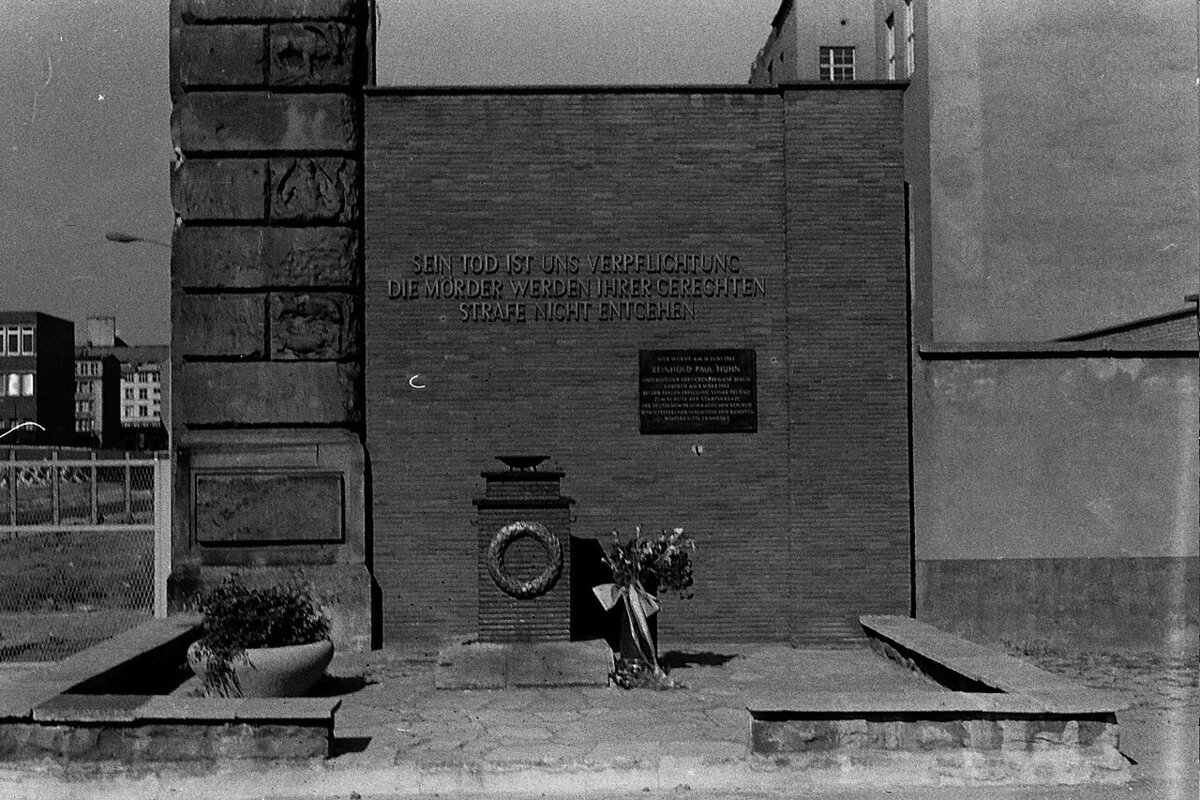
Reinhold Huhn’s case ran for decades. On 18 June 1962, the 20-year-old border guard was shot dead on Zimmerstraße by Rudolf Müller, a West Berliner helping a family escape through a tunnel. The GDR made Huhn a martyr: the street was renamed Reinhold-Huhn-Straße, and his story was taught in schools. After reunification, Müller was charged with murder. Acquitted by the lower court in 1999, he was convicted on appeal in 2000 and sentenced to one year suspended. A court in a unified Germany finding that he had not acted in lawful self-defence. The case drew fierce debate.
The story of Egon Schultz carries a darker twist. On 5 October 1964, the 21-year-old guard was killed during a firefight at the entrance to Tunnel 57, the escape tunnel on Strelitzer Straße through which 57 people reached the West. The GDR blamed West Berlin escape helpers and built a cult around Schultz’s memory. But when the Stasi files opened after 1989, the ballistics record showed what the ministry had known all along: Schultz was hit by bullets from a comrade’s weapon. The regime had concealed the truth for a quarter of a century to preserve a propaganda narrative.
9 November 1989: When the Guards Held Their Fire
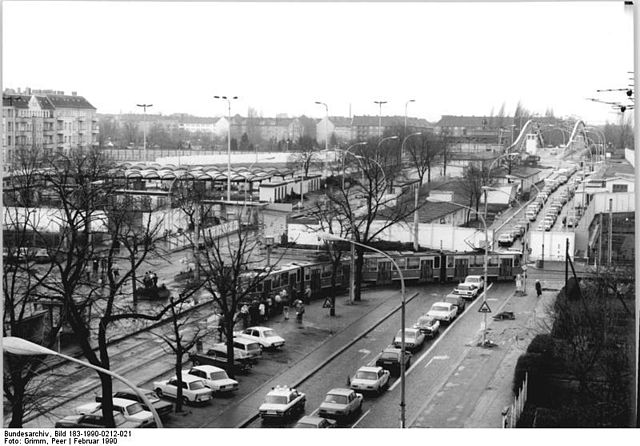
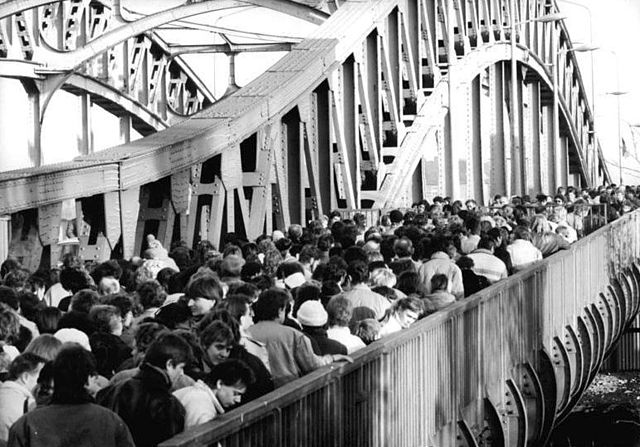
On the evening of 9 November 1989, the border troops faced the moment their entire existence had been built around, and chose not to shoot. After Günter Schabowski’s confused press conference, the spark that set off the Peaceful Revolution, announced that the border was open “sofort, unverzüglich” (“immediately, without delay”), thousands of East Berliners surged toward the crossing points. At Bornholmer Straße, passport-control officer Harald Jäger watched the crowd swell for hours, received no clear orders from above, and finally, at around 11:30 pm, told his men to open the barriers. The other crossings followed within the hour.
The border troops had live ammunition. They had the standing order. And they had a crowd that no volley could have stopped. Not one shot was fired. In the weeks that followed, the guards who had spent years preventing exactly this simply stood aside as millions of people walked through.
The Mauerschuetzenprozesse: The Border Guard Trials
After reunification, Germany confronted a legal question with no clean answer: could soldiers be prosecuted for killings that , indeed ordered, under the state they served? The Mauerschuetzenprozesse (border-shooter trials) ran for more than a decade and reached the European Court of Human Rights.
The numbers tell the scale. In Berlin alone, prosecutors brought 112 indictments against 246 people. Roughly half were acquitted. The courts ultimately convicted 132: 80 border guards who had pulled the trigger, 42 military commanders who had given the orders, and 10 members of the SED political leadership who had set the policy. In Neuruppin, where the outer-ring border cases were tried, 21 further indictments covered 39 shooters and 12 officers; one shooter received a ten-year sentence for murder.
The precedent came early. In January 1992, a Berlin court convicted Ingo Heinrich and Andreas Kühnpast for the killing of Chris Gueffroy. Heinrich received three and a half years, Kühnpast two years suspended. The verdict rejected the defence of superior orders outright: the court held that the guards could and should have recognized that shooting an unarmed person for trying to leave a country was a violation of fundamental human rights, regardless of what their orders said.
Later trials reached the commanders. The shooting of Peter Fechter, who bled to death in the death strip at Zimmerstraße in August 1962 while border guards watched and Western cameras rolled, was tried in 1997 as Totschlag (manslaughter). Both defendants received suspended sentences of twenty-one and twenty months. That same year, the courts convicted the men at the top: Egon Krenz, the last SED general secretary, received six and a half years; Fritz Streletz, a deputy defence minister, five and a half; and Günter Schabowski, the man whose press conference had accidentally opened the Wall, three years.
The final word came from Strasbourg. On 22 March 2001, the Grand Chamber of the European Court of Human Rights ruled unanimously in Streletz, Kessler and Krenz v. Germany that the convictions did not violate Article 7 of the Convention (the prohibition on retroactive criminal law). The German Federal Court of Justice had already reached its own conclusion in language drawn from the legal philosopher Gustav Radbruch: the killings at the Wall were unjustifiable “wegen offensichtlichen, unerträglichen Verstoßes gegen elementare Gebote der Gerechtigkeit” (“because of an obvious, intolerable violation of elementary principles of justice”). The law of the state that ordered the killings could not shield those who carried them out.
One detail cut the other way. The courts distinguished between the shooting of unarmed civilians and the shooting of armed deserters. Under the GDR’s 1962 military penal code, desertion was a felony, and border guards who fired on armed fellow soldiers fleeing their posts were acquitted. The moral clarity of the trials had a legal boundary.
After the Wall: The End of the Grenztruppen
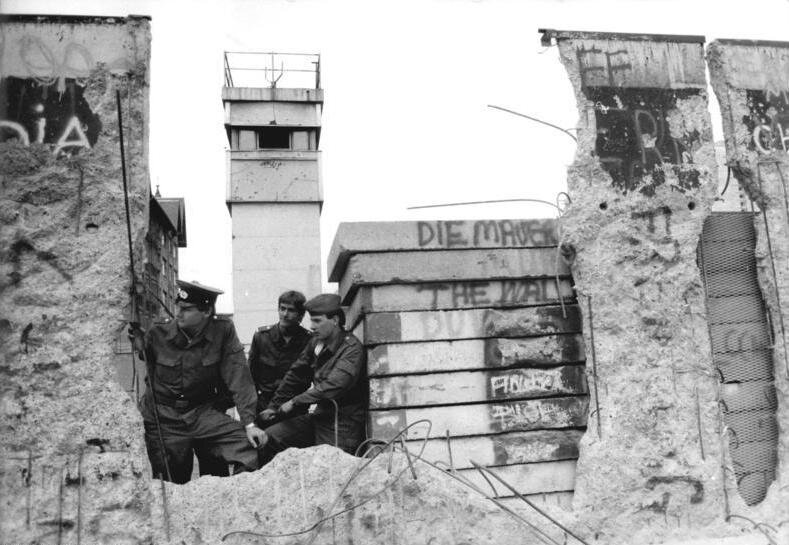
The border troops did not survive the state they had defended. On 21 September 1990, ten days before German reunification, Defence Minister Rainer Eppelmann signed Befehl 49/90, formally dissolving the Grenztruppen der DDR. Responsibility for the border passed to the Bundesgrenzschutz (Federal Border Guard). Some former border soldiers were absorbed into the new structures; many were dismissed.
The border itself took years to remove. Under Bundeswehr direction, teams, some of them former border troops who knew the installations better than anyone, cleared the mines, dismantled the fences and watchtowers, tore up the patrol roads, and filled in the anti-vehicle ditches. The work continued until 1994. Today the death strip has become the Berliner Mauerweg, a 160-kilometre walking and cycling path that traces the entire circuit of the former Wall through the city. Where guards once patrolled with orders to kill, joggers and cyclists pass without a thought.
The Watchtowers You Can Visit Today
Five watchtowers from the Berlin Wall fortifications survive in and around the city. Each has a different character, and together they give a physical sense of what the border looked like from the inside: the cramped observation rooms, the narrow stairs, the view across the death strip that the guards saw every shift.
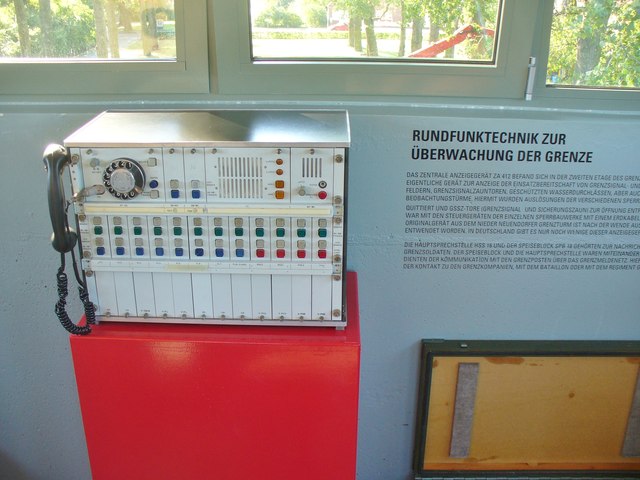
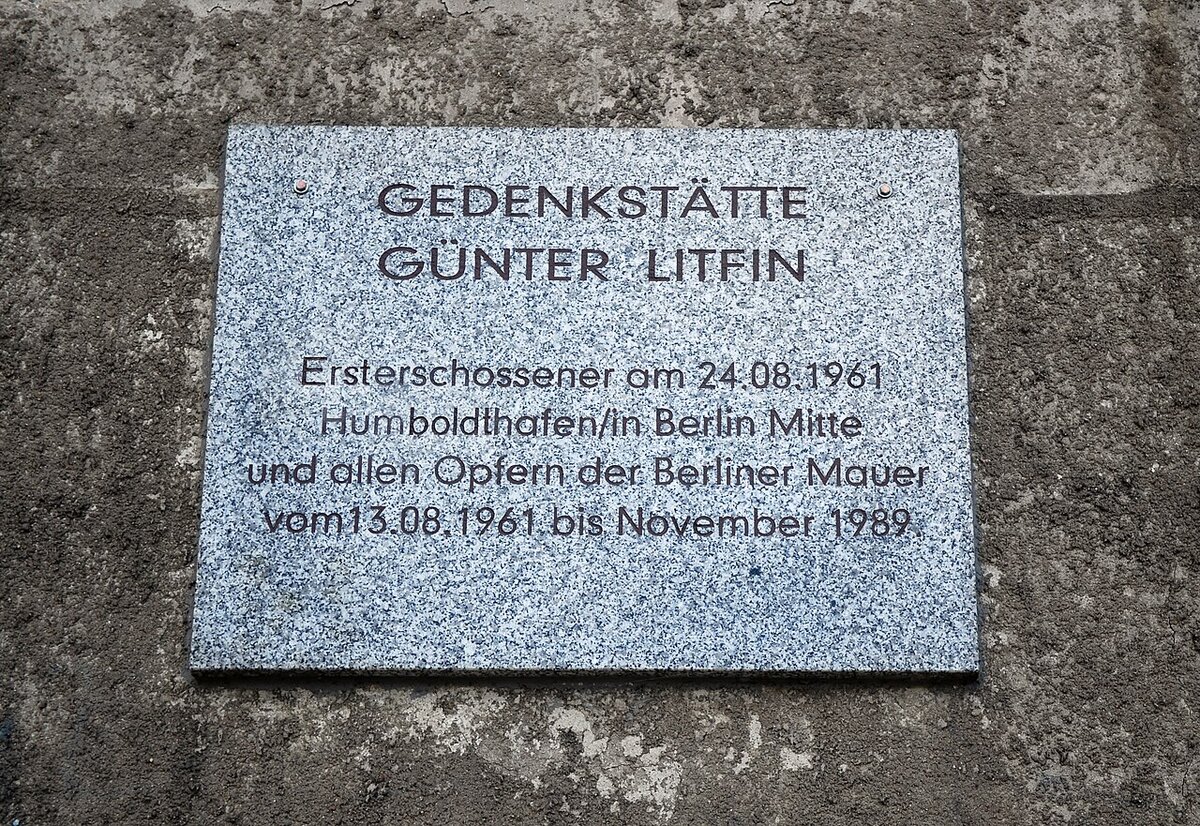
The Gedenkstätte Günter Litfin in the Kieler Eck command tower near Berlin Hauptbahnhof is the most personal of the five. It was established and run for years by Jürgen Litfin, the brother of Günter Litfin, the first person shot dead at the Berlin Wall on 24 August 1961. The tower preserves the observation room and tells both Günter’s story and the broader history of the border fortifications at this stretch of the Spree.
The Führungsstelle Schlesischer Busch stands in Kreuzberg, on the edge of the former death strip near the Landwehr Canal. This was a command post rather than a simple observation tower, coordinating patrols across the sector. It now hosts a small exhibition on the border regime and temporary art shows.
The Wachturm Erna-Berger-Straße, just south of Potsdamer Platz, is a round observation tower of the BT-11 type that was standard along the Berlin Wall. Surrounded today by government buildings and new construction, it is a startling survivor — a piece of the fortified border standing in the middle of the reunified capital.
Further out, the Grenzturm Nieder Neuendorf sits on the bank of the Havel river northwest of Berlin. This is the most complete of the five: a full command tower with a well-preserved interior, now a museum that documents the daily reality of the border service: shift rosters, observation logs, the view the guards actually had. It is the closest thing to standing inside the system.
The Bergfelde Watchtower, in Brandenburg just beyond the Berlin city line, marks the outer ring of the fortifications. It stands at the edge of open fields where the border ran through farmland rather than city streets, a reminder that the Wall was only the urban face of a much longer frontier.
Frequently Asked Questions
Did the border guards really have a shoot-to-kill order?
Yes. The Schießbefehl was not a single document but a chain of written orders and oral instructions from 1961 to 1989, each authorizing lethal force against border crossers. Guards were trained to hit with the first shot, rewarded for killing, and punished for failing to fire. The order was secretly lifted on 3 April 1989, seven weeks after the last fatal shooting. See the full timeline above.
How many people did the border guards kill?
At least 140 people died at the Berlin Wall between 1961 and 1989, the majority shot by border guards. On the whole inner-German border (from the Baltic coast to the Czech frontier) the total is higher. Eight border guards themselves were also killed on duty at the Berlin Wall.
How many border guards escaped to the West?
About 2,500 border troops successfully defected over the life of the Wall, out of roughly 7,000 who attempted it. The most famous was Conrad Schumann, who jumped over the barbed wire on Bernauer Straße on 15 August 1961. Around 5,500 who tried and failed were caught and imprisoned.
Were the border guards punished after reunification?
Yes. In the Mauerschuetzenprozesse (border-shooter trials) that ran through the 1990s, Berlin courts convicted 132 people: 80 guards, 42 military commanders, and 10 SED political leaders including Egon Krenz. The European Court of Human Rights upheld the convictions in 2001, ruling that the law of the GDR could not shield those who killed unarmed people trying to leave the country.
Can you visit a Berlin Wall watchtower today?
Yes. Five watchtowers survive in and around Berlin, all marked on the interactive map. The Grenzturm Nieder Neuendorf has the most complete museum interior, while the Gedenkstätte Günter Litfin near Hauptbahnhof is the most central. See the watchtowers section above for all five.
How many Berlin Wall watchtowers are left?
Five survive: the Gedenkstätte Günter Litfin (Kieler Eck), the Führungsstelle Schlesischer Busch, the Wachturm Erna-Berger-Straße, the Grenzturm Nieder Neuendorf, and the Bergfelde Watchtower. At the Wall’s peak, there were more than 300 watchtowers along the border around West Berlin alone.
Find all five watchtowers and every other site of the divided city on our interactive Berlin Wall map, or follow the full arc from the barbed wire to the fall on the Berlin Wall history timeline.
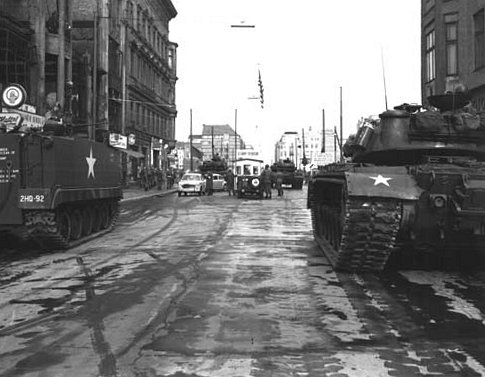
Checkpoint Charlie
East Side Gallery
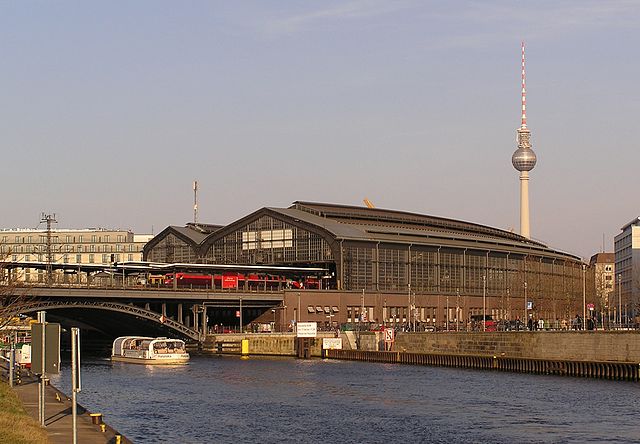
Bahnhof Friedrichstraße
Bornholmer Straße
65 Years Ago: US and Soviet Tanks Faced Off at Checkpoint Charlie
The Border Guards of the Berlin Wall: Conscripts, the Order to Shoot, and the Trials That Followed
9 November in Berlin: 37 Years Since the Wall Fell, and What’s On
Gethsemanekirche
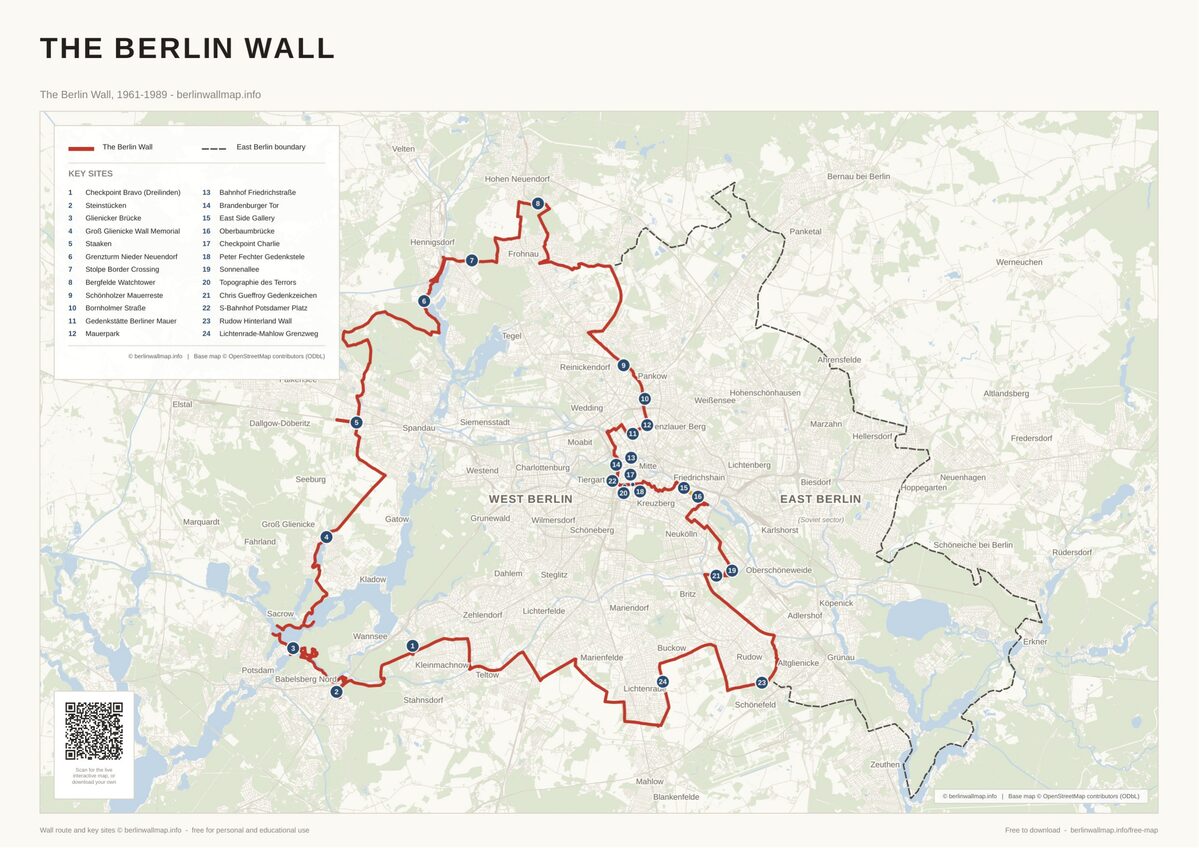
Free map downloads
Free printable PDF maps of the Berlin Wall.
Get the free maps →Explore the Timeline
Journey through Berlin Wall history from 1945 to 1990.
View Timeline →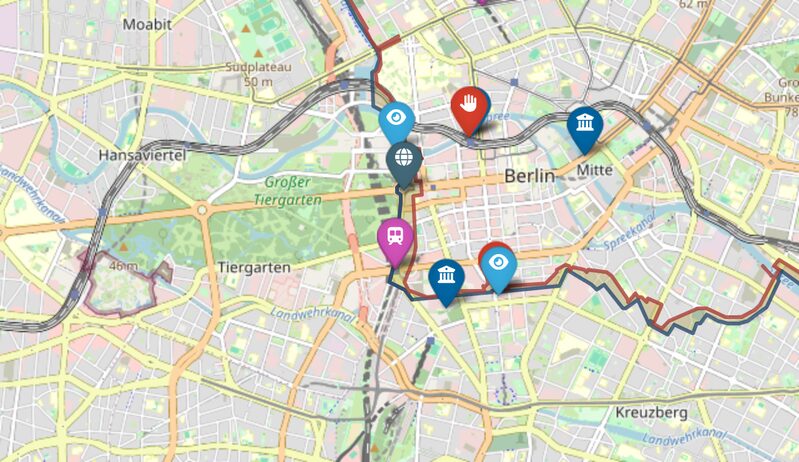
Embed Our Map
Add a free interactive Berlin Wall map to your website or blog.
Get embed code →