The Berlin Spy Tunnel: The CIA, MI6 and Operation Gold
In the summer of 1954, American engineers began building a warehouse on the southeastern edge of West Berlin, in a scrubby district called Rudow where the American sector ran up against East German fields. It had an unusual design: half above ground, half below, with a ramp so fork-lift trucks could run from the basement to the ground floor. East German border guards watched the excavation from a few hundred metres away and thought nothing of it. The basement was not for storage. It was the top of a shaft, and the shaft was the start of a tunnel that would run 450 metres east, under the border, to tap the telephone cables of the Soviet army.
What Operation Gold Was
Operation Gold was a joint venture between the American Central Intelligence Agency and the British Secret Intelligence Service, better known as MI6. It is often described as a CIA operation, and that is only half right. The Americans dug the tunnel and paid for it; the British built and worked the tap chamber at the far end, using Post Office engineers who had done the same job on Soviet cables in Vienna a few years earlier.
The two services gave it two names. To Washington it was Operation Gold, and internally the project carried the cryptonym PBJOINTLY. To London it was Operation Stopwatch. Around the Berlin base it was known as Harvey’s Hole, after William King Harvey, the CIA’s chief in Berlin, who ran it.
One date is worth fixing before anything else, because it is the thing most retellings get wrong: this happened before the Berlin Wall. Digging began in 1954 and the tunnel was discovered in April 1956, five years before the first barbed wire went up on 13 August 1961. In 1954 the sector boundary here was a line across farmland, patrolled but not fortified. That is precisely why a tunnel was thinkable at all.
There is a second half to that, and it is the reason the story belongs on a map of the Berlin Wall at all. The tunnel ran out of the American sector and into the Soviet one, so it passed directly beneath the line the Wall would be built along five years later. Of its 450 metres, roughly 120 lay under West Berlin and about 330 under the East. It crossed the sector border a little over a hundred metres from its western portal, within a few metres of where the memorial stands today – and from August 1961 the ground above that crossing point was border strip, walled on both sides and cleared of everything in between.
The two are not the same line, they cross. The tunnel ran west to east; the border, and later the Wall, ran north to south; and they meet at a point, which is near enough the point where the memorial stands today. That much is true of every tunnel that ever crossed this border, including the escape tunnels further north that this map is full of. What makes this one different is the order of events. Those tunnels were dug because the Wall was there. This one was dug when there was no Wall to dig under, and the Wall arrived on top of it five years later.
Why the Cable Ran Under Schoenefelder Chaussee
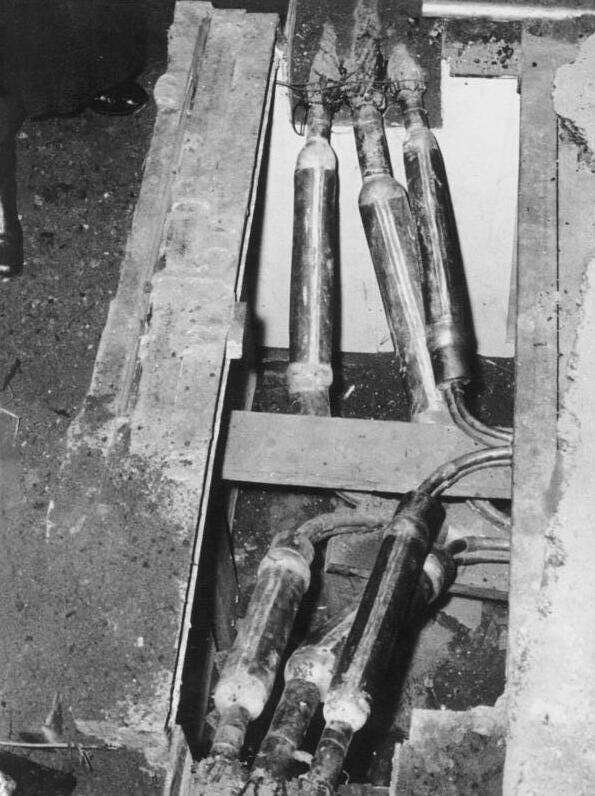
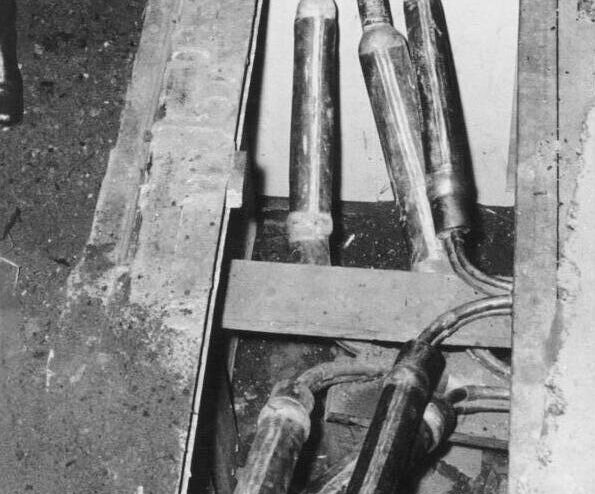
The target was not in the centre of the city. It was three buried telephone cables running beneath a main road in Altglienicke, on the East Berlin side, carrying traffic between the Soviet military headquarters at Karlshorst, Moscow, and Soviet units across East Germany and Poland. Between them the three cables held 273 metallic pairs and around 1,200 channels.
From the warehouse the diggers went at right angles towards the road, past the edge of the village cemetery and on under the chaussee itself. Rudow was chosen because it was the closest point in the American sector to those cables, and because it was empty. The CIA’s own history describes the area at the time as a squattersville of shacks built from rubble by refugees from the East Zone. Nobody overlooked it. The nearest thing to a landmark was a rubbish dump.
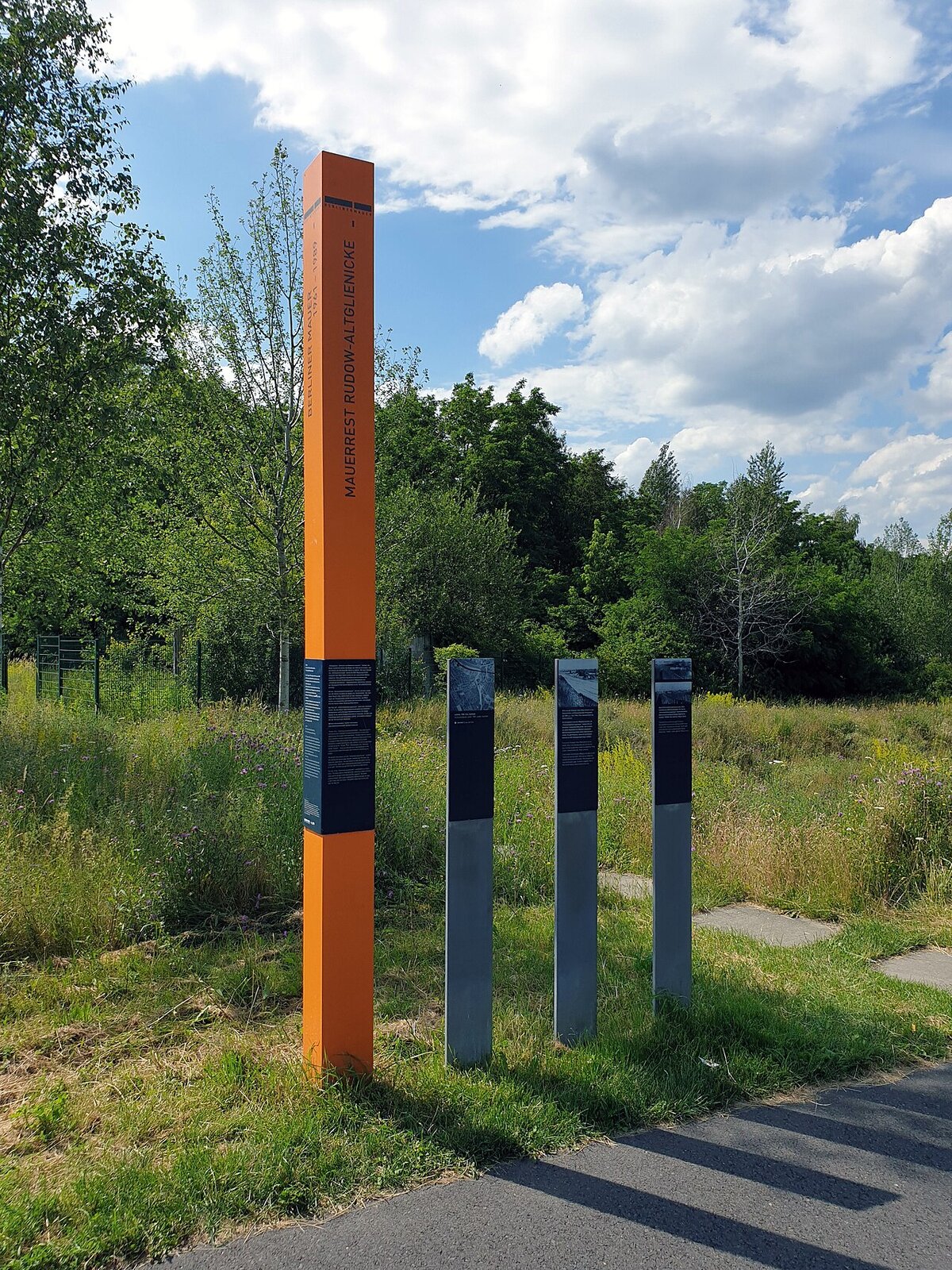
The memorial that now marks the site stands in the Landschaftspark Rudow-Altglienicke, on the line the border once followed. It is an information stele and three panels of photographs, and it is one of the few places on the Berlin Wall Trail where the story on the panel has nothing to do with the Wall itself.
The Warehouse That Was Really a Shaft
A tunnel of this size creates two problems before it creates any intelligence. The first is a cover story for the building at the western end. The second, less obvious and far more awkward, is where to put roughly 3,000 tons of excavated soil in full view of the people you are digging towards.
The warehouse solved both at once. It was presented as a Quartermaster Corps store, built in Berlin, the Americans explained, because labour was cheap there and the work would help the local economy. A US Air Force radar installation went up on the site as well, which supplied the noise, the aerials and the general air of routine electronic activity that a listening operation needs. And because the warehouse had been designed with a deep basement, the basement itself became the answer to the spoil. As the CIA history puts it, the hole was dug under the eyes of the border guards, and that gave them somewhere to put the dirt.
The cover worked well enough to become local gossip in its own right. Bored Americans in the occupied city speculated for months about what was really going on at Rudow’s radar station. None of them guessed.
1,476 Feet, and a Target Two Inches Across
The engineering was the hardest part. The tunnel ran 1,476 feet, about 450 metres, four to six metres down depending on which account you read, lined with 125 tons of steel segments that had to be shipped from the United States and then hauled across East German territory by rail to reach Berlin. The first consignment filled a train and a half. Every sensitive crate was double packed and drop tested before it left, and similar-looking items were packaged differently on purpose, so that a lost or opened crate would not give the project away.
The site had been chosen partly on a survey that put the permanent water table 32 feet down, which promised the diggers could work without compressed air, watertight locks or watertight construction. In late August 1954 a vertical shaft 16 feet across went down through the warehouse basement floor and struck water at 16 feet, half the promised depth – a perched water table nobody had predicted. Digging proper began on 2 September 1954 and the tunnel was completed on 28 February 1955; work on the tap chamber at the eastern end started on 10 March.
What the CIA’s engineers were actually attempting is easy to lose in the round numbers. They were tunnelling 1,476 feet blind, under a heavily patrolled border, in order to arrive at a cable two inches in diameter lying 27 inches beneath a busy main road. Senior officers had reservations. The report is candid that the project was allowed to proceed in spite of them.
George Blake Had Already Told Moscow
None of it was a secret. George Blake was an SIS officer who had been recruited by Soviet intelligence in 1952, while a prisoner in North Korea. By the time Operation Gold was being planned he was back in London, and he was in the room. He attended the Anglo-American planning conference as its secretary, and he passed what he heard to his Soviet contact as the final decision on the tunnel’s location was being taken, in the latter part of 1953.
The KGB therefore knew about the tunnel before a single spade went into the ground, and it faced an uncomfortable choice. Acting on the information would have exposed Blake, who was worth more than any cable. So the Soviets did nothing. For two and a half years they allowed a foreign intelligence service to dig under their border and listen to their army, because stopping it would have cost them their source.
The obvious suspicion is that they used the tunnel to feed disinformation. The CIA’s own post-mortem says otherwise: despite knowing that elements of the Soviet government were aware of the plan, the report states plainly that there is no evidence the Soviets ever attempted to push deception material through the tap. Corrupting traffic on that scale, across hundreds of live circuits used by people who had no idea they were being recorded, would have been close to impossible without giving the game away.
Blake was uncovered in 1961, sentenced to 42 years, escaped from Wormwood Scrubs prison in 1966 and lived in Moscow until his death in 2020.
Eleven Months of the Red Army’s Phone Calls
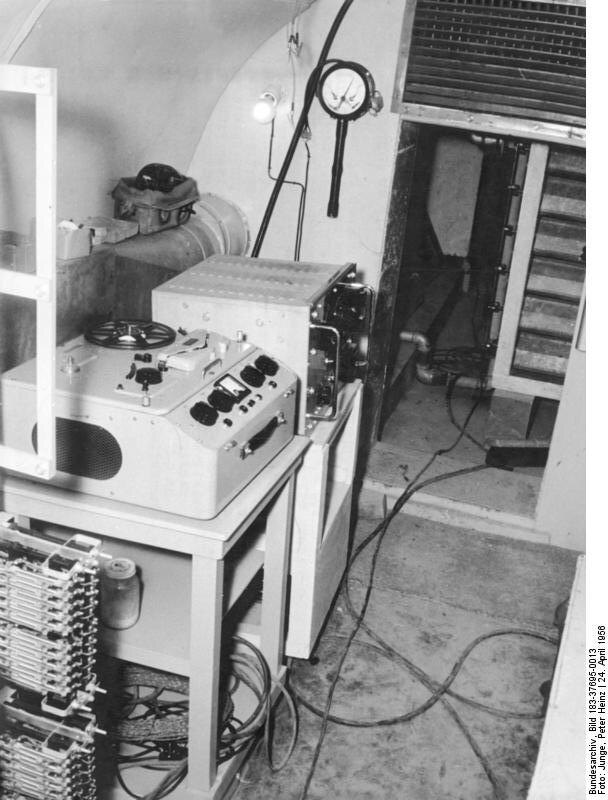
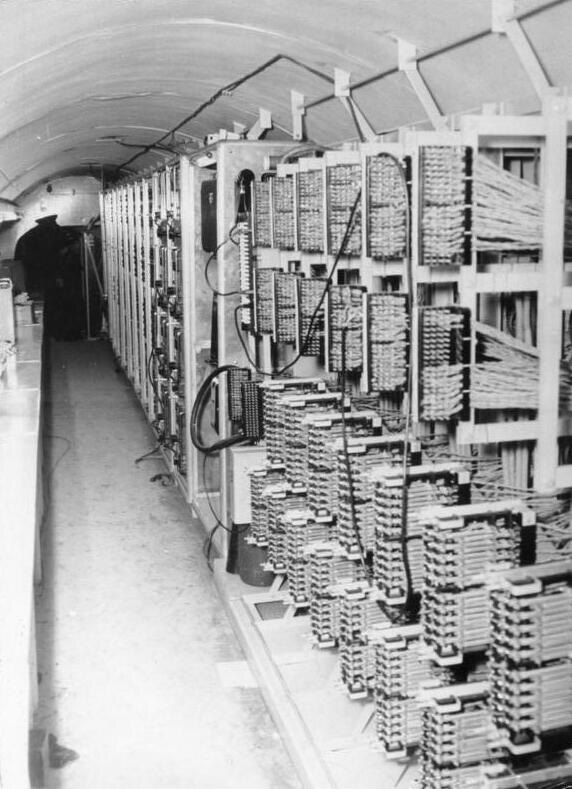
The three cables were tapped on 11 May 1955 and over the following days. The tunnel then ran for eleven months and eleven days, recording continuously: on average 121 voice circuits and 28 telegraph circuits at any moment, out of some 500 in use.
The scale of the take is startling even now. Around 50,000 reels of magnetic tape were used, about 25 tons of them. A processing centre in London grew to 317 people, who fully transcribed 20,000 Soviet voice reels containing 368,000 conversations, and processed a further 75,000 German conversations. A second centre in Washington, 350 strong at its peak, worked through 18,000 Soviet and 11,000 German teletype reels. The daily teletype output ran to about 4,000 feet of printed message.
22 April 1956
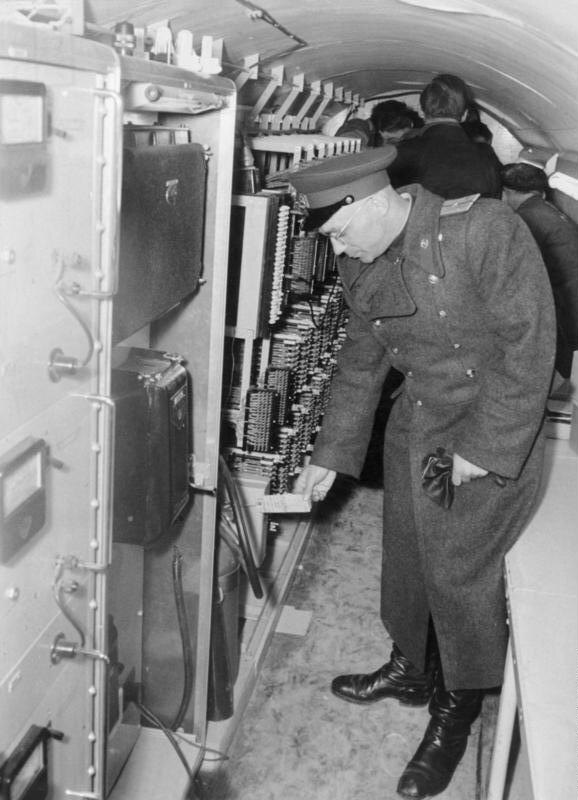
What ended the operation was rain. Heavy and prolonged rainfall flooded telephone and telegraph ducts between Karlshorst and Mahlow on the night of 16 April 1956, and the Soviet cables began to fault. These were not minor outages. Between 17 and 22 April four cables were out at various times; the telephone lines of Marshal Grechko, commander of the Group of Soviet Forces in Germany, failed along with those of four of his generals, and a fault on cable FK 150 cut the main Soviet signal centre in Germany off from Moscow and knocked out the Soviet air warning control centre in East Germany.
Soviet signal troops and East German post and telegraph technicians worked frantically to get communications back. They started testing at Karlshorst and Mahlow and worked north along the line. One major fault was found and repaired on 18 and 19 April; on 19 April a second turned up at Schoenefeld, two kilometres south of the tap. Communications stayed unsatisfactory, so the repair crews kept moving north.
At around ten to one in the morning on 22 April, the men listening at the western end watched 40 or 50 soldiers deploy along the road above them and start digging at intervals of a few feet, directly over the line of the cable and, not at all incidentally, over the tap chamber. By two o’clock they had uncovered its top. Ten minutes later a microphone inside the chamber picked up Russian voices. The listeners heard their own operation being discovered, in real time, through their own equipment. Nobody was in the tunnel; the Americans and British had withdrawn behind a steel door.
Was the Discovery Really an Accident?
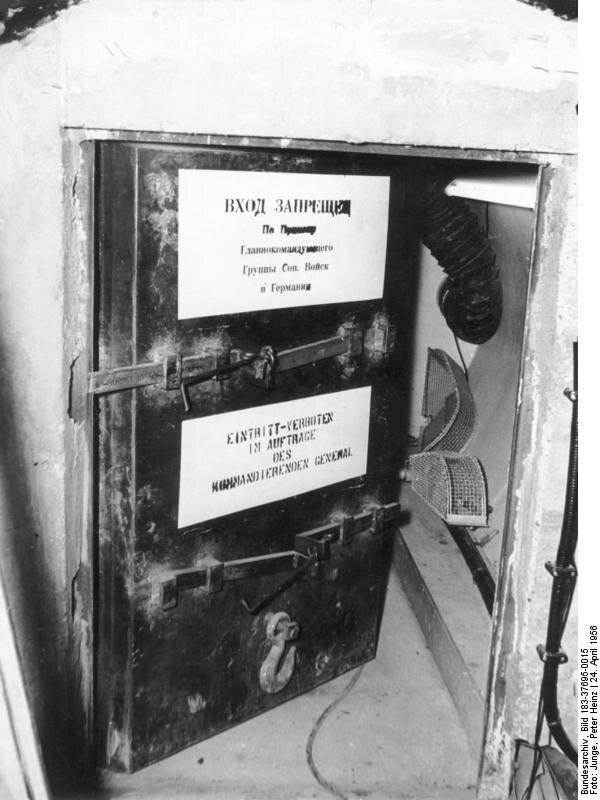
The soldiers who found it did not know what they had found. On first opening the chamber they took it for a manhole over a cable repeater, called in a Soviet engineer, agreed among themselves that a repeater was what it was, and set about enlarging the hole to reach it. At about half past two, while the working party dug, two Soviet signals officers, Major Alpatov and Lieutenant Colonel Vyunik, had a rambling telephone conversation about the state of the network. They were relieved that air warning communications with Moscow were back, and Vyunik was irritated with the Germans for failing to sort out FK 150 once and for all. The tone was relaxed and casual. The CIA, which had been listening to both men for months and by its own account knew them well, read the call as clear evidence that neither officer knew a tap existed.
There is a bleak irony in which cable did it. FK 150 had worried the project from the day its engineers first reached the cables: the insulation was brittle and cracking, and the tap on it had been delayed almost three months out of deference to its condition. The weakest of the three was the one that flooded, the one that would not stay repaired, and the one whose repair crews walked into the tap chamber. A memorandum written that August examined all the evidence then available and concluded that the loss was purely the result of circumstances beyond anyone’s control: a cable known from the start to be in poor shape, and an unusually long spell of heavy rain.
Then Blake surfaced, and the question changed. The CIA’s own history sets the alternative out and pointedly does not resolve it. If the Soviets had known since 1953, why did they permit the tunnel to be dug and to operate at all? Many theories have been advanced, the report says, and it is most probable that we will never know the exact rationale behind the Soviet moves. That is still roughly where the matter stands. The flood damage was real and the officers’ surprise looks real, but whether the KGB had been waiting for precisely such a moment is not something the evidence settles.
The tunnel stopped producing on 22 April 1956. The material did not. Processing of the backlog ran until 30 September 1958, two and a half years after the tunnel was found, and produced 1,750 intelligence reports and 90,000 translated messages and conversations. The project cost 6.7 million dollars in all.
The Tunnel East Berliners Queued to Walk Through
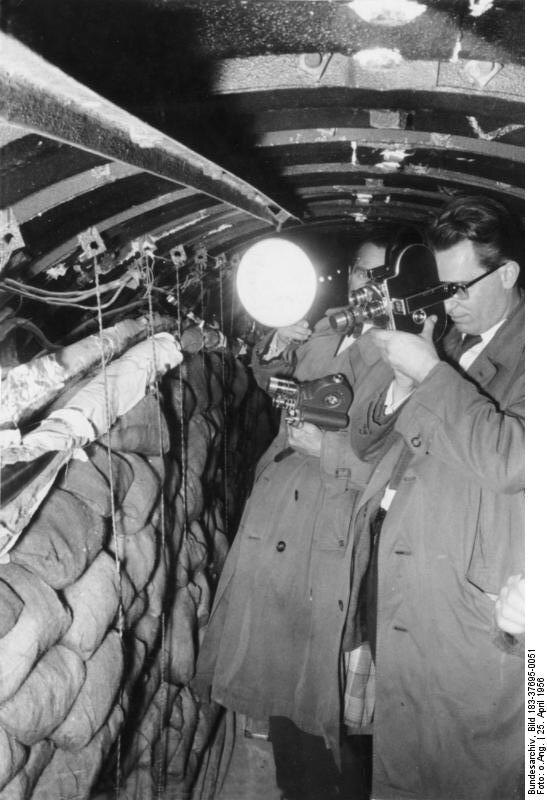
The Soviets called a press conference in East Berlin, protested at a breach of international law, and then made a decision that did not go the way they expected: they opened the tunnel to visitors.
It was meant as a propaganda exhibit. Delegations of East German factory workers were brought to see the work of American imperialists and to record their indignation in a visitors’ book afterwards. Western correspondents were let in too. What all of them found was a well-built, brightly lit installation painted battleship grey, with a row of benches under fluorescent lights, amplifier rooms behind steel doors, and equipment plainly built for years of service rather than a quick raid.
The Western press treated it as a feat of engineering. Newspapers printed diagrams and admiring descriptions. One American paper called it the best publicity the United States had had in Berlin in years. The visitors’ book filled with signatures from both sides of the Iron Curtain, including, the CIA noted with some amusement, a Sudanese official.
Seeing the Spy Tunnel Today
Very little of the tunnel itself is left. The Soviets took out the eastern section in the autumn of 1956. The western stretch, under what had been West Berlin, came through the entire Cold War intact and was then dug up and thrown away in 1995, more than a hundred metres of it. A piece was rescued for the Allied Museum in 1997, and the museum describes the section it recovered in 2005 as the last authentic one. Houses stand on the Rudow site today and the A113 motorway cuts across the line. What is left is in two places.
The memorial in the Landschaftspark Rudow-Altglienicke sits between Mozartring and Dankmarsteig, on the Berlin Wall Trail. It is open air, free and accessible at any hour, and it is the only place where you can stand roughly where the tunnel crossed the border.
The Allied Museum in Dahlem holds the only original segments of the tunnel anywhere in the world, and about seven metres of it can be walked into. Entry is free, and it is the closest anyone can now come to the inside of the thing.
The memorial is a long way out, so it rewards being combined with its neighbours. The Rudow Hinterland Wall, a listed 450-metre stretch of the inner wall, and the former Waltersdorfer Chaussee crossing are both a little over a kilometre away along the same trail, and together the three make a short walk through a corner of the border almost no visitor reaches.
The fullest account of the operation is Operation Gold: Der Spionagetunnel in Berlin / The Berlin Spy Tunnel, published in March 2026 by Dietmar Arnold of Berliner Unterwelten and Helmut Mueller-Enbergs. It is bilingual German and English, and it is built on a documentation compiled for the GDR interior minister Karl Maron that was long thought lost, with 181 illustrations including photographs of the tunnel that had never been published.
For the story on film, John Schlesinger’s The Innocent (1993), adapted by Ian McEwan from his own novel, puts a young British Post Office engineer in this tunnel. It is the only feature film about Operation Gold, and it appears in our guide to the Berlin Wall in film. For the wider espionage story, see the Glienicke Bridge, where captured agents were exchanged, and the Stasi, who ran the surveillance on the other side.
Frequently Asked Questions
Was Operation Gold a CIA operation?
It was a joint CIA and MI6 operation. The CIA planned, funded and dug the tunnel; British Secret Intelligence Service personnel built and operated the tap chamber at the eastern end. The Americans called it Operation Gold, the British called it Operation Stopwatch.
Was the tunnel under the Berlin Wall?
Not in time, but yes in place. The tunnel was dug in 1954 and found in April 1956, five years before the Wall went up in August 1961. It ran from Rudow in the American sector into Altglienicke in the Soviet sector, which means it passed directly under the line the Wall was later built along. About 120 metres of it lay beneath West Berlin and about 330 metres beneath the East.
Did the Soviets know about the tunnel?
Yes, from before construction started. George Blake, an MI6 officer working for the KGB, reported the plan in late 1953. The Soviets let the tunnel be dug and run for its eleven months of production rather than expose him, and the CIA found no evidence that they used it to pass false information. Why they allowed it at all was never established.
Was the intelligence any good?
By the CIA’s own account, yes. The tunnel produced 1,750 reports and 90,000 translated messages and conversations, and the material was still being processed until September 1958. The project cost 6.7 million dollars.
Can you visit the Berlin spy tunnel?
You can visit two places connected with it. A memorial stele and information panels stand at the site in the Landschaftspark Rudow-Altglienicke, open air and free at any time. About seven metres of the original tunnel are on display at the Allied Museum in Berlin-Dahlem, where entry is also free.
Checkpoint Charlie
East Side Gallery
Bahnhof Friedrichstraße
History of the Berlin Wall: A Complete Guide (1961-1989)
65 Years Ago: US and Soviet Tanks Faced Off at Checkpoint Charlie
The Border Guards of the Berlin Wall: Conscripts, the Order to Shoot, and the Trials That Followed
9 November in Berlin: 37 Years Since the Wall Fell, and What’s On
Gethsemanekirche
Free map downloads
Free printable PDF maps of the Berlin Wall.
Get the free maps →Explore the Timeline
Journey through Berlin Wall history from 1945 to 1990.
View Timeline →
Embed Our Map
Add a free interactive Berlin Wall map to your website or blog.
Get embed code →