Berlin Wall Sites to Visit
Gedenkstätte Berliner Mauer
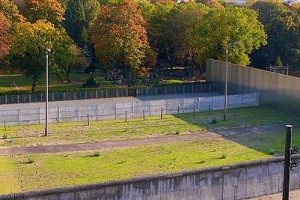
The “Berlin Wall Memorial”, was built in 1998 to commemorate the division the wall created, and the deaths that occurred because of it. It includes a Chapel of Reconciliation, a visitor center and a 60m section of the border and wall.
More...Gedenkstätte Günter Litfin
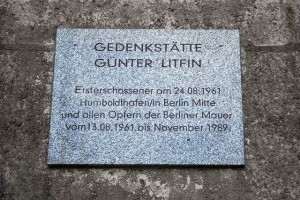
A former watchtower, named after Günter Litfin, a tailor from Weissensee, who was the first person to be shot dead by border guards while trying to flee East Berlin. The tower was restored by Günter’s brother, Jürgen Liftin who also conducts tours there today.
More...Gleim-Tunnel
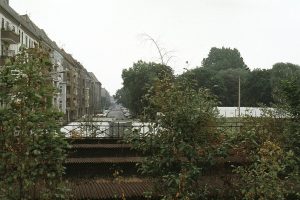
The Gleim-Tunnel is a 130-metre street tunnel built in 1905 beneath the railway tracks between Prenzlauer Berg and Wedding. During the Cold War, the Berlin Wall ran directly through its centre, sealing it shut for 29 years.
More...Glienicke/Nordbahn Family Tunnel
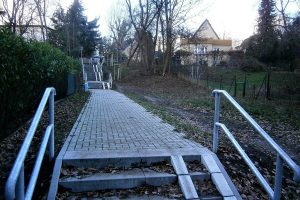
In March 1963, one of the most daring family escape tunnels was dug beneath a living room in Glienicke/Nordbahn, a small town on Berlin’s northern border. Eleven-year-old Detlef Aagard, his parents, and ten others crawled to freedom through the narrow passage.
More...Glienicker Brücke
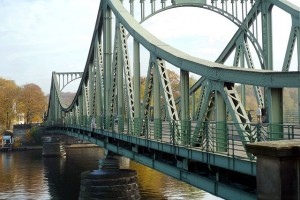
A bridge spanning the Havel river, connecting Wannsee with the Brandenburg capital, Potsdam. Spies captured during the Cold War were often exchanged here, earning it the moniker “Bridge of Spies”. The East German authorities closed the bridge to West Berliners on 27 May 1952, and was closed to East Berliners after construction of the Berlin […]
More...Grenzturm Nieder Neuendorf
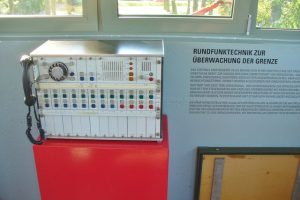
One of the last surviving Berlin Wall watchtowers, the Grenzturm in Nieder Neuendorf stands on the banks of the Havel river, where the border between West Berlin and East Germany once ran.
More...Griebnitzsee Wall Remains
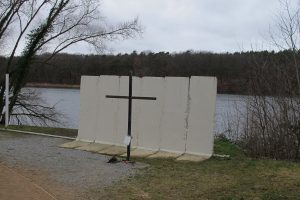
The Griebnitzsee Wall Remains are a protected monument on the shore of Griebnitzsee lake, marking a section of the border where the Wall met the water. The scenic lakeside setting belies the deadly purpose of the installations that once stood here.
More...Groß Glienicke Wall Memorial
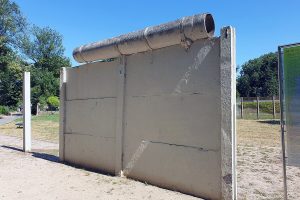
The Groß Glienicke Wall Memorial preserves the only surviving “first generation” Berlin Wall segment, built in 1961-62. Over 30 metres of original concrete slabs with hollow blocks and Y-shaped barbed wire deflectors stand on the shore of Groß Glienicker See.
More...Heidelberger Straße Tunnels
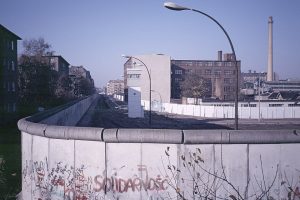
Known as the “Straße der Tränen” (Street of Tears), Heidelberger Straße was split down the middle by the Berlin Wall, with the western pavement in Neukölln and the eastern side in Treptow. Multiple escape tunnels were dug here in 1962, helping over 100 people reach the West. Escape helper Heinz Jercha was shot and killed […]
More...Heilandskirche Sacrow
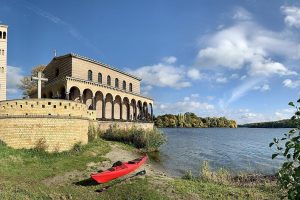
Heilandskirche Sacrow, the Church of the Redeemer, is a striking Italianate church on the banks of the Havel near Potsdam. Walled off for 28 years during the division of Germany, it became one of the most powerful symbols of the Berlin Wall’s impact on daily life.
More...Heinrich-Heine-Straße
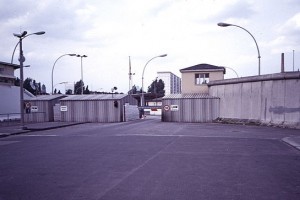
A former border crossing between the Russian and US sectors. There isn’t much to see here today. The route of the Berlin Wall is marked clearly down the center of nearby Sebastianstraße. The nearby Heinrich-Heine-Straße U-Bahn station was closed and skipped by trains during the wall years.
More...Internationales Pressezentrum

The GDR’s official press centre for foreign correspondents, where Günter Schabowski held his historic press conference on 9 November 1989. Asked when new travel regulations would take effect, he replied “sofort, unverzüglich” (immediately, without delay) — triggering the rush to the border crossings that brought down the Berlin Wall. The building on Mohrenstraße (renamed Anton-Wilhelm-Amo-Straße in 2025) now belongs to the Federal Ministry of Justice; the original press room no longer exists, but an art installation marks the event.
More...Invalidenfriedhof
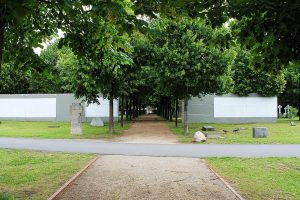
One of Berlin’s oldest military cemeteries, the Invalidenfriedhof was bisected by the Berlin Wall. Border guards demolished graves to create clear firing lines across the death strip.
More...Invalidenstraße
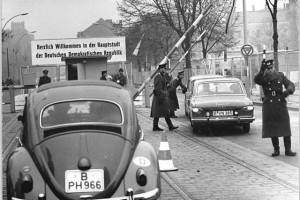
A former border crossing at Sandkrugbrücke bridge over the Berlin-Spandau Shipping Canal (Spandauer Schifffahrtskanal). Numerous escape attempts took place here, including that of Günter Litfin, who was shot dead. A memorial stone was erected to commemorate him. Nearby: Memorial stone for Günter Litfin, “Sinkende Mauer”, Berlin Wall History Mile
More...Kiefholzstraße Tunnel
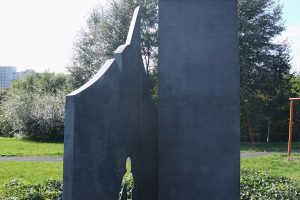
In the early 1960s, several escape tunnels were dug along the Neukölln-Treptow border near Kiefholzstraße, where favourable soil conditions and the configuration of the border aided tunnel construction. An estimated 35 to 59 people escaped through one tunnel here before a Stasi informant betrayed the route, leading to the arrest of 89 people.
More...Klein Glienicke
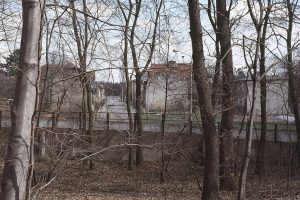
Klein Glienicke was a GDR enclave wedged between West Berlin and Potsdam, accessible only through a single surveilled bridge. Its residents lived in near-total isolation for 28 years, surrounded on three sides by territory they could see but never enter.
More...Lichtenrade-Mahlow Grenzweg
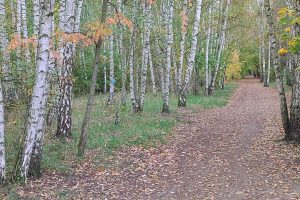
The Lichtenrade-Mahlow Grenzweg follows the former border along Berlin’s southern boundary, where a preserved Kolonnenweg patrol road with original GDR lamp posts traces the path of the Wall through what is now a peaceful residential area.
More...Mauermuseum – Haus am Checkpoint Charlie
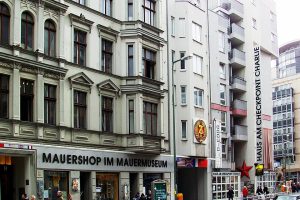
Founded in 1962 by human rights activist Rainer Hildebrandt, this museum documents the ingenuity and desperation of escape attempts from East Berlin. Exhibits include a homemade hot air balloon, a modified car with a hidden compartment, and a one-person submarine. Located directly at Checkpoint Charlie, it draws over 850,000 visitors per year.
More...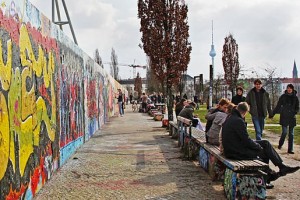
Niederkirchnerstraße Wall Remains
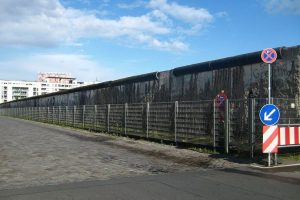
A 200-metre preserved section of the Berlin Wall at Niederkirchnerstraße, one of the longest remaining original sections of the inner wall in central Berlin.
More...