Berlin Wall Sites to Visit — Central
Alexanderplatz Demonstration
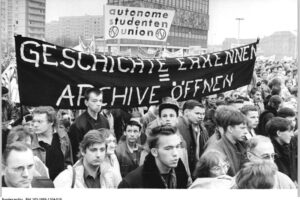
On 4 November 1989, between 200,000 and 500,000 people filled this square in the largest non-state demonstration in East German history and the first legally permitted protest organised by private citizens. Twenty-six speakers addressed the crowd from a flatbed truck, among them Christa Wolf, Stefan Heym and Jens Reich, while East German television broadcast it live. The demands were free elections, press freedom, an end to Stasi surveillance and a new constitution. Five days later the Berlin Wall fell. No monument marks the event, but the square where half a million people found their voice is unmistakable.
More...Ausstellung zum Mauergedenken
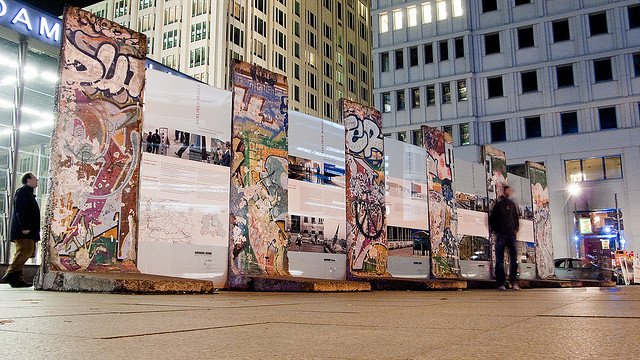
This exhibition at Potsdamer Platz is made up of displays hung between original segments of the Berlin Wall. Created in 2005 as a temporary exhibition, it was made permanent due to very positive public response.
More...Bahnhof Friedrichstraße
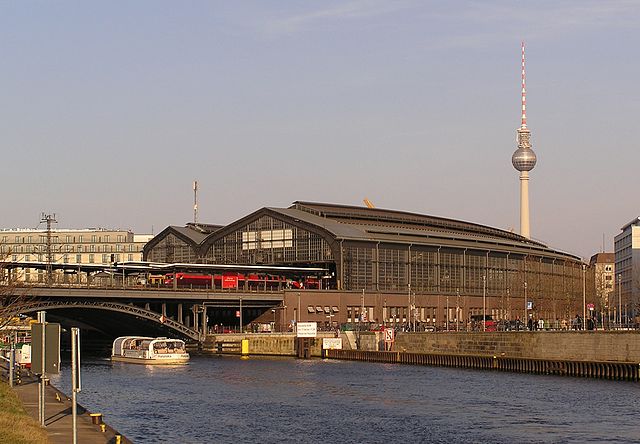
As an important travel hub between the West Berlin sectors, despite it being located entirely in the Soviet occupied West Berlin, its underground U and S-Bahn facilities were only open to West Berlin travelers, for transferring, or to access the border crossing on the ground floor. Nearby: Tränenpalast (Reichstagufer 17), a permanent exhibition of daily […]
More...Berliner Unterwelten
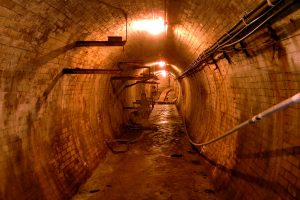
The Berliner Unterwelten association offers guided tours through underground bunkers and escape tunnels near Bernauer Straße, revealing the hidden infrastructure of Cold War Berlin.
More...Brandenburger Tor
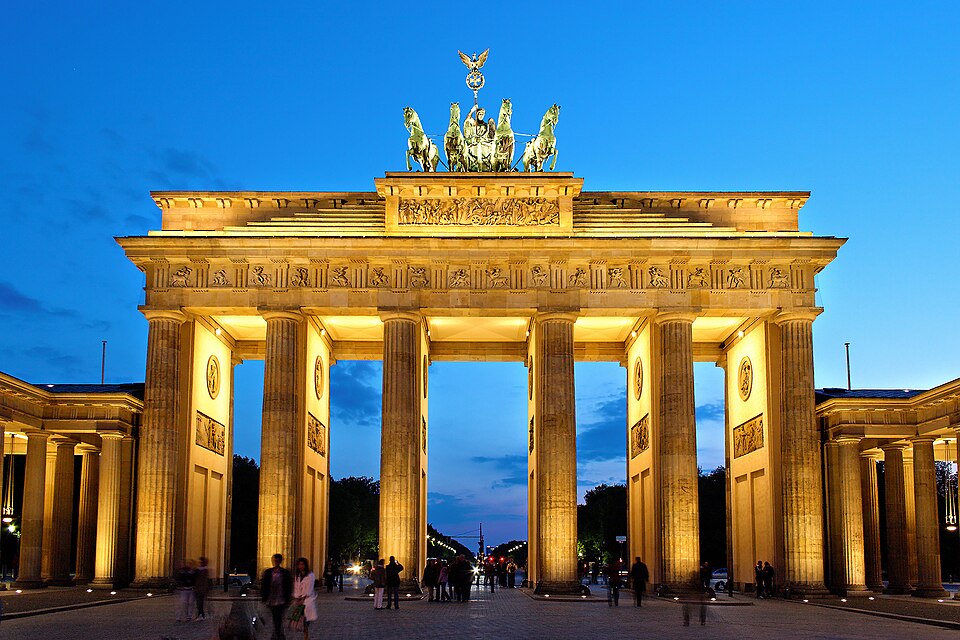
The Brandenburg Gate became the main symbol of Berlin’s division. From 1961 to 1989, it stood inaccessible in the death strip, visible but unreachable from both sides. On 22 December 1989, the gate was reopened as over 100,000 people gathered to celebrate. Today it is the main site for reunification events.
More...Chausseestraße

A low-profile border crossing, at the intersection of Chausseestraße and Liesenstraße, it was the location of an escape attempt on 8 April 1989, during which shots were fired. Nearby: Berlin Wall History Mile, “Kaninchenfeld” (Rabbit Field), Memorial: “Wiedervereinigung”
More...Checkpoint Charlie
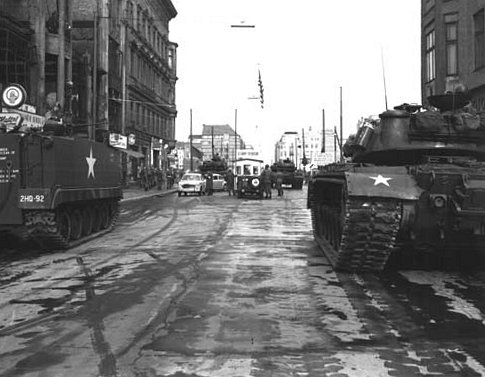
At Friedrichstraße, and featured in many cold-war era spy movies and books, this was the most famous of the border crossings. It was the only designated crossing for foreigners and Allied Forces. Many notable historical incidents took place here, including the intense standoff of Soviet and US tanks in 1961, and the fatal escape attempt […]
More...DDR Museum
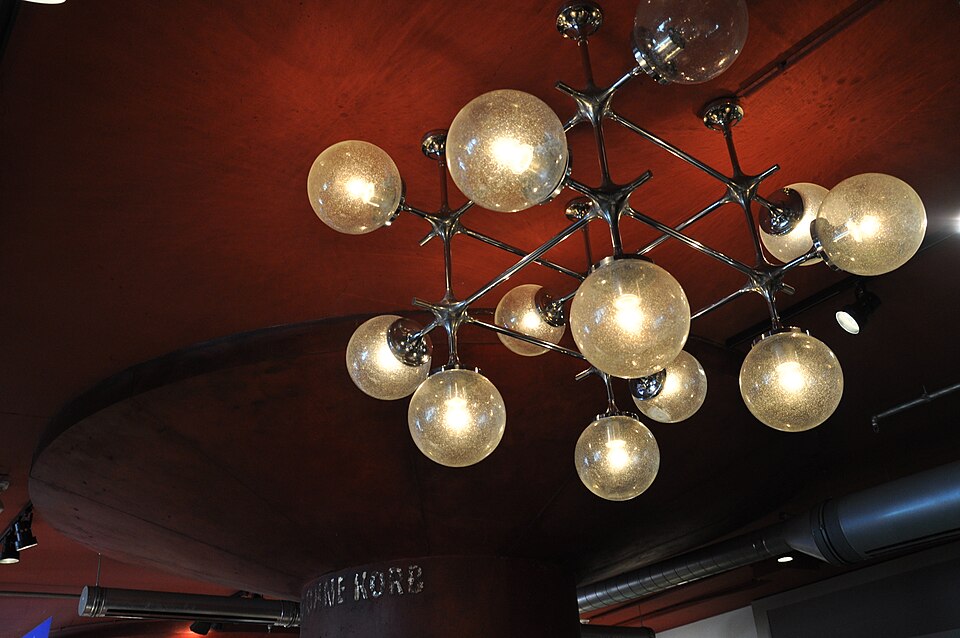
An interactive museum dedicated to everyday life in East Germany. Visitors can sit in a Trabant, explore a reconstructed East German apartment, and learn about the state surveillance, education system, and culture of the GDR. One of Berlin’s most popular museums, offering a vivid picture of life behind the wall.
More...Gedenkstätte Berliner Mauer
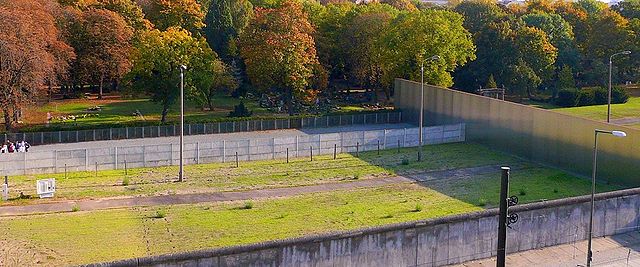
The “Berlin Wall Memorial”, was built in 1998 to commemorate the division the wall created, and the deaths that occurred because of it. It includes a Chapel of Reconciliation, a visitor center and a 60m section of the border and wall.
More...Gedenkstätte Günter Litfin
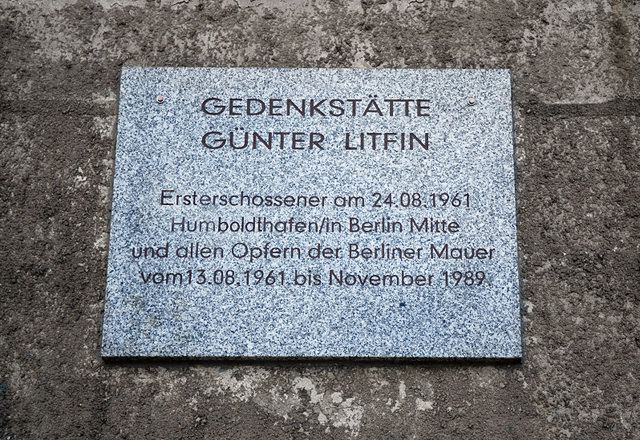
A former watchtower, named after Günter Litfin, a tailor from Weissensee, who was the first person to be shot dead by border guards while trying to flee East Berlin. His brother Jürgen Litfin saved the tower from demolition and opened it as a memorial in 2003, guiding visitors himself for years; the Berlin Wall Foundation […]
More...Gleim-Tunnel
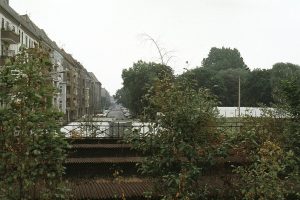
The Gleim-Tunnel is a 130-metre street tunnel built in 1905 beneath the railway tracks between Prenzlauer Berg and Wedding. During the Cold War, the Berlin Wall ran directly through its centre, sealing it shut for 29 years.
More...Hansa Studios
Hansa Studios, in the historic Meistersaal concert hall at Köthener Straße 38, stood right beside the Berlin Wall by Potsdamer Platz. Between 1976 and 1978 the building became the creative refuge of David Bowie and Iggy Pop: Bowie recorded much of “Heroes” (1977) here and produced Iggy Pop’s albums The Idiot and Lust for Life in the same rooms. The control room of the big studio looked out over the death strip, and the title track of “Heroes”, with its lovers kissing “by the Wall”, was inspired by that view. The 1910 hall is a protected monument and still works as a recording studio and event space today.
More...Heinrich-Heine-Straße
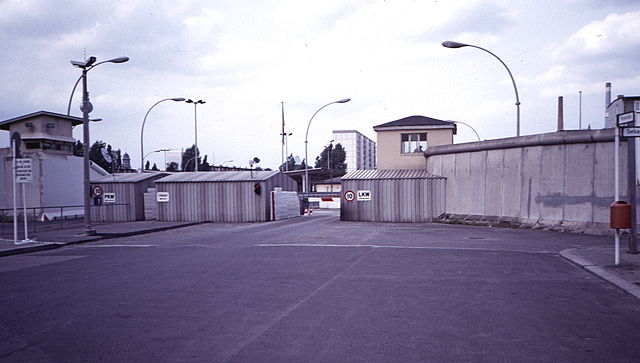
A former border crossing between the Russian and US sectors. There isn’t much to see here today. The route of the Berlin Wall is marked clearly down the center of nearby Sebastianstraße. The nearby Heinrich-Heine-Straße U-Bahn station was closed and skipped by trains during the wall years.
More...Internationales Pressezentrum
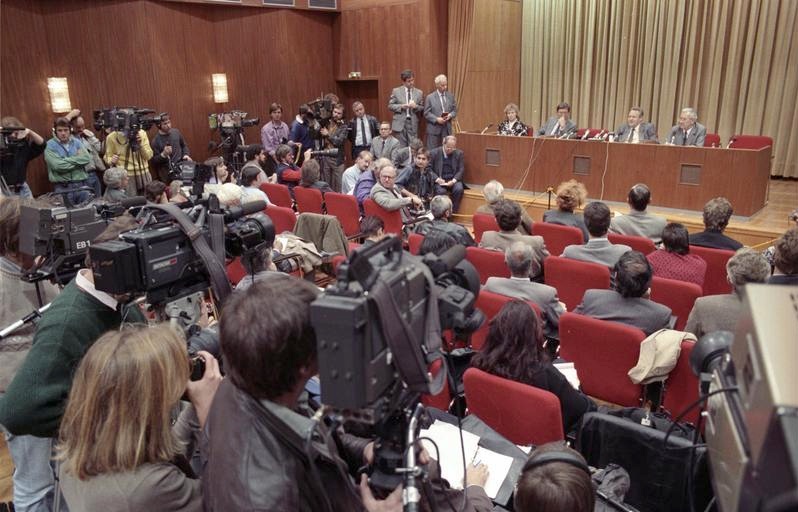
The GDR’s official press centre for foreign correspondents, where Günter Schabowski held his historic press conference on 9 November 1989. Asked when new travel regulations would take effect, he replied “sofort, unverzüglich” (immediately, without delay) — triggering the rush to the border crossings that brought down the Berlin Wall. The building on Mohrenstraße (renamed Anton-Wilhelm-Amo-Straße in 2025) now belongs to the Federal Ministry of Justice; the original press room no longer exists, but an art installation marks the event.
More...Invalidenfriedhof
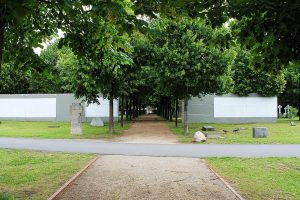
One of Berlin’s oldest military cemeteries, the Invalidenfriedhof was bisected by the Berlin Wall. Border guards demolished graves to create clear firing lines across the death strip.
More...Invalidenstraße
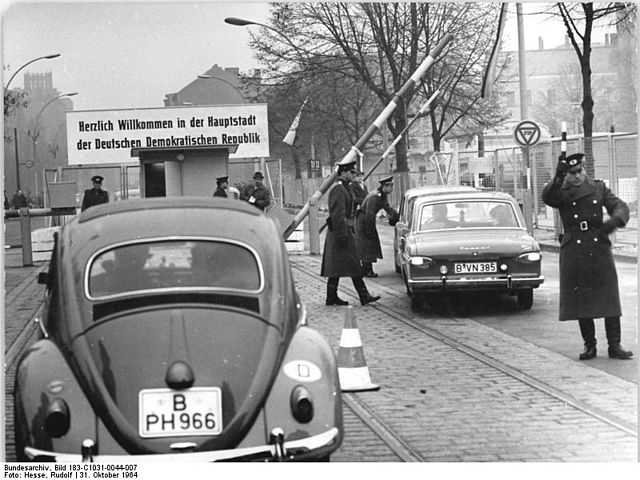
A former border crossing at Sandkrugbrücke bridge over the Berlin-Spandau Shipping Canal (Spandauer Schifffahrtskanal). Numerous escape attempts took place here, including that of Günter Litfin, who was shot dead. A memorial stone was erected to commemorate him. Nearby: Memorial stone for Günter Litfin, “Sinkende Mauer”, Berlin Wall History Mile
More...Leipziger Platz Wall Segments
On the green between Potsdamer Platz and Leipziger Platz stand several original Berlin Wall segments painted by the pioneers Thierry Noir and Kiddy Citny, whose bright cartoon heads, crowned figures and hearts made them among the first to turn the Wall into art in the mid-1980s. Decorated on their western face, the segments are set upright on the grass beside the former border course, a short walk from the surviving Erna-Berger-Straße watchtower. It is one of the few places in central Berlin to see the pioneers’ Wall art out in the open rather than in a museum.
More...Mauermuseum – Haus am Checkpoint Charlie
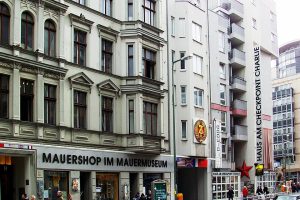
Founded in 1962 by human rights activist Rainer Hildebrandt, this museum documents the ingenuity and desperation of escape attempts from East Berlin. Exhibits include a homemade hot air balloon, a modified car with a hidden compartment, and a one-person submarine. Located directly at Checkpoint Charlie, it draws over 850,000 visitors per year.
More...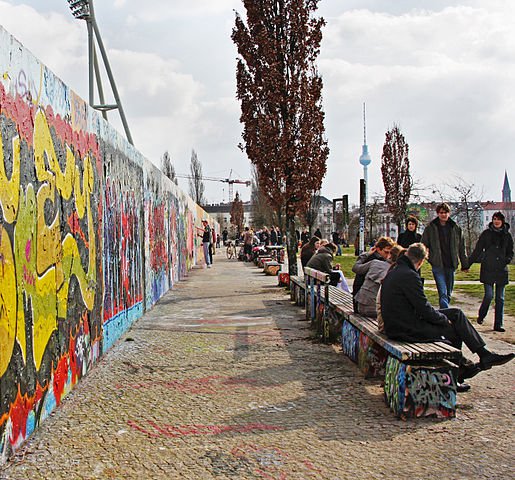
Niederkirchnerstraße Wall Remains
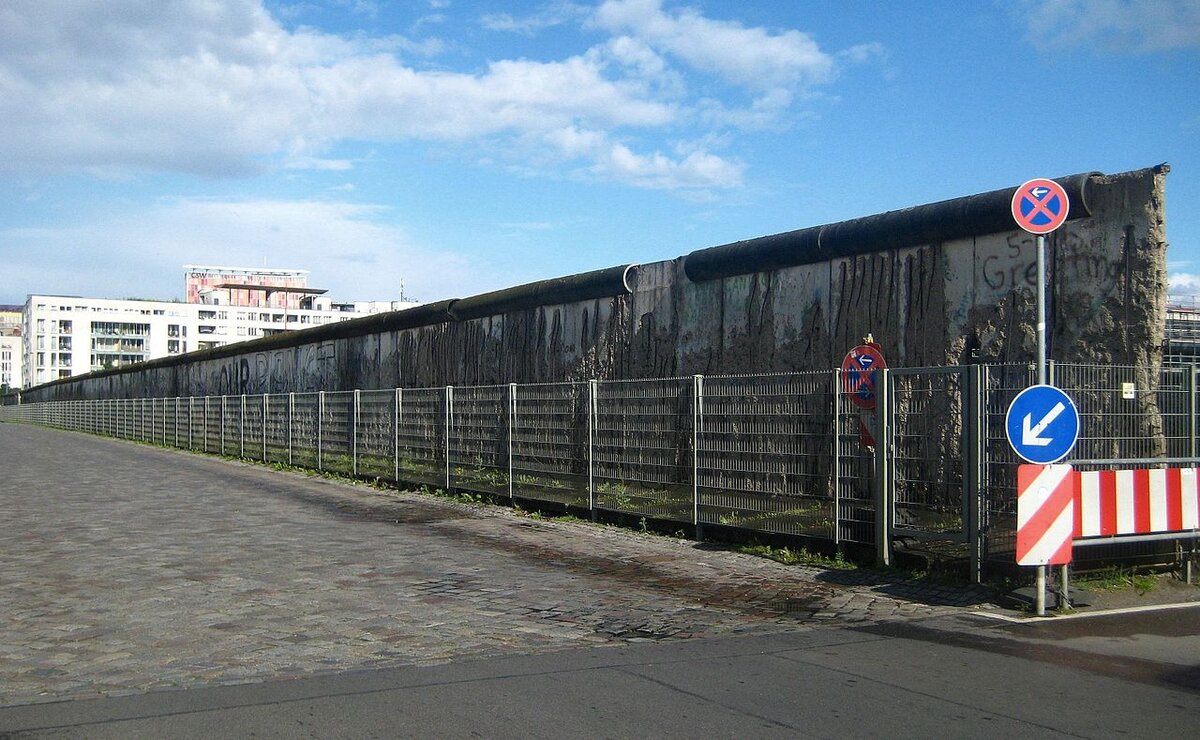
A 200-metre preserved section of the Berlin Wall at Niederkirchnerstraße, one of the longest remaining original sections of the inner wall in central Berlin.
More...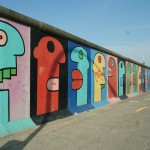
Free map downloads
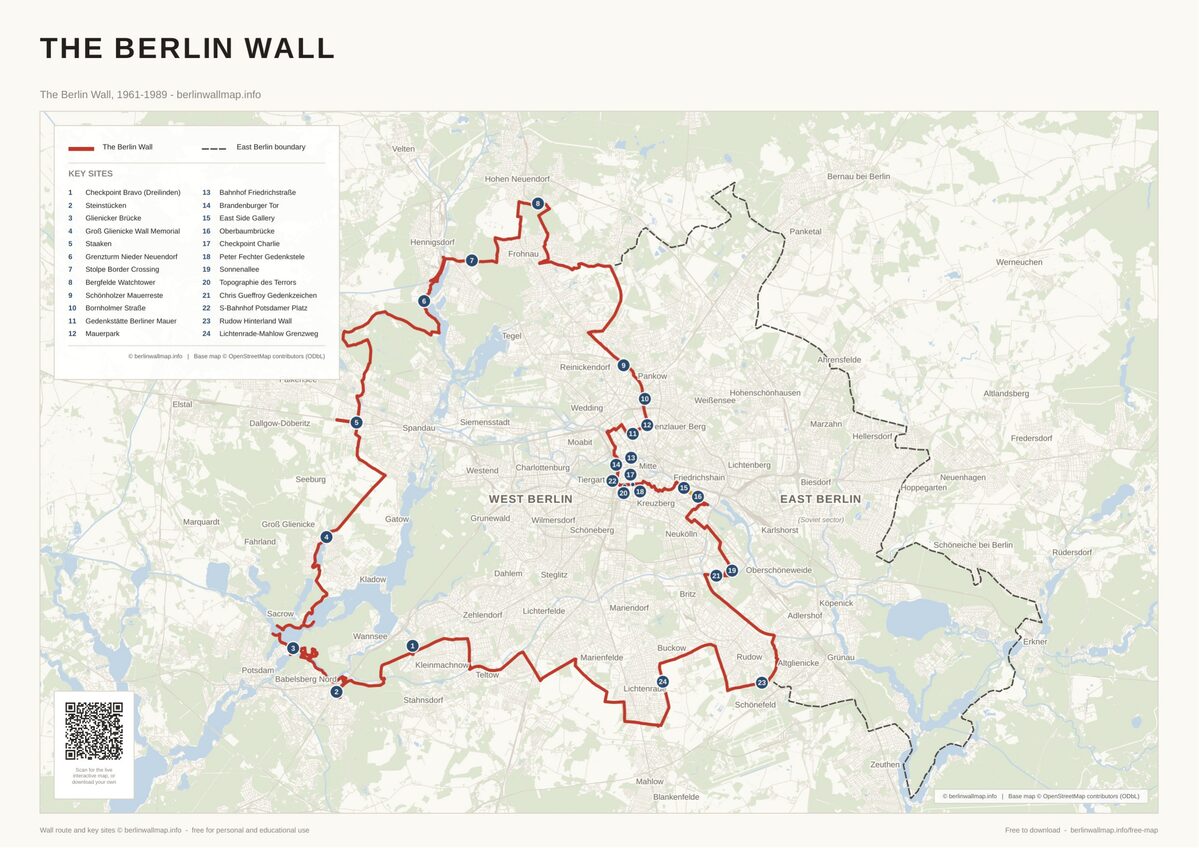
Free printable PDF maps of the Berlin Wall.
Get the free maps →Explore the Timeline
Journey through Berlin Wall history from 1945 to 1990.
View Timeline →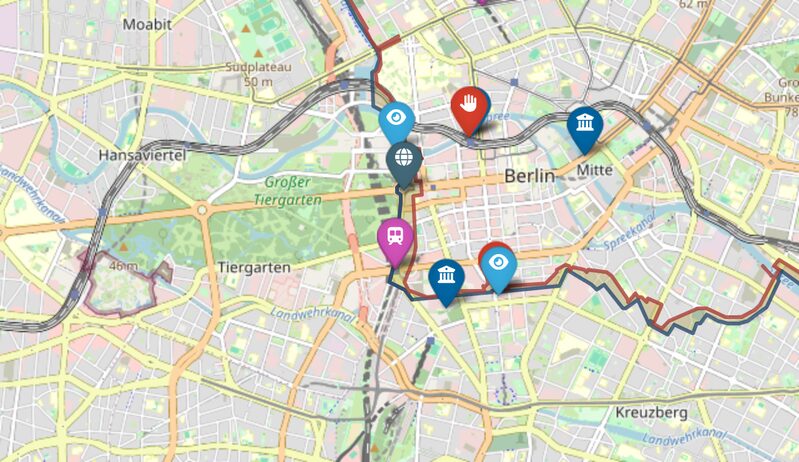
Embed Our Map
Add a free interactive Berlin Wall map to your website or blog.
Get embed code →