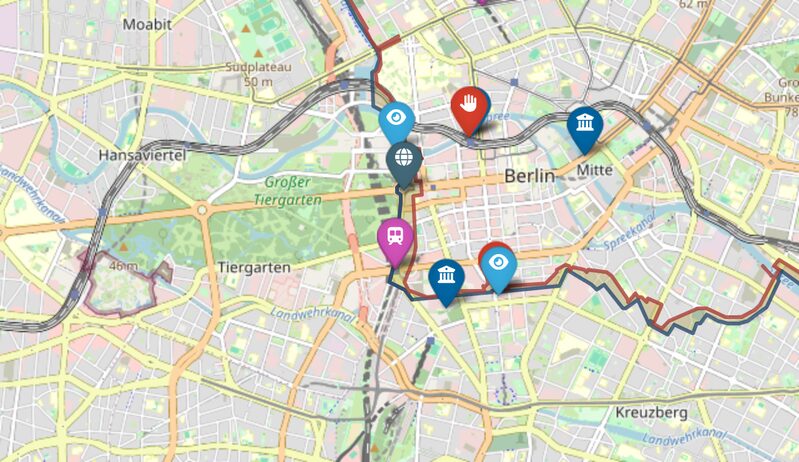
Berlin Wall Sites to Visit
Nordbahnhof – Geisterbahnhof
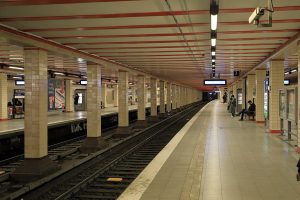
This S-Bahn station was sealed from 1961 to 1989 while Western trains passed through East Berlin territory without stopping. Today the station houses “Grenzübergänge” (Border Crossings), a free permanent exhibition with photographs of bricked-up entrances and ghost station interiors.
More...Notaufnahmelager Marienfelde
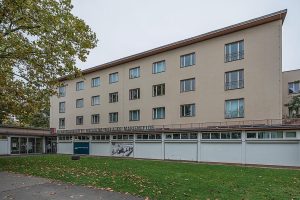
The Marienfelde Emergency Reception Centre processed over 1.35 million refugees from East Germany between 1953 and 1990. Today it houses a museum documenting the history of flight from the GDR.
More...Oberbaumbrücke
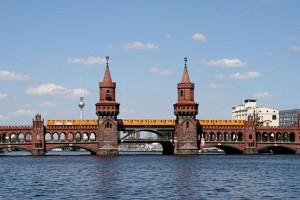
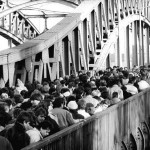
Crossing the River Spree, this beautiful double-decker bridge is well-known Berlin landmark. It became a pedestrian border-crossing for West Berliners. The entire width of the river here was in East Berlin, which meant that West Berliners could not intervene to save the life of a 5 boy who fell into the water and drowned. Nearby: […]
More...Oranienburger Chaussee Tunnels
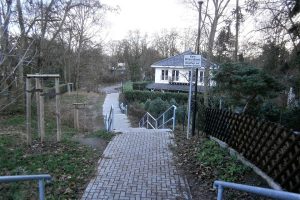
Site of some of the earliest successful escape tunnels beneath the Berlin Wall. On 24 January 1962, 28 people escaped through a tunnel dug by brothers Günter and Bruno Becker from their basement – an event that inspired the film “Tunnel 28.” In May 1962, twelve senior citizens dug a 32-metre tunnel from a chicken […]
More...Parlament der Bäume
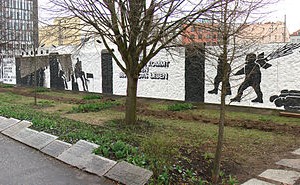
At the Marie-Elisabeth-Lüders-Haus, the Parliament of Trees against War and Violence is a memorial commemorating the 258 people who died at the wall. Begun in 1990 by the artist Ben Wagin, it is made up of trees, memorial stones, and original parts of the wall. The names of the 258 dead are inscribed on stones. […]
More...Peter Fechter Gedenkstele
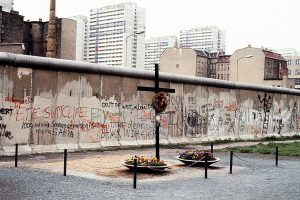
A memorial cross marks the spot where 18-year-old Peter Fechter was shot by border guards on 17 August 1962 while trying to escape to the West. He fell back into the death strip and lay bleeding for nearly an hour in full view of Western observers before being carried away by East German guards. He […]
More...Rathaus Schöneberg
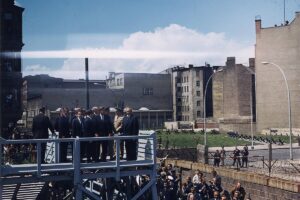
Schöneberg Town Hall served as West Berlin’s city hall from 1949 to 1991, after the historic Rotes Rathaus fell within the Soviet sector. It is best known as the site of President Kennedy’s famous “Ich bin ein Berliner” speech on 26 June 1963, delivered to a crowd of over 120,000 on the square now named John-F.-Kennedy-Platz. The tower houses a replica of the American Liberty Bell, donated by 16 million Americans in 1950 and rung daily at noon. Today the building serves as the Tempelhof-Schöneberg district hall.
More...Rudow Hinterland Wall
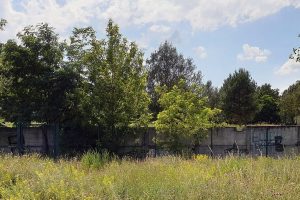
The Rudow Hinterland Wall preserves the southernmost Berlin Wall remains in the city. Third-generation concrete slabs stand between H-shaped reinforced concrete supports, overlooking a former death strip that has been reclaimed by nature.
More...S-Bahnhof Bornholmer Straße
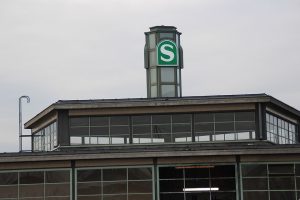
The only above-ground ghost station. West and East S-Bahn tracks ran parallel through the station but were separated by a tall fence. Western trains did not stop here. Located next to the Bornholmer Straße road crossing where the Wall was first breached on the night of 9 November 1989.
More...S-Bahnhof Brandenburger Tor
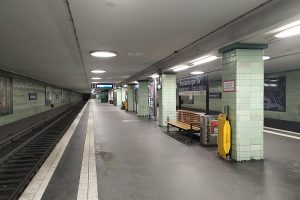
Originally named “Unter den Linden” when it opened in 1936, this S-Bahn station sits directly beneath the Brandenburg Gate. During the Cold War, Western trains passed through the sealed platform while East German guards stood watch. Renamed “Brandenburger Tor” in 2009.
More...S-Bahnhof Oranienburger Straße
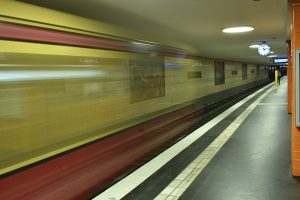
The first ghost station on the north-south S-Bahn tunnel to reopen, on 2 July 1990. During the Wall era it lay sealed underground while the neighbourhood above was a quiet, neglected part of East Berlin. Today the area is busy, with galleries, bars, and the Neue Synagoge nearby.
More...S-Bahnhof Potsdamer Platz
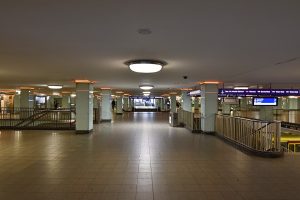
One of the best-known ghost stations. The Wall ran directly through Potsdamer Platz above, turning what was once Europe’s busiest intersection into empty wasteland. Below, the sealed S-Bahn station was untouched for decades. When entered after 1989, 1930s advertising posters were found still on the walls. The last ghost station to reopen, on 3 March […]
More...Schönholzer Mauerreste
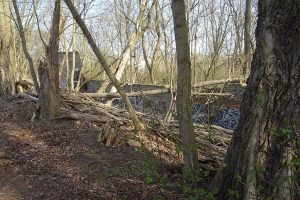
The Schönholzer Mauerreste is an 80-metre triangular section of early-era Berlin Wall, built from World War II rubble in the early 1960s. Concealed and forgotten for 30 years, it was rediscovered in 1999 and officially recognized as a heritage site in 2018.
More...Sebastianstraße Tunnel
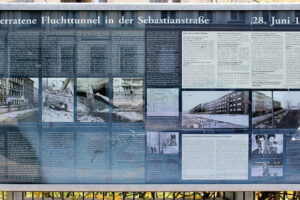
In 1962, Siegfried Noffke and Dieter Hötger dug a tunnel approximately 30 metres long from Sebastianstraße 82 in West Kreuzberg under the Wall to Heinrich-Heine-Straße 45–49 in East Berlin. The Wall ran down the centre of the street at this point. An information board erected by Berliner Unterwelten at the site documents this escape route.
More...Sonnenallee
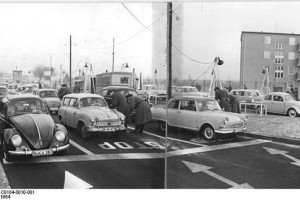
This was one of the quieter border crossings. It became better known after the 1999 comedy movie with the same name. Today it is marked with a double line of cobble stones, and a Berlin History Mile information board. Nearby: Memorial plaque for the fall of the Wall in 1989, Berlin Wall History Mile, Memorial […]
More...Staaken
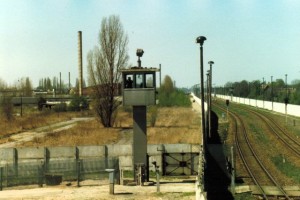
Staaken, on the west-most outskirts of West Berlin, was home to several different rail and road crossings during the cold war years. Albrechtshof rail crossing was closed in 1961 after possibly one of the most dramatic GDR escapes: East German engineer Harry Deterling crashed a whole train through the barriers towards Gartenstadt Staaken in West […]
More...Stasi Museum
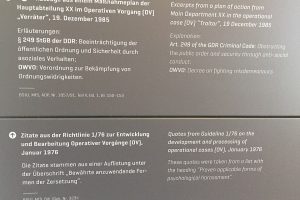
Located in the former headquarters of the Ministry for State Security in Lichtenberg, this museum preserves the office of Stasi chief Erich Mielke exactly as it was. Exhibits document the vast surveillance apparatus that monitored East German citizens, including mail interception equipment, hidden cameras, and the infamous smell samples used to track dissidents.
More...Steinstücken
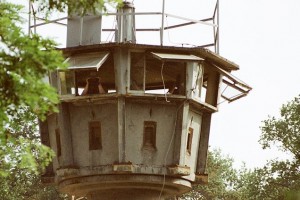
A small enclave of around 200 inhabitants, Steinstücken is the southern most territory of Berlin, in Wannsee. For a time its border was made up of only barbed wire, and was the point of many escape attempts. A permanent border wall was erected here after 20 East German border guards escaped to the West. Nearby: […]
More...Stolpe Border Crossing
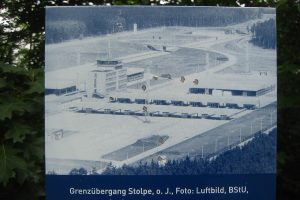
The Stolpe border crossing, opened in 1982, holds the distinction of being the last checkpoint built before the Berlin Wall fell. Located at the northern edge of Berlin on Route 96, it served travellers heading to Scandinavia and the Baltic coast.
More...Teufelsberg
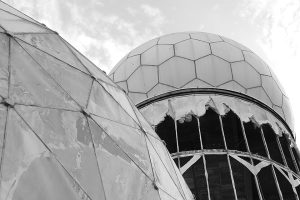
An artificial hill built from 26 million cubic metres of World War II rubble in the Grunewald forest. The US National Security Agency built a listening station on its summit to intercept Eastern Bloc communications during the Cold War. The abandoned geodesic radomes are now a street art destination and offer panoramic views of Berlin.
More...