Berlin Wall Sites Near Tränenpalast
The "Palace of Tears" was the departure hall at Friedrichstraße station where East Germans said goodbye to visiting Western relatives, often not knowing when they would meet again. The glass pavilion earned its name from the tears shed at these farewells. Now a free museum with a permanent exhibition on daily life in divided Germany.
15 Berlin Wall Sites Within Walking Distance

Tränenpalast
The "Palace of Tears" was the departure hall at Friedrichstraße station where East Germans said goodbye to visiting Western relatives, often not knowing when they...

Bahnhof Friedrichstraße
As an important travel hub between the West Berlin sectors, despite it being located entirely in the Soviet occupied West Berlin, its underground U and...

U-Bahnhof Oranienburger Tor
Named after the historic Oranienburger Tor gate that once stood here, this U6 ghost station is just one stop north of Friedrichstraße, the border crossing...

U-Bahnhof Französische Straße
After serving as a U6 ghost station from 1961 to 1990, this station operated normally for 30 years before being permanently closed on 4 December...

S-Bahnhof Brandenburger Tor
Originally named "Unter den Linden" when it opened in 1936, this S-Bahn station sits directly beneath the Brandenburg Gate. During the Cold War, Western trains...

Parlament der Bäume
At the Marie-Elisabeth-Lüders-Haus, the Parliament of Trees against War and Violence is a memorial commemorating the 258 people who died at the wall. Begun in...

S-Bahnhof Oranienburger Straße
The first ghost station on the north-south S-Bahn tunnel to reopen, on 2 July 1990. During the Wall era it lay sealed underground while the...

Weiße Kreuze
Located on the bank of the Spree near the Reichstag building, this memorial consists of seven white wooden crosses commemorating victims who died attempting to...

Brandenburger Tor
The Brandenburg Gate became the main symbol of Berlin's division. From 1961 to 1989, it stood inaccessible in the death strip, visible but unreachable from...

U-Bahnhof Naturkundemuseum
This U6 ghost station has had a confusing naming history. During the Wall era it was called "Nordbahnhof" on East German maps, then renamed "Zinnowitzer...

DDR Museum
An interactive museum dedicated to everyday life in East Germany. Visitors can sit in a Trabant, explore a reconstructed East German apartment, and learn about...

Internationales Pressezentrum
The GDR's official press centre for foreign correspondents, where Günter Schabowski held his historic press conference on 9 November 1989. Asked when new travel regulations...

Invalidenstraße
A former border crossing at Sandkrugbrücke bridge over the Berlin-Spandau Shipping Canal (Spandauer Schifffahrtskanal). Numerous escape attempts took place here, including that of Günter Litfin,...

Nordbahnhof – Geisterbahnhof
This S-Bahn station was sealed from 1961 to 1989 while Western trains passed through East Berlin territory without stopping. Today the station houses "Grenzübergänge" (Border...

U-Bahnhof Stadtmitte (U6)
Like Alexanderplatz, Stadtmitte was a split station. The U2 platform operated normally for East Berliners (as "Otto-Grotewohl-Straße"), while the physically separate U6 platform was sealed...
Explore Berlin Wall Sites Near Other Landmarks
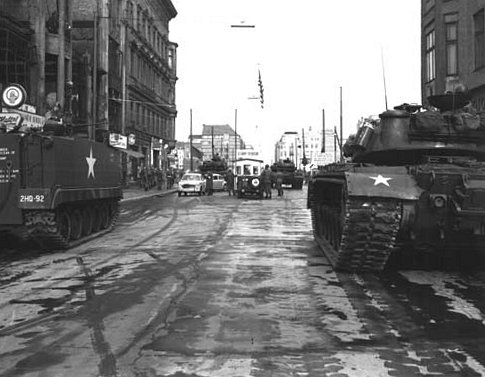
Checkpoint Charlie
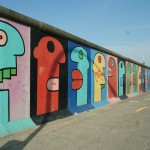
East Side Gallery
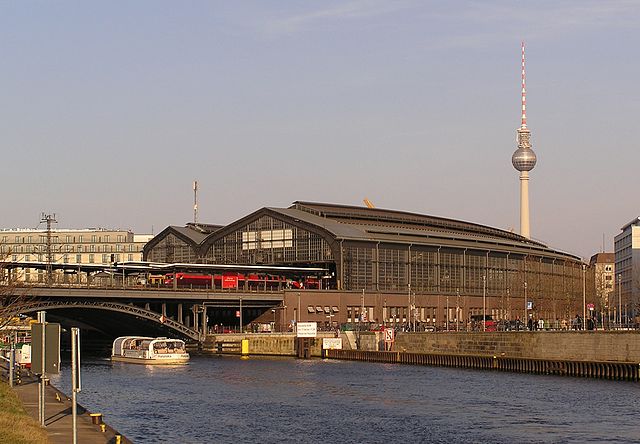
Bahnhof Friedrichstraße
History of the Berlin Wall: A Complete Guide (1961-1989)
65 Years Ago: US and Soviet Tanks Faced Off at Checkpoint Charlie
The Border Guards of the Berlin Wall: Conscripts, the Order to Shoot, and the Trials That Followed
9 November in Berlin: 37 Years Since the Wall Fell, and What’s On
Gethsemanekirche
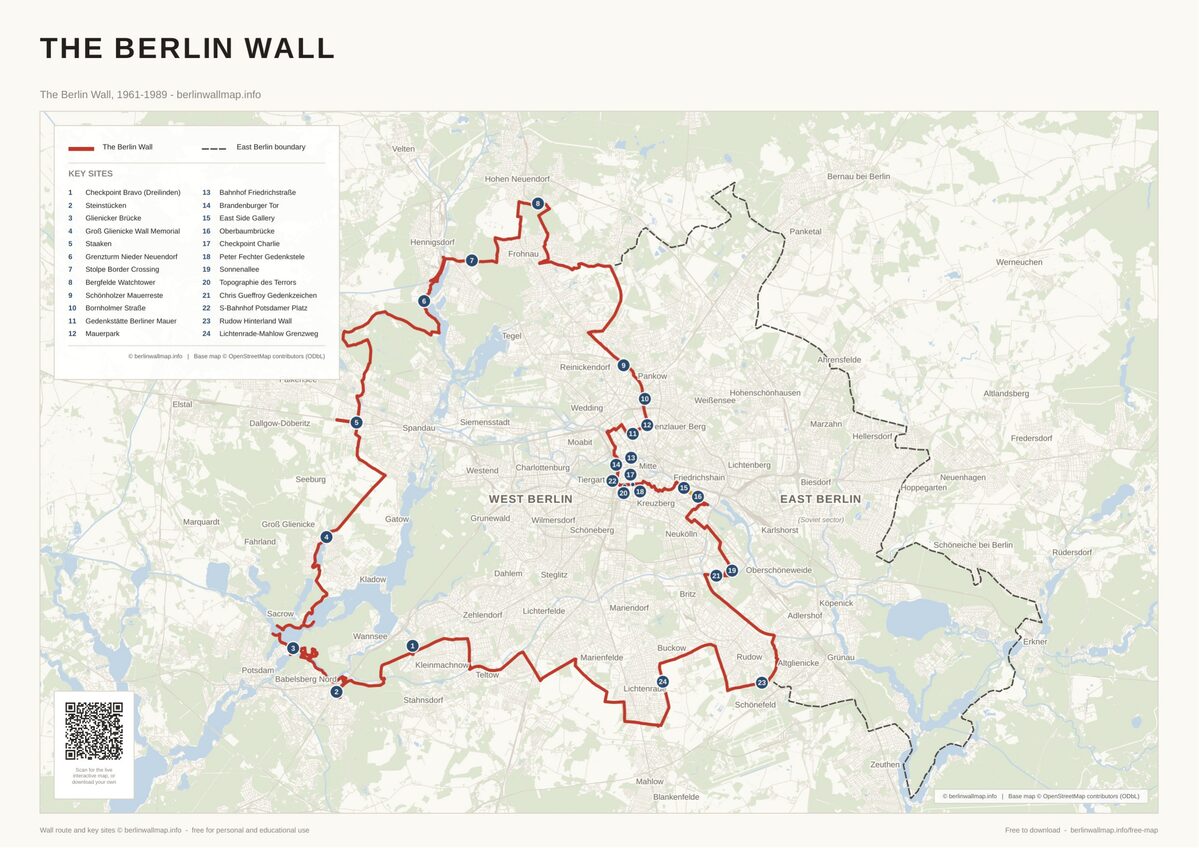
Free map downloads
Free printable PDF maps of the Berlin Wall.
Get the free maps →Explore the Timeline
Journey through Berlin Wall history from 1945 to 1990.
View Timeline →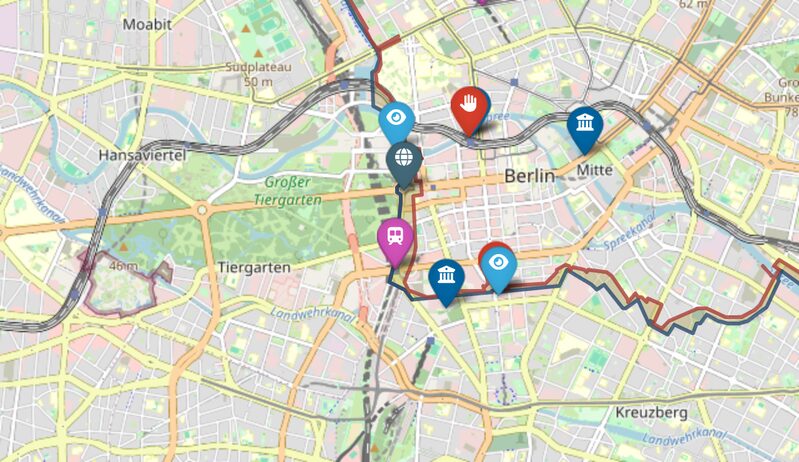
Embed Our Map
Add a free interactive Berlin Wall map to your website or blog.
Get embed code →