Berlin Wall Sites Near Invalidenfriedhof
The Invalidenfriedhof, one of Berlin's oldest military cemeteries (founded 1748), was bisected by the Berlin Wall from 1961. The Wall ran directly through the cemetery, and border guards demolished many graves to create clear firing lines across the death strip. Tombstones were used as building material for border fortifications. After reunification, some graves were restored, but many remain lost. The cemetery sits adjacent to the Berlin-Spandau Ship Canal, where several escape attempts were made. Today visitors can see the remaining graves alongside traces of where the Wall once stood.
15 Berlin Wall Sites Within Walking Distance

Invalidenfriedhof
The Invalidenfriedhof, one of Berlin's oldest military cemeteries (founded 1748), was bisected by the Berlin Wall from 1961. The Wall ran directly through the cemetery,...

Invalidenstraße
A former border crossing at Sandkrugbrücke bridge over the Berlin-Spandau Shipping Canal (Spandauer Schifffahrtskanal). Numerous escape attempts took place here, including that of Günter Litfin,...

Gedenkstätte Günter Litfin
A former watchtower, named after Günter Litfin, a tailor from Weissensee, who was the first person to be shot dead by border guards while trying...

U-Bahnhof Schwartzkopffstraße
This U6 ghost station was renamed twice while sealed. In 1951 it became "Walter-Ulbricht-Stadion" and in 1973 "Stadion der Weltjugend". These changes were visible only...

U-Bahnhof Naturkundemuseum
This U6 ghost station has had a confusing naming history. During the Wall era it was called "Nordbahnhof" on East German maps, then renamed "Zinnowitzer...

Chausseestraße
A lesser-known border crossing at the intersection of Chausseestraße and Liesenstraße, used primarily for West Berlin residents visiting relatives in the East. On 8 April...

Parlament der Bäume
At the Marie-Elisabeth-Lüders-Haus, the Parliament of Trees against War and Violence is a memorial commemorating the 258 people who died at the wall. Begun in...

Nordbahnhof – Geisterbahnhof
This S-Bahn station was sealed from 1961 to 1989 while Western trains passed through East Berlin territory without stopping. Today the station houses "Grenzübergänge" (Border...

Weiße Kreuze
Located on the bank of the Spree near the Reichstag building, this memorial consists of seven white wooden crosses commemorating victims who died attempting to...

Gedenkstätte Berliner Mauer
The "Berlin Wall Memorial", was built in 1998 to commemorate the division the wall created, and the deaths that occurred because of it. It includes...

U-Bahnhof Oranienburger Tor
Named after the historic Oranienburger Tor gate that once stood here, this U6 ghost station is just one stop north of Friedrichstraße, the border crossing...

Tunnel 37 – Brunnenstraße
A memorial plaque marks the site of an escape tunnel through which 37 people reached freedom from East to West Berlin. The tunnel was one...

U-Bahnhof Bernauer Straße
This U8 station sat directly beneath the Berlin Wall boundary on Bernauer Straße. Sealed from 1961, it reopened on 12 April 1990. The Berlin Wall...

Bahnhof Friedrichstraße
As an important travel hub between the West Berlin sectors, despite it being located entirely in the Soviet occupied West Berlin, its underground U and...

Tränenpalast
The "Palace of Tears" was the departure hall at Friedrichstraße station where East Germans said goodbye to visiting Western relatives, often not knowing when they...
Explore Berlin Wall Sites Near Other Landmarks
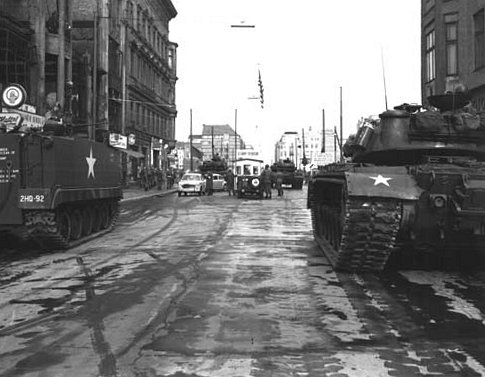
Checkpoint Charlie
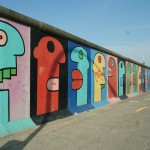
East Side Gallery
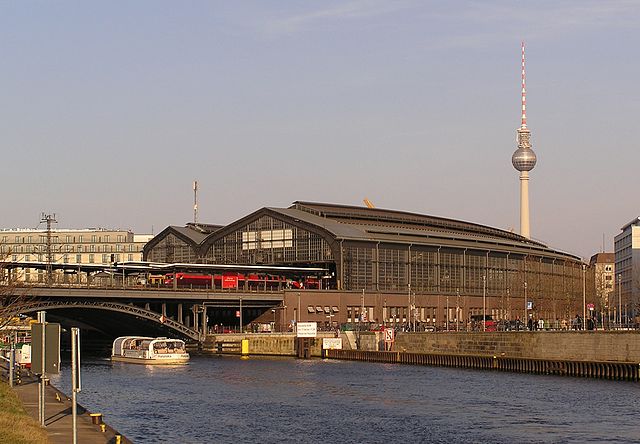
Bahnhof Friedrichstraße
History of the Berlin Wall: A Complete Guide (1961-1989)
65 Years Ago: US and Soviet Tanks Faced Off at Checkpoint Charlie
The Border Guards of the Berlin Wall: Conscripts, the Order to Shoot, and the Trials That Followed
9 November in Berlin: 37 Years Since the Wall Fell, and What’s On
Gethsemanekirche
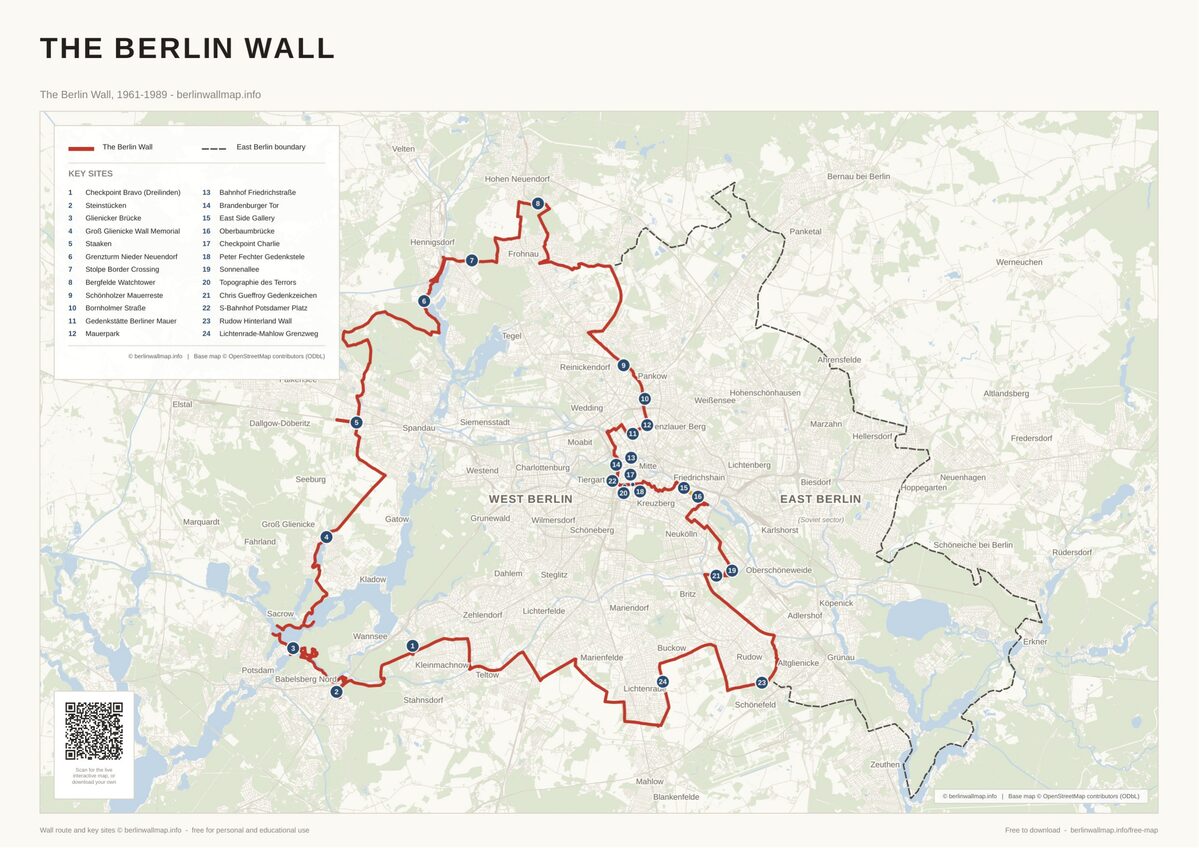
Free map downloads
Free printable PDF maps of the Berlin Wall.
Get the free maps →Explore the Timeline
Journey through Berlin Wall history from 1945 to 1990.
View Timeline →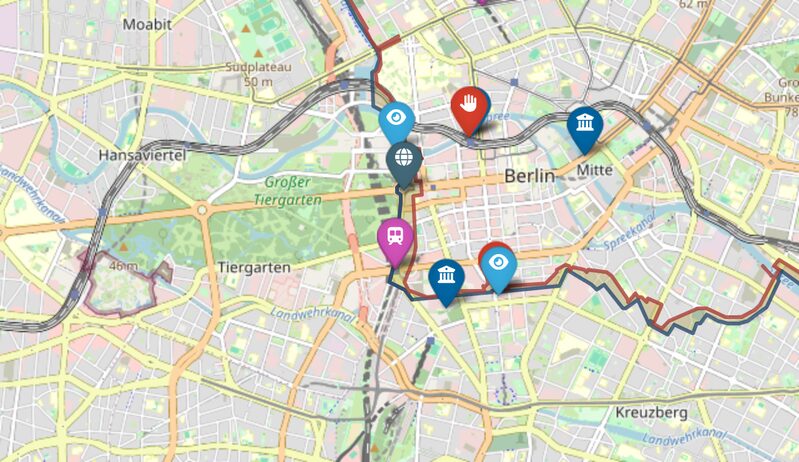
Embed Our Map
Add a free interactive Berlin Wall map to your website or blog.
Get embed code →