When was the Berlin Wall built?
The Berlin Wall was built on 13 August 1961.
In the early hours of that Sunday morning, East German soldiers and workers began sealing the border between East and West Berlin with barbed wire, concrete posts, and improvised barriers. Berliners woke to find their city divided overnight.
The operation – codenamed “Rose” – had been planned in secret. Even many senior East German officials were not informed until the last moment. Soviet premier Nikita Khrushchev had given his approval, and 40,000 East German soldiers and police were mobilised to enforce the closure.
In the first days, the “Wall” was little more than barbed wire and cinder blocks. Along Bernauer Straße, the front facades of apartment buildings served as the border – desperate residents jumped from upper-floor windows into West Berlin before the windows were bricked up. One iconic photograph shows East German soldier Conrad Schumann leaping over the barbed wire on the first day.
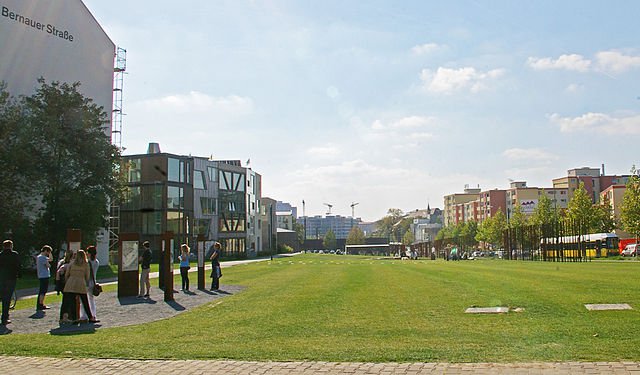
The reaction from the West was muted. US President Kennedy, while privately outraged, recognised that a wall was preferable to a war. His famous remark – “A wall is a hell of a lot better than a war” – reflected the Cold War calculus of the time. It was not until June 1963 that he visited Berlin and delivered his “Ich bin ein Berliner” speech.
The initial barbed wire was progressively replaced by more permanent structures, eventually evolving through four generations into the formidable concrete barrier that stood until 1989.
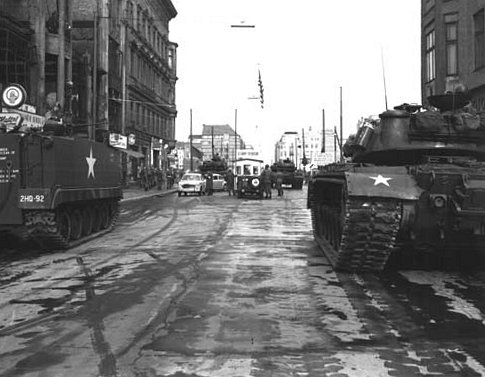
Checkpoint Charlie
East Side Gallery
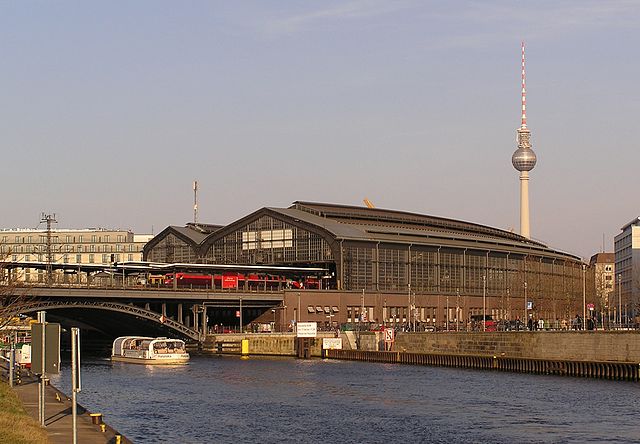
Bahnhof Friedrichstraße
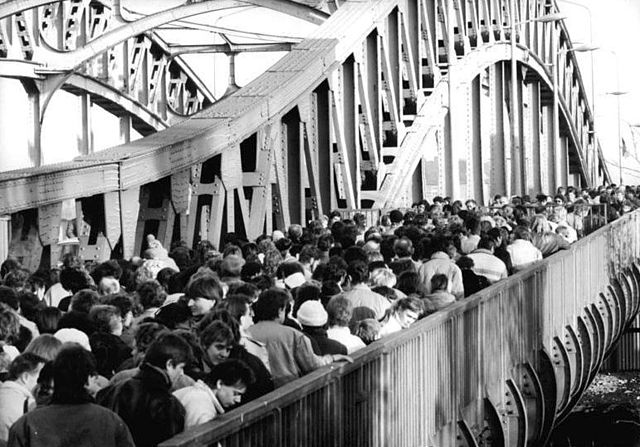
Bornholmer Straße
65 Years Ago: US and Soviet Tanks Faced Off at Checkpoint Charlie
The Border Guards of the Berlin Wall: Conscripts, the Order to Shoot, and the Trials That Followed
9 November in Berlin: 37 Years Since the Wall Fell, and What’s On
Gethsemanekirche
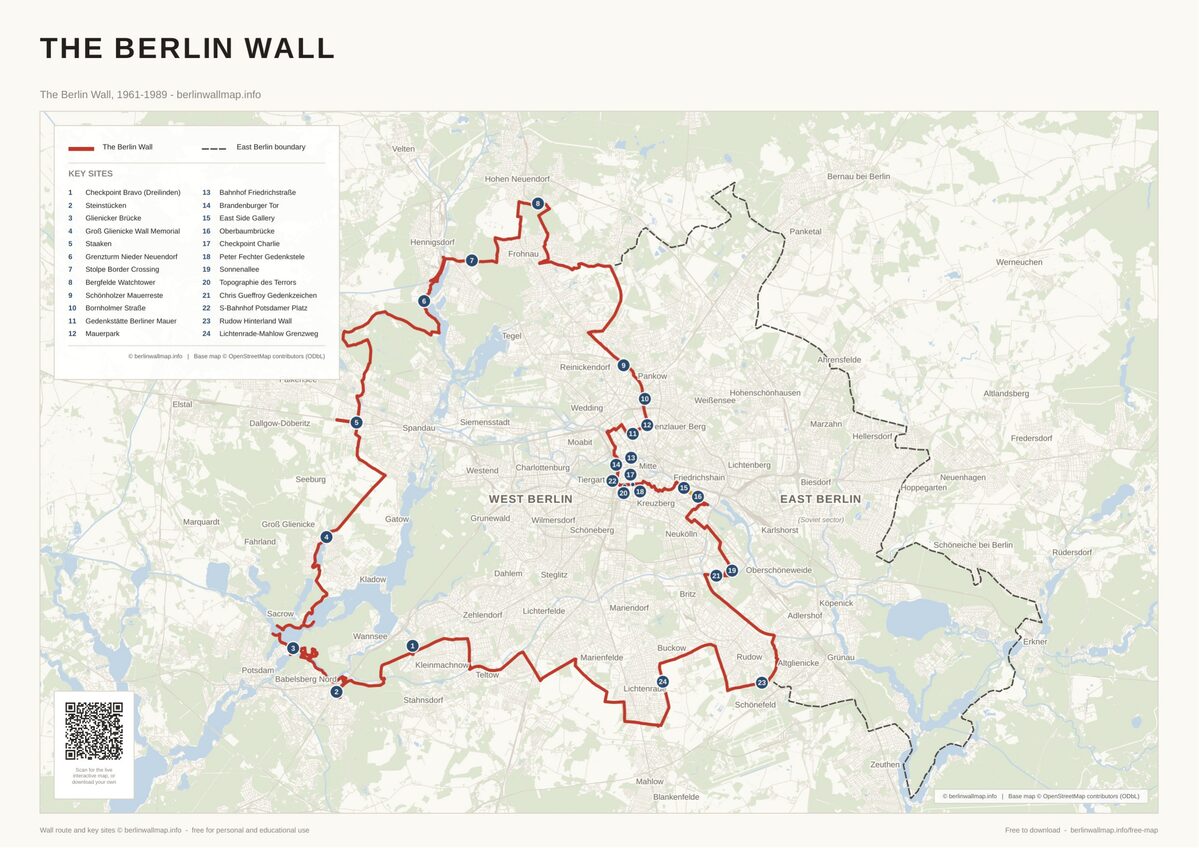
Free map downloads
Free printable PDF maps of the Berlin Wall.
Get the free maps →Explore the Timeline
Journey through Berlin Wall history from 1945 to 1990.
View Timeline →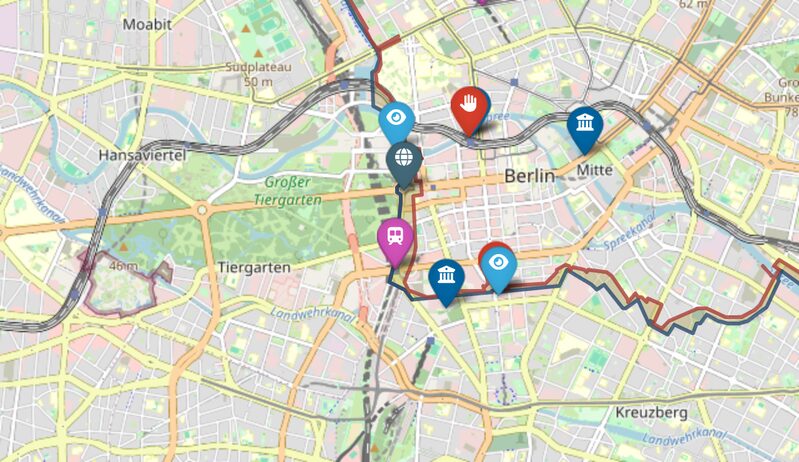
Embed Our Map
Add a free interactive Berlin Wall map to your website or blog.
Get embed code →