Torn Curtain
Torn Curtain (1966) is Alfred Hitchcock’s espionage thriller set in Cold War East Germany. Paul Newman plays Professor Michael Armstrong, an American rocket scientist who pretends to defect to the DDR in order to extract a crucial anti-missile defense formula from a leading East German physicist.
| Year | 1966 |
|---|---|
| Director | Alfred Hitchcock |
| Genre | Thriller |
| Language | English |
| IMDb |
Plot
Armstrong stages his defection at a physics conference in Copenhagen, leaving behind his horrified fiancee and assistant Sarah Sherman, played by Julie Andrews. Once in East Berlin, he must gain the trust of Professor Gustav Lindt while secretly working with an underground escape network called Pi. When his cover is blown, Armstrong and Sherman must flee through East Germany using the escape network, pursued by the Stasi at every turn.
Berlin Wall Connection
The film is set primarily in East Berlin and Leipzig, depicting life behind the Iron Curtain as oppressive and paranoid. Armstrong’s arrival in East Berlin and his eventual escape route pass through the divided city. While the Wall itself does not appear as prominently as in some other films, the entire plot hinges on the impossibility of freely crossing between East and West — the Wall’s existence drives every decision the characters make. The escape sequences dramatize the elaborate networks that helped people flee the communist East.
Filming Locations
Despite its German setting, the film was shot entirely at Universal Studios in Hollywood. The East Berlin and Leipzig sets were constructed on soundstages, and some scenes used matte paintings and rear projection for exterior shots. The lack of authentic locations was noted by critics, and Hitchcock himself was reportedly dissatisfied with the studio’s insistence on star casting over his preferred choices.
Cultural Impact
Torn Curtain was not considered among Hitchcock’s best works upon release, with critics noting a mismatch between the director’s style and his leading actors. However, the film contains one of Hitchcock’s most memorable sequences: the protracted, unglamorous killing of a Stasi agent in a farmhouse, which deliberately shows how difficult it actually is to kill someone. This scene is studied in film schools as a masterclass in suspense through duration. The film’s depiction of East German surveillance culture influenced later Cold War thrillers.
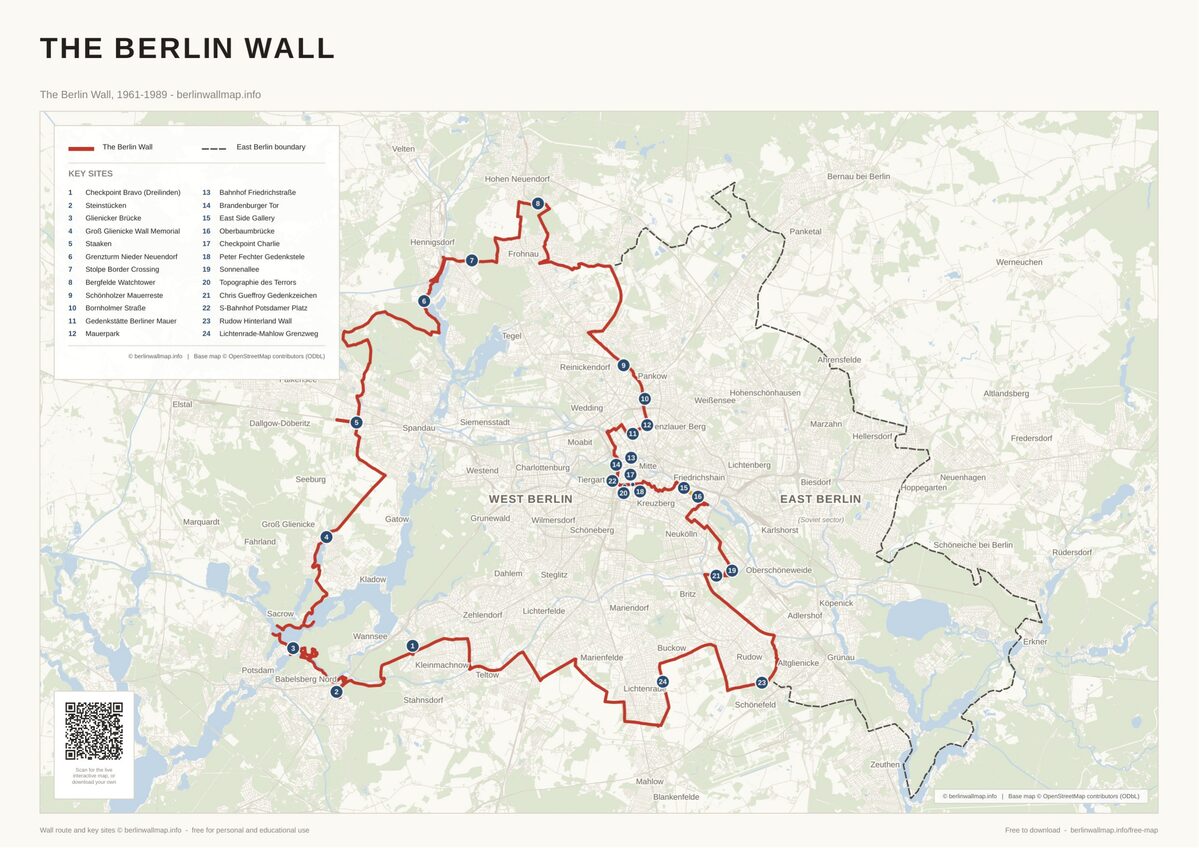
Free map downloads
Free printable PDF maps of the Berlin Wall.
Get the free maps →Explore the Timeline
Journey through Berlin Wall history from 1945 to 1990.
View Timeline →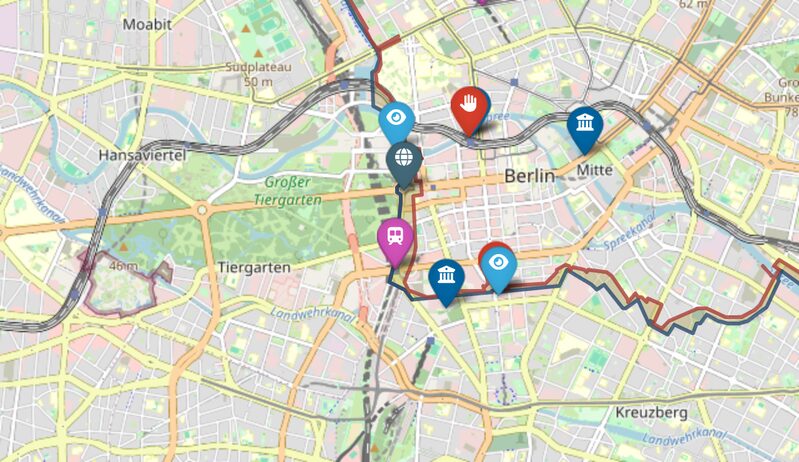
Embed Our Map
Add a free interactive Berlin Wall map to your website or blog.
Get embed code →