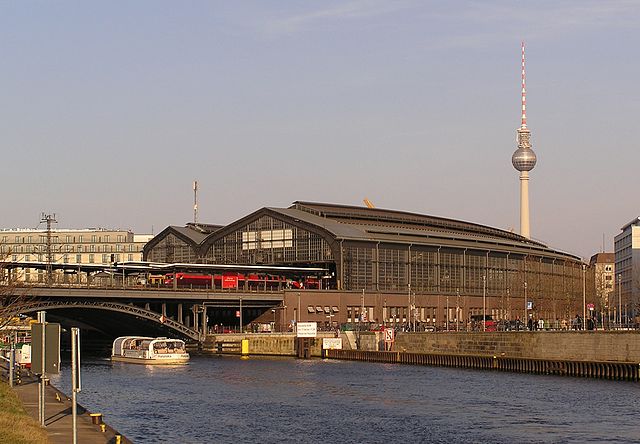
Bahnhof Friedrichstraße
As an important travel hub between the West Berlin sectors, despite it being located entirely in the Soviet occupied West Berlin, its underground U and S-Bahn facilities were only open to West Berlin travelers, for transferring, or to access the border crossing on the ground floor.
Nearby: Tränenpalast (Reichstagufer 17), a permanent exhibition of daily life in divided Berlin is now housed at the former border crossing point.
Despite being located entirely in East Berlin, the station’s underground U-Bahn and S-Bahn platforms were only accessible to West Berlin passengers, who could transfer between lines or ascend to the ground floor to cross the border. East Berliners were forbidden from entering these underground areas, creating a surreal divided station where two populations used the same building but could never meet.
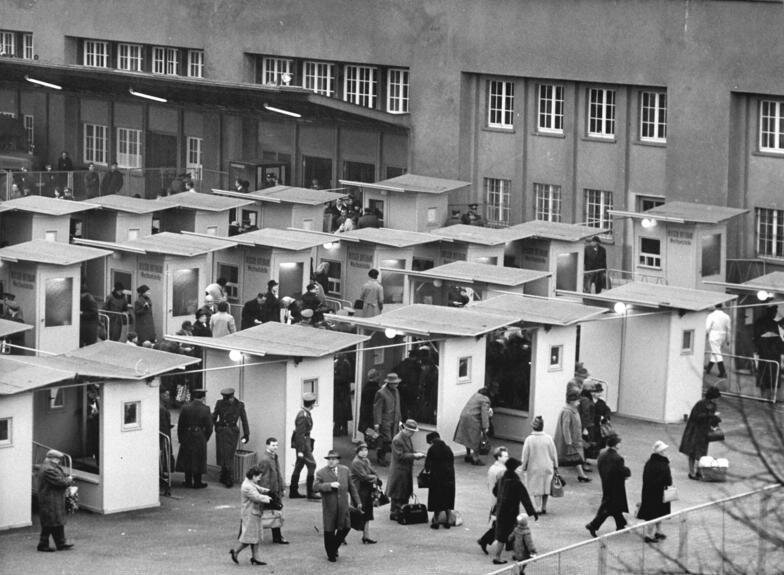
Passport control at Bahnhof Friedrichstraße 1964 (Photo: Bundesarchiv)
The border crossing on the ground floor was one of the most controlled in Berlin. Travellers passed through a labyrinth of narrow corridors, passport windows, and customs checks designed to intimidate and disorient. The attached departure hall, known as the Tränenpalast (Palace of Tears), was where East Germans said emotional farewells to Western visitors, never certain when – or whether – they would see each other again.
Friedrichstraße station was also a key node in the ghost station network: trains on the U6 and north-south S-Bahn lines passed through sealed stations in East Berlin without stopping, except here, where they paused only briefly for border formalities. Today the station is once again a normal transit hub, but the Tränenpalast next door houses a free permanent exhibition on daily life in divided Germany.
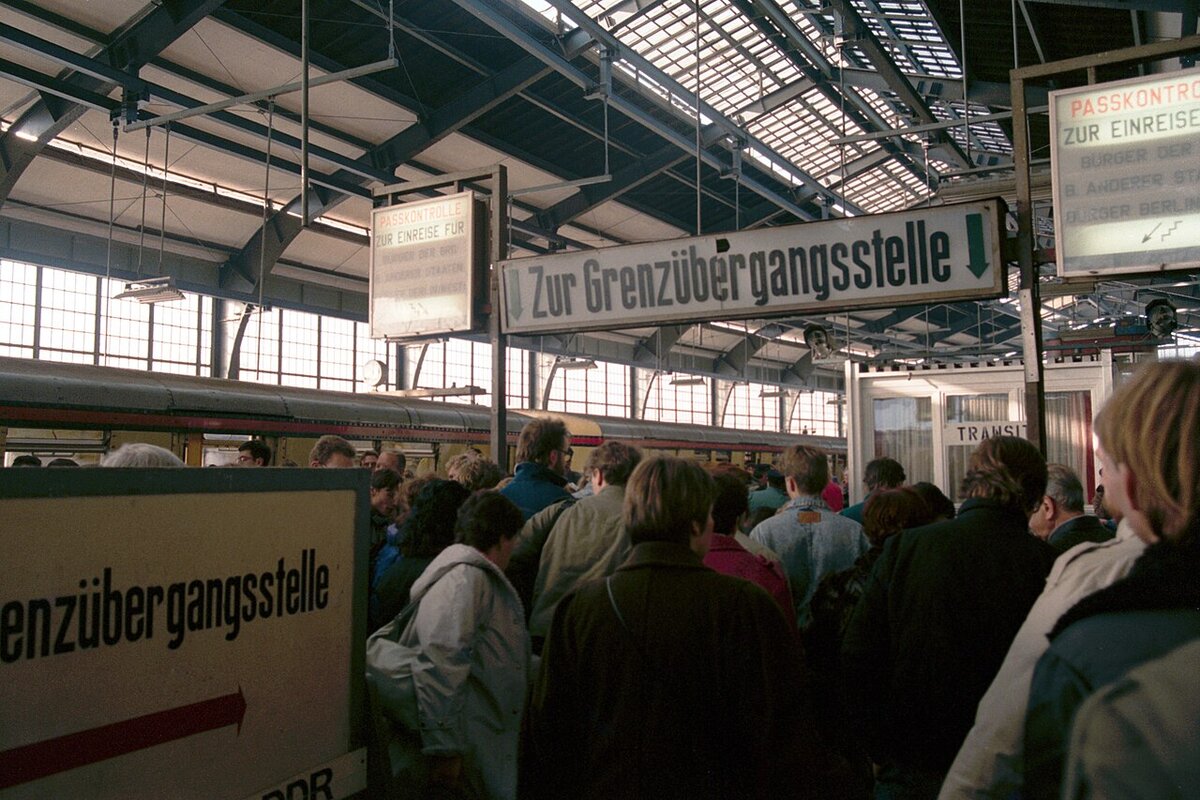
Platform B: S-Bahn to the West (Photo: Frits Wiarda)
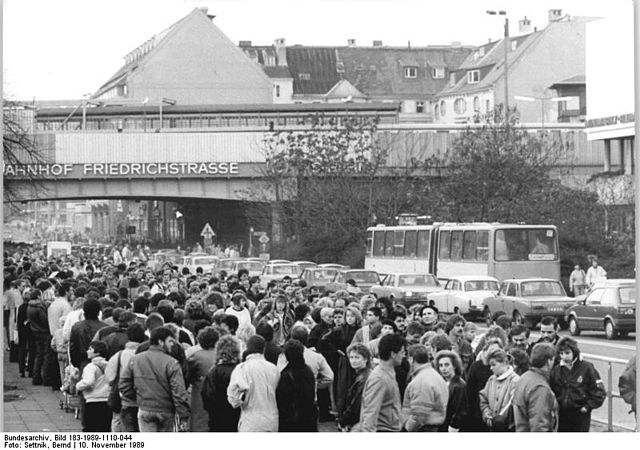
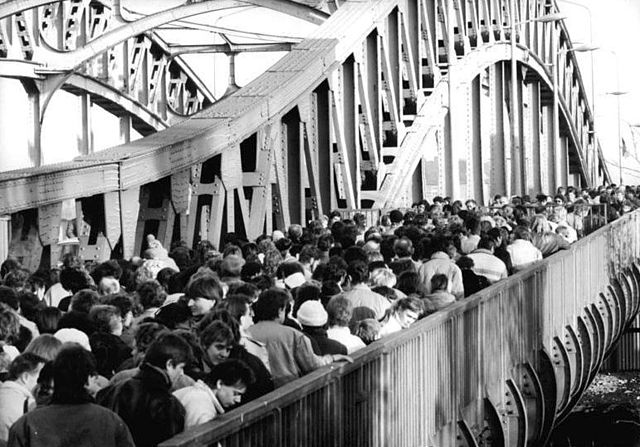
Crowds queue to cross to West Berlin a day after the fall of the Wall (Photo: Bundesarchiv)
Gallery


Nearby Berlin Wall Sites


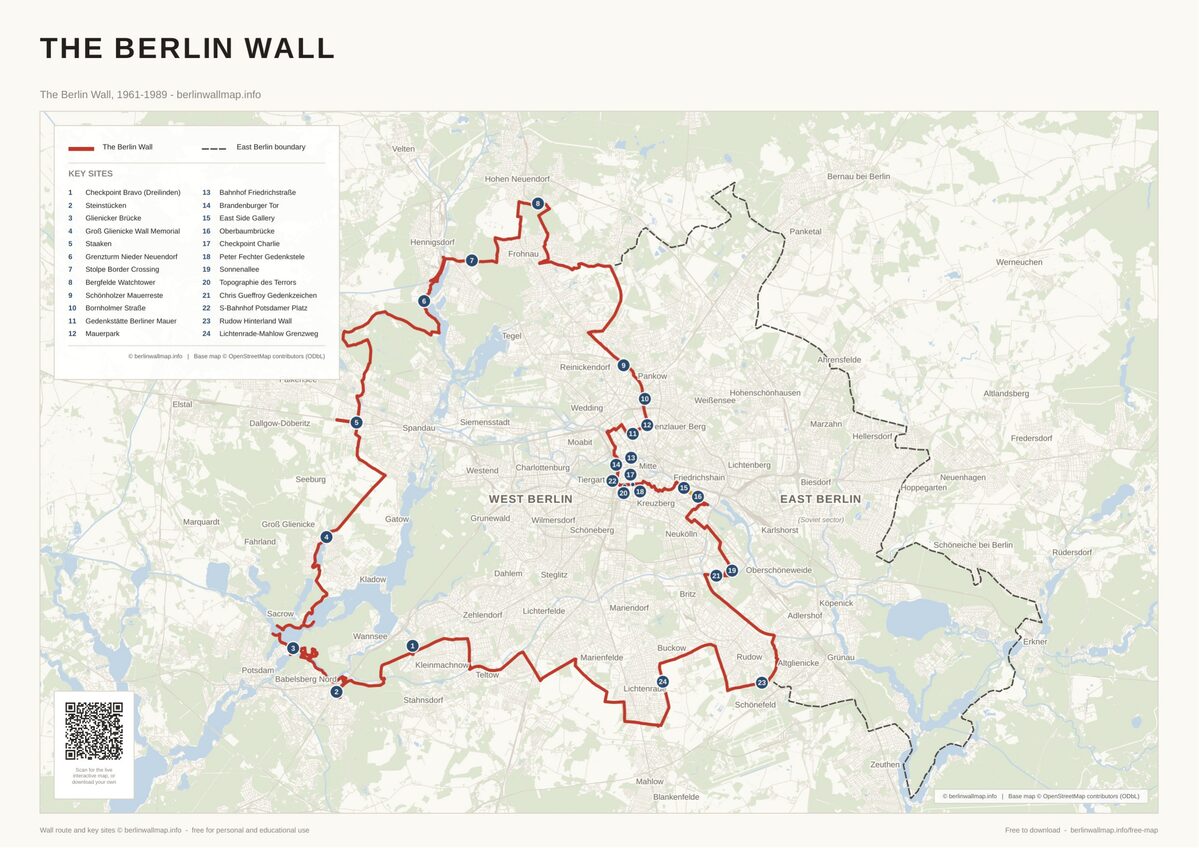
Free map downloads
Free printable PDF maps of the Berlin Wall.
Get the free maps →Explore the Timeline
Journey through Berlin Wall history from 1945 to 1990.
View Timeline →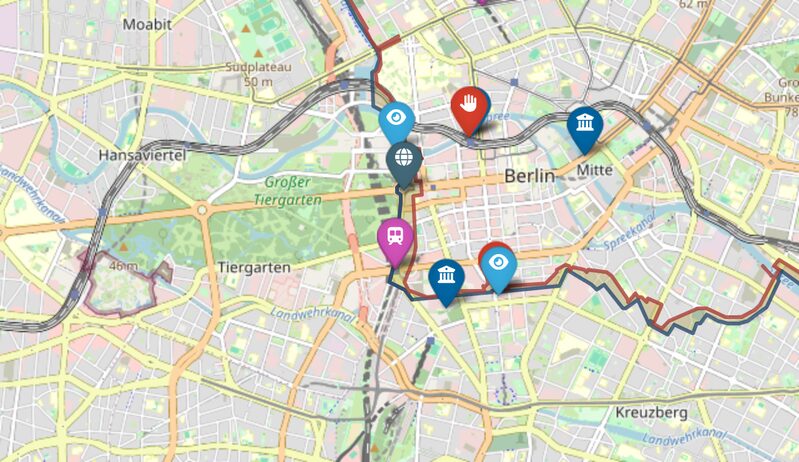
Embed Our Map
Add a free interactive Berlin Wall map to your website or blog.
Get embed code →