What were the ghost stations?
Ghost stations. Geisterbahnhöfe in German, were underground railway stations in East Berlin through which West Berlin trains passed without stopping.
When the Berlin Wall was built in 1961, it divided not just streets and neighbourhoods but also the city’s U-Bahn (underground) and S-Bahn (suburban railway) networks. Several lines that had been built to serve a unified Berlin now crossed between the two halves of the city.
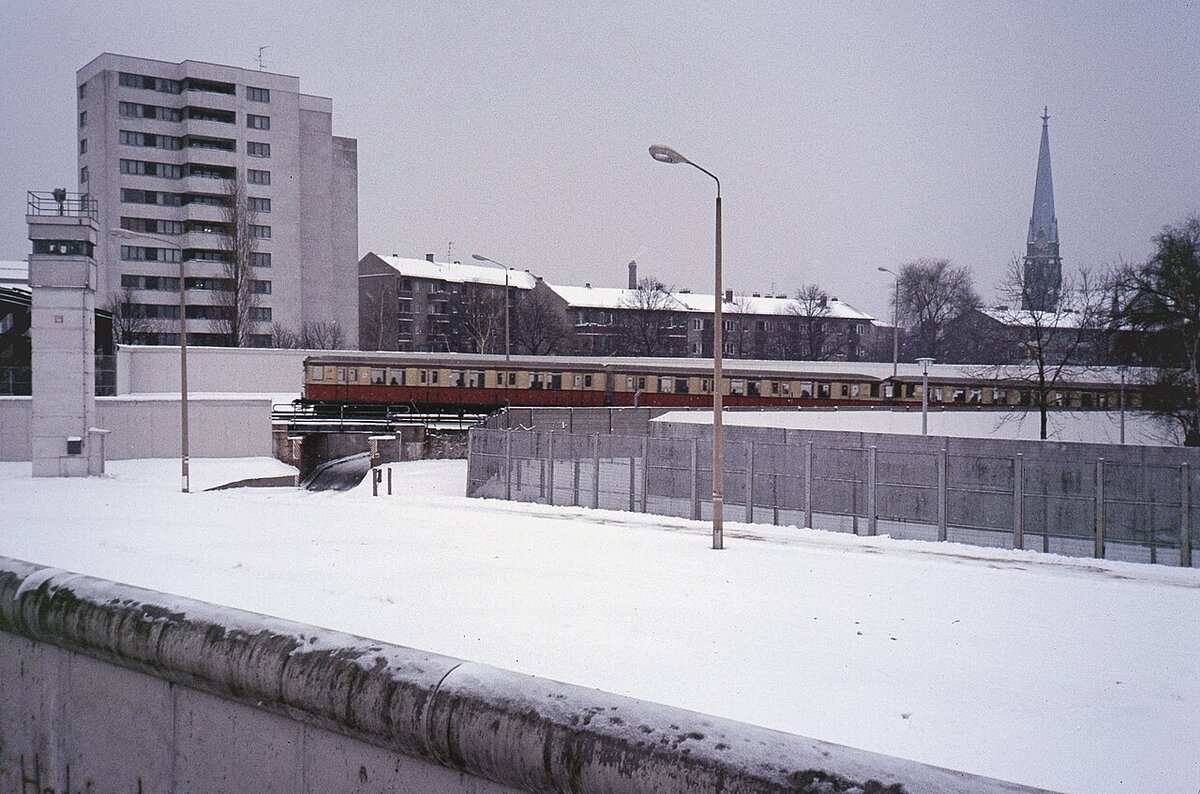
Rather than rerouting these lines, an enormously expensive undertaking, the East German authorities simply sealed the stations that lay in their territory. West Berlin trains continued to pass through, but at reduced speed, without stopping. Passengers peering out of the windows saw sealed platforms patrolled by armed border guards.
There were 16 ghost stations in total: 12 on the U-Bahn (lines U6 and U8) and 4 on the north-south S-Bahn tunnel. The only exception was Bahnhof Friedrichstraße, which remained open as a border crossing point, and earned the nickname Tränenpalast (“Palace of Tears”) because of the tearful goodbyes between East and West German families.
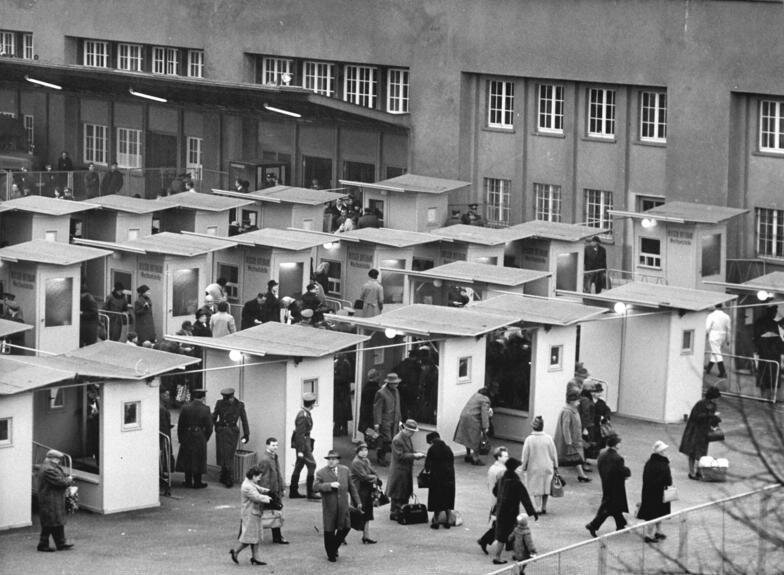
The ghost stations were eerie preserved interiors. When they were reopened after the Wall fell, workers found 1961-era advertisements still on the walls, vintage signage, and in some cases station names that had been changed decades earlier by the East German government, changes that only the guards and passing Western passengers ever saw.
Today, some stations preserve elements of their ghost-station past. Nordbahnhof has a permanent exhibition documenting the phenomenon, and several stations retain original Cold War-era features.
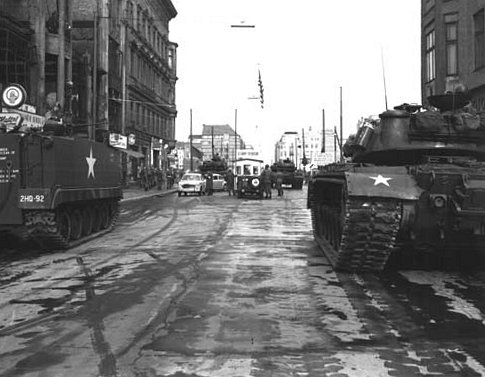
Checkpoint Charlie
East Side Gallery
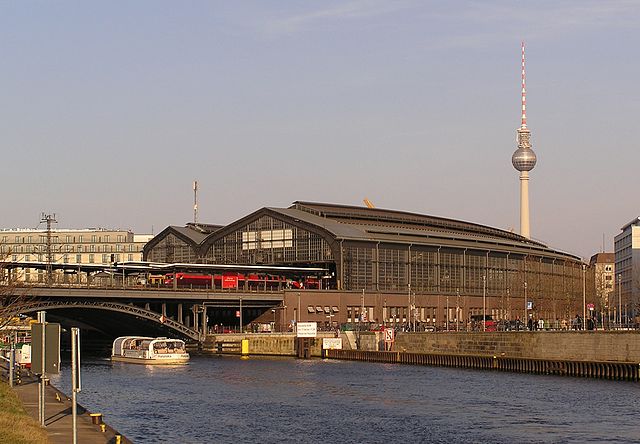
Bahnhof Friedrichstraße
History of the Berlin Wall: A Complete Guide (1961-1989)
65 Years Ago: US and Soviet Tanks Faced Off at Checkpoint Charlie
The Border Guards of the Berlin Wall: Conscripts, the Order to Shoot, and the Trials That Followed
9 November in Berlin: 37 Years Since the Wall Fell, and What’s On
Gethsemanekirche
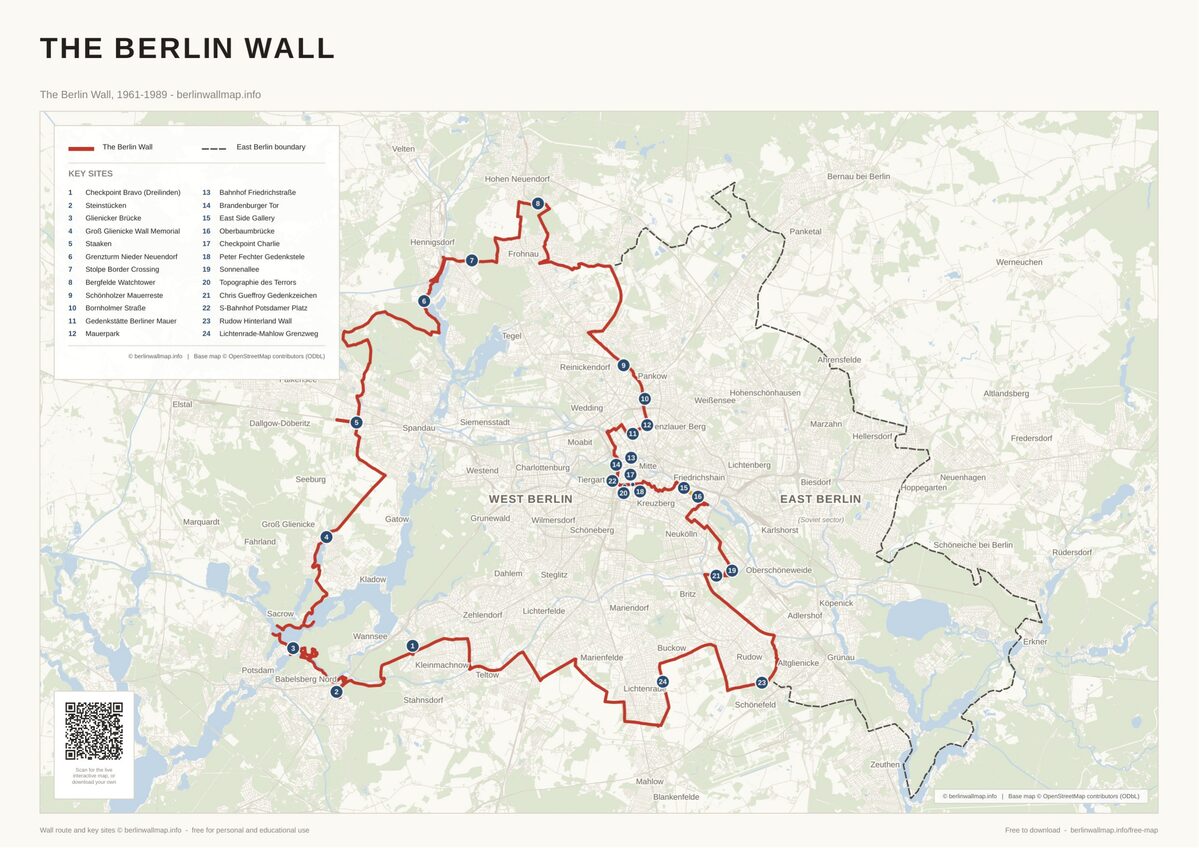
Free map downloads
Free printable PDF maps of the Berlin Wall.
Get the free maps →Explore the Timeline
Journey through Berlin Wall history from 1945 to 1990.
View Timeline →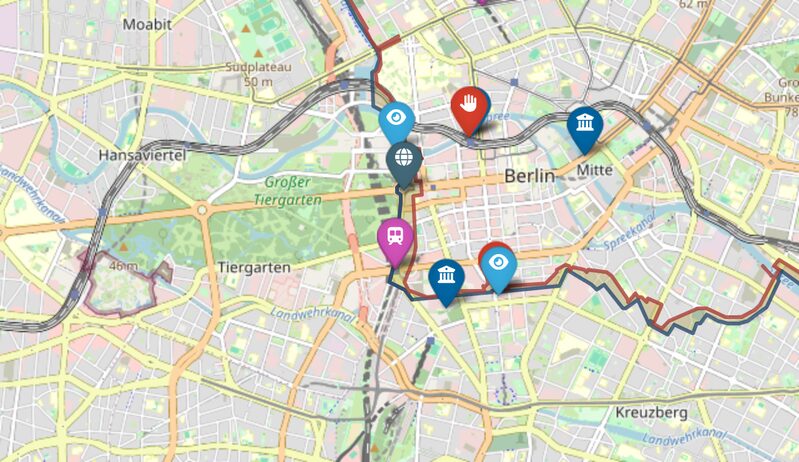
Embed Our Map
Add a free interactive Berlin Wall map to your website or blog.
Get embed code →