The Weissensee Saga
The Weissensee Saga (Weissensee, 2010-2018) is an acclaimed German television drama following two families in East Berlin, the regime-loyal Kupfers and the dissident Hausmanns, across the final decade of the GDR and the fall of the Wall.
| Year | 2010 |
|---|---|
| Director | Friedemann Fromm |
| Genre | TV Series |
| Language | German |
| IMDb | |
| Locations |
Gedenkstätte Berlin-Hohenschönhausen |
Plot
Set in the Weissensee district of East Berlin, the series opens in 1980 with the forbidden romance between Martin Kupfer, son of a high-ranking Stasi officer, and Julia Hausmann, daughter of a banned dissident singer. Their love sets in motion a saga of surveillance, betrayal, blackmail and divided loyalties that ensnares both families. Across four seasons the story moves from the entrenched dictatorship of the early 1980s through the growing unrest of the decade to the night the Wall falls and the uncertain, score-settling years of reunification that follow.
Berlin Wall Connection
Weissensee is a panoramic portrait of how the divided state shaped private life. The Stasi’s machinery of informers and intimidation, the privileges of the party elite, and the constant lure and danger of the West all drive the drama. The fall of the Wall is not an endpoint but a hinge, exposing old secrets and forcing every character to reckon with what they did under the regime.
Filming Locations
The series was shot in and around Berlin, recreating the apartments, ministries and streets of 1980s East Berlin, including the kind of Stasi institutions preserved today at the Gedenkstätte Berlin-Hohenschönhausen.
Cultural Impact
Frequently compared to the espionage series Deutschland 83 and praised as one of German television’s finest achievements, Weissensee won Grimme and Bambi awards and reached a wide international audience. Its multi-generational sweep made it a definitive small-screen treatment of life on the eastern side of the Wall.
Free map downloads
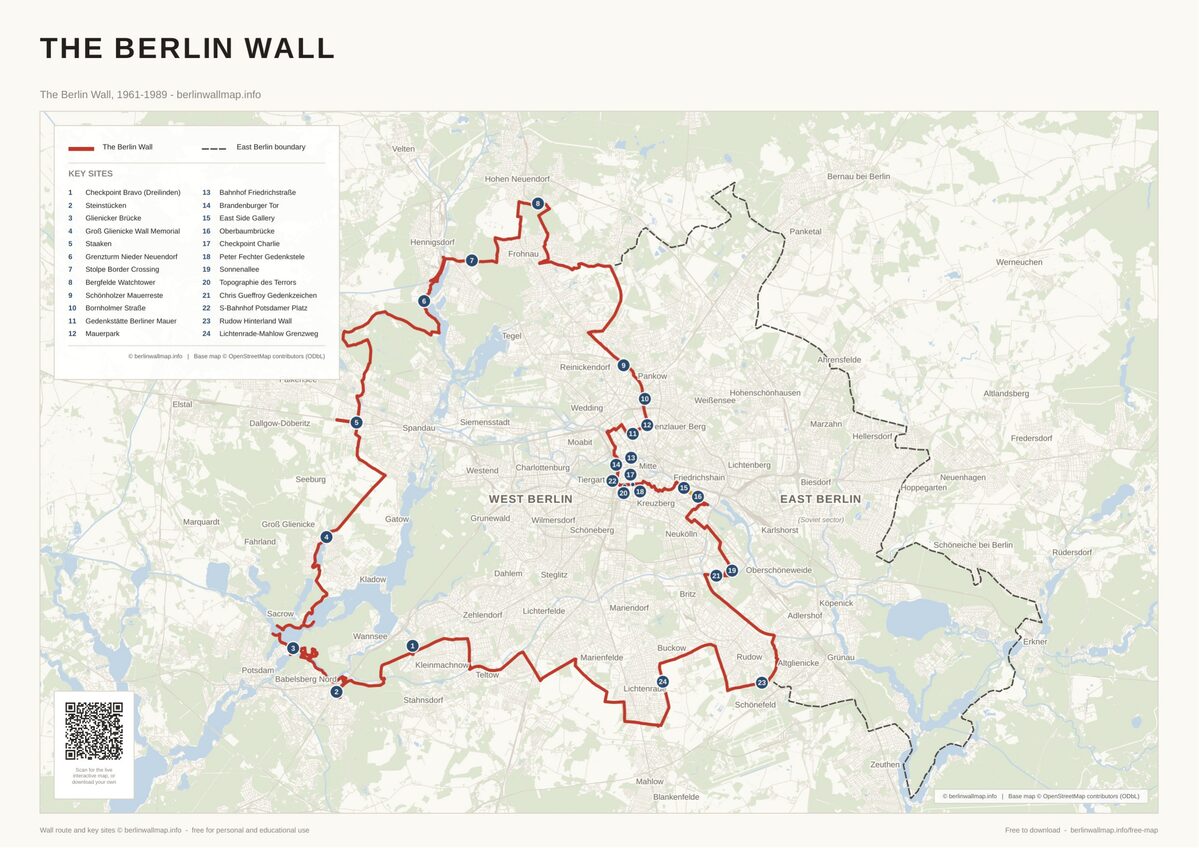
Free printable PDF maps of the Berlin Wall.
Get the free maps →Explore the Timeline
Journey through Berlin Wall history from 1945 to 1990.
View Timeline →
Embed Our Map
Add a free interactive Berlin Wall map to your website or blog.
Get embed code →