The Man on the Wall
| Year | 1982 |
|---|---|
| Director | Reinhard Hauff |
| Genre | Drama |
| Language | German |
| IMDb | |
| Locations |
Checkpoint Charlie |
The Man on the Wall (Der Mann auf der Mauer, 1982) is Reinhard Hauff’s tragicomedy about an East German defector who keeps crossing back and forth over the Berlin Wall, unable to feel at home in either Germany.
Plot
Kabe is a man obsessed with the border. Having fled to the West, he finds the promised freedom hollow and repeatedly climbs back over the Wall into the East, only to be sent West again, becoming a bewildering case for the authorities on both sides. When he manages to bring his wife across as well, life in the West proves just as disappointing as he feared. Through Kabe’s compulsive crossings, the film paints an absurdist portrait of a divided city where the barrier has lodged itself inside people’s minds as firmly as it cuts through their streets.
Berlin Wall Connection
Few films are so literally about the Wall as a physical and psychological object. Based on Peter Schneider’s celebrated novella The Wall Jumper, the story treats the border not only as a deadly obstacle but as an idea that shapes identity, belonging and discontent on both sides. It captures the strange truth that the Wall divided minds as much as territory.
Filming Locations
Shot in West Berlin in the early 1980s, the film uses the real divided cityscape, with the Wall, its crossings and the watched no-man’s-land running through the heart of Berlin.
Cultural Impact
Featuring rock musician Marius Müller-Westernhagen in the lead, The Man on the Wall is one of the most pointed West German screen treatments of the division from the years before the Wall fell, and a key adaptation of Schneider’s influential book about the inner border between East and West.





Free map downloads
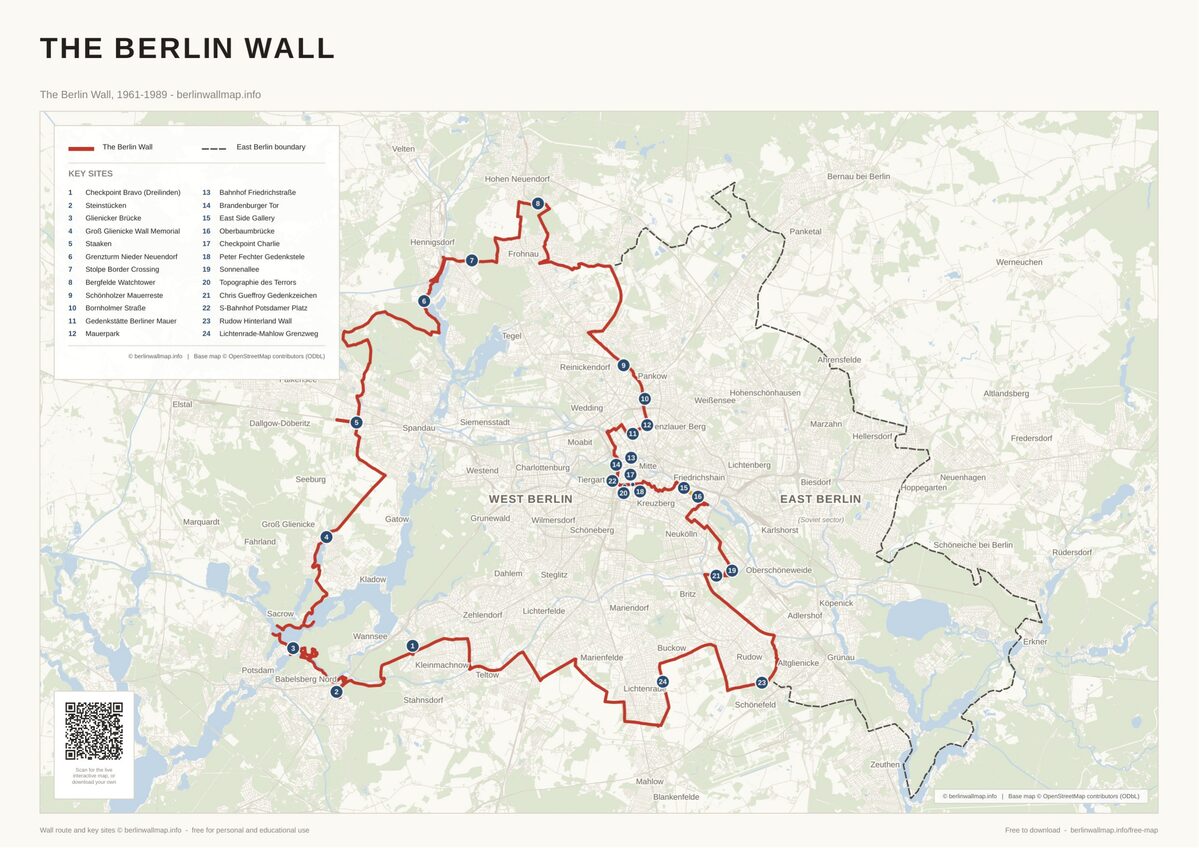
Free printable PDF maps of the Berlin Wall.
Get the free maps →Explore the Timeline
Journey through Berlin Wall history from 1945 to 1990.
View Timeline →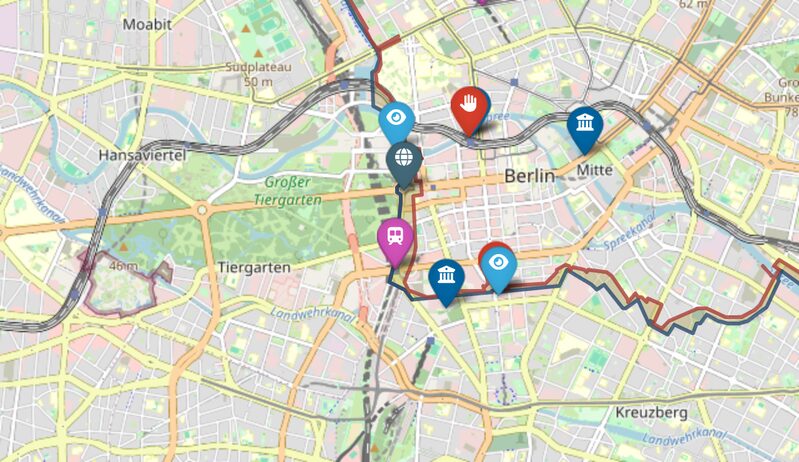
Embed Our Map
Add a free interactive Berlin Wall map to your website or blog.
Get embed code →