One, Two, Three
One, Two, Three (1961) is Billy Wilder’s frenetic Cold War comedy starring James Cagney as C.R. MacNamara, a Coca-Cola executive stationed in West Berlin who schemes to climb the corporate ladder while managing a secret crisis involving his boss’s daughter and an East German communist.
| Year | 1961 |
|---|---|
| Director | Billy Wilder |
| Genre | Comedy |
| Language | English |
| IMDb |
Plot
MacNamara’s ambitions to run Coca-Cola’s London operations are derailed when his boss’s teenage daughter, visiting from Atlanta, secretly marries Otto Piffl, a young East German communist. With his boss about to arrive in Berlin, MacNamara must transform Otto from a radical agitator into a presentable capitalist son-in-law — all within 24 hours. The result is a breathless comedy of deception, bribery, and Cold War absurdity delivered at machine-gun pace.
Berlin Wall Connection
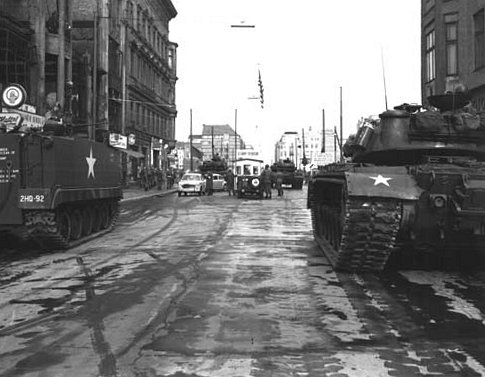
The film holds unique historical significance: principal photography at the Brandenburg Gate took place in the summer of 1961, just weeks before the Wall was erected on August 13. When the Wall went up during production, the crew could no longer film at the actual Gate. Wilder had to reconstruct it on a Munich soundstage for remaining scenes. The film captures the last moments of relatively free movement between East and West Berlin, making it an unintentional time capsule of the divided city’s final pre-Wall days.
Filming Locations
Location shooting took place at the Brandenburg Gate, Tempelhof Airport, and various West Berlin streets. After August 13, the production relocated to Bavaria Film Studios in Munich, where sets replicated the Gate and East Berlin streets. The Coca-Cola bottling plant scenes were filmed at a real facility in West Berlin.
Cultural Impact
Initially a box-office disappointment — audiences found Cold War comedy uncomfortable with the Wall freshly built — the film was later re-evaluated as one of Wilder’s most virtuosic comedies. It was James Cagney’s final theatrical film before his retirement. The dialogue averages more jokes per minute than almost any other Hollywood comedy of its era, and the film’s satirical jabs at both capitalism and communism remain sharp decades later.
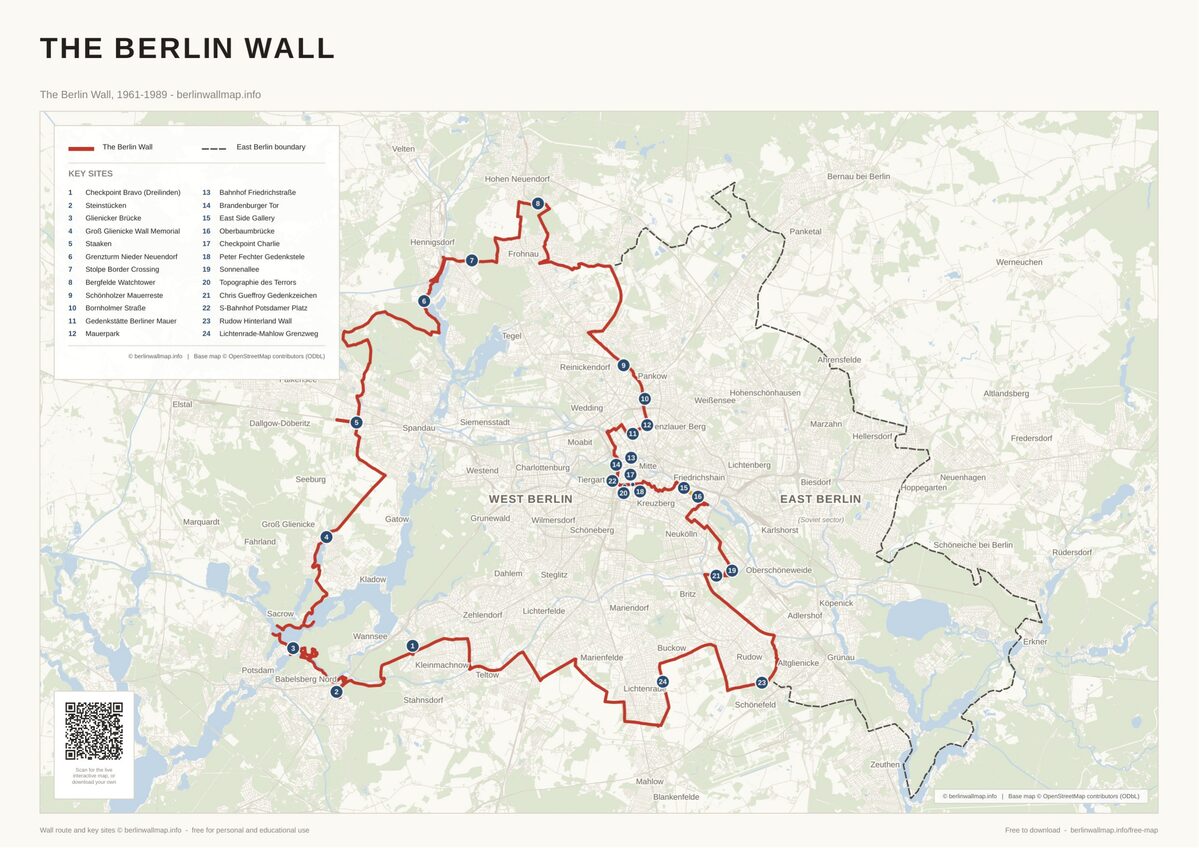
Free map downloads
Free printable PDF maps of the Berlin Wall.
Get the free maps →Explore the Timeline
Journey through Berlin Wall history from 1945 to 1990.
View Timeline →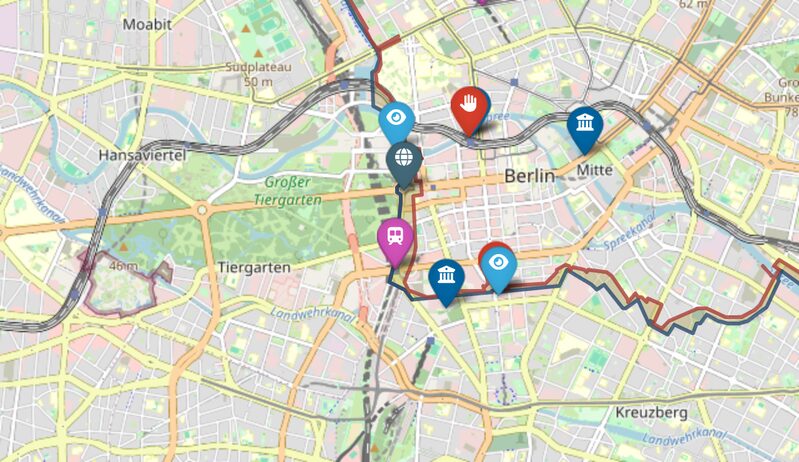
Embed Our Map
Add a free interactive Berlin Wall map to your website or blog.
Get embed code →