Oberbaumbrücke
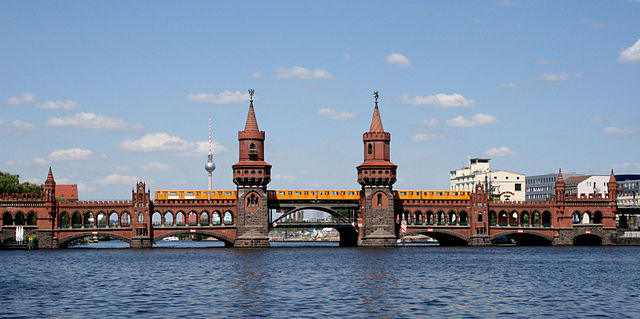
Crossing the River Spree, this beautiful double-decker bridge is well-known Berlin landmark. It became a pedestrian border-crossing for West Berliners. The entire width of the river here was in East Berlin, which meant that West Berliners could not intervene to save the life of a 5 boy who fell into the water and drowned.
Nearby: “Stein-Papier-Schere”, Berlin Wall History Mile
The bridge as it stands today was built in 1895, and links two of Berlin’s Kiez (neighbourhoods), Friedrichshain and Kreuzberg. It was built on the site of a wooden drawbridge that dates back to 1724, which served as a gate to the city. The bridge has seven arches and medieval-style turrets, and is built of concrete and brick. It was designed to accommodate the ever-increasing traffic that crossed the original bridge, and became a combined crossing for road, pedestrian, and U-Bahn (subway rail) travellers.
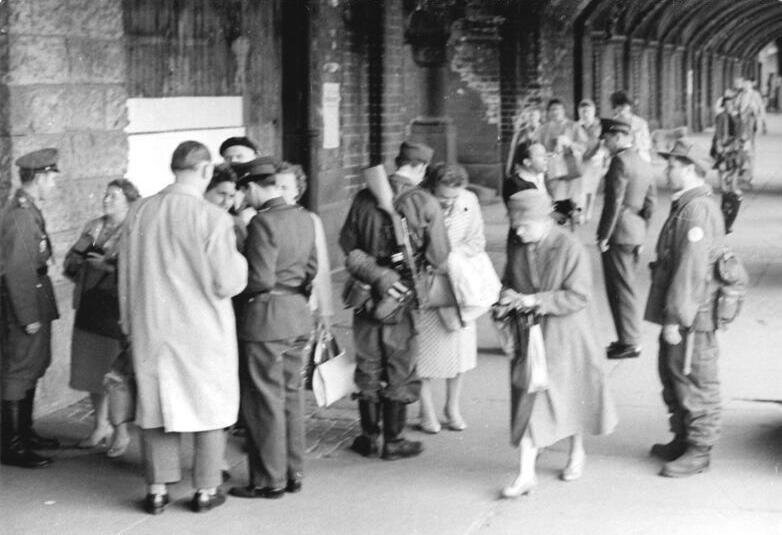
East German checkpoint at Oberbaumbrucke, 1961 (Photo: Bundesarchiv)

When the Berlin Wall went up in 1961, Oberbaumbrücke crossed the border from West to East Berlin. It became a pedestrian border crossing for West Berliners, who had to pass through East German checkpoint controls on the bridge. The entire width of the River Spree here was considered to be in East Berlin. This had fatal consequences for five-year-old Cengaver Katrancı in 1972 and Çetin Mert in 1975 – children who fell into the river on the western bank. West Berliners could not enter the water to save them without crossing into East Berlin, and the children drowned.
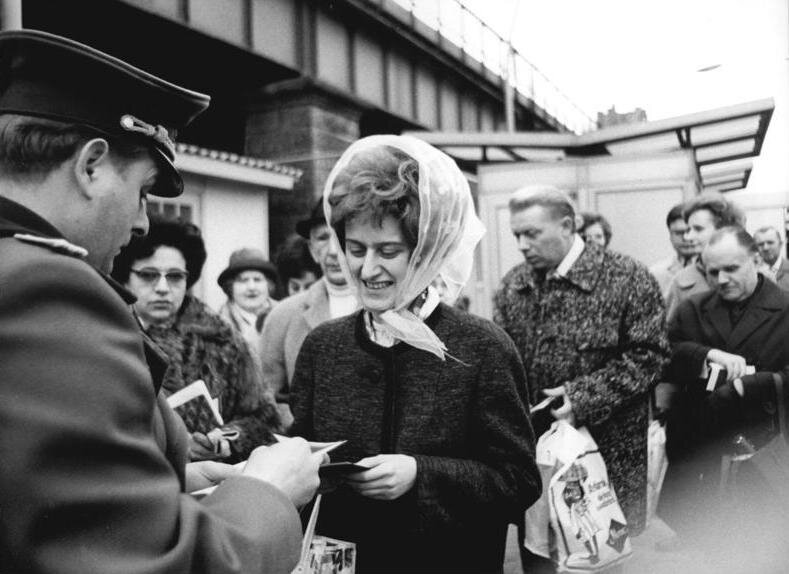
Passport control at Oberbaumbrucke, 1972 (Photo: Bundesarchiv)

In 1945, the middle section of the bridge was destroyed by the Wehrmacht, the armed forces of Nazi Germany, to prevent the Soviet Red Army from using it. The bridge was only partially repaired during the decades of division. When the Berlin Wall came down in 1989, the bridge was fully restored and received a new steel middle section designed by Spanish architect Santiago Calatrava, completed in 1995. Today it is one of Berlin’s most recognisable landmarks and a popular spot for photographs.
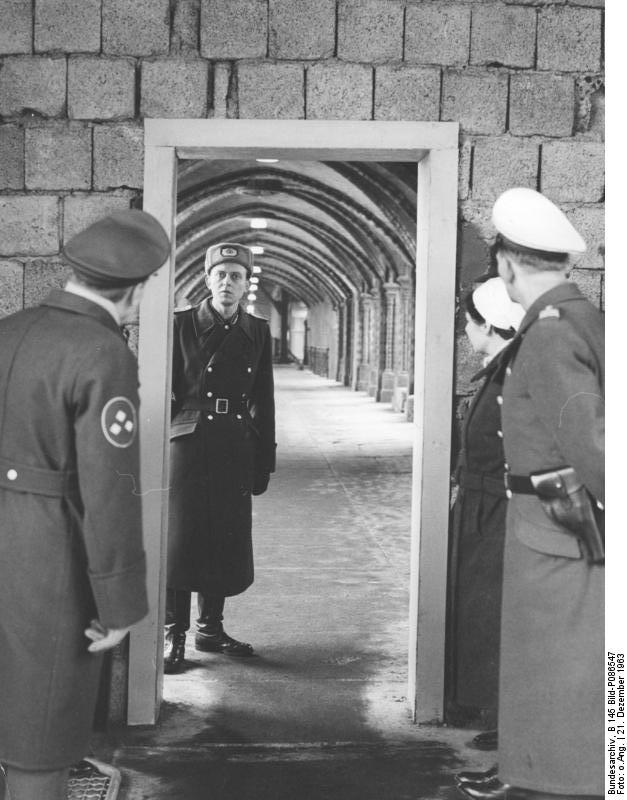
Pedestrian border crossing. Western police meet Eastern border guard 1963 (Photo: Bundesarchiv)

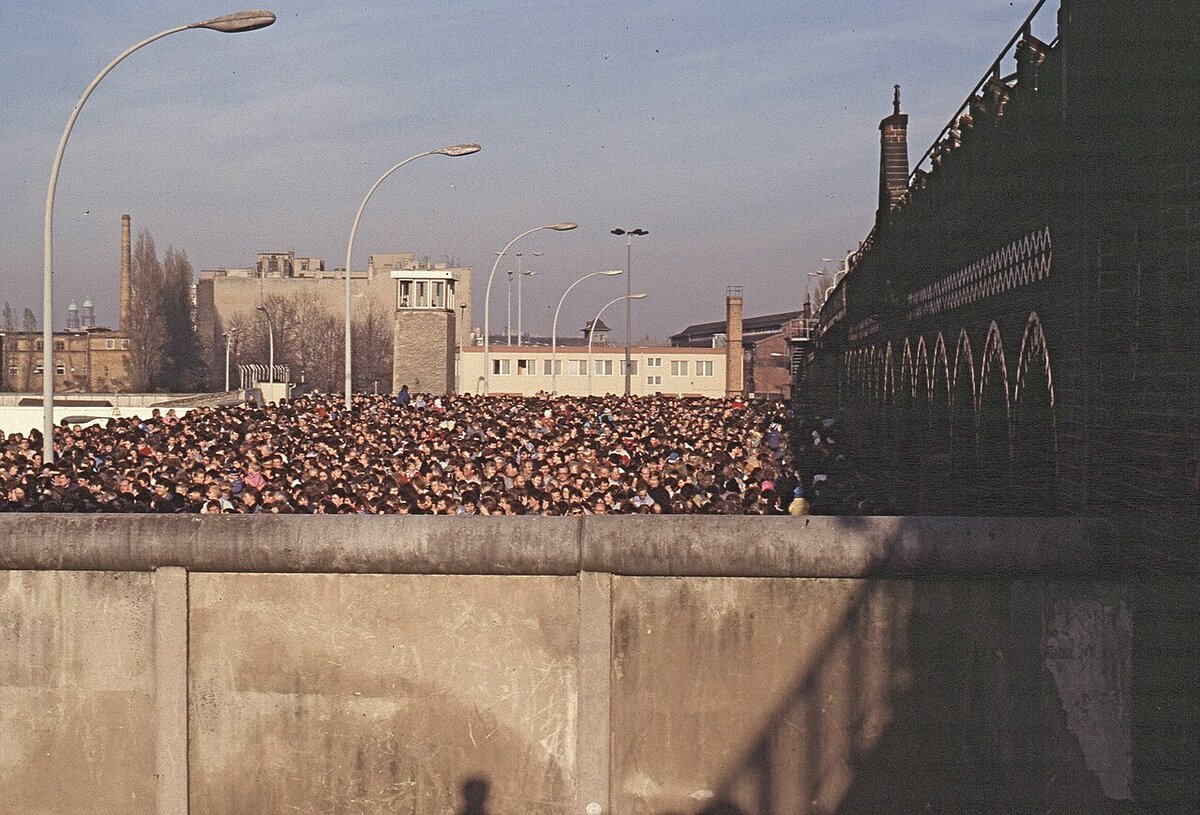
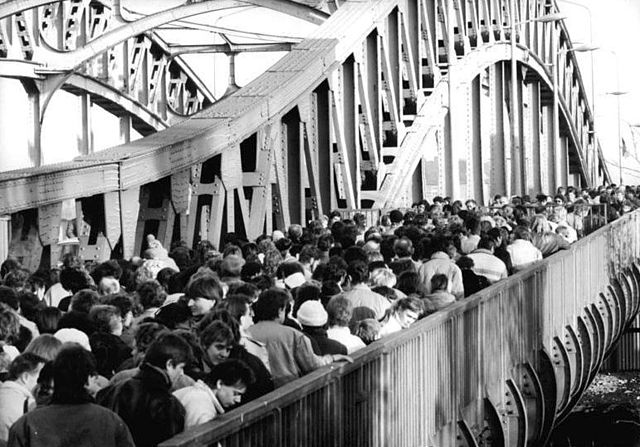
Crowds amass at Oberbaumbrucke after the fall of the Berlin Wall in 1989 (Photo: Roehrensee)

Gallery


Nearby Berlin Wall Sites
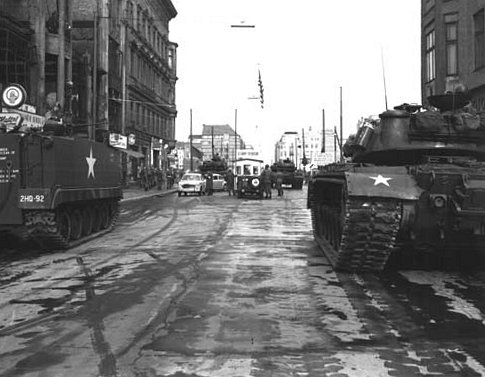
Checkpoint Charlie
East Side Gallery
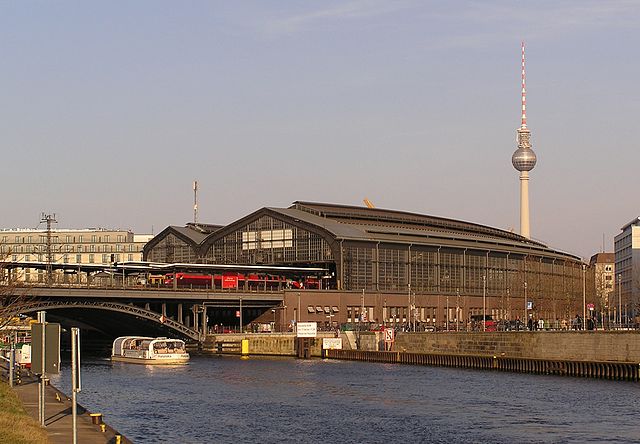
Bahnhof Friedrichstraße
Bornholmer Straße
Music Behind the Wall: Rock, Punk and Wolf Biermann in East Germany
Berlin Wall at 65: Commemorations and What’s On, 13-16 August 2026
Khrushchev’s Berlin Ultimatum: The Crisis That Built the Wall
The Berlin Wall in Music: Songs, Concerts and the Sound of a Divided City
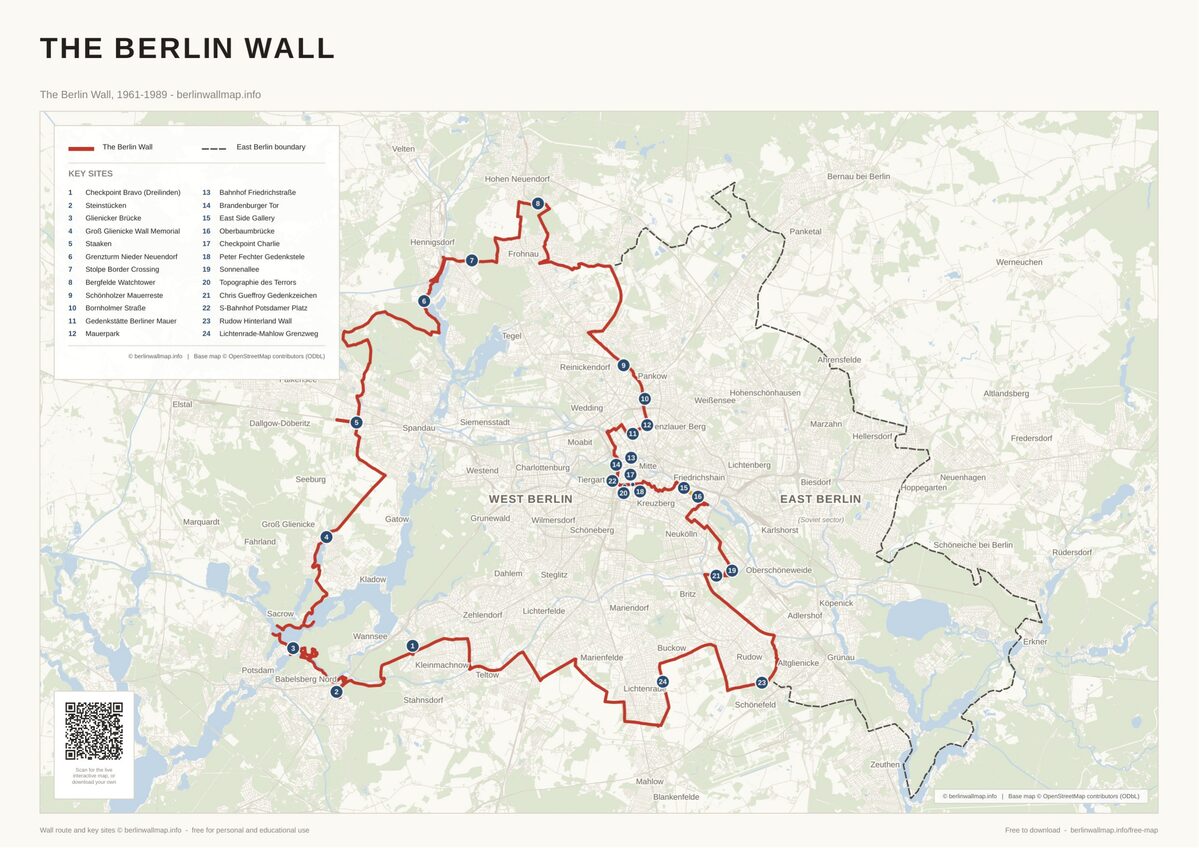
Free map downloads
Free printable PDF maps of the Berlin Wall.
Get the free maps →Explore the Timeline
Journey through Berlin Wall history from 1945 to 1990.
View Timeline →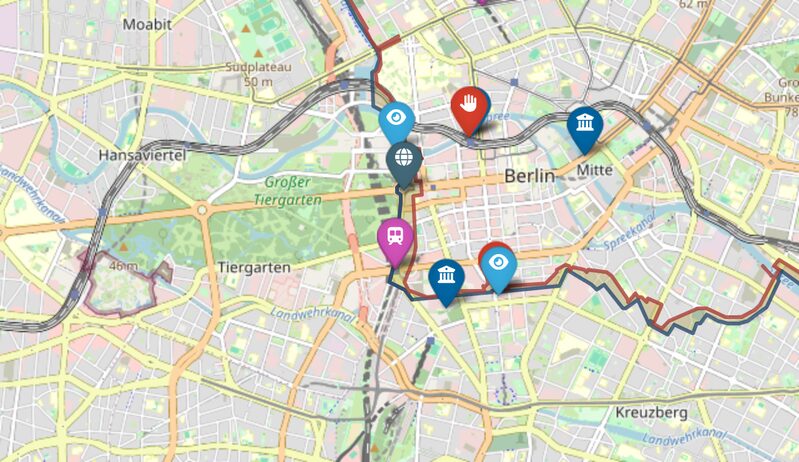
Embed Our Map
Add a free interactive Berlin Wall map to your website or blog.
Get embed code →