Sprechende Bilder: Wall Photographs Described for Blind Visitors
Fourteen photographs of Bernauer Straße hang at eye level, and beside each one sits a code you can find with your fingers. Scan it with a phone and a voice describes the picture: what fills the frame, where the Wall runs through it, what the people in it are doing. The exhibition is called “Sprechende Bilder”, speaking pictures, and it exists so that people who cannot see these photographs can still read them.
It is a touring exhibition from the Berlin Wall Foundation, and its full title names the street it is about: “Sprechende Bilder. Die Bernauer Straße 1961 bis 1989”. The fourteen images are little known, and they are grouped into four themes: everyday life at the Wall, the build-up of the border installations, the border guards, and Wall tourism. A single photograph of the Wall coming down closes the sequence.
How it works
Each station is a white wooden module 1.80 metres tall and 60 centimetres wide, with the photograph printed matt at 40 by 60 centimetres and hung centrally at 1.50 metres. The console below it carries three things, arranged left to right: a QR code raised on a small plinth so it can be located by touch, information sheets in Braille and large print, and a notch at the right-hand edge where a white cane can be rested. Visitors use their own smartphone for the audio, and the Foundation suggests bringing headphones. Finding the code is the part the furniture has to solve, because the scan itself is guided by sound: a phone announces a code once the camera picks it up, and scanner apps made for blind users play a tone that steers the lens onto it.
The exhibition was developed together with blind and partially sighted people rather than simply for them, and it is curated by Katrin Passens and Manfred Wichmann. The Foundation makes one point that is easy to overlook: the audio descriptions are not only for visitors who cannot see. For sighted visitors they open a different route into images whose motifs have become familiar, because a spoken description insists on what is actually in the frame rather than what you remember being there.
Where you can see it
Not in Berlin, at the moment. The exhibition is at the regional office of the Blinden- und Sehbehindertenverein Westfalen in Dortmund, Märkische Straße 61-63, until 13 September 2026, open Monday to Thursday from 9:00 to 16:00.
It travelled widely before that, including a showing at the Berlin Wall Memorial itself, as well as TU Dresden, the Andreasstraße memorial in Erfurt, the Hohenschönhausen memorial and the University of Cologne. An expanded edition shown at Hohenschönhausen added two photographs on the Stasi remand prison and ran under a wider title, “Fotografien zur Teilung Berlins und politischen Haft in der DDR”. Nothing has been announced about a return to Berlin.
The version anyone can open
There is also a free online edition at sprechende-bilder.stiftung-berliner-mauer.de. It carries the same photographs and audio descriptions, a text version of the panels for screen readers, and the exhibition’s title set in Braille at the head of the page. It is in German only.
If you want to stand where the photographs were taken, the street is the memorial. The preserved section of the border strip on Bernauer Straße is the one place where the full depth of the border installations is still legible on the ground.
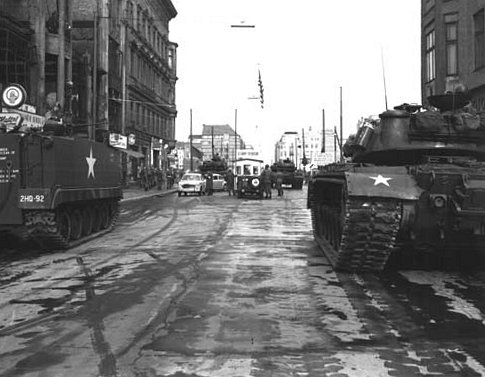
Checkpoint Charlie
East Side Gallery
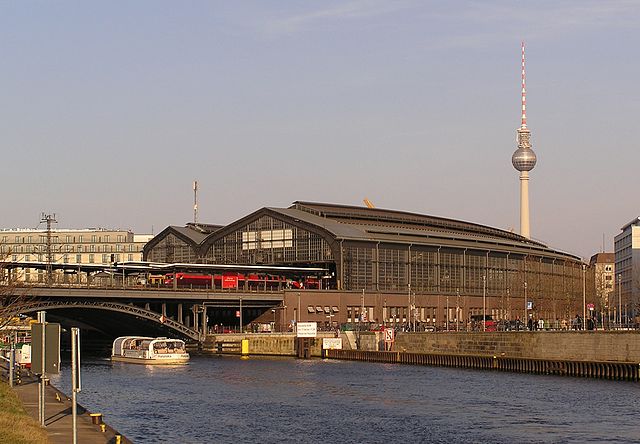
Bahnhof Friedrichstraße
Bornholmer Straße
65 Years Ago: US and Soviet Tanks Faced Off at Checkpoint Charlie
The Border Guards of the Berlin Wall: Conscripts, the Order to Shoot, and the Trials That Followed
9 November in Berlin: 37 Years Since the Wall Fell, and What’s On
Gethsemanekirche
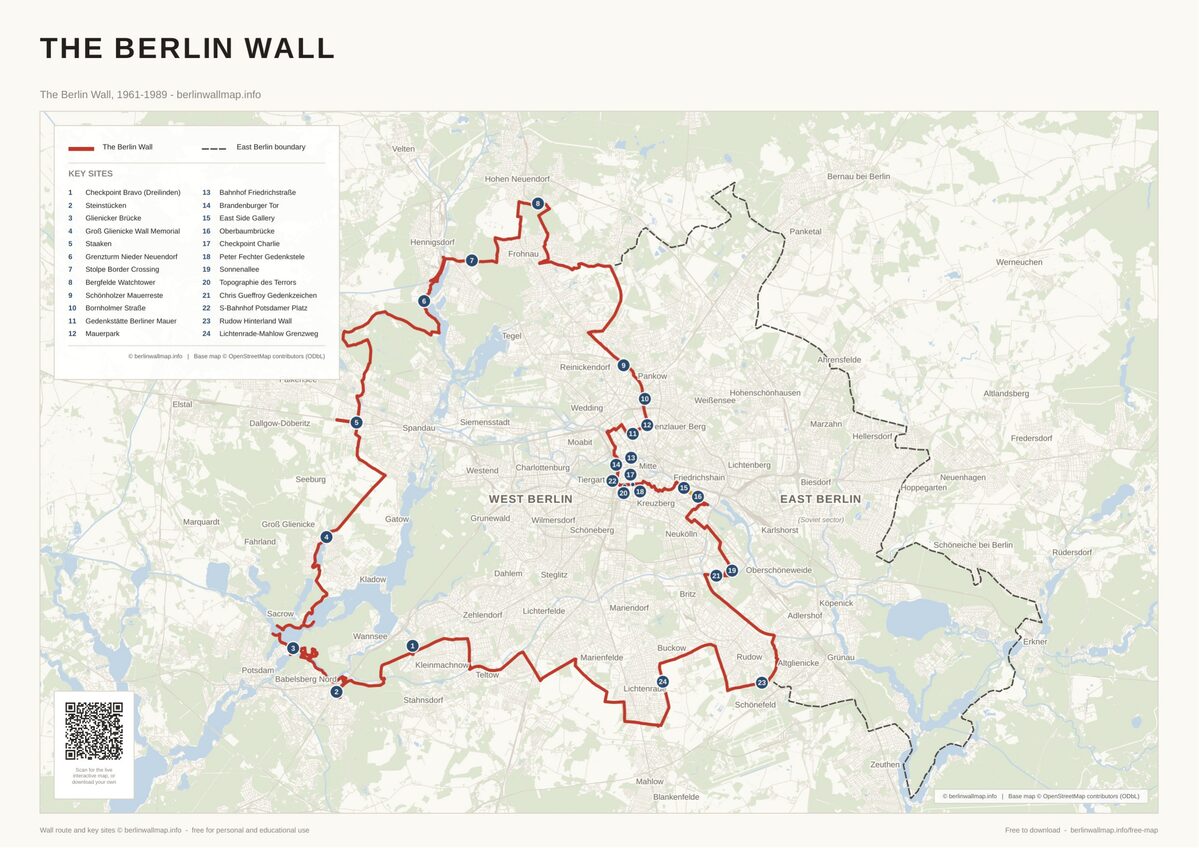
Free map downloads
Free printable PDF maps of the Berlin Wall.
Get the free maps →Explore the Timeline
Journey through Berlin Wall history from 1945 to 1990.
View Timeline →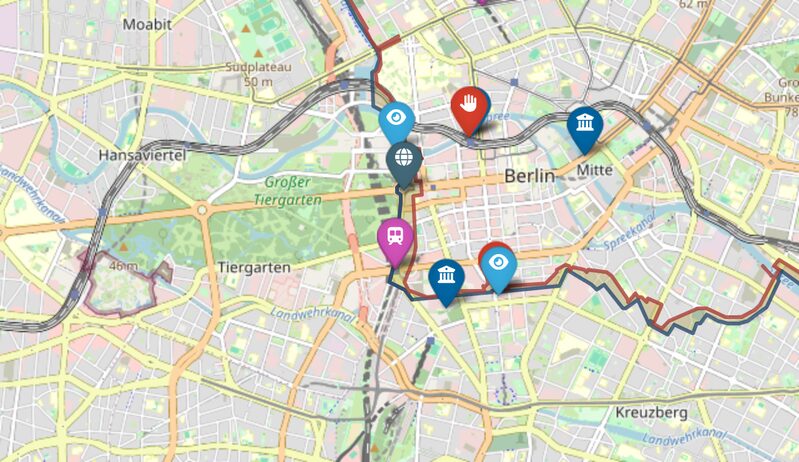
Embed Our Map
Add a free interactive Berlin Wall map to your website or blog.
Get embed code →