The Berlin Wall in Music: Songs, Concerts and the Sound of a Divided City
The Berlin Wall was concrete, barbed wire and floodlights, but it was also one of the most sung-about structures of the twentieth century. For nearly thirty years it stood at the dead centre of the Cold War, and the soundtrack of that stand-off was written on both sides of it. In the West, rock stars recorded love songs in its shadow and hurled concerts at it; in the East, the state licensed its own rock bands and jailed the musicians who went too far. And when the Wall finally fell, it was music – a cellist at the concrete, a conductor changing a single word of Beethoven – that gave the moment its voice. This is the story of the Berlin Wall in music, from Bowie to Beethoven’s Ninth: the songs it inspired, the concerts it provoked, and the two very different musical worlds it kept apart.
“Heroes”: A Kiss in the Shadow of the Wall
The most famous song ever written about the Wall was made a few metres from it. In 1977 David Bowie was living in West Berlin and recording at Hansa Studios, whose control-room window looked straight out over the death strip, the watchtowers and the border guards. Out of that room came “Heroes”, built around the image of two lovers who “stand, by the Wall” and “kiss, as though nothing could fall”. For years Bowie said the couple were strangers he had watched embracing beneath a guard tower; his producer Tony Visconti later admitted that the lovers were himself and the backing singer Antonia Maaß.
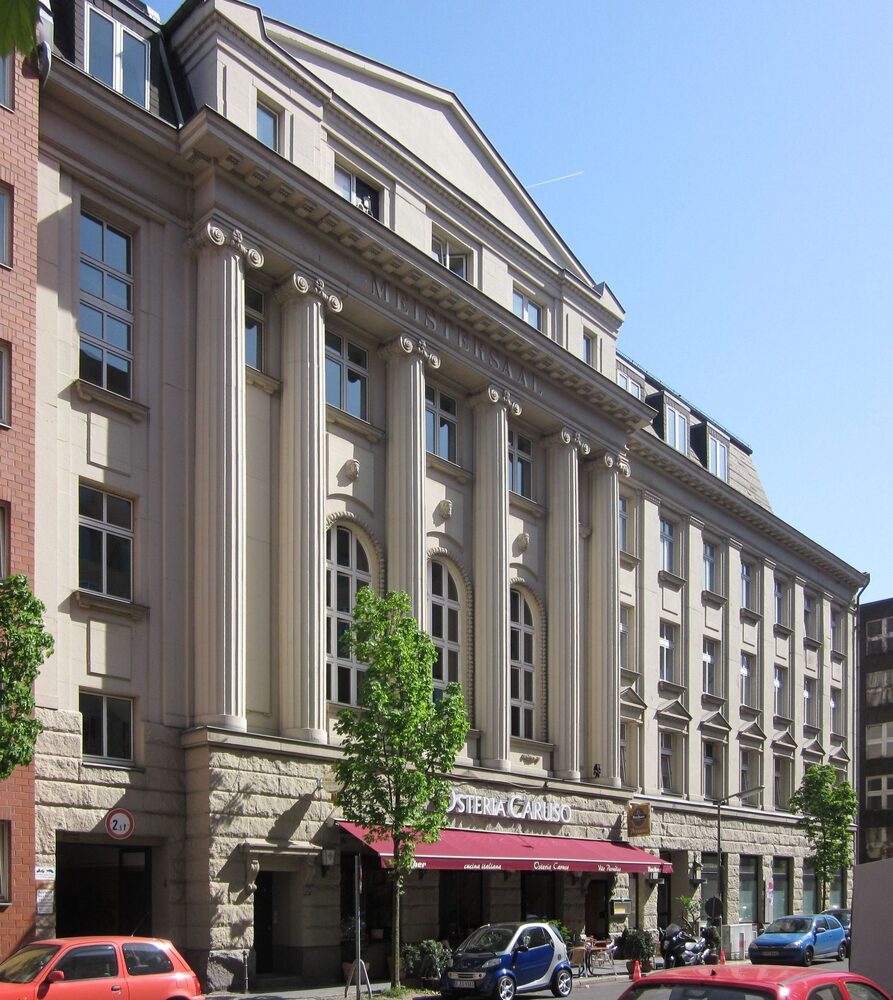
The song has since become the Wall’s unofficial anthem. When Bowie died in 2016 the German Foreign Office thanked him publicly for “helping to bring down the Wall”, and “Heroes” is now played whenever the city wants to speak about itself. The studio still stands by the old line of the border – you can find Hansa Studios on our map – and we tell the full story in our guide to Bowie and Iggy Pop in West Berlin.
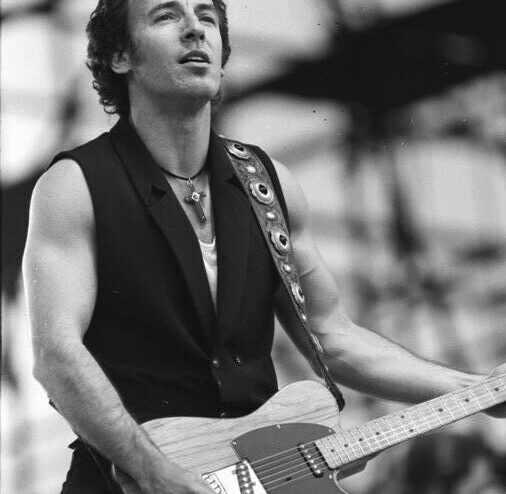
Bowie was not there alone. In the same studio, in the same year, he produced Iggy Pop’s Lust for Life, and its hypnotic single “The Passenger” turned the divided city into a view from a train. Iggy wrote it riding Berlin’s S-Bahn around the walled half-city at night, watching a place cut in two slide past the window – the Wall observed rather than named, the world seen from inside the cage.
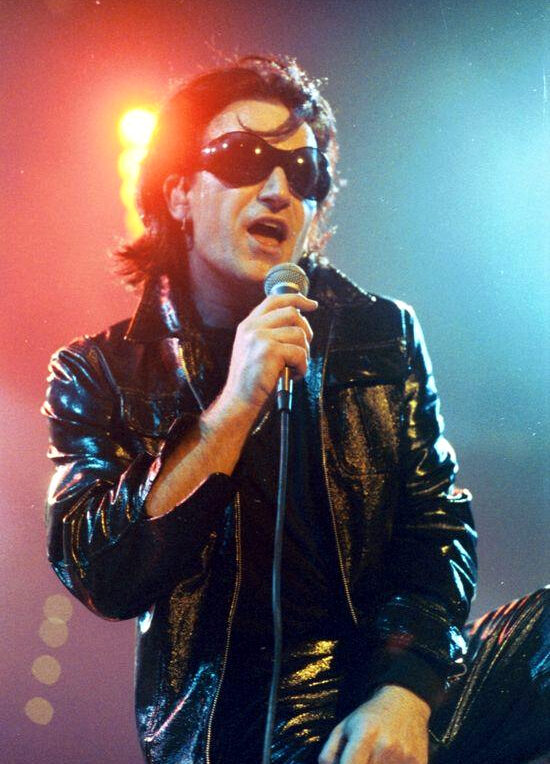
Hansa kept its place in the story. In October 1990, on what was said to be the last flight into East Berlin before reunification, U2 arrived at the same studio to record what became Achtung Baby. The sessions nearly tore the band apart in the grey, uneasy winter of a just-reunited city, until they stumbled into writing “One”; the album’s opening track, “Zoo Station”, takes its name from the West Berlin railway station at the Zoologischer Garten, run through the years of division by the East German railway. A decade and a half after Bowie stood at that window, the same rooms were still turning the divided city into music. Here it is only the opening note in a much larger chorus.
Cold War Pop: Songs About a Divided City
If “Heroes” was the Wall as tragedy, the divided city also produced one of the era’s most unlikely global hits. In 1983 the West Berlin band Nena released “99 Luftballons”, a bright, breathless new-wave song with a dark heart: ninety-nine toy balloons drift across a border, are mistaken for enemy aircraft, and trigger a ninety-nine-year apocalyptic war. The band’s guitarist Carlo Karges had the idea at a Rolling Stones concert in West Berlin in 1982, watching a cloud of released balloons float up over the crowd and away toward the East – and wondering what the nervous men on the other side would make of them.
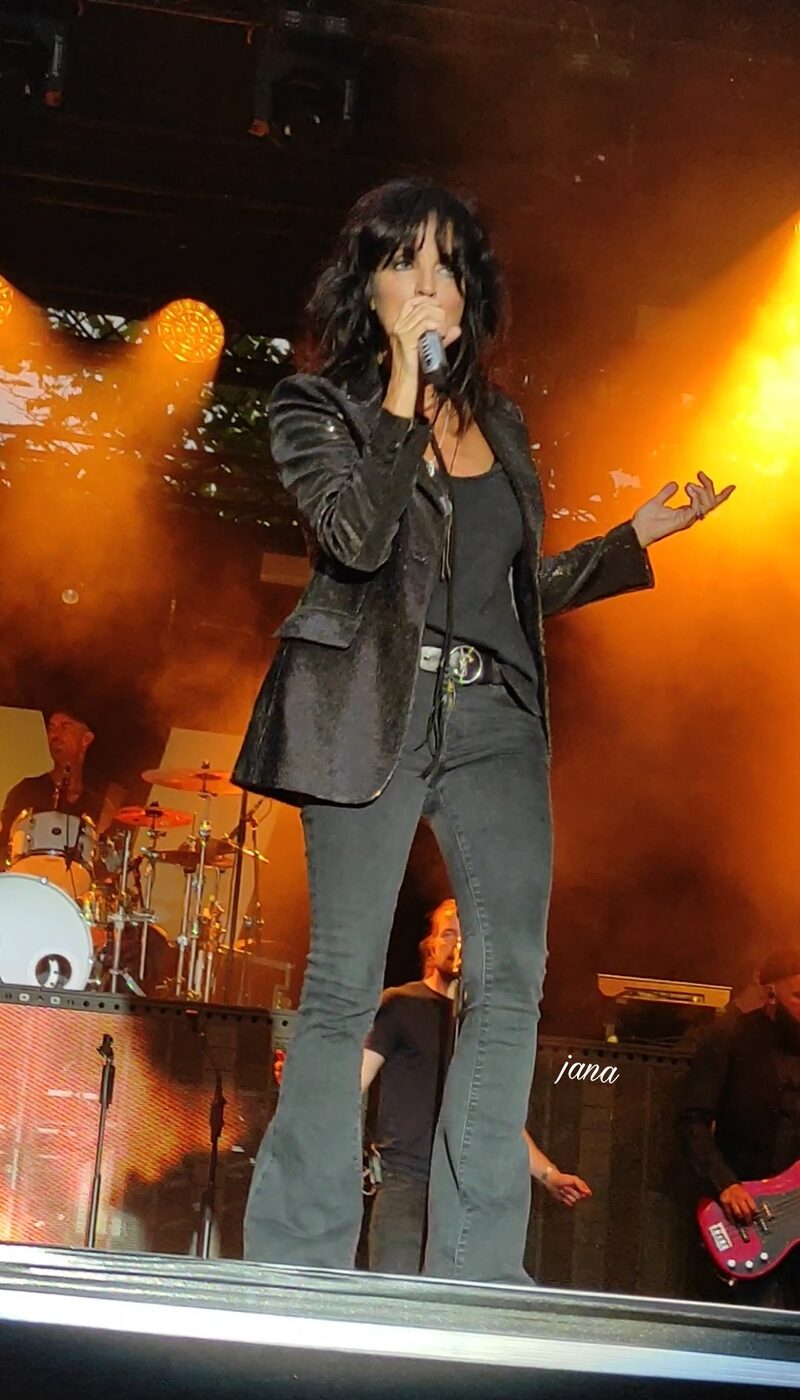
The song is not, strictly, about the Berlin Wall; its subject is the nuclear hair-trigger of the early 1980s. But it could only have come from a city where the front line of that stand-off ran straight down the middle of the streets. Sung in German, “99 Luftballons” reached number one in West Germany and, astonishingly, number two on the American charts – a protest song in a language most of its listeners did not speak, carried by the sheer nervous energy of a walled city.
Nena was not the only Western act to write the divided city into a hit. In 1985 Elton John released “Nikita”, Bernie Taupin’s tale of a hopeless love for a border guard “on the wrong side of the Berlin Wall”, its video following Elton as he drives again and again up to an Eastern checkpoint. And the longing predated the Wall itself: Marlene Dietrich’s “Ich hab noch einen Koffer in Berlin” (“I still have a suitcase in Berlin”), from the 1950s, became an anthem of yearning for a city split in two – so much so that Ronald Reagan borrowed its line in the 1987 speech at the Brandenburg Gate where he demanded, “Mr Gorbachev, tear down this wall.”
Meanwhile, Behind the Wall
Everything so far has been Western. On the other side of the concrete lay a whole other musical world – one the East German state licensed, censored and, when a band went too far, simply banned. It had its own tolerated rock stars, a tiny punk scene hunted through the churches, and in Wolf Biermann a banned songwriter whose 1976 exile helped crack the country open. That is a story in its own right. Here we stay on the Western side, and the concerts that were aimed straight at the border.
The Soundtrack of 1989
By the end of the decade the mood in the Western music had turned from dread to hope, and two very different records became the accidental anthems of the year the Wall fell. The first was a piece of cheerful pop sung by an American television actor. David Hasselhoff’s “Looking for Freedom”, a reworking of a 1970s German song, spent eight weeks at number one in West Germany in the summer of 1989 – months before anyone imagined the border would open. On New Year’s Eve, with the Wall already breached, Hasselhoff was hoisted on a crane above the crowds at the Brandenburg Gate to sing it in a glowing, light-up scarf, and a piece of disposable pop became, for one night, the sound of a city celebrating its reunion. (He has claimed ever since, to general German amusement, that he helped bring the Wall down; the song was a symptom of the moment, not its cause.)
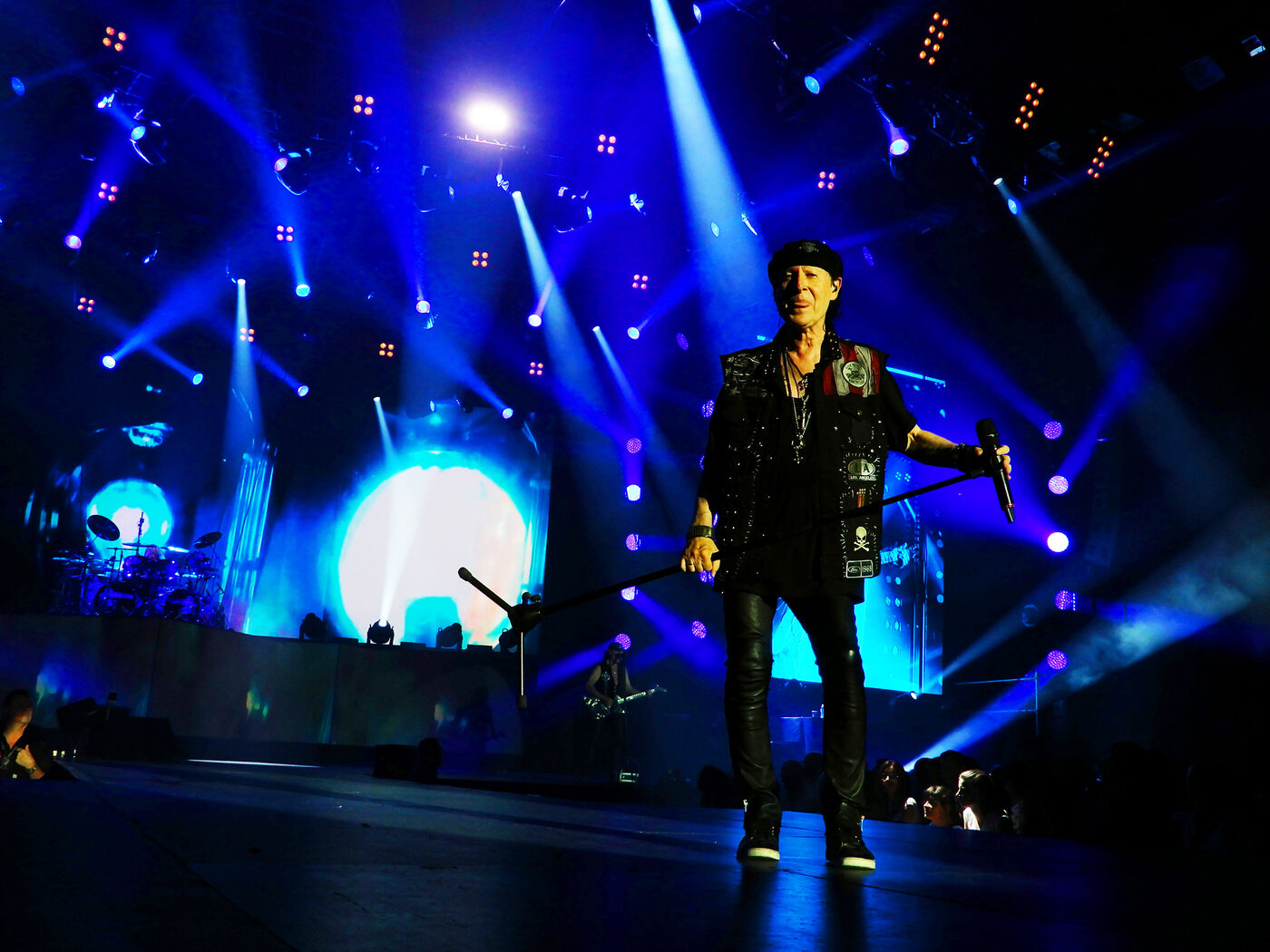
The second song took longer and cut deeper. The West German rock band Scorpions had played the Moscow Music Peace Festival in August 1989, and their singer Klaus Meine came home and wrote “Wind of Change”, a power ballad that opens with a whistled melody now inseparable from the fall of the Iron Curtain. Released on the band’s 1990 album Crazy World, it became one of the best-selling singles of all time and the unofficial anthem of German reunification and the end of the Cold War – a song by a German band, in English, about a change that swept the very city the Wall had split in two.
Concerts Aimed at the Wall
Music did not only describe the Wall; in its last years it was hurled at it. A run of enormous open-air concerts on the Western side, staged within earshot of the border, turned rock and roll into a kind of soft weapon – and East Germans heard every note.
The first came on 6 June 1987, when David Bowie headlined a “Concert for Berlin” beside the Reichstag, the speaker stacks deliberately angled toward the East. Thousands of young East Berliners gathered on the far side of the Wall to listen, chanting for the Wall to fall and clashing with the police who moved in to break them up. Bowie, close to tears, dedicated “Heroes” to the crowd he could not see; he later called it one of the most emotional performances of his life.
A year later the drama repeated itself on a larger scale. Pink Floyd played the same Reichstag ground on 16 June 1988, and Michael Jackson on 19 June, and each time crowds of East Berliners massed a few hundred metres away at the Brandenburg Gate to catch the sound on the wind. They chanted “Die Mauer muss weg” – “the Wall must go” – and fought running battles with the Volkspolizei, who dragged people away and turned on the Western television crews filming it all. The concerts the regime could not silence were teaching its own young people to shout for the border to open.
The Concerts the Regime Let In
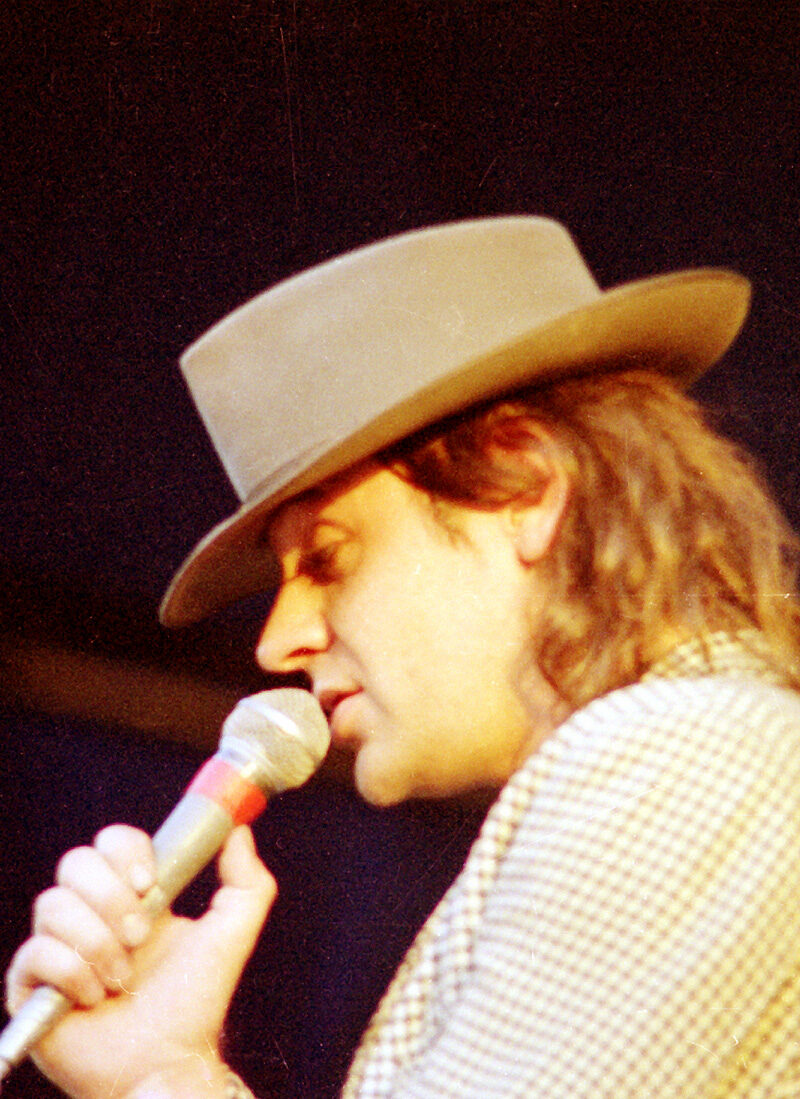
Faced with a generation straining westward for its music, the GDR tried the opposite tactic: it began, cautiously, to import the West. The results were always double-edged. When the West German rocker Udo Lindenberg was finally allowed to play East Berlin’s Palast der Republik on 25 October 1983, it was on the state’s terms – a vetted audience of blue-shirted state-youth members, a handful of approved songs, and a ban on the one number everyone wanted. Lindenberg had scored a hit that year with “Sonderzug nach Pankow”, a cheeky reworking of “Chattanooga Choo Choo” that mocked Erich Honecker as a secret rock fan and demanded to be let in to play; on the night, he was forbidden from performing it. The feud had a strange thaw: Honecker later sent Lindenberg a ceremonial shawm, and Lindenberg sent back a leather jacket and a guitar inscribed “guitars instead of guns”.
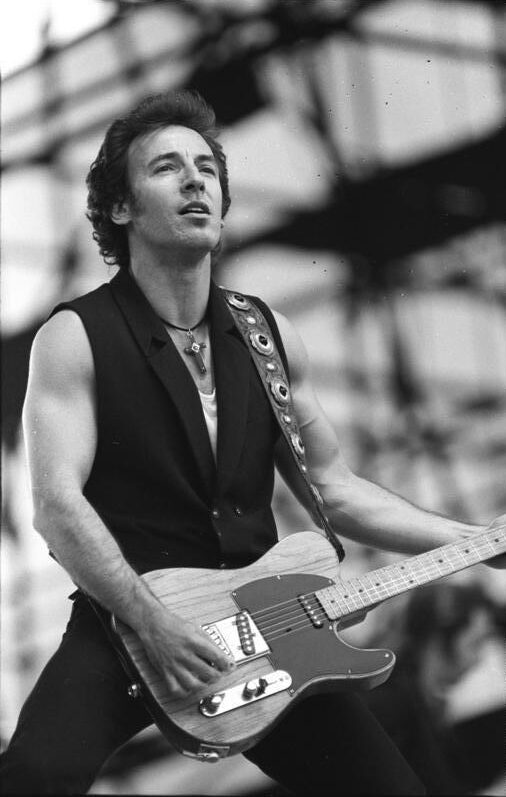
Other Western acts followed, each an experiment the regime could not quite control. Bob Dylan drew a vast crowd to the Treptower Festwiese in September 1987; Depeche Mode played to ecstatic East German fans in March 1988, in a hall where the tickets had gone not to the public but to the party faithful – the band later said they felt used. And the biggest of them all was as much a miscalculation as a concert. On 19 July 1988 the communist youth organisation invited Bruce Springsteen to play the Radrennbahn Weissensee, and a crowd estimated at more than 300,000 – one of the largest in East German history – packed in. Halfway through, Springsteen stopped and read out a statement in German: “I’ve come to play rock and roll for you in the hope that one day all the barriers will be torn down.” He had wanted to say “walls” and been talked into the safer “barriers”, but nobody there could miss the meaning, and he followed it into Bob Dylan’s “Chimes of Freedom”. Many who were there – and at least one historian since – have argued that the night deepened the very hunger for change that broke the Wall sixteen months later.
When the Wall Fell: From Rostropovich to Beethoven’s Ninth
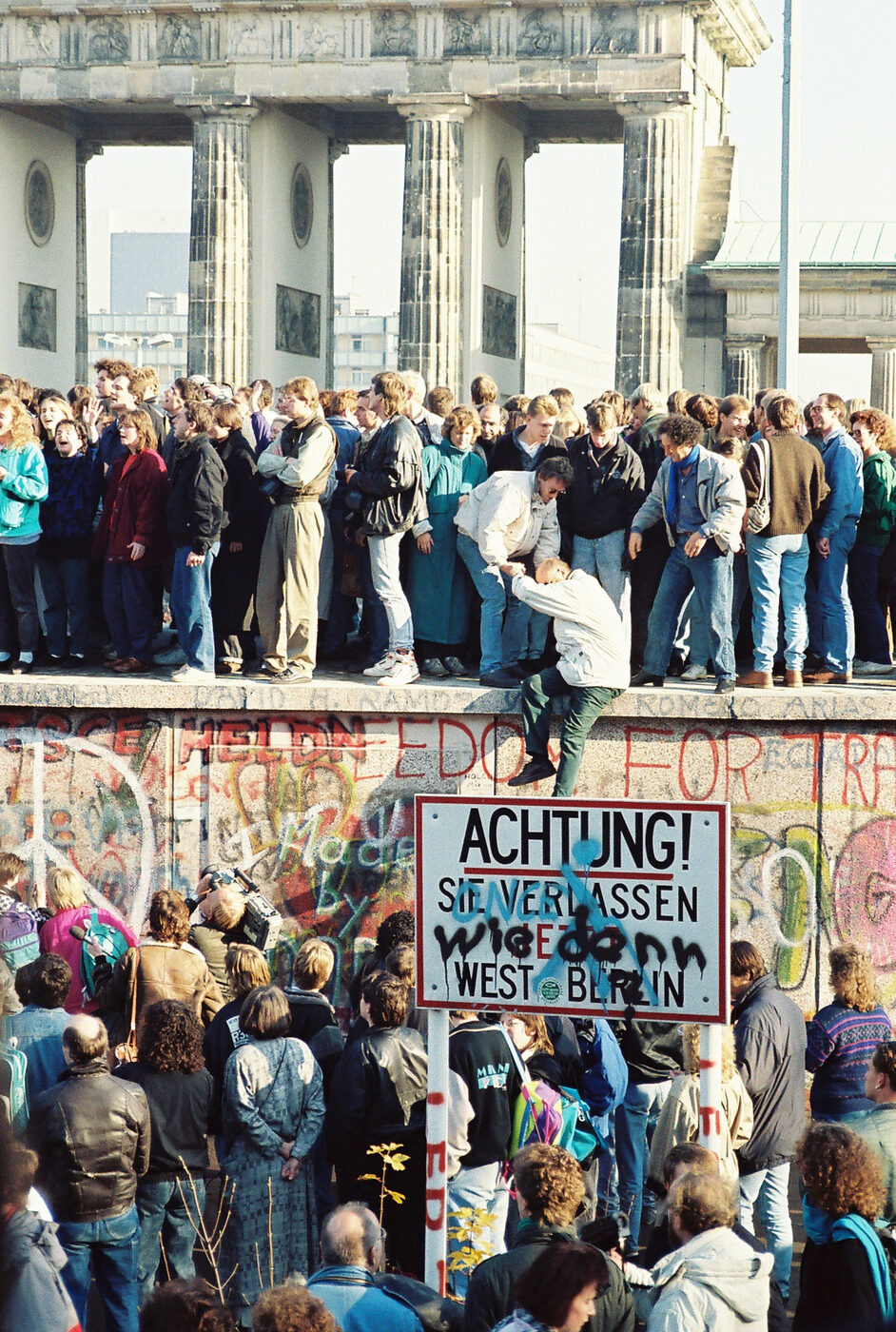
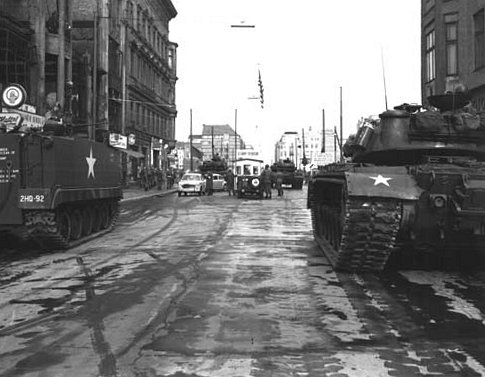
When the border finally opened on 9 November 1989, the music that met the moment came from an unexpected direction. Two days later, on 11 November, the exiled Russian cellist Mstislav Rostropovich – who had been stripped of his Soviet citizenship for sheltering the dissident Solzhenitsyn – heard the news at his home in Paris, chartered a plane, and flew to Berlin with his cello. He borrowed a chair, sat down at a graffiti-covered stretch of the Wall near Checkpoint Charlie, and played Bach’s cello suites to the passing crowds, the Sarabande among them in memory of those shot trying to cross. The image of one man and a cello at the concrete became one of the most enduring of the whole event.
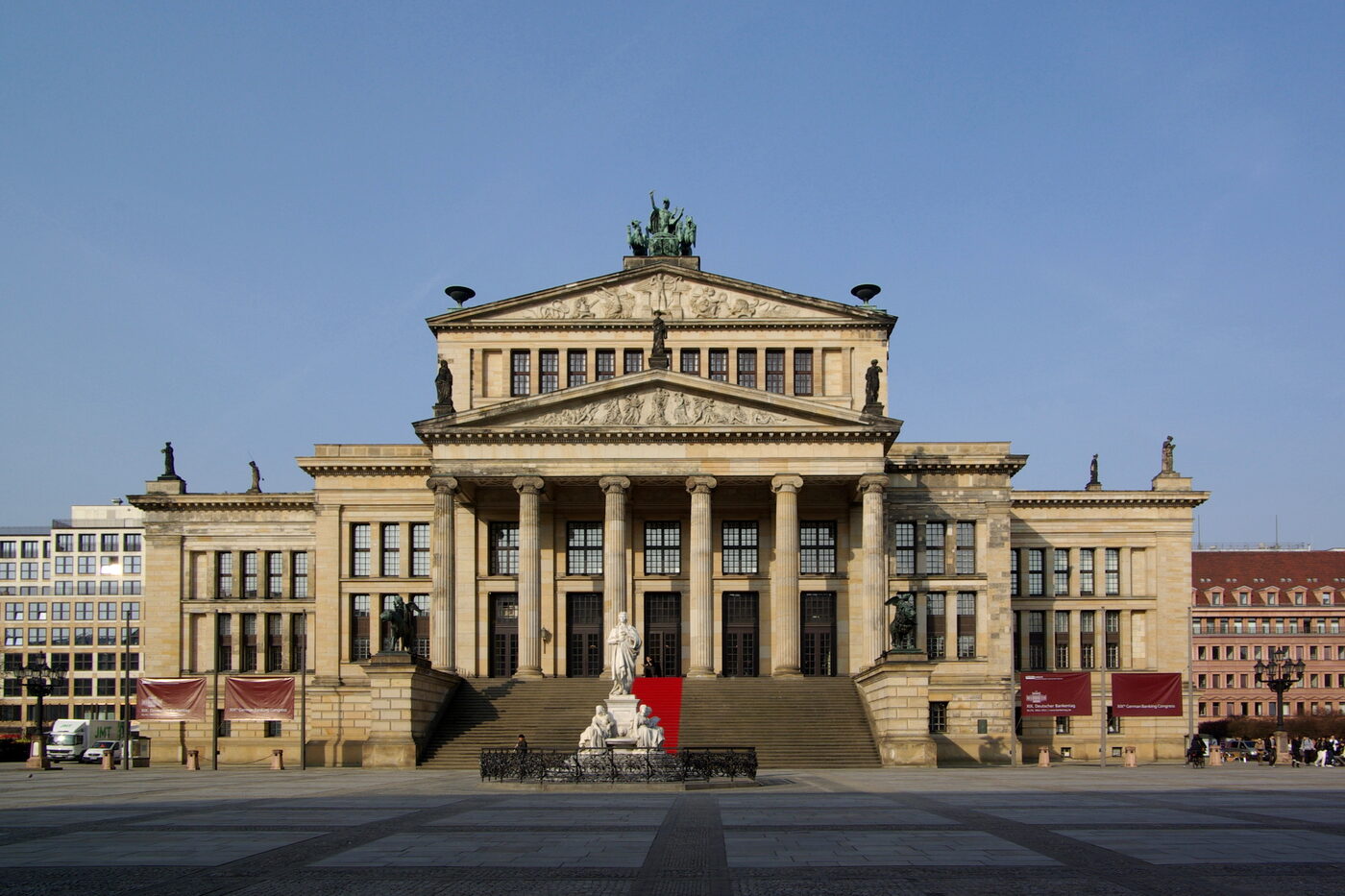
The concert halls answered too. On 12 November the Berlin Philharmonic threw open its doors for a free concert for East Germans, with Daniel Barenboim conducting Beethoven at short notice while queues of Easterners formed before dawn. And on Christmas Day, 25 December 1989, Leonard Bernstein conducted Beethoven’s Ninth Symphony in the Schauspielhaus in East Berlin, before an orchestra assembled from both Germanys and the four occupying powers – the two superpowers, Britain and France playing together where the Cold War had drawn its sharpest line. In the choral finale, Bernstein made one deliberate change to Schiller’s text, having the singers sing “Freiheit” – freedom – wherever the “Ode to Joy” calls for “Freude”, joy. “If ever there was a historic time to take an academic risk in the name of human joy,” he said, “this is it.” It was broadcast to an estimated hundred million people.
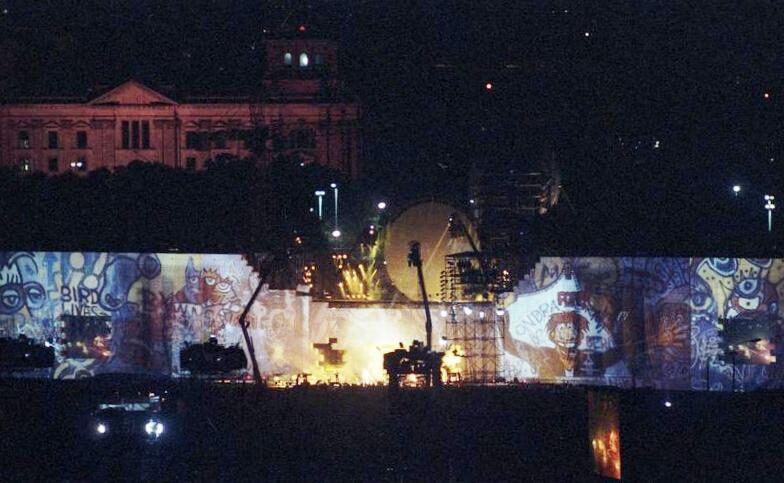
Even the concrete’s own soundtrack found a classical afterlife: in the 1990s the American composer Philip Glass turned Bowie and Brian Eno’s Berlin albums into orchestral symphonies – his First, “Low”, and his Fourth, “Heroes” – carrying the music made at that studio window back into the concert hall. And the Wall got one last, literal concert. On 21 July 1990 Roger Waters staged “The Wall – Live in Berlin” on the empty no-man’s-land by Potsdamer Platz, building a 170-metre stage wall across the former death strip and knocking it flat before a crowd of hundreds of thousands, with Scorpions, Bryan Adams, Sinéad O’Connor, Van Morrison and Joni Mitchell among the guests. Pink Floyd’s 1979 album had never been about the Berlin Wall – Waters wrote it about a personal wall of grief and isolation – but its central image, a wall torn down to set the prisoner free, had been waiting for this city all along.
What the Wall Never Inspired: Ballet, Opera and a Few Myths
For all the music the Berlin Wall produced, some of what you might expect never appeared. There is, strikingly, no famous ballet about the Berlin Wall, and no landmark opera. The nearest thing to a Wall ballet is a niche 2009 project by the Berlin-born choreographer Nejla Yatkin, who witnessed the fall as a teenager and marked its twentieth anniversary with a set of dance pieces; the only serious “division” opera, Georg Katzer’s “Antigone oder die Stadt”, was conceived in the GDR as a coded critique and reached the stage in Berlin only in 1991, after the country it attacked had vanished. The Wall spoke to songwriters and to symphonists, but the ballet and the opera house mostly stayed silent.
The Wall also gathered its share of legends. The best known is the tale of a secret Rolling Stones concert on the roof of the Axel Springer building beside the Wall on 7 October 1969 – the GDR’s national holiday – meant to be heard in the East. It never happened: the rumour seems to have started with an offhand remark by a West Berlin radio DJ, yet thousands of fans gathered at the Spittelmarkt to wait for a band that was not even in the country, and many were beaten and arrested. And it is worth saying plainly, since he appears earlier in this story, that David Hasselhoff did not help bring down the Wall, however often he has implied it. The music mattered enormously – but it worked on the imagination, not on the concrete.
After the Fall
The songs outlived the Wall and, in a way, outgrew it. “Wind of Change” became a fixture at moments of political upheaval far beyond Germany; “Heroes” is sung whenever Berlin marks itself out; the East German records the state once tried to license and ban are now cherished as the sound of a lost country. What began as the divided music of a divided city – Bowie at his studio window, Biermann alone with a banned guitar, a vast crowd straining to hear Springsteen through the summer dark, a single cellist at the concrete – became a shared memory of how the twentieth century’s most notorious border was mourned, mocked, defied and finally celebrated in song. You can stand on much of the ground where it happened, from Hansa Studios to Potsdamer Platz to the Brandenburg Gate, on our interactive Berlin Wall map.
Frequently Asked Questions
What songs are about the Berlin Wall?
David Bowie’s “Heroes” (1977), written and recorded beside the Wall, is the best known. Others closely tied to the divided city include Nena’s “99 Luftballons” (1983), Elton John’s “Nikita” (1985), David Hasselhoff’s “Looking for Freedom” (1989) and Scorpions’ “Wind of Change” (1990). Pink Floyd’s The Wall is often assumed to be about it but is not.
Is “99 Luftballons” about the Berlin Wall?
Not directly. Nena’s 1983 hit is an anti-war song about balloons that are mistaken for military targets and set off a nuclear conflict. It was born of Cold War West Berlin – the idea came from balloons released at a concert there – but the lyric is about the nuclear stand-off rather than the Wall itself.
Did David Bowie play at the Berlin Wall?
Yes. On 6 June 1987 Bowie headlined a concert beside the Reichstag with the speakers aimed toward East Berlin. Crowds gathered on the eastern side of the Wall to listen and clashed with police. He had recorded “Heroes” a few hundred metres away ten years earlier.
Did Bruce Springsteen play in East Berlin?
Yes. On 19 July 1988 Springsteen played to a crowd of more than 300,000 at the Radrennbahn Weissensee in East Berlin, at the invitation of the communist youth organisation. Mid-concert he told the audience, in German, that he hoped one day “all the barriers” would be torn down.
Was there rock music in East Germany?
Yes. The GDR licensed a domestic rock scene – bands such as the Puhdys, City, Karat and Silly – while censoring lyrics and controlling who could perform. Bands that went too far were banned outright, as the Klaus Renft Combo was in 1975. There was even a small, heavily policed punk scene sheltered largely by the Protestant churches.
What classical music is linked to the fall of the Berlin Wall?
On 25 December 1989 Leonard Bernstein conducted Beethoven’s Ninth Symphony in East Berlin, changing “Freude” (joy) to “Freiheit” (freedom) in the Ode to Joy, with an orchestra drawn from both Germanys and the four occupying powers. Days earlier, the cellist Mstislav Rostropovich played Bach at the Wall near Checkpoint Charlie, and the Berlin Philharmonic gave a free concert for East Germans.
Is there a ballet about the Berlin Wall?
No famous ballet or opera about the Berlin Wall exists. The Wall inspired a great deal of popular music and some notable classical moments, but not a landmark stage work; the closest is a niche 2009 dance project by the choreographer Nejla Yatkin marking the twentieth anniversary of the fall.
Is Pink Floyd’s “The Wall” about the Berlin Wall?
No. Roger Waters wrote the 1979 album about a personal, psychological wall of isolation. But its imagery fitted Berlin so well that in July 1990 he staged the whole show on the former death strip, building and toppling a wall on stage – which is why the album and the city are so often linked.
What song is associated with the fall of the Berlin Wall?
Scorpions’ “Wind of Change” (1990) is the song most tied to the fall of the Wall and the end of the Cold War. Bowie’s “Heroes” and David Hasselhoff’s “Looking for Freedom” are also strongly associated with 1989.
The Wall shaped painting and film as powerfully as it did music – see how artists turned it into the largest canvas in the world and how it appears on screen, or read the deeper story of David Bowie and Iggy Pop in West Berlin. You can trace every surviving site on our interactive Berlin Wall map, or follow the division from first day to last on the Berlin Wall history timeline.
Checkpoint Charlie
East Side Gallery
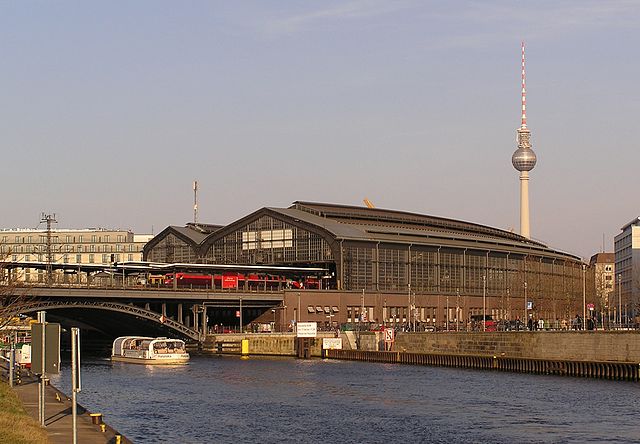
Bahnhof Friedrichstraße
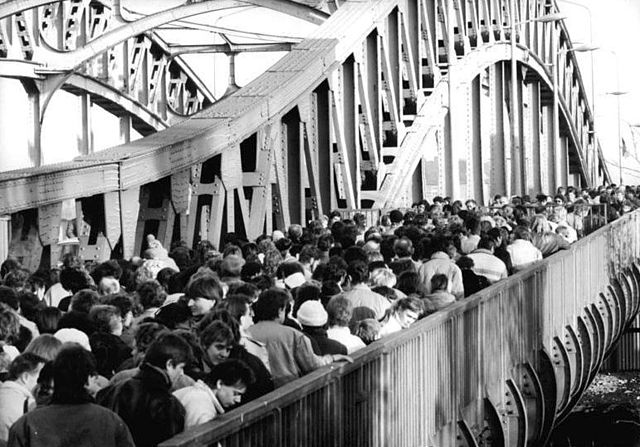
Bornholmer Straße

Checkpoint Charlie’s New Design Has Been Chosen, and the Guard House Stays
The Berlin Spy Tunnel: The CIA, MI6 and Operation Gold
Berlin Spy Tunnel Memorial
The Islands of West Berlin: Steinstücken, Eiskeller and the Exclaves Stranded in the East
Free map downloads
Free printable PDF maps of the Berlin Wall.
Get the free maps →Explore the Timeline
Journey through Berlin Wall history from 1945 to 1990.
View Timeline →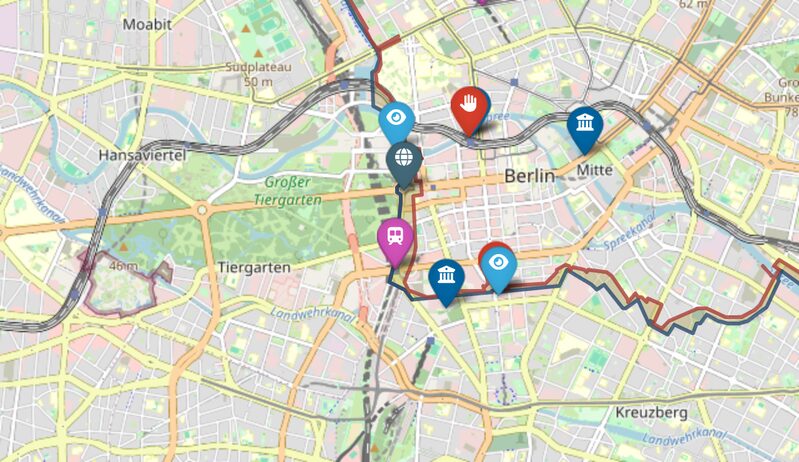
Embed Our Map
Add a free interactive Berlin Wall map to your website or blog.
Get embed code →