The Lives of Others
The Lives of Others (2006) is a German drama set in East Berlin in 1984, following Stasi Captain Gerd Wiesler as he conducts round-the-clock surveillance on playwright Georg Dreyman and his actress girlfriend Christa-Maria Sieland.
| Year | 2006 |
|---|---|
| Director | Florian Henckel von Donnersmarck |
| Genre | Drama |
| Language | German |
| IMDb | |
| Locations |
Stasi Museum Gedenkstätte Berlin-Hohenschönhausen |
Plot
Wiesler, a devoted officer of the Ministry for State Security, is assigned to monitor Dreyman — a loyal socialist writer who has so far avoided state censorship. As Wiesler listens to every conversation in the couple’s apartment, he gradually becomes drawn into their lives. When he discovers that the surveillance operation is motivated by a minister’s personal interest in Sieland rather than state security, Wiesler begins to subtly protect the couple, falsifying reports at great personal risk.
Berlin Wall Connection
The film provides one of cinema’s most detailed and accurate portrayals of the Stasi’s domestic surveillance apparatus. The Hohenschönhausen Memorial, the former Stasi remand prison in East Berlin, appears as a location where suspects are interrogated. The Stasi Museum at the former Ministry headquarters in Lichtenberg represents the bureaucratic machinery that drove the surveillance state. The film’s epilogue takes place after the fall of the Wall, when Dreyman discovers the extent of his monitoring through the Stasi archives.
Filming Locations
The production filmed extensively in Berlin, including the Karl-Marx-Allee apartments that serve as Dreyman’s residence. Interiors were shot at various locations across former East Berlin. The Volksbühne theater and other GDR-era cultural venues appear in scenes depicting East Berlin’s artistic milieu. The filmmakers consulted former Stasi officers and dissidents for authenticity.
Cultural Impact
The Lives of Others won the Academy Award for Best Foreign Language Film in 2007 and is widely considered one of the finest films about life in the GDR. It sparked renewed public interest in the Stasi archives and the experience of those who lived under surveillance. The film’s nuanced portrayal of a Stasi officer developing a conscience challenged simplistic narratives about East German complicity. It remains a touchstone for discussions about state surveillance in the digital age.
Free map downloads
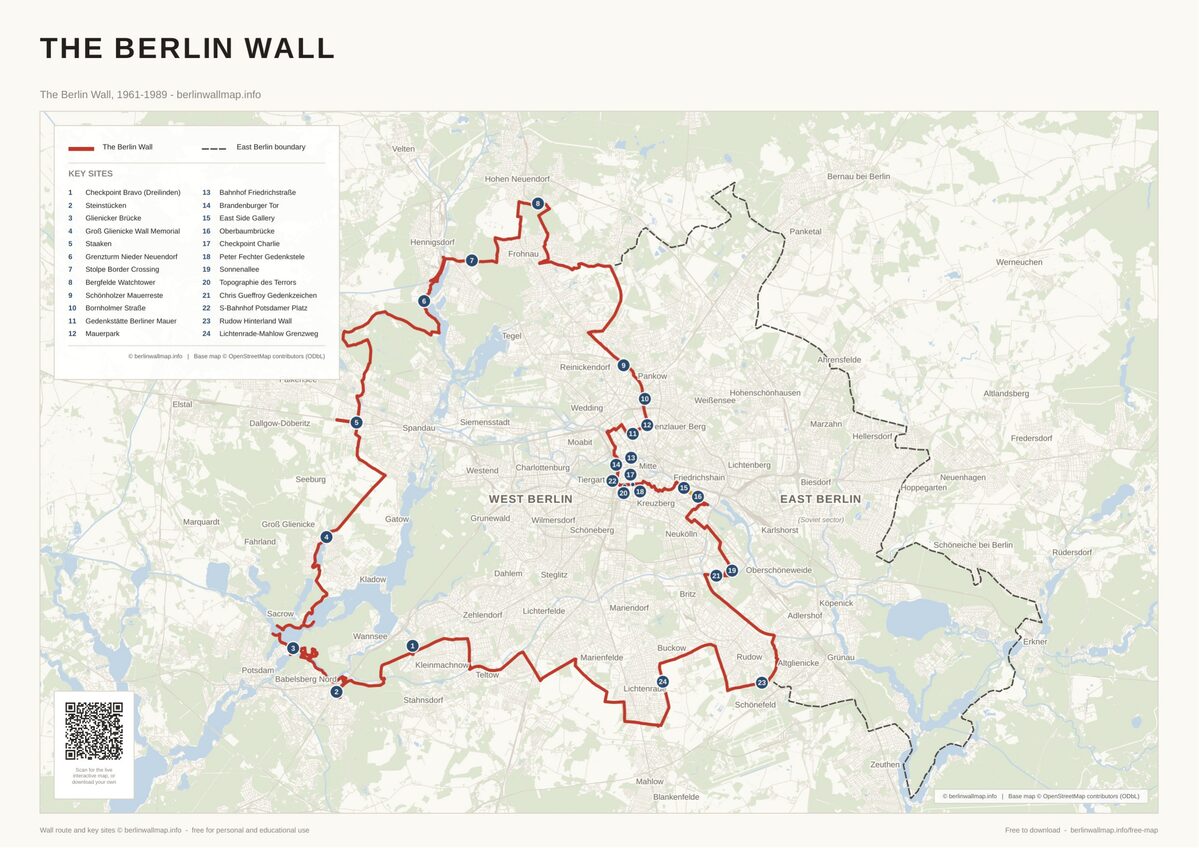
Free printable PDF maps of the Berlin Wall.
Get the free maps →Explore the Timeline
Journey through Berlin Wall history from 1945 to 1990.
View Timeline →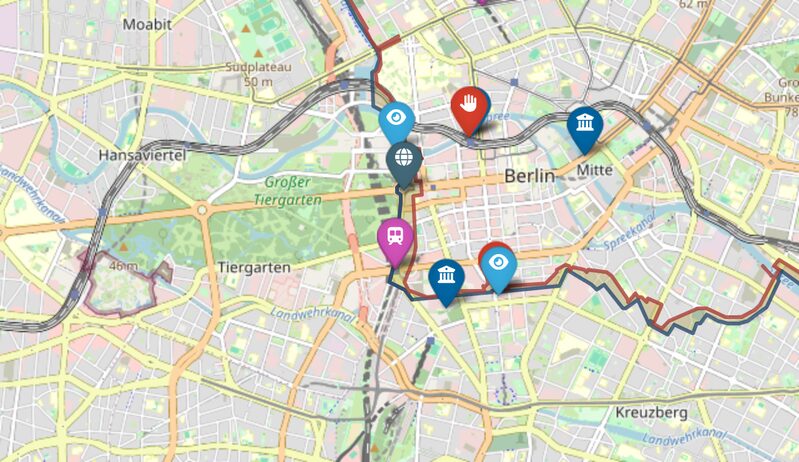
Embed Our Map
Add a free interactive Berlin Wall map to your website or blog.
Get embed code →