Goodbye, Lenin!
Goodbye, Lenin! (2003) is a German tragicomedy set during and after the fall of the Berlin Wall, following Alex Kerner as he goes to absurd lengths to hide the reunification of Germany from his mother, who was in a coma when the Wall fell.
| Year | 2003 |
|---|---|
| Director | Wolfgang Becker |
| Genre | Comedy |
| Language | German |
| IMDb |
Plot
In October 1989, Alex’s mother Christiane — a committed socialist and GDR citizen — suffers a heart attack and falls into a coma just days before the Wall comes down. When she wakes eight months later, doctors warn that any shock could kill her. Alex decides to maintain the illusion that the GDR still exists within the confines of their apartment, recruiting friends to fake news broadcasts, sourcing discontinued East German products, and constructing increasingly elaborate deceptions as the real world outside transforms around them.
Berlin Wall Connection
The film captures the dizzying transformation of East Berlin in the months following the Wall’s fall — the arrival of Western brands, the dismantling of socialist iconography, and the cultural whiplash experienced by ordinary citizens. The famous scene of the Lenin statue being airlifted by helicopter (which really happened in 1991) symbolizes the erasure of GDR identity. The film treats the Wall’s fall not as simple liberation but as a complex upheaval that left many East Germans disoriented.
Filming Locations
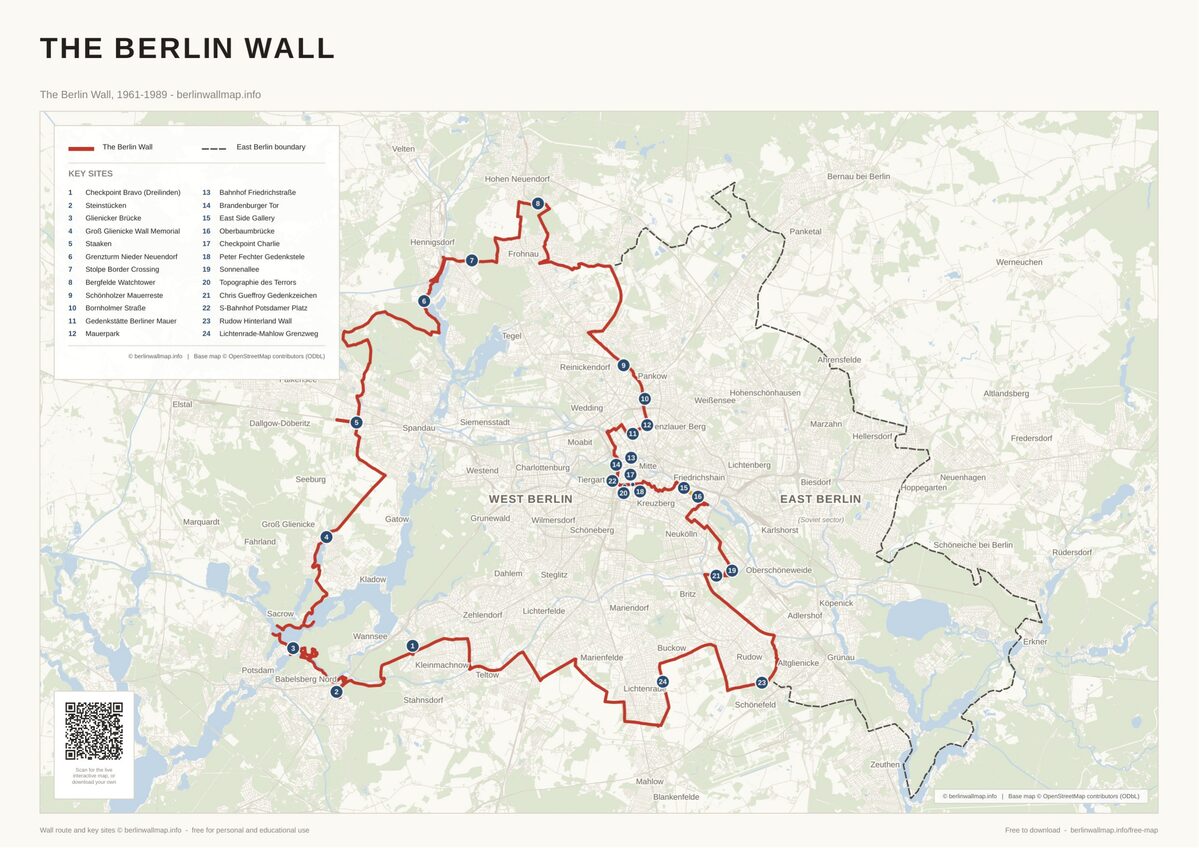
The film was shot entirely on location in Berlin. The Kerner family apartment was filmed in a Plattenbau building on Karl-Marx-Allee. Alexanderplatz, the Palace of the Republic, and various streets in Mitte and Friedrichshain appear throughout. The production team meticulously recreated the visual transformation of East Berlin, showing how Western advertisements and shops rapidly replaced socialist-era signage.
Cultural Impact
Goodbye, Lenin! became Germany’s most successful domestic film in decades and introduced international audiences to the concept of “Ostalgie” — nostalgia for aspects of East German life. It earned over 79 million euros worldwide and won the Blue Angel award at the Berlin Film Festival. The film resonated deeply with former East Germans and sparked conversations about identity, memory, and the human cost of rapid social change. It remains the definitive cinematic exploration of German reunification from an Eastern perspective.
Free map downloads
Free printable PDF maps of the Berlin Wall.
Get the free maps →Explore the Timeline
Journey through Berlin Wall history from 1945 to 1990.
View Timeline →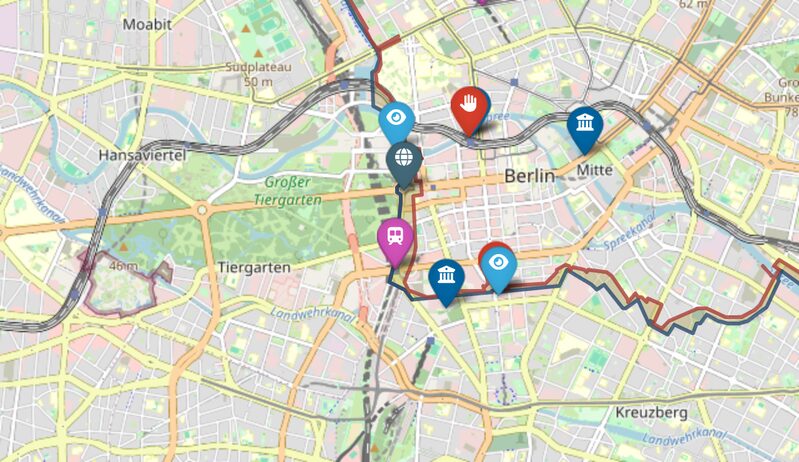
Embed Our Map
Add a free interactive Berlin Wall map to your website or blog.
Get embed code →