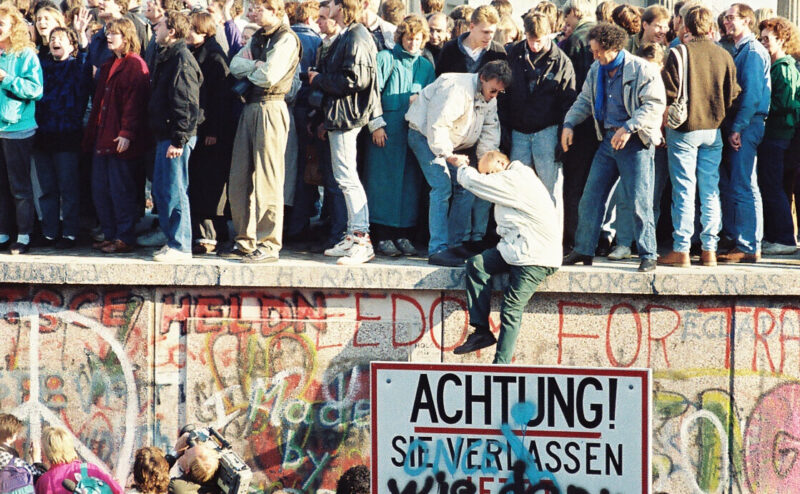
9 November in Berlin: 37 Years Since the Wall Fell, and What’s On
On 9 November 2026, Berlin marks 37 years since the night the Wall opened. At 18:53 on 9 November 1989, Günter Schabowski read out new travel regulations at a press conference and, asked when they would take effect, answered “immediately, without delay.” Within hours, thousands of East Berliners streamed to the border crossings. The first to open was Bornholmer Strasse, where overwhelmed guards lifted the barrier just before midnight.
This year, the anniversary falls inside the second Berlin Freedom Week (7-14 November 2026), a citywide festival of events on freedom, democracy and human rights. More than a hundred talks, tours, films, concerts and exhibitions fill the week, organised by a consortium including visitBerlin, the Robert Havemann Society and the Axel Springer Freedom Foundation, with Berlin’s Governing Mayor as patron.
Not every event is about the Wall. We have picked out the ones that connect to the places and stories on our map.
9 November at the Bösebrücke
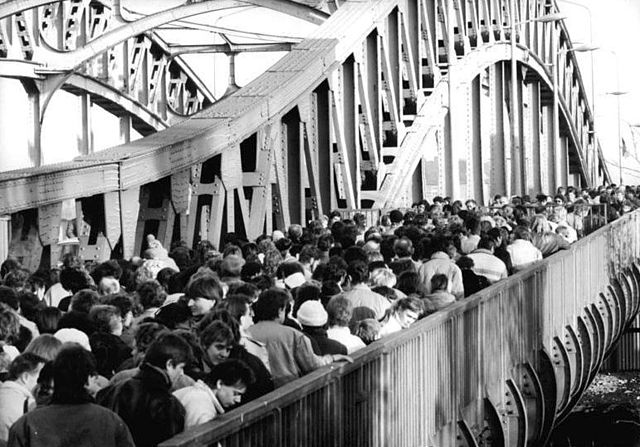
The centrepiece of the evening is at the place where it happened. At 18:53 — the exact minute of Schabowski’s answer — a gathering begins on the Bösebrücke, the bridge above the former Bornholmer Strasse crossing. The event, “37 Jahre Mauerfall — Erinnerungen an der Bösebrücke”, runs until 20:30 and invites people to share memories of the freedom won that night. It is open to everyone.
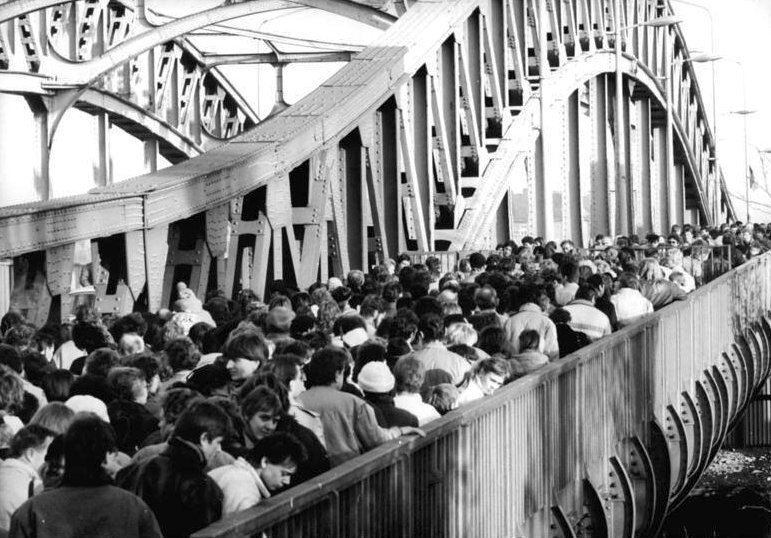
The crossing at Bornholmer Strasse was the first to open on 9 November 1989. Harald Jaeger, the passport-control officer on duty, made the decision to let people through after his superiors stopped answering the phone. By midnight, all Berlin crossings were open.
What else is on: Wall-related highlights across the week
Escape tunnels and the border strip
Berliner Unterwelten runs two escape-tunnel tours with eyewitnesses who helped dig them. On Saturday 7 November (from 10:00), Eveline Rudolph leads a group through the tunnels near Bernauer Strasse — she fled through “Tunnel 29” in 1962. On Saturday 14 November (from 10:00), Joachim Neumann takes the same route and describes the tunnels he built. Both sell out quickly.
The Berlin Wall Memorial
The Berlin Wall Memorial on Bernauer Strasse hosts guided walks through the former death strip on 7 and 8 November (11:00), a Turkish-language tour on 8 November (14:00), a film screening on 10 November (18:00), and a family tour for children aged 8-12 on 14 November (13:00). On 12 November (19:00), the historian Ilko-Sascha Kowalczuk presents Wolf Biermann’s diaries for the first time.
The Foundation’s own central commemoration on 9 November, held each year at the Chapel of Reconciliation, has not yet been announced. We will update this post as soon as it is.
The Tränenpalast and the Stasi
At the Tränenpalast, the exhibition “Tränenpalast — Ort der deutschen Teilung” runs throughout the week, with guided tours on 7, 8 and 9 November. On 9 November at 18:00, the dance company LUNA PARK performs “BEYOND LINES”, a piece about crossing borders, inside the hall where East Germans once said goodbye to Western visitors.
The Stasi-Zentrale on the former ministry campus runs events on six of the eight days. Highlights include a tour of the Stasi files archive (7 and 14 November), a reading on work and everyday life in the GDR on 9 November at 19:00, and the documentary “Beyond the Berlin Wall — Reports from Stasi Prisoners” on 13 November (17:00), followed by a panel with the filmmakers and former political prisoners.
East Side Gallery, Hohenschönhausen and more
At the East Side Gallery, a guided tour on 8 November (11:00) looks at the 1990 murals and how artists viewed reunification. At the Günter Litfin Memorial, a live-speaking event on 8 November (14:00) tells the story of the watchtower and the first person shot at the Wall. At the Glienicker Brücke in Potsdam, a tour of the former border strip runs on 8 November (14:00).
The former Stasi prison at Hohenschönhausen hosts eyewitness talks on 10 and 13 November, with Christian Koenig describing his resistance to the SED dictatorship and his detention by the Stasi.
By bike along the Wall
A guided bike tour following the route of the Berlin Wall runs every day from 7 to 14 November (10:00-13:30). It is a good way to see the memorial sites in context. For a self-guided walk, our Berlin Wall walking map covers the central stretch from the East Side Gallery to the Memorial.
Other events on 9 November
Beyond the Wall-specific programme, 9 November itself is a full day. The Deutsches Historisches Museum runs two tours on “Grenzen, Gewalt, Geschichte” — borders, violence and history — timed for the anniversary (12:00 and 14:00). A bus tour with historical footage retraces the route from the Wall’s construction to its fall (the same bus tour runs the day before, on 8 November, at 11:00). And at the James-Simon-Galerie on Museum Island, a panel at 18:00 marks 40 years of the cultural agreement between East and West Germany.
Practical information
Berlin Freedom Week runs from 7 to 14 November 2026. Most events are free; some require registration. The full day-by-day programme is at berlin-freedom-week.com.
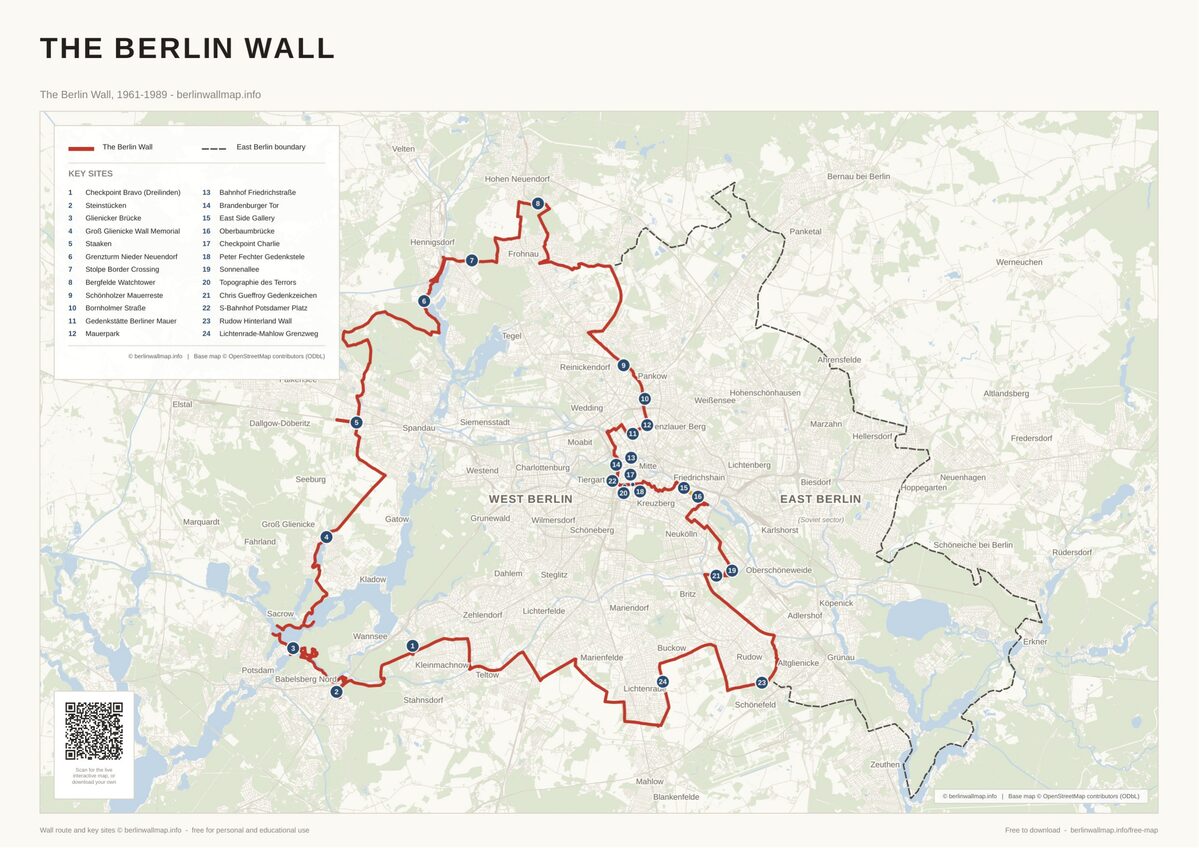
The key Wall-related sites are all on our interactive map. The Bösebrücke, the Memorial, the Tränenpalast and the Stasi-Zentrale are all reachable by S-Bahn or U-Bahn; see each place page for directions.
The story of the night the Wall fell — from the Leipzig Monday demonstrations in September to the border opening on 9 November — is told in full on our Berlin Wall history timeline, and in our guide to the Peaceful Revolution.
Event details last checked 12 Oct 2026
Free map downloads
Free printable PDF maps of the Berlin Wall.
Get the free maps →Explore the Timeline
Journey through Berlin Wall history from 1945 to 1990.
View Timeline →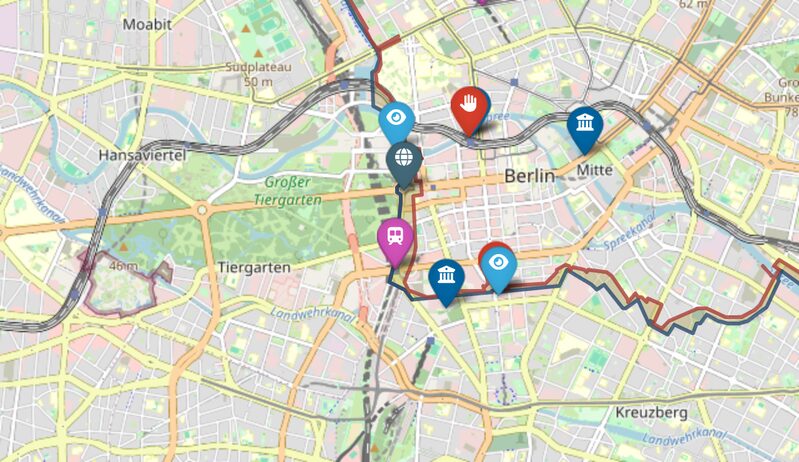
Embed Our Map
Add a free interactive Berlin Wall map to your website or blog.
Get embed code →