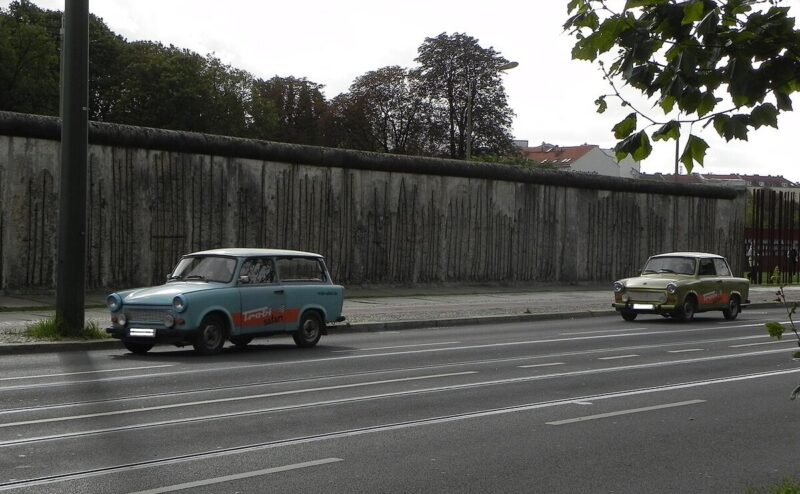
Mauer Land: Thomas Meyer’s Photographs of the Former Wall Strip Open at the Memorial
On 1 October the Berlin Wall Memorial opens Thomas Meyer: Mauer Land, a set of photographs made along the course of the Wall inside Berlin between 2017 and 2024. It runs until 31 January 2027, and like everything else at the memorial it is free to see.
Meyer is a member of OSTKREUZ, the photographers’ agency founded in East Berlin in 1990 by seven photographers who had worked in the GDR. They set it up a year after the Wall came down and before reunification, and named it after the S-Bahn station that joins the east of the city to the rest of it. He spent eight years on one question, which the Berlin Wall Foundation gives in his terms: “Wo ist die Teilung in der Stadt heute noch spürbar? Wo ist sie noch mit dem Auge auszumachen?” – where in the city is the division still perceptible today, and where can it still be made out by eye?
The inner-city strip
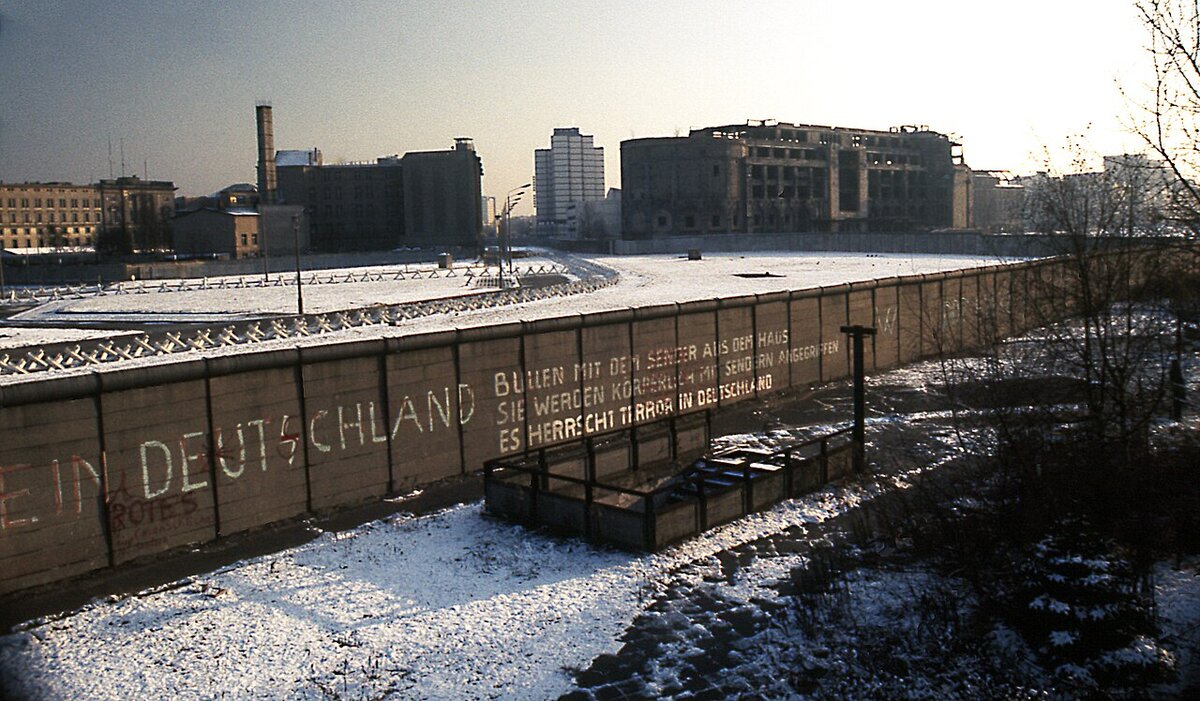
The pictures are colour, shot on digital medium format, and they were taken across different seasons over the eight years. They cover the innerstädtischer Mauerstreifen, the stretch that ran through the built-up middle of the city, rather than the whole 155 kilometres of border installations that ringed West Berlin.
The outer ring mostly ran through forest, field and lakeside, and much of it is now the Mauerweg cycle and walking path, still legible because little was built there afterwards. The inner-city strip ran through Mitte, Kreuzberg and Friedrichshain, across squares and along streets that were rebuilt, sold, dug up and built over from 1990 onwards, and most of it is gone.
A disappearing Wall: places that once made history
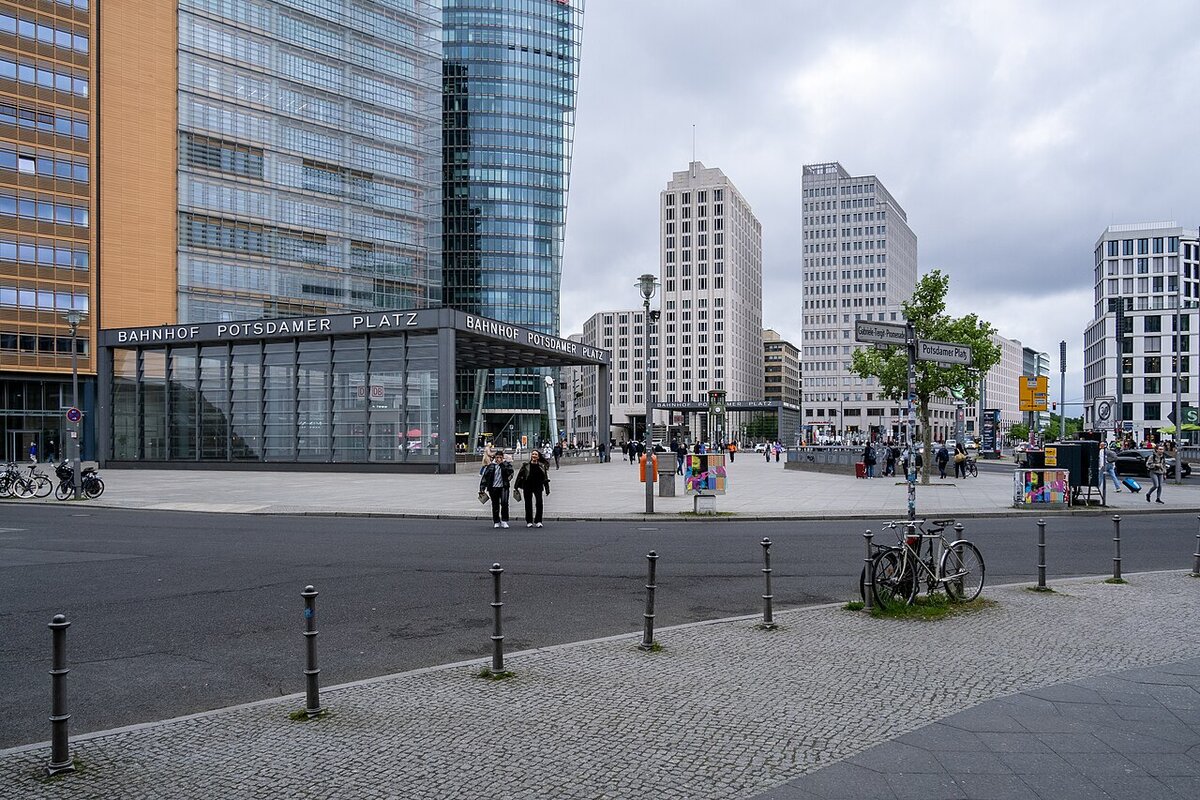
The Foundation describes the subjects as “Plätze, die einmal Geschichte schrieben sowie das Verschwinden der Mauer” – places that once made history, and the disappearance of the Wall. At Potsdamer Platz the former death strip is now offices, a tram stop and a busy footpath.
Meyer’s cover image for the exhibition is Potsdamer Platz, which held the busiest square in Europe before the war, then twenty-eight years of open ground behind the Wall, then a corporate quarter built from scratch in the 1990s. The Wall segments at Potsdamer Platz, a short row of concrete standing beside a station entrance, are what is left of the border there.
The Foundation notes that in recording those overlapping layers of history and present, Meyer also documents the urban development of Berlin.
On our map
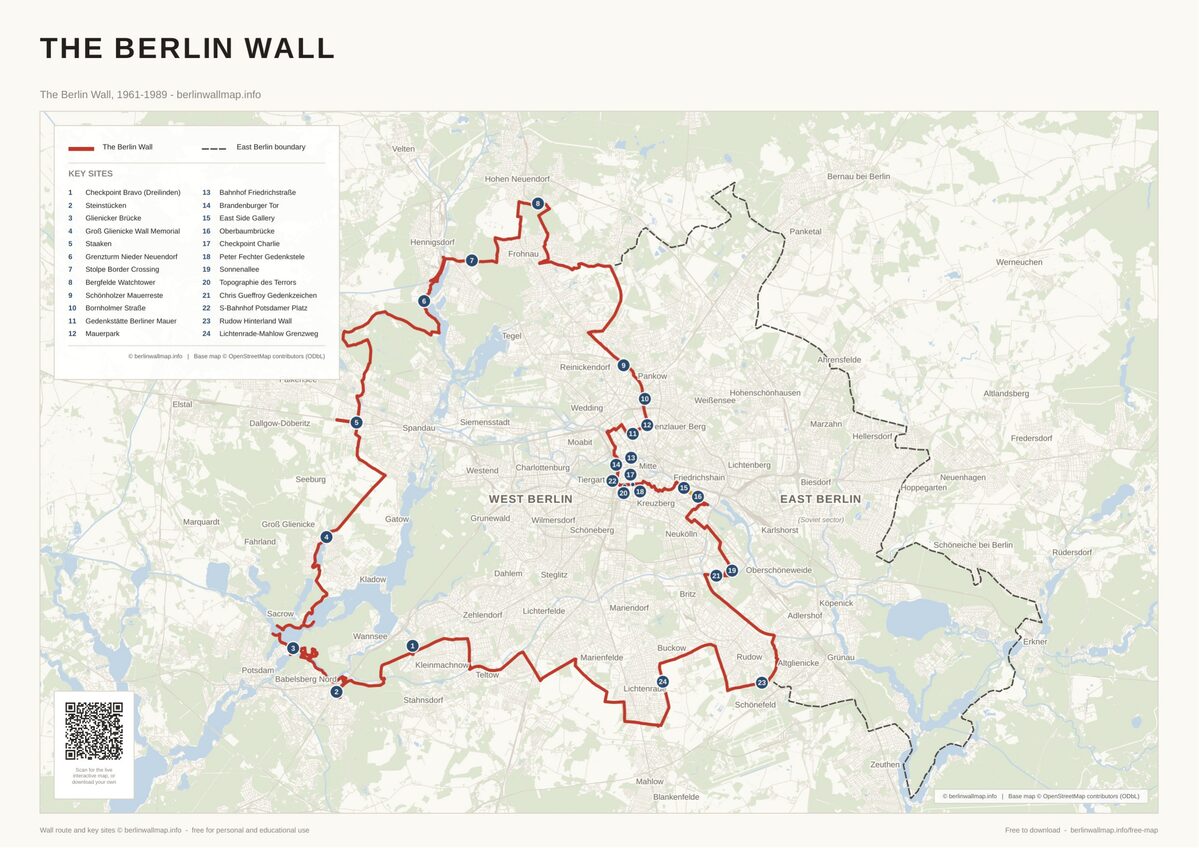
The red line on our interactive map follows the same course, so the places in Meyer’s photographs can be found along it, Potsdamer Platz among them. Around eighty are marked in all. Some are substantial, like the memorial at Bernauer Strasse. Others are a double line of cobble stones set into the road, easy to walk past without noticing.
Also on at the memorial
Generation 75 – Mit 14 ins neue Deutschland runs alongside it until 13 December. It is a video installation portraying nine people born in 1975. The title means “into the new Germany at fourteen”, which is roughly the age they reached at reunification, and they grew up on both sides of the border, in the GDR and in the Federal Republic.
The Baltic escape exhibition Wo Kolibris schwimmen, which had been at the memorial since June, closed on 20 September.
If you go
The memorial is at Bernauer Strasse 111. The Visitor and Documentation Centre opens Tuesday to Sunday, 10:00 to 18:00, and the open-air memorial daily from 08:00 to 22:00. Admission is free; only guided tours are charged.
The opening is on Thursday 1 October 2026 at 18:30. The exhibition is mounted in cooperation with OSTKREUZ and funded by the Bundesstiftung zur Aufarbeitung der SED-Diktatur together with donations from the Erbengemeinschaft Hempel. Details are on the Foundation’s exhibition page, which at the time of writing is in German only.
Event details last checked 23 Sep 2026
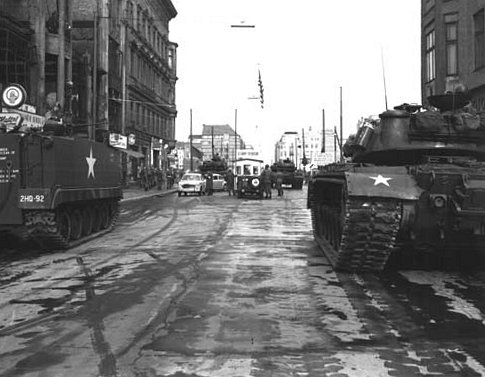
Checkpoint Charlie
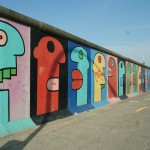
East Side Gallery
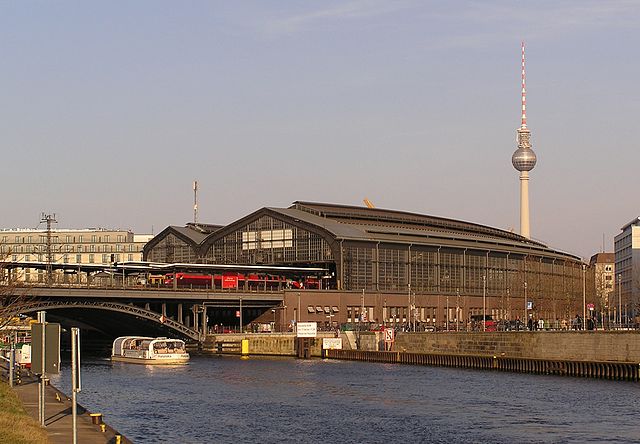
Bahnhof Friedrichstraße
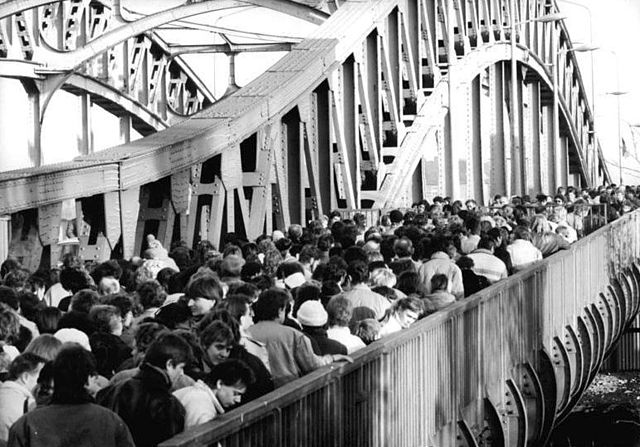
Bornholmer Straße
Mauer Land: Thomas Meyer’s Photographs of the Former Wall Strip Open at the Memorial
East Side Gallery: The Last 1990 Original Is Being Conserved, and an Exiled Painting Has Come Home
Checkpoint Charlie’s New Design Has Been Chosen, and the Guard House Stays
The Berlin Spy Tunnel: The CIA, MI6 and Operation Gold
Free map downloads
Free printable PDF maps of the Berlin Wall.
Get the free maps →Explore the Timeline
Journey through Berlin Wall history from 1945 to 1990.
View Timeline →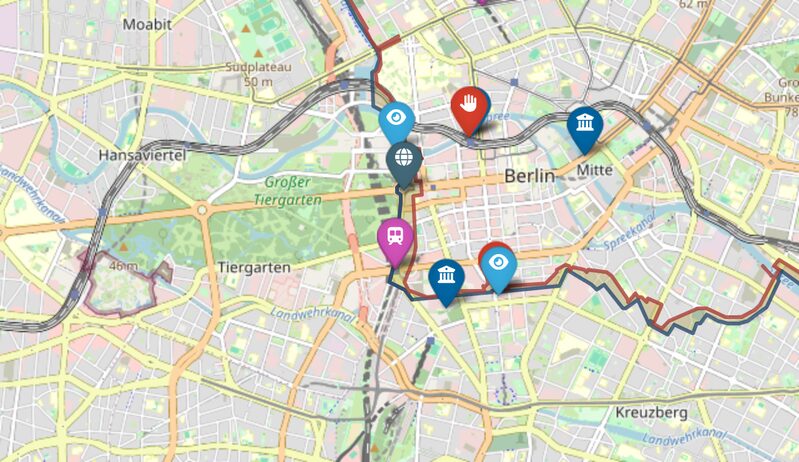
Embed Our Map
Add a free interactive Berlin Wall map to your website or blog.
Get embed code →